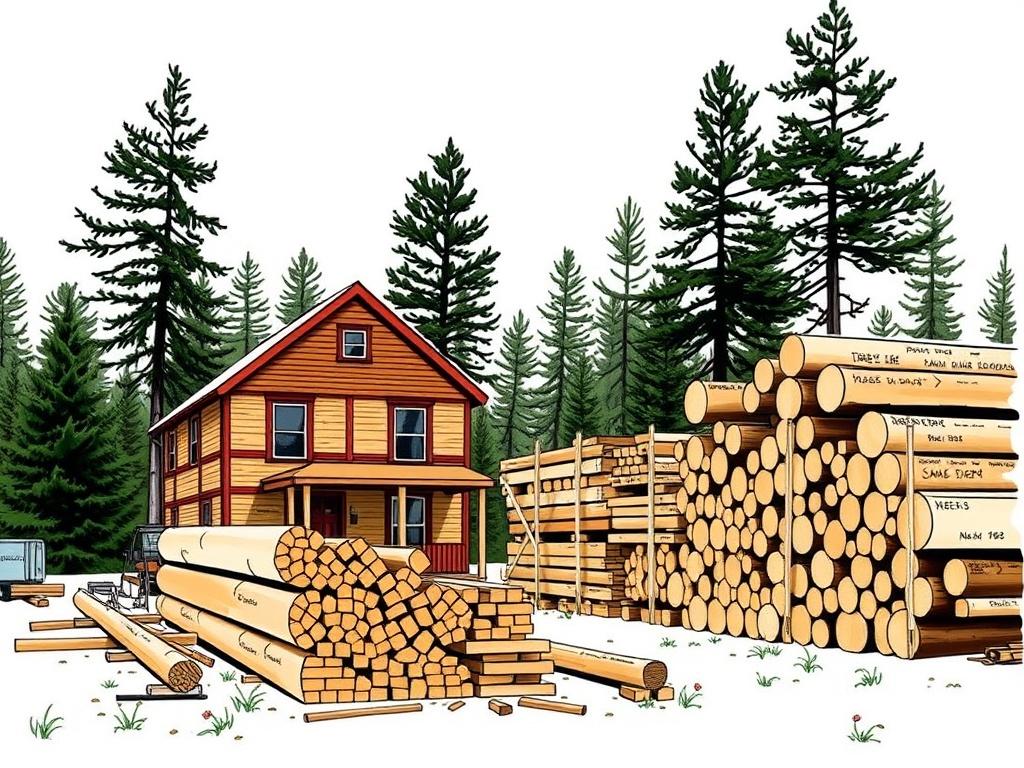
Tariff policies aimed at lumber might sound like a niche trade story, but their effects travel fast — from timberlands to framing crews to the homeowner signing the mortgage papers. This article traces how import duties on wood change prices, alter supply chains, influence builders’ decisions, and ultimately reshape housing affordability and construction activity.
- What a tariff does, in plain terms
- Why lumber is a frequent target of trade measures
- A brief history of trade measures on lumber
- How tariffs affect lumber prices and the supply chain
- Short-run vs. long-run effects on the housing market
- How much do lumber price changes matter to a single-family home?
- Evidence from recent market episodes
- Winners and losers in a tariff-driven lumber market
- How builders and suppliers adapt
- Substitution and innovation in construction materials
- Trade policy tools and alternatives to tariffs
- Legal and international dimensions
- How tariffs change housing starts and financing
- Distributional impacts: who pays and who benefits
- Case study: builders during price spikes
- Policy trade-offs: jobs versus affordability
- Market signaling and investment in domestic capacity
- Environmental and sustainability considerations
- Practical steps for builders and developers
- Practical advice for homeowners and buyers
- Tools for policymakers to reduce harm
- How to read the data: what to watch
- Alternatives to timber protection that support local economies
- Future trends that could change the calculus
- Summary of policy options and impacts
- Final considerations and where this leaves homeowners and policymakers
What a tariff does, in plain terms
A tariff is a tax on imported goods. When a government levies a tariff on foreign lumber, the immediate result is a higher landed price for that timber unless exporters or importers absorb the charge.
That added cost doesn’t disappear. Producers and distributors adjust, buyers react, and the extra dollars flow through to margins, consumer prices, or both. The path that cost takes depends on market structure and timing.
Understanding that simple chain — tariff to price to buyer — is the key to seeing why trade policy can look like housing policy in practice.
Why lumber is a frequent target of trade measures
Softwood lumber has been at the center of recurring trade disputes, largely because timber markets are concentrated, politically important in timber-producing regions, and tied to family-wage jobs. These features make lumber an attractive candidate for protectionist action.
National interest arguments typically center on preserving domestic mills and forests, while critics point out that protection raises costs for construction-intensive industries and consumers. The tension between those objectives fuels the on-again/off-again nature of lumber trade rules.
Because wood is bulky and transportation-sensitive, even modest duties change trade flows. Importers look for alternative ports, domestic producers may expand slowly, and mills respond to price signals — all of which alter market dynamics for months or years.
A brief history of trade measures on lumber
Disputes over softwood lumber have a long track record, particularly between neighboring countries with large timber sectors. These disagreements often involve countervailing duties and anti-dumping claims, and they have periodically led to tariffs or quotas that disrupt trade.
Even when tariffs are temporary, they influence investment and short-run supply. Mills may idle, loggers may shift production, and buyers accustomed to a certain flow of imports must scramble to secure material from new sources.
Those historical frictions matter because the housing market is sensitive to disruptions: builders schedule projects, labor availability is finite, and finance hinges on predictable costs. A sudden spike in lumber tariffs can therefore have outsized consequences relative to the size of the tariff itself.
How tariffs affect lumber prices and the supply chain
When a tariff is applied, import prices rise immediately by at least the tariff amount, though market actors sometimes absorb some of that increase to preserve sales. Price transmission depends on the bargaining power of suppliers, wholesalers, and buyers.
Supply chain complexity lengthens the lag between tariff imposition and its full impact on construction. Lumber cut today may be sold several times before reaching a build site, and inventories can smooth short-term shocks but not prolonged ones.
Moreover, domestic production cannot always scale up quickly. Harvesting, mill capacity, and regulatory constraints mean that ramping up supply in response to tariffs takes time — a lag that keeps prices elevated for months or even years.
Short-run vs. long-run effects on the housing market
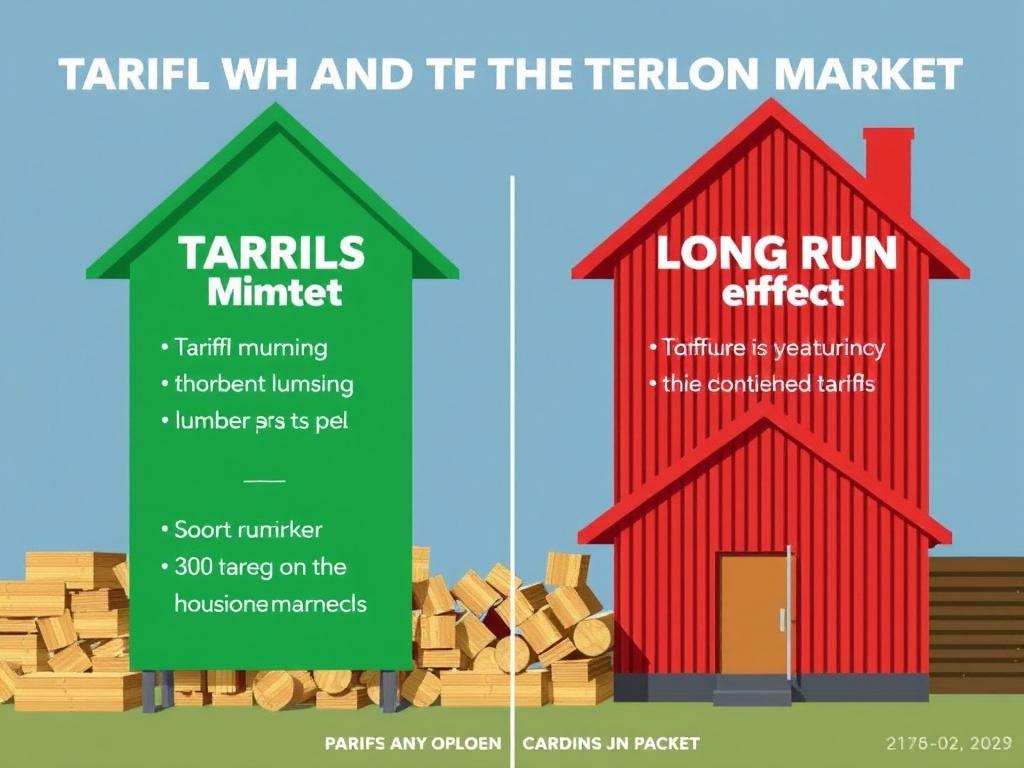
In the short run, higher lumber prices increase the direct cost of framing and other wood-intensive tasks. Builders face squeezed margins or must pass costs on to buyers, which can reduce the number of projects that are financially viable.
Over the longer term, markets adjust. Higher prices encourage investment in domestic milling capacity or in alternative materials, and buyers alter preferences. New construction may shift toward designs that use less lumber or toward modular methods that reduce waste.
That said, the long-run adjustments have limits: land availability, labor shortages, and zoning rules continue to constrain housing supply independently of lumber costs, so tariffs are one of several factors shaping the market.
How much do lumber price changes matter to a single-family home?
Lumber is a significant input in wood-framed housing. Framing, sheathing, and finish carpentry rely heavily on dimensional lumber and engineered wood products, so price swings can add thousands of dollars to the cost of a new house.
The exact impact varies with home size and design. A modest single-family house will see a smaller absolute increase than a large custom home, but the proportional effect on the developer’s profit margin or on affordability can still be meaningful.
For multifamily builds and renovations the dynamics differ, but the common thread is that materials account for a nontrivial share of costs and therefore influence pricing, timelines, and feasibility.
Evidence from recent market episodes
The lumber market experienced dramatic price swings during the global COVID-19 pandemic: demand shifts, supply disruptions, and inventory adjustments combined to create sharp volatility. Those swings coincided with trade tensions, producing amplified effects in some markets.
Builders responded by pausing starts, increasing product prices, or introducing escalation clauses in contracts. Some projects were delayed to avoid locking in high material costs, which had knock-on effects for workers and suppliers tied to the construction cycle.
These episodes illustrate how supply shocks and trade policy can interact. Even when tariffs are not the sole cause, they can increase the severity and duration of price movements that harm housing affordability and construction activity.
Winners and losers in a tariff-driven lumber market
Domestic timber producers and mills tend to benefit from tariffs because imported competition becomes pricier. Higher domestic prices can improve margins and support local employment in the short to medium term.
On the losing side are builders, developers, and home buyers who face higher costs. Affordable housing projects, which operate on thin margins, are particularly vulnerable to input price shocks that raise per-unit costs beyond program thresholds.
Beyond firms and households, local governments can feel the impact through slowed permit revenues and delayed developments that reduce property tax growth expectations.
How builders and suppliers adapt
Contract strategies change quickly when material prices are volatile. Builders commonly use escalation clauses that tie contract prices to material indices or include pass-through provisions for extraordinary cost movements.
Suppliers diversify sourcing, entering forward contracts or hedging positions. Some firms also invest in inventory buffers during expected tariff windows, though that carries carrying costs and risk if prices fall later.
I’ve seen small builders switch suppliers mid-project and negotiate with homeowners for shared cost treatment rather than absorbing sudden increases. These ad hoc solutions work in the short term but add complexity and friction to the market.
Substitution and innovation in construction materials
Persistent high lumber prices incentivize substitution. Steel framing, light-gauge metal, masonry, or manufactured components like SIPs (structural insulated panels) become relatively more attractive when wood costs rise.
Engineered wood products — laminated beams, I-joists, and cross-laminated timber — can offer either cost or performance advantages that change the choice calculus. Manufacturers may invest in these lines when market signals indicate sustained demand.
Innovation is not instant. Transitioning to alternative systems requires training, changes in supply chains, and sometimes code updates. Those frictions moderate how quickly substitution can relieve upward pressure on housing costs.
Trade policy tools and alternatives to tariffs
Policymakers have options besides tariffs to protect domestic industries or respond to dumping claims. Subsidies, tax incentives for domestic investment, or targeted procurement policies can support local mills without directly raising import prices for builders.
Other tools include negotiated quotas, safeguard measures with sunset clauses, or dispute settlement mechanisms that address unfair trade practices while preserving trade flows. Each choice has distributional consequences and political trade-offs.
Evaluating these policies requires balancing the goal of protecting jobs and industry against the social cost of higher housing prices and slower construction activity.
Legal and international dimensions
Tariffs do not exist in a vacuum; they interact with trade agreements and international dispute processes. A country facing tariffs may launch a countercomplaint or retaliatory measures, creating broader trade friction.
Long-running disputes often end with negotiated settlements that include price or volume bands, joint commissions, or transitional supports for affected workers. These solutions can calm markets but take time to negotiate.
Understanding the international legal context is crucial for anticipating the duration and intensity of any tariff episode and for crafting domestic policies that minimize unintended harm.
How tariffs change housing starts and financing
Developers decide whether to break ground based on expected costs and sale prices. When a tariff raises the cost of key inputs like lumber, some planned projects become marginal or loss-making, so starts decline.
Lenders and equity investors respond to that risk. If material-price volatility makes project returns uncertain, financing terms can tighten, increasing the cost of capital and slowing overall activity.
That interplay means tariffs can indirectly affect housing supply by altering both the cost side and the financing environment that supports new development.
Distributional impacts: who pays and who benefits
Tariffs function as a transfer from domestic consumers to protected domestic producers. Homebuyers, renters, and government housing programs often shoulder the increased costs through higher rents or purchase prices.
The geographic distribution of effects tends to mirror the structure of production and consumption: regions with less domestic timber production may bear a larger share of the burden, while timber-producing areas capture more of the gains.
Policymakers should weigh these distributional effects, especially when affordable housing goals are at stake and when many households are cost-burdened by housing expenses already.
Case study: builders during price spikes
When prices jumped steeply in 2020–2021, many small and mid-size builders delayed starts or raised contract prices. Some added material escalation clauses on new contracts, while others absorbed smaller increases to protect customer relationships.
Large homebuilders tended to weather the storm better because of purchasing power and the ability to spread costs across many projects. That advantage sometimes shifted market share within local housing markets.
These real-world responses show how market structure and firm size mediate the effects of tariffs and price shocks on housing supply and affordability.
Policy trade-offs: jobs versus affordability
Proponents of protection argue that tariffs save jobs in logging and milling, preserving communities dependent on forestry. That argument carries weight in regions where alternatives are limited.
Opponents counter that the broader economy — homeowners, renters, builders, and downstream workers — pays the price through higher housing costs and fewer starts. The resulting tensions make timber trade policy politically charged.
Constructive policy design tries to balance these objectives, using targeted supports for displaced workers and investment incentives for domestic capacity rather than blunt import taxes that raise prices across the board.
Market signaling and investment in domestic capacity
Higher lumber prices can signal a business case for new mills or expanded production. But timber supply constraints, environmental permitting, and capital intensity make rapid scale-up difficult.
Investors weigh long-term price expectations against regulatory risk and harvesting limits, so short-lived price spikes may not trigger significant capacity additions. That’s why policymakers and industry often favor predictable, stable frameworks over abrupt protectionist moves.
Well-designed incentives that lower barriers to responsible domestic expansion can be more effective at building resilient supply chains than temporary tariffs that create volatility.
Environmental and sustainability considerations
Lumber is renewable when forests are managed sustainably, and wood offers a lower embodied carbon footprint than many alternatives. Policies that encourage responsible forestry and domestic processing can align economic and climate objectives.
Tariffs, however, can distort incentives. If they encourage accelerated harvesting or substitution toward higher-carbon materials, the environmental outcome may worsen. Conversely, tariffs combined with sustainability standards can protect both jobs and forests, but such hybrid approaches are politically and administratively complex.
Any long-term trade policy affecting timber should therefore be evaluated against environmental goals as well as economic ones.
Practical steps for builders and developers
To manage tariff-driven volatility, builders can adopt procurement practices such as longer-term supply contracts, indexed pricing clauses, and diversified sourcing to reduce exposure to any one market disruption.
Design choices that reduce waste and optimize material usage help too. Prefabrication and precision building practices lower the volume of raw lumber needed per project and shorten build times, mitigating some tariff impacts.
On the financing side, contingency reserves and realistic cost buffers in pro forma calculations protect projects from sudden cost overruns tied to material price shifts.
Practical advice for homeowners and buyers
Potential buyers should be mindful of escalation clauses and the timing of closings when material costs are volatile. Negotiating shared risk arrangements or small deposits can reduce personal exposure to price shocks.
If planning a renovation, homeowners can consider alternative materials and staged projects to smooth spending. Working with contractors who use transparent pricing and communicate supply chain risks reduces surprises.
At the broader level, voters can press for policy solutions that balance industry protection with housing affordability — a civic action with direct personal consequences.
Tools for policymakers to reduce harm
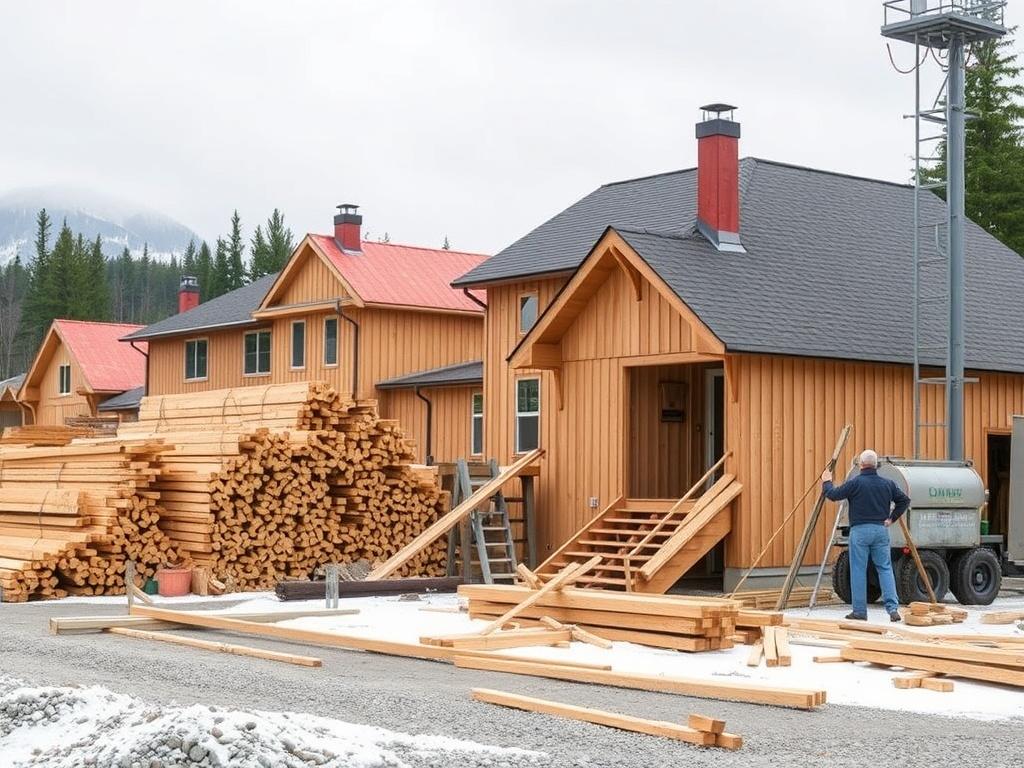
Instead of across-the-board tariffs, targeted measures can protect vital domestic capacity while minimizing damage to housing affordability. Examples include time-limited safeguards, adjustment assistance for workers, and investment tax credits for domestic processing upgrades.
Another option is to combine trade remedies with affordable housing supports, such as increased subsidies or expedited permitting for construction, to ensure that protectionist measures do not squeeze low-income households further.
Transparent, data-driven decision-making and stakeholder consultation can reduce unintended consequences and build durable solutions that serve both industry and consumers.
How to read the data: what to watch
Key indicators include lumber futures and spot prices, housing starts and permits, builder confidence surveys, and inventory levels at mills and distribution yards. Watching these together gives a clearer picture than any single metric.
Also pay attention to trade data — import volumes and duty schedules — because changes there foreshadow shifts in supply and price formation. Policymakers and market participants who monitor a range of indicators can react more intelligently to shocks.
Finally, local market dynamics can diverge from national averages, so regional data on starts, prices, and labor availability matter for practical decisions by builders and buyers.
Alternatives to timber protection that support local economies
Policies that subsidize workforce training, encourage value-added processing, or invest in log-to-lumber facilities can strengthen domestic industries without raising prices via import taxes.
Public procurement that prioritizes responsibly sourced domestic timber for government construction projects can create reliable demand that helps firms scale without distorting the wider market.
These approaches generally take longer to implement but tend to build more sustainable local capacity and avoid the blunt, regressive effects tariffs impose on consumers.
Future trends that could change the calculus
Technological advances in engineered wood and mass timber create new markets for domestically processed fiber, which could reduce sensitivity to import tariffs over time. If domestic value-add grows, the industry becomes less dependent on raw imports.
At the same time, climate-driven changes in forest health and fire regimes can affect timber supply unpredictably, making resilient supply chains and adaptive policy more important than ever.
Finally, evolving global trade relationships and potential new trade agreements will alter the baseline risks and returns for affected industries, so the policy context in coming years may look quite different from the recent past.
Summary of policy options and impacts
The following table sketches the primary policy approaches and their typical housing market effects. It is a simplified view, but useful for comparing trade-offs.
| Policy | Typical effect on lumber prices | Typical effect on housing affordability |
|---|---|---|
| Tariffs | Increase | Worsen (short-to-medium term) |
| Subsidies for domestic processing | Neutral to decrease (long-term) | Neutral to improve (long-term) |
| Targeted procurement | Neutral | Neutral to improve locally |
| Adjustment assistance for workers | Neutral | Neutral |
Final considerations and where this leaves homeowners and policymakers
Tariff decisions are trade-offs. They can protect domestic jobs and industry in timber-producing regions, but they also raise material costs that ripple through construction and housing affordability. The challenge for policymakers is to design measures that achieve social goals without imposing unnecessary burdens on buyers and renters.
For builders and homeowners, the practical response is risk management: diversify suppliers, use contract language to handle volatility, and embrace efficiency and alternative building methods where possible. Those steps don’t remove macro risks, but they make individual projects more resilient.
Ultimately, sustainable solutions that combine targeted support for domestic capacity with investments in affordable housing and responsible forestry are likeliest to produce stable markets and fair outcomes. The question is not whether trade policy matters for housing — it clearly does — but how to shape policy so its benefits outweigh its costs in the communities that depend on both timber and affordable homes.