
Tariffs are more than numbers on balance sheets or policy levers in trade agreements; they are moral choices about who pays, who benefits, and how nations relate to one another. Debates over tariffs often reduce to technical arguments about efficiency and GDP, but those narrow frames miss the ethical questions underneath: Are we protecting vulnerable workers, or privileging certain industries at others’ expense? Do national obligations outweigh global responsibilities?
- Why ethics matters when economists and politicians talk tariffs
- Historical context: tariffs as policy tools through time
- Ethical frameworks for evaluating tariffs
- Arguments ethically in favor of tariffs
- Arguments ethically against tariffs
- Balancing rights and welfare: who counts morally?
- Distributional concerns: winners, losers, and fairness
- The global justice dimension
- Case study: Smoot-Hawley and moral lessons
- Case study: recent tariffs and contested motives
- Empirical evidence and moral inference
- Tariffs and poverty: a challenging relationship
- Environment, labor, and moral externalities
- Alternatives to blunt tariffs
- Designing ethically defensible tariffs
- Practical principles for policymakers
- Trade law, sovereignty, and ethical limits
- Tariffs and democratic accountability
- Morality and political economy: the risk of capture
- Practical checklist for assessing a tariff proposal
- Comparative table: common ethical arguments
- Personal perspective: seeing the moral texture of tariffs
- Special considerations for developing countries
- The ethics of escalation and retaliation
- Special cases: sanctions versus tariffs
- Behavioral ethics and public perception
- Long-term virtues: responsibility, humility, and solidarity
- Putting ethics into practice: a policymaker’s roadmap
- When tariffs might be the morally preferable option
- When tariffs are ethically dubious
- Final reflections on the moral trade-offs of trade policy
Why ethics matters when economists and politicians talk tariffs
Economists typically frame tariffs as distortions to market efficiency, while politicians present them as tools that defend jobs or national sovereignty. Both views matter, but neither sweeps up the ethical complexities that citizens actually feel. Ethics asks about duties, harms, fairness, and the distribution of costs—matters that are often obscured by statistics and rhetoric.
When tariffs are imposed, real people change plans: a factory may stay open for another year, a consumer may pay more for a staple, a trading partner may retaliate. Those outcomes present moral trade-offs that are not resolved by pointing to GDP growth alone. Recognizing the ethical dimension helps policymakers design responses that acknowledge trade-offs instead of pretending they do not exist.
Historical context: tariffs as policy tools through time
Tariffs are ancient. Governments have taxed imports for revenue, military financing, or to favor nascent industries since before modern nation-states. In the 19th century, leading economies used tariffs to nurture industrialization; in the 20th century, policy swung between protectionism and liberalization as political winds shifted.
Historical episodes carry ethical lessons. The Smoot-Hawley tariffs of the 1930s, for example, are often cited as a symbol of protectionism gone wrong, but the human motivations behind them—farmers and manufacturers seeking survival amid economic collapse—were morally charged and not merely self-interested. History reminds us tariffs are borne of social pressures, not abstract theory.
Ethical frameworks for evaluating tariffs
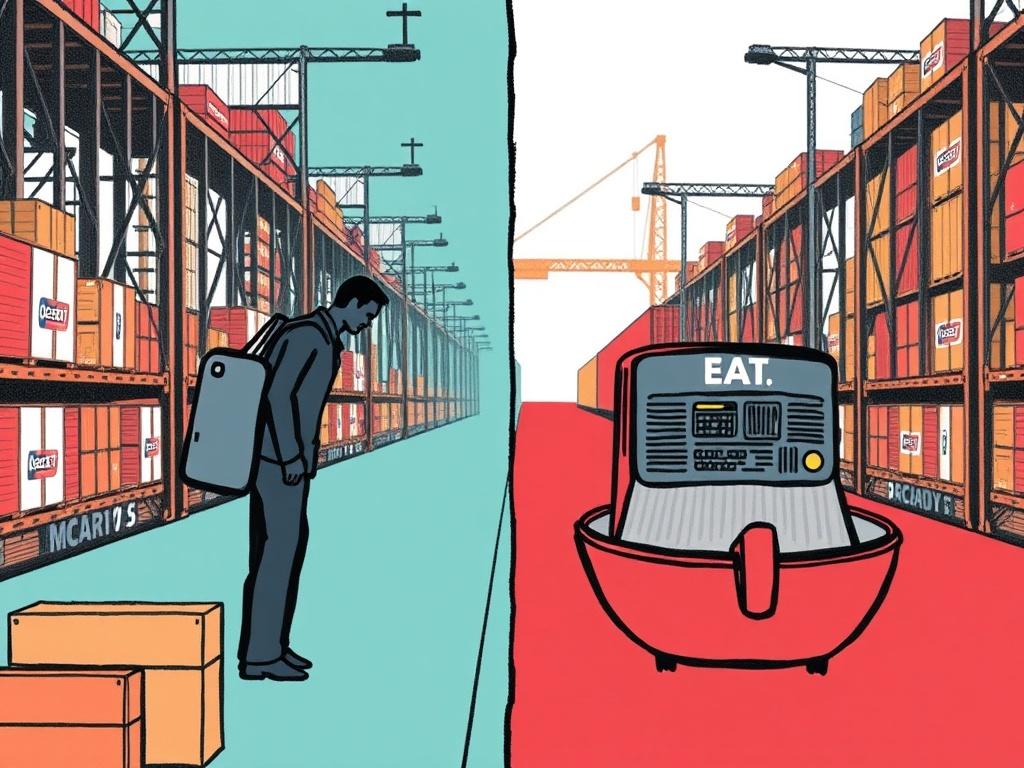
To assess tariffs ethically, we can draw on multiple frameworks. Utilitarianism asks whether a tariff increases overall welfare by summing benefits and harms. Deontology focuses on rights, duties, and principles that should not be violated even for greater aggregate gain. Justice theories emphasize fairness in distribution across persons and generations. Each framework highlights different moral considerations and potential conflicts.
Virtue ethics asks what tariffs say about a nation’s character: whether a policy displays prudence, courage, or justice. Communitarian approaches examine the obligations a state has to its members versus non-members. Cosmopolitan perspectives treat people everywhere as bearing equal moral weight. These competing lenses reveal why the same tariff can be morally lauded in one view and condemned in another.
Arguments ethically in favor of tariffs
One common ethical defense for tariffs is protection of livelihoods. If a tariff preserves jobs in a community facing sudden import competition, supporters argue it prevents immediate hardship and social dislocation. This protective impulse carries moral weight because policy often has obligations to safeguard citizens’ basic capabilities and economic security.
Tariffs can also be defended on grounds of national security and strategic autonomy. Dependence on foreign suppliers for critical goods—medical supplies, energy inputs, or defense-related items—poses risks that some argue states have a moral duty to mitigate. In this view, tariffs are a tool to sustain essential domestic capacity that underwrites collective safety and resilience.
Another ethical case rests on rectifying unfair practices. If trading partners subsidize producers, break labor or environmental standards, or otherwise distort markets, tariffs can be framed as a response to injustice. Implemented as remedial measures, they aim to level the playing field and uphold norms of fair competition, which supporters argue is ethically justified.
There is also a forward-looking moral argument: protecting infant industries can promote long-term development and self-sufficiency, especially in lower-income countries. Temporary tariffs may give fledgling sectors time to mature and contribute to domestic prosperity, reducing long-term global inequalities. Advocates see this as a morally licensed investment in future flourishing.
Arguments ethically against tariffs
Opponents point to the harm tariffs cause consumers, especially low-income households who spend a larger share of income on goods whose prices rise. From a distributive justice perspective, policies that disproportionately hurt the poor are ethically problematic. Tariffs can therefore be regressive, shifting burdens onto those least able to bear them.
There is also the issue of retaliation and broader harm to international partners. Tariffs can trigger trade wars that reduce exports and incomes abroad, potentially deepening poverty in vulnerable countries. Critics argue that policies harming foreign populations, particularly in poorer nations, conflict with moral duties of global justice and solidarity.
Tariffs can encourage rent-seeking and corruption. When governments grant protection to specific firms or sectors, political influence can determine who benefits rather than merit or need. This undermines fairness and erodes public trust in institutions, creating ethical problems even if short-term economic objectives are met.
Balancing rights and welfare: who counts morally?
A central ethical tension is whose interests are prioritized: citizens, workers in protected industries, consumers, or people in foreign countries affected by retaliation. Rights-based thinking emphasizes individuals’ entitlements—property, freedom of contract, access to affordable goods—while utilitarian approaches might favor policies that maximize aggregate welfare even if some are disadvantaged.
Consider a tariff that saves 10,000 domestic jobs but raises prices for millions of consumers. A strictly utilitarian calculus might support it if overall welfare increases, but rights or equality frameworks may reject a policy that systematically harms a broad low-income population for the benefit of a concentrated group. These trade-offs force policymakers to decide which moral principles guide decision-making.
Distributional concerns: winners, losers, and fairness
Tariffs create concentrated winners and dispersed losers: a protected industry gains, while consumers and related businesses pay higher costs. Ethically, policies that concentrate benefits and diffuse harms require scrutiny: fairness demands compensation mechanisms for those harmed or strong justification for why the gains are worth unequal distribution.
Design choices matter. A tariff accompanied by targeted support for displaced workers, retraining programs, or social insurance can be more defensible than a blunt price-raising measure without safety nets. Ethically responsible policy design recognizes obligations to mitigate harms and make adjustments equitable.
The global justice dimension
Trade is embedded in an international order where wealth and power are uneven. Tariffs by rich countries can exacerbate global inequality, reducing market access for producers in developing nations who rely on exports. From a cosmopolitan standpoint, policies that worsen poverty abroad are difficult to justify morally.
On the other hand, some developing countries use tariffs as part of industrial policy to develop domestic capacity. The ethical debate here hinges on who gets to determine a nation’s development path and how much moral weight to give global welfare compared to a state’s obligation to its own citizens. These tensions resist simple resolution.
Case study: Smoot-Hawley and moral lessons
The Smoot-Hawley tariffs of the early 1930s are often called a cautionary tale. Intended to protect American farmers and manufacturers during the Great Depression, the tariffs arguably deepened global economic contraction through retaliatory measures. Ethically, the episode shows how well-intentioned protection can multiply harms when it neglects broader systemic effects.
Yet the human context matters. American constituencies demanded relief amid desperate conditions, and policymakers responded. The moral lesson is not just that tariffs can backfire economically, but that ethical policymaking must grapple with urgent human suffering while assessing long-run consequences—a balance that is morally complex.
Case study: recent tariffs and contested motives
Contemporary examples—such as tariff actions framed as defending national security or rebalancing trade—reveal the mixed ethical terrain. Supporters argue these moves reclaim jobs and correct unfair practices, while critics see protectionism cloaked in high-stakes rhetoric. The moral evaluation depends on evidence of motives, proportionality, and whether harms are anticipated and addressed.
For policymakers, transparent justification and clear goals matter ethically. Tariffs justified as temporary, targeted measures with accompanying domestic support fare better morally than broadly protective acts that persist without evaluation. Responsibility requires honesty about both intended and foreseeable unintended consequences.
Empirical evidence and moral inference
Economic studies show tariffs reduce trade and can raise prices; they also sometimes protect domestic employment in targeted sectors. Translating empirical findings into moral judgments requires more than technical analysis: you must weigh who bears costs and whether policymakers fulfilled duties to mitigate harms. Data informs but does not settle ethical debate.
Evidence also suggests that timing and scale matter. Short-term tariffs to address sudden disruptions may be morally more acceptable than long-term protection that entrenches inefficient industries. Policy debates should therefore incorporate ethical criteria alongside empirical estimates to reach defensible choices.
Tariffs and poverty: a challenging relationship
Tariffs can both alleviate and aggravate poverty depending on context. In a fragile local economy, protecting a labor-intensive industry could prevent immediate destitution. Conversely, tariffs that raise staple food prices or cause retaliatory export losses can deepen poverty for many. Ethical judgment entails careful, context-sensitive analysis.
As a general rule, policies that disproportionately impose costs on low-income households demand stronger moral justification and robust compensatory measures. Equity-minded design is essential if tariffs are to be defensible when poverty is at stake.
Environment, labor, and moral externalities
Tariffs can be used to enforce environmental and labor standards by penalizing goods produced under harmful conditions. Ethically, conditioning market access on basic rights and sustainability aligns trade policy with broader values. However, care is required to avoid unintended harm to workers in poorer countries whose livelihoods depend on export markets.
Design matters here too. Border carbon adjustments and labor-related tariffs can be ethically attractive if they effectively reduce global harm without punishing vulnerable producers. Complementary policies—technical assistance, capacity building, and phased implementation—help align ethical aims with practical outcomes.
Alternatives to blunt tariffs
Policymakers have moral reasons to consider alternatives before resorting to tariffs. Direct support for displaced workers, public investments in education and infrastructure, and subsidies for research and development can protect jobs without raising consumer prices. These approaches respect consumer welfare while addressing legitimate domestic concerns.
Another alternative is rules-based enforcement through international institutions. Seeking remedies for unfair trade practices via multilateral mechanisms can preserve cooperation and reduce retaliatory cycles. Ethically, this approach honors commitments to orderly dispute resolution and mutual accountability among nations.
Designing ethically defensible tariffs
When tariffs are chosen, ethical design principles should guide their application. Temporariness and periodic review prevent protection from calcifying into permanent privilege. Targeting preserves legitimacy when help is narrowly focused and evidence-based. Transparency and public justification foster accountability and moral credibility.
Compensation matters. Redistributive measures to offset higher consumer prices and retraining programs for displaced workers convert a policy that concentrates harm into one that shares burdens fairly. Ethically defensible tariffs should include such mechanisms from the outset rather than as afterthoughts.
Practical principles for policymakers
Policies carry moral obligations. First, policymakers should clearly articulate the moral justification for tariffs: protection of lives, national security, correcting grave injustices, or temporary assistance for adjustment. Vague or self-serving rationales lack legitimacy and fail ethical scrutiny.
Second, actions must be proportional. The scale of tariffs should fit the moral aim and minimize collateral harm. Third, safeguards like sunset clauses, impact monitoring, and compensation make policies more ethically robust. Finally, international dialogue and cooperation help mitigate harms to trading partners and honor broader moral duties.
Trade law, sovereignty, and ethical limits
International trade law—embodied in the WTO—tries to constrain unilateral tariff use through rules and dispute settlement. These legal frameworks reflect ethical commitments to predictability, fairness, and dispute avoidance. Violating agreed rules may be legally risky and ethically problematic when it undermines mutual expectations between nations.
At the same time, legal compliance does not exhaust ethical responsibility. A policy may satisfy legal constraints but still disadvantage vulnerable populations. Ethical assessment requires looking beyond legality to consequences, fairness, and the legitimacy of the motives behind action.
Tariffs and democratic accountability
Democratic processes can lend moral weight to tariffs when they represent considered choices by accountable institutions. Public deliberation that includes affected communities gives voice to those who will bear costs and benefits. Ethically, decisions made behind closed doors or driven solely by special interests are suspect.
Yet democratic choices can also be morally troubling if majorities impose unjust burdens on minorities or external populations. Democratic legitimacy and moral justice are related but distinct; democratic endorsement should not be the sole ethical criterion for tariffs.
Morality and political economy: the risk of capture
Interest groups often lobby successfully for protection that benefits a few at the expense of many. This dynamic raises ethical questions about fairness and the integrity of policymaking. When tariffs are the result of political capture, their moral claim weakens, even if they yield local economic benefits.
Countering capture requires transparency, conflict-of-interest rules, and strong institutions that evaluate policies according to broad public interest rather than narrow private gain. Ensuring voice for affected constituencies bolsters the ethical case for any protectionist measure.
Practical checklist for assessing a tariff proposal
- Clear moral rationale: Is there a specific moral obligation or public good at stake?
- Evidence of necessity: Are less harmful alternatives exhausted?
- Proportionality: Is the scale appropriate to the aim?
- Temporary design: Are sunset clauses and reviews included?
- Mitigation: Are compensatory measures for losers planned?
- Transparency: Are motives and expected impacts public?
- International consideration: Have implications for trading partners been considered?
Comparative table: common ethical arguments
| Ethical claim | Argument for tariffs | Counterargument |
|---|---|---|
| Protect livelihoods | Tariffs save jobs and stabilize communities | Costs fall on consumers; may delay necessary adjustment |
| Correct unfair trade | Tariffs remedy subsidies or dumping | May provoke retaliation and harm innocents abroad |
| National security | Tariffs preserve strategic industries | Overbroad claims can mask protectionism and inefficiency |
| Promote development | Infant industry protection supports industrialization | Risk of perpetual dependency and corruption |
Personal perspective: seeing the moral texture of tariffs
I once attended a town meeting in a small manufacturing town where a proposed tariff was the center of debate. Workers spoke of overnight anxiety when a plant closed, while shoppers worried about rising prices for basic goods. Listening to both groups reminded me that ethical analysis must be grounded in lived realities, not just models.
That encounter shaped how I view policy: promises of protection must be matched with plans for training, healthcare, and community support. The moral credibility of tariffs depends on whether policymakers take responsibility for both benefits and burdens.
Special considerations for developing countries

Developing countries face a delicate ethical calculus. Tariffs can be a tool for industrialization and self-reliance, with legitimate moral claims tied to domestic development and poverty reduction. At the same time, these countries are often vulnerable to the consequences of protectionism by richer states and must weigh long-term empowerment against short-term political gains.
International support—technology transfers, development finance, and fair market access—can reduce the need for damaging tariffs. Ethically, richer nations have obligations to support equitable development that reduce the moral tension between domestic protection and global justice.
The ethics of escalation and retaliation
Tariffs often trigger retaliatory measures, with spiraling economic and social costs. Ethically, initiating a policy that predictably harms others raises questions about responsibility for induced harm. Policymakers should consider whether retaliation is likely and whether they can morally justify imposing such risks on foreign populations.
Diplomacy and cooperation are ethical tools to avoid escalation. Using tariffs as a first resort rather than a last resort weakens the moral case for unilateral action. Seeking multilateral remedies reflects a commitment to shared problem-solving and reduced harm.
Special cases: sanctions versus tariffs
International sanctions differ ethically from standard tariffs because their motive is often punitive or aimed at changing behavior, not economic protection. Sanctions raise urgent moral questions about collective punishment and civilian suffering. Tariff-style measures used as sanctions thus carry a heavier ethical burden and require rigorous justification.
Humanitarian exemptions, targeted measures against elites, and monitoring of humanitarian impacts can partially mitigate ethical concerns, but the risk of broad civilian harm remains. Policymakers must weigh geopolitical aims against human costs carefully.
Behavioral ethics and public perception
Public opinion about tariffs often reflects concerns about fairness and dignity rather than abstract efficiency. People respond emotionally to job losses, factory closures, or perceived unfairness in competition. Ethical policymaking must take these perceptions seriously without being captive to populist impulses.
Communicating honestly about trade-offs helps preserve civic trust. When leaders explain why a tariff is necessary, how long it will last, and what compensations are offered, they engage citizens in a moral dialogue rather than imposing decisions from on high.
Long-term virtues: responsibility, humility, and solidarity
Two virtues help guide tariff policy: responsibility and humility. Responsibility means owning the consequences of policy—providing support to those harmed and adjusting policy when it proves unjust. Humility recognizes the limits of predictive power and the need to cooperate internationally rather than assume unilateral fixes.
Solidarity extends responsibility beyond borders, urging policymakers to consider how actions affect distant others. A trade policy that cultivates mutual respect and shared prosperity aligns with both moral conscience and long-term stability.
Putting ethics into practice: a policymaker’s roadmap
Start with a clear diagnosis: identify the market failure or moral obligation that motivates the tariff and evaluate non-tariff alternatives. Commission independent impact assessments that include distributive effects and likely international responses. Engage stakeholders—workers, consumers, and trading partners—in deliberation.
Institute sunset provisions, review mechanisms, and compensation funds upfront. Coordinate with international institutions where possible to seek remedies that minimize harm to vulnerable external populations. These steps do not guarantee moral perfection, but they move policy toward accountability and fairness.
When tariffs might be the morally preferable option
Tariffs can be morally preferable when they protect lives and basic capabilities in the short term, address grave unfairness that multilateral institutions cannot remedy, or safeguard essential security needs with clear, proportional measures. The moral case strengthens when tariffs are temporary, targeted, transparent, and accompanied by support for those harmed.
Even in these cases, ethical vigilance is required. Policymakers must monitor outcomes, be ready to revise course, and offer reparative measures if harms exceed benefits. The legitimacy of such interventions depends on continuous moral reflection and practical follow-through.
When tariffs are ethically dubious
Tariffs are ethically dubious when they serve narrow interests, lack clear moral justification, or remain permanent without evidence of public benefit. Protection that entrenches inefficiency, fosters corruption, or shifts burdens onto the poor fails basic fairness tests. Such measures should be resisted or reformed.
Furthermore, tariffs that ignore international consequences—deepening poverty abroad or provoking destructive retaliation—raise serious moral objections. In our interconnected world, unilateral gains that produce widespread harm are difficult to justify ethically.
Final reflections on the moral trade-offs of trade policy
Tariffs are moral instruments as much as economic ones. They embody choices about who we protect, whose suffering we deem tolerable, and how we balance national commitments with global responsibilities. Recognizing this moral dimension should change how debates are framed and how policies are designed.
Ethical policymaking requires humility, empirical caution, and an insistence on fairness. Tariffs can sometimes be justified, but not as automatic first resorts. When used, they must be temporary, transparent, targeted, and coupled with compensation and international dialogue—measures that turn contested policy into defensible action grounded in moral responsibility.