The US-China trade war explained (2018–present) is shorthand for a complex, evolving clash that goes far beyond tariffs and headlines. What began as a dispute over trade imbalances and market access quickly widened into contests over technology, national security, supply chains, and global norms. This article traces the arc of the conflict, explains the instruments and actors involved, and weighs the economic and geopolitical consequences that keep reverberating across the world.
- Why it began: grievances, politics, and shifting power
- Tools of the contest: tariffs, controls, and investment rules
- 2018: escalation and the first heavy rounds of tariffs
- 2019: brinkmanship, negotiations, and the Huawei flashpoint
- Phase one deal and the limits of de-escalation (January 2020)
- 2020–2021: pandemic shocks, tariff persistence, and the technology front
- 2021–present: strategic rivalry, coalition building, and selective decoupling
- Who are the main actors and institutions?
- Economic impact: tariffs, prices, and growth
- Technology decoupling: chips, software, and standards
- Legal fights, the WTO, and international norms
- Who gained and who lost?
- Real-life business impacts and anecdotes
- The geopolitical dimension: alliances, coercion, and strategic signaling
- Supply-chain strategies firms adopted
- Regional effects: Asia, Europe, Latin America, and Africa
- Monetary and financial spillovers
- Domestic politics and the electoral calculus
- Policy alternatives and tools for managing competition
- Scenario planning: where might this go next?
- What businesses should watch and do now
- Measuring success: what would a “win” look like?
- Key dates and measures: a compact timeline
- Final reflections on an unfinished contest
Why it began: grievances, politics, and shifting power
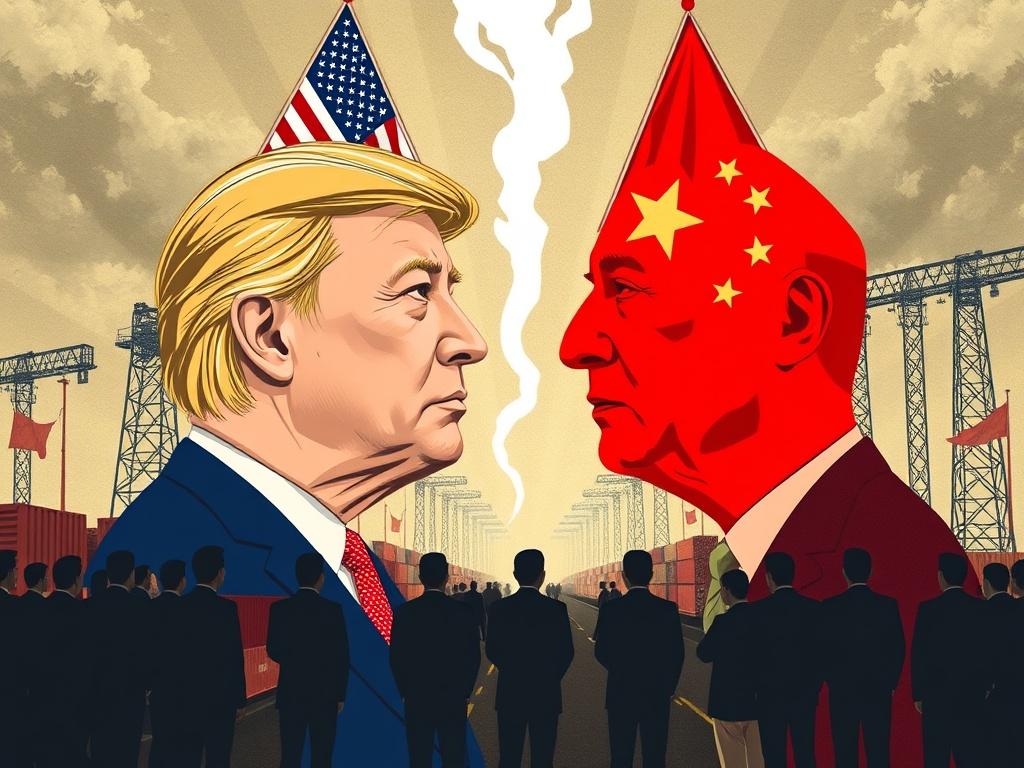
Tensions did not arise overnight. For decades U.S. policymakers complained about large bilateral deficits, forced technology transfer, state subsidies, and barriers to foreign firms operating in China. Those complaints were not new, but the political will to act decisively grew as China’s economic size and technological ambition rose.
Domestic politics in Washington amplified the impulse to do something dramatic. In 2016 and 2017, economic anxiety in key regions and manufacturing states made aggressive trade enforcement politically attractive. The Trump administration framed tariffs as a tool to extract better terms and to signal toughness.
At the same time, Chinese leaders pushed industrial policies like Made in China 2025 to move the economy up the value chain. Those policies, seen by many U.S. officials as state-directed competition, heightened fears that unfettered market access would accelerate technological transfer and erode American comparative advantages.
Tools of the contest: tariffs, controls, and investment rules
The main instruments used by both sides were familiar but applied more intensively: tariffs, export controls, investment restrictions, and regulatory measures. Tariffs were the most visible weapon, levied on a wide range of goods from solar panels to semiconductors and agricultural products.
Export controls and entity lists extended the fight into technology. The U.S. used tools like the Department of Commerce’s Entity List to restrict Chinese firms’ access to advanced chips and equipment. China responded with its own regulatory levers, creating a reciprocal mix of measures that targeted specific companies and sectors.
Investment screening tightened as well. The Committee on Foreign Investment in the United States (CFIUS) grew more assertive, blocking or imposing conditions on Chinese acquisitions of U.S. technology firms. China likewise increased scrutiny of outbound investment, especially into strategic areas.
2018: escalation and the first heavy rounds of tariffs
The confrontation accelerated in 2018. The U.S. administration announced multiple rounds of tariffs aimed at reducing the bilateral goods deficit and pressuring China on intellectual property and market access. Initial duties targeted steel and aluminum, then broadened into hundreds of billions of dollars’ worth of imports.
China retaliated with tariff lists of its own, targeting U.S. agricultural goods and industrial products. The tit-for-tat pattern was immediate and public: announcements, lists, and counter-lists that businesses and markets watched closely. Each side sought to inflict pain while signaling readiness to negotiate.
These 2018 measures also marked an important change in rhetoric and practice. U.S. officials increasingly framed trade disputes as part of a longer-term strategic competition, and Chinese commentary emphasized the need to defend sovereignty and development paths. That hardened public and legal justification for defensive measures on both sides.
2019: brinkmanship, negotiations, and the Huawei flashpoint
The year 2019 saw intense negotiations interspersed with fresh rounds of tariffs. Both sides engaged in high-level talks, and there were moments when markets expected a settlement. Yet distrust and domestic political pressures complicated any durable agreement.
Huawei emerged as a flashpoint that pushed the fight into technology and national security. The U.S. placed Huawei on the Commerce Department’s Entity List, restricting its access to U.S. components and software. That move signaled that trade disputes would no longer be confined to duties on goods.
China retaliated selectively and also took steps to build resilience. State planning encouraged domestic alternatives in semiconductors and software, which lengthened the competition from a diplomatic spat to an industrial-policy race with strategic stakes.
Phase one deal and the limits of de-escalation (January 2020)
In January 2020, the two countries signed a so-called “phase one” agreement that eased some tensions without resolving core disputes. The deal included Chinese commitments to increase purchases of U.S. goods, new intellectual property protections, and modest structural language, in exchange for tariff rollbacks on certain products.
Markets briefly cheered, but the agreement left many hard issues untouched: subsidies, state ownership, cybersecurity rules, and export controls were largely outside its scope. Observers noted the deal’s transactional nature—concrete purchase targets without deep structural reforms.
Then the Covid-19 pandemic arrived, complicating implementation. Supply-chain disruptions and global demand shocks affected both sides’ capacity to meet targets and shifted attention to health and economic stabilization. The pandemic also exposed strategic vulnerabilities that deepened interest in supply-chain diversification.
2020–2021: pandemic shocks, tariff persistence, and the technology front
Tariffs largely remained in place despite the phase one accord, and new measures continued on the technology front. The U.S. sharpened export controls, especially around advanced semiconductors and equipment used in chipmaking. This expanded the fight into the supply networks that underpin modern electronics.
China accelerated efforts to reduce reliance on foreign technology, increasing subsidies, scaling state-backed investment, and supporting domestic champions. These actions were both defensive and offensive: to close gaps and to create global competitors.
Biden’s administration, which took office in 2021, maintained many of the Trump-era measures while reframing the approach with allies. Instead of unilateral moves, Washington sought multilateral coordination on restrictions and export controls for technologies deemed critical to national security.
2021–present: strategic rivalry, coalition building, and selective decoupling
Under President Biden the tone shifted toward strategic competition framed as a battle over rules and values, yet many tactics stayed the same. The administration continued sanctions and export controls but invested more in industry policy at home—passing laws and funds to bolster chipmaking, clean energy, and critical supply chains.
Diplomatically, the U.S. tried to build coalitions with allies to coordinate on export controls and investment screening. These efforts aimed to prevent China from acquiring advanced capabilities via third countries and to build a normative front that could limit export of certain dual-use technologies.
China’s response combined defensive measures with assertive diplomacy. Beijing tightened its own export controls, leveraged its role in global manufacturing, and sought to diversify partners and markets. The result today is a managed but persistent decoupling in strategic sectors alongside continuing deep economic interdependence in others.
Who are the main actors and institutions?
Multiple agencies and actors shape the trajectory. In the U.S., the Treasury, Commerce, State, and Defense Departments, plus the Office of the U.S. Trade Representative (USTR), all play distinct roles spanning tariffs, export controls, and sanctions. Congress has also influenced policy through legislation and appropriations for industrial support.
On the Chinese side, the Ministry of Commerce (MOFCOM), the State Administration for Market Regulation, and technocratic planning bodies coordinate trade and industry policy. State-owned enterprises, central banks, and provincial governments add layers of implementation and incentive that often make China’s policy toolkit broader and more flexible.
Companies and investors are consequential actors too. Multinationals, small suppliers, and financial firms constantly adjust to new duties, licensing regimes, and supply-chain disruptions. Their decisions—where to locate factories, which suppliers to trust—help shape the de facto architecture of international trade.
Economic impact: tariffs, prices, and growth
Tariffs imposed costs on importers and consumers in both countries. Studies estimate that U.S. tariffs raised prices on affected goods, with some burden falling on American firms and households and some absorbed by foreign exporters. Chinese tariffs on U.S. agricultural products harmed American farmers in targeted states.
At the macro level, the bilateral tariffs were significant but not decisive in long-term growth trajectories. Trade diversion occurred: countries like Vietnam, Mexico, and Taiwan benefited as companies shifted sourcing to avoid tariffs. That reorientation reshaped regional production networks more than it rewrote global trade patterns.
Supply-chain resilience became a higher priority, prompting firms to diversify suppliers and add redundancy. That reconfiguration brought costs and inefficiencies in the short run but also reduced some single-country dependencies that had been exposed as vulnerabilities.
Technology decoupling: chips, software, and standards
Where the contest has been most consequential is technology. Semiconductors are the clearest example: the U.S. restricted exports of high-end chips and manufacturing equipment, while China invested aggressively in domestic chipmaking capacity and alternative suppliers. That pushed a partial bifurcation of supply chains for advanced nodes versus mature processes.
Software and cloud services became areas of scrutiny too. Concerns over data security and surveillance led both sides to consider stricter localization rules and vetting of foreign platforms. Standard-setting—about 5G, AI ethics, and data governance—has emerged as another arena where influence matters.
Standards and interoperability decisions influence which firms and technologies dominate global markets. When countries diverge on technical rules, the costs to multinational companies rise because they must design for different regimes, creating incentives to regionalize product lines and platforms.
Legal fights, the WTO, and international norms
Both the U.S. and China used rules-based forums selectively. The United States frequently criticized the World Trade Organization (WTO) as inadequate for addressing state-directed industrial policy, and it blocked appointments to the WTO Appellate Body for a time. China, meanwhile, sought to use WTO mechanisms when advantageous.
The WTO’s limitations became evident: its dispute-resolution mechanisms are slow, and its rules reflect an older era less concerned with state capitalism and modern digital trade. That mismatch left negotiations and unilateral measures as the dominant means of contestation.
Outside the WTO, both sides pursued bilateral and plurilateral arrangements, export control regimes, and standards bodies as arenas to secure advantage. The patchwork of formal and informal rules has left global governance more fragmented than before.
Who gained and who lost?
There are few clear winners in the short run. U.S. manufacturers faced higher input costs for intermediate goods subject to tariffs, while some exporters found new markets. Chinese exporters lost some market share in the U.S., but China gained by redirecting trade and deepening ties with other regions.
Third countries were mixed beneficiaries. Southeast Asian nations and Mexico attracted reshoring and nearshoring flows, while the EU and Japan navigated complex policy choices balancing access and security. Corporations that could adapt supply chains profited, while smaller firms with thin margins suffered the most.
Long-term gains are still uncertain. China’s investment in technology may reduce its vulnerabilities, but catching up on the most advanced semiconductor capabilities remains time-consuming and expensive. U.S. policy aimed at rebuilding domestic capacity could restore some advantages but will take sustained investment and time.
Real-life business impacts and anecdotes
I spent several months in 2019 talking to supply-chain managers and CEOs for a trade magazine. One small electronics firm told me it diverted a Taiwanese supplier to Mexico to avoid a tariff hit, but higher logistics and managerial costs erased most of the tariff savings. The story repeated in different forms across sectors: relocation saved tariffs but added coordination headaches.
A Midwest farmer described a different reality: soybean prices fell after Chinese retaliatory tariffs, squeezing producers who had few alternative markets at scale. Government aid helped some, but the shock showed how trade policy can have deep local political repercussions.
Meanwhile, a European carmaker I interviewed worried about dual regimes for software and telematics. Designing vehicles to operate under differing data and security rules added development costs and delayed product launches, illustrating how regulatory divergence can be as disruptive as tariffs.
The geopolitical dimension: alliances, coercion, and strategic signaling
This trade conflict is inseparable from geopolitics. Washington framed parts of the dispute as a national security imperative, using tariffs and controls to blunt perceived threats to technological leadership. Beijing framed its responses as resistance to coercion and protection of development rights.
Alliances and partnerships became more salient. The U.S. sought alignment with partners in the Indo-Pacific and Europe on export controls, while China cultivated alternatives through trade deals and infrastructure investment. The competition thus expanded into diplomatic and financial arenas.
Economic measures became forms of signaling and coercion too: sanctions can be calibrated to send messages without provoking full-blown escalation, but they also carry the risk of spiraling retaliation. That tension shaped much of the incremental, targeted approach seen since 2018.
Supply-chain strategies firms adopted
Companies pursued a range of responses: diversification, nearshoring, inventory buildup, and dual sourcing. Firms in labor-intensive industries often moved production to lower-cost sites in Southeast Asia, while technology firms sought alternative suppliers for critical components. These strategies aimed to reduce exposure to sudden policy shifts.
Other firms doubled down on China, betting on scale and market access. For many consumer-goods companies, China remained the best place to mass-produce and test products, despite political friction. The result is a heterogeneous patchwork of strategies rather than a single trend toward full decoupling.
Risk management also evolved. Procurement teams started incorporating political risk assessments into supplier selection and used contractual clauses to share tariff burdens with partners and customers. These changes increased the complexity of global sourcing but also made firms more resilient to future shocks.
Regional effects: Asia, Europe, Latin America, and Africa
Asia benefited in several ways. Vietnam, Thailand, and Malaysia captured manufacturing relocations; South Korea and Taiwan expanded in electronics and semiconductors; and ASEAN states saw increased foreign direct investment. These shifts rebalanced regional trade flows but did not eliminate China’s central role.
Europe faced an awkward balancing act. EU members resisted a wholesale realignment toward U.S. security-focused measures while also pursuing trade defense against unfair competition. European firms navigated conflicting regulatory demands and sought clarity on supply-chain rules.
Latin America and Africa saw mixed outcomes. Some exporters benefited from Chinese demand or new investments, while others lost markets due to shifting tariffs or slower global growth. For many countries, the key challenge remained attracting stable investment amid higher geopolitical competition.
Monetary and financial spillovers
Financial markets reacted to tariff escalations with volatility, but central banks cushioned much of the macroeconomic fallout. Both the Federal Reserve and the People’s Bank of China adjusted policy stances as growth concerns rose, although monetary tools could not offset structural shifts in trade relationships.
Exchange rates absorbed part of the adjustment. China allowed more flexibility in the yuan at times to manage external pressures, while firms used currency hedging to combat tariff-backed cost fluctuations. Financial linkages thus provided buffers but did not eliminate the real effects of trade measures.
Capital flows also reflected strategic concerns. Investment screening and increased scrutiny of outbound and inbound capital altered the pattern of cross-border deals, particularly in technology and infrastructure sectors deemed strategically important.
Domestic politics and the electoral calculus
Trade policy shaped domestic politics in both countries. In the U.S., tariffs were wielded as a tool to appeal to voters in manufacturing regions, though the benefits to those constituencies were uneven. In China, leadership portrayed resistance to foreign pressure as a matter of sovereignty and national dignity, consolidating domestic support for defensive measures.
These domestic imperatives made concessions politically costly. Leaders on both sides needed to show results without appearing to capitulate, which constrained negotiating room and helped explain the persistence of tariffs and unilateral measures.
Elections and public sentiment will continue to affect how policymakers approach the dispute, making predictability difficult and reinforcing the need for businesses to build flexibility into their plans.
Policy alternatives and tools for managing competition
Policymakers have several avenues beyond tariffs. Multilateral rulemaking that addresses state-owned enterprises, subsidies, and digital trade could reduce unilateralism. Strengthening the WTO or crafting new plurilateral agreements on technology governance would help set clearer expectations.
At the domestic level, investing in R&D, workforce training, and infrastructure can reduce vulnerabilities while improving competitiveness. Subsidies and industrial policy are controversial but increasingly common as governments seek to secure critical capabilities at home.
Coordination among like-minded allies on export controls and standards can increase leverage, but it requires careful diplomacy to avoid forcing countries into binary choices that could deepen fragmentation. Smart coordination focuses on shared norms while leaving space for legitimate development pathways.
Scenario planning: where might this go next?
One plausible scenario is managed competition: selective decoupling in strategic sectors like semiconductors and AI, accompanied by continued economic ties in less sensitive areas. That scenario preserves global trade flows while insulating critical technologies.
A more adversarial path would deepen decoupling and see more aggressive restrictions, leading to higher costs for consumers and firms and accelerating regional blocs centered on rival standards. This would increase geopolitical friction and hamper global economic efficiency.
Alternatively, a negotiated détente—unlikely without structural concessions—could reduce tariffs and align some rules on investment and IP, but it would require both sides to accept uncomfortable compromises on industrial policy and market access.
What businesses should watch and do now
Firms should map their exposure to tariffs, export controls, and regulatory divergence and move beyond single-country dependency for critical inputs. Scenario planning that includes geopolitical shocks is now standard risk management rather than an extraordinary measure.
Engaging with policymakers, industry groups, and multilateral forums helps firms anticipate regulatory changes and contribute practical perspectives to policy debates. In-house legal and compliance teams must be strengthened to track entity lists, licensing requirements, and sanctions in real time.
Finally, investment in supplier relationships, dual sourcing, and modular product design reduces disruption costs and increases agility when rules change. Those steps require resources but pay off in a world where policy shocks are a recurring risk.
Measuring success: what would a “win” look like?
Success depends on perspective. For the U.S., a win might mean stronger domestic supply chains, protected critical technologies, and fairer market access for American firms. For China, success entails preserving development space, sustaining growth, and building indigenous capabilities.
From a global perspective, success would minimize economic disruption while setting rules that curb coercive industrial practices and protect open markets. Achieving that balance is difficult because structural competition and normative disagreements will persist for some time.
Ultimately, a pragmatic mix of competition management, targeted cooperation on global problems, and clearer rules would reduce uncertainty and make outcomes more predictable for businesses and citizens alike.
Key dates and measures: a compact timeline
Below is a concise table summarizing major events and measures from 2018 onward. It is not exhaustive but highlights turning points that shaped the trajectory of the dispute.
| Date | Event | Notable measures |
|---|---|---|
| 2018 (early) | U.S. tariffs on steel and aluminum; initial Section 301 actions | Broad duties; investigations into IP practices |
| 2018 (mid–late) | Tariff rounds expand on both sides | Hundreds of billions in goods targeted |
| 2019 | Huawei added to U.S. Entity List | Export controls; supply-chain restrictions |
| Jan 2020 | Phase one agreement | Chinese purchase commitments; partial tariff rollbacks |
| 2020–2021 | Pandemic and continued technology restrictions | Enhanced export controls; investment screening |
| 2021–present | Strategic competition with allied coordination | Targeted export controls; domestic industrial subsidies |
Final reflections on an unfinished contest
The trade dispute that crystallized in 2018 has matured into a broader strategic contest that mixes economics, technology, and national security. Tariffs were the spark, but the flames spread into supply chains, standards, and statecraft. That diffusion makes any simple resolution unlikely.
For ordinary people and businesses the key takeaway is practical: expect ongoing uncertainty and design strategies that balance efficiency with resilience. Governments will continue to use trade and industrial policy as levers of power, and firms will be judged by how well they adapt.
The story is still unfolding. Negotiations, technological advances, and political shifts will reshape the landscape in coming years. For anyone trying to understand global economics today, following this contest is essential—because how it ends will affect not only U.S.–China relations, but the rules and rhythms of the global economy for years to come.