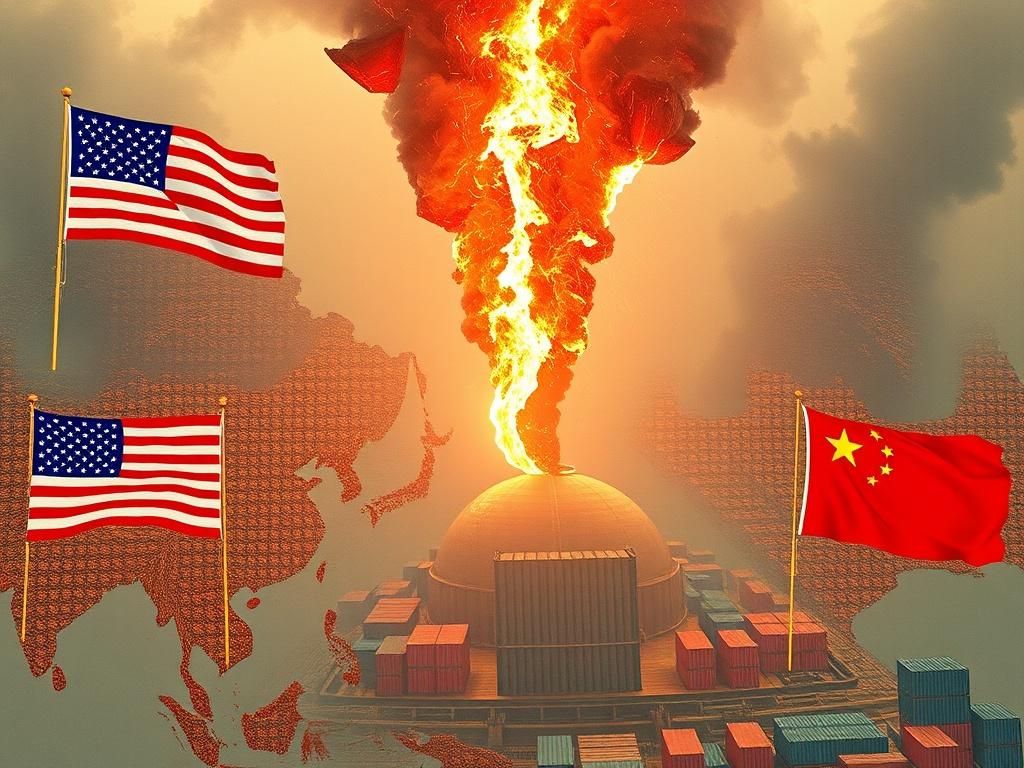
The prospect of a full-scale economic clash between the United States and China sounds like a script for geopolitical thrillers, but it is also a real policy path with predictable shocks. In the paragraphs that follow I trace how a dispute can escalate beyond tariffs into restrictions on technology, investment, finance, and supply chains, and what the ripple effects would mean for businesses, governments, and everyday consumers.
To be clear: the sentence that follows frames the piece, not a forecast—What a full-scale trade war between US and China would look like is a mosaic of policy moves, countermoves, and unintended consequences built from observed precedents and economic logic. I draw on real episodes—2018–2019 tariffs, export controls on advanced semiconductors, and China’s past retaliatory measures—as touchstones to sketch plausible futures.
- How a bilateral trade dispute turns into a full-scale confrontation
- Immediate economic shocks: what households and markets would first feel
- Export controls and the technology front
- Investment controls, national security reviews, and corporate strategy
- Supply chain disruption and the rise of reconfiguration
- Financial measures, currency pressure, and reserve dynamics
- Commodity markets and secondary global shocks
- Sector-by-sector impacts: winners and losers
- Illustrative sector impact table
- Rules-based institutions, litigation, and legal warfare
- Allies, third parties, and the global order
- Human dimension: jobs, wages, and social fallout
- Business playbook: immediate actions for resilience
- Policy options for de-escalation and risk management
- What a prolonged fragmentation of technology ecosystems would cost
- Case studies and precedent: lessons from recent years
- Strategic choices for smaller countries caught in the middle
- Thinking ahead: scenarios and probabilities
- Personal perspective from covering trade and policy
- How long would a full-scale trade war last?
- Practical tips for readers worried about personal finances
- Final thoughts on structure, strategy, and endurance
How a bilateral trade dispute turns into a full-scale confrontation
Most trade frictions begin with tariffs and targeted sanctions, then move into broader measures if political objectives are not met. A full-scale confrontation typically follows a laddered escalation: tariffs widen, export controls on strategic technologies tighten, investment screenings intensify, and financial countermeasures appear.
The laddered escalation matters because each rung changes the toolkit. Tariffs primarily raise prices and divert trade; export controls freeze access to critical inputs; investment bans sever ownership links; financial sanctions and restrictions curtail flows of capital and liquidity. Combined, these tools go beyond commerce to touch national security and technological sovereignty.
Political signaling accelerates the process. Domestic pressure groups, supply-chain lobbying, and nationalist narratives push governments to act decisively. Once each side frames the dispute as a systemic rivalry rather than a narrow trade complaint, rollback becomes harder and the conflict deepens into sustained policy competition.
Immediate economic shocks: what households and markets would first feel
The first visible effects would be higher prices on consumer goods and raw materials. Tariffs on imports raise costs for retailers and manufacturers, and many companies pass at least part of that increase to consumers, so inflation spikes in key categories—electronics, appliances, clothing, and some foodstuffs.
Financial markets would respond swiftly. Equities tied to global trade and manufacturing would drop on heightened uncertainty, bond yields could climb if investors expect higher inflation, and volatility would surge across currencies and commodities. Central banks face a difficult trade-off between fighting inflation and supporting growth.
Trade-sensitive industries would see immediate pain: semiconductors, machinery, and autos would experience disruptions as inputs become more expensive or harder to obtain. Smaller firms with thin margins and limited supplier options are often the first casualties; they lack the scale to absorb cost increases or to reconfigure sourcing quickly.
Export controls and the technology front
One defining feature of an intense US–China confrontation is the use of export controls on advanced technology. The U.S. has already restricted sales of certain chips and equipment, and a full-scale war would expand these controls to more classes of semiconductors, design software, lithography tools, and related intellectual property.
China’s responses could include its own controls on technologies that use American components, tighter restrictions on data flows, and accelerated investment in domestic substitutes. The net effect would be faster bifurcation of technology ecosystems, higher R&D duplication, and slower global innovation as firms develop parallel standards and supply bases.
For companies in the middle—suppliers of components, testing services, and design tools—the practical hit is fragmentation. They would face compliance costs, licensing complexities, and the strategic dilemma of choosing which market to prioritize when global standards diverge.
Investment controls, national security reviews, and corporate strategy
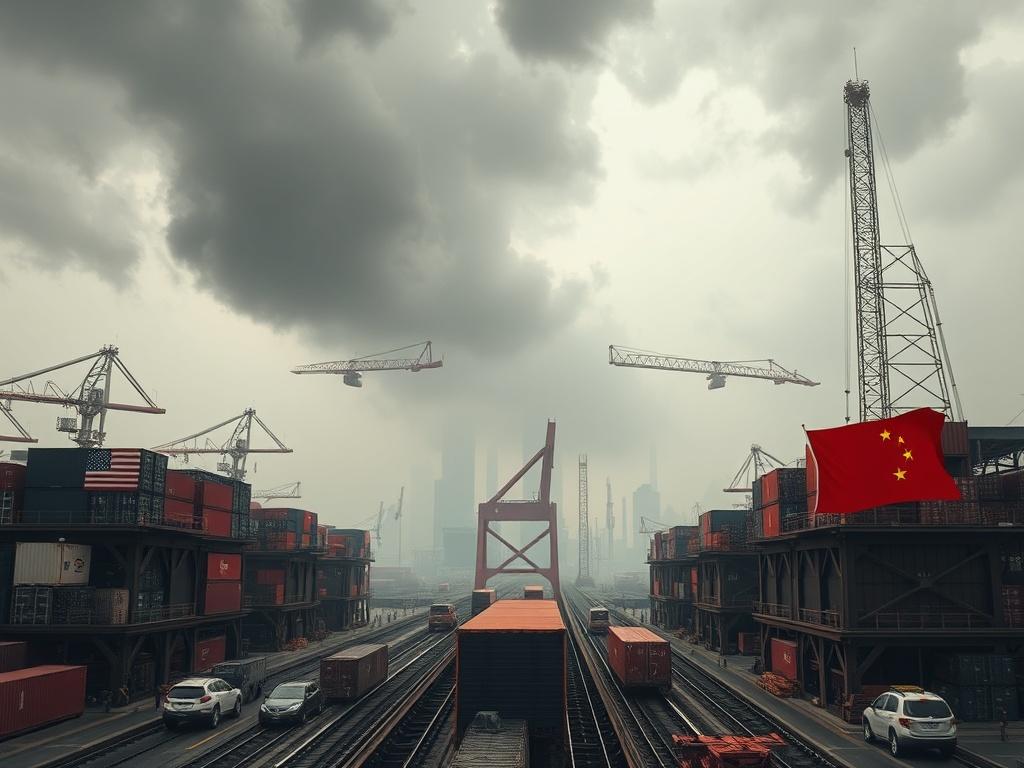
During a deep dispute, both governments expand the scope of foreign investment reviews. The U.S. may strengthen CFIUS-style screens for Chinese investors, while China could tighten approvals and impose joint-venture requirements. The result is a shrinkage in cross-border mergers, acquisitions, and greenfield foreign direct investment.
Multinationals would reassess long-term strategies. Firms might slow outbound acquisitions in sectors deemed strategic, redirect capital to safer jurisdictions, and favor partnerships with allies. Private equity and venture capital flows, particularly into technology and infrastructure, could cool as regulatory uncertainty makes valuations riskier.
For entrepreneurs and managers, this environment changes risk-return calculations. Scaling internationally becomes more expensive and politically risky, and firms that thrive on global integration must now build resilience and contingency options into their capital plans.
Supply chain disruption and the rise of reconfiguration
Supply chains are the connective tissue of modern manufacturing, and they are inherently fragile under sanctions and tariffs. In a full-scale confrontation, companies would accelerate reshoring, nearshoring, and diversification to countries like Vietnam, Mexico, India, and Southeast Asia to reduce dependency on Chinese inputs.
Rewiring supply chains takes time and money: new vendor qualification, logistics retooling, and potential productivity losses during the transition. The short-term cost of moving supply chains can outweigh tariff impacts, which is why many companies delay—but a full-scale war shortens decision windows and forces quicker, costlier moves.
Sectoral differences matter. Low-value, labor-intensive goods are easier to re-source than capital-intensive industries like semiconductor fabrication or advanced machinery, where the concentration of specialized equipment and skilled labor is harder to replicate quickly.
Financial measures, currency pressure, and reserve dynamics
Beyond trade barriers, financial instruments become central. The U.S. could restrict Chinese access to dollar clearing, impose limits on purchases of U.S. Treasuries, or target Chinese banks with sanctions. China could retaliate by selling U.S. assets, tightening capital controls, or reducing dollar holdings held as reserves.
Massive sell-offs of U.S. Treasuries are often discussed as leverage, but they come with mutual harm: rising U.S. yields make borrowing costlier globally and would erode the value of China’s remaining holdings. More likely is a calibrated use of financial tools, with both sides mindful of self-inflicted damage.
Currency dynamics would be volatile. China could allow the renminbi to depreciate to cushion export competitiveness, but depreciation risks capital flight and higher import costs. The U.S. dollar typically strengthens in crises, which can pressure emerging markets through tighter global financial conditions.
Commodity markets and secondary global shocks
A full-scale trade war affects commodity prices broadly. Tariffs on industrial inputs increase demand for alternatives and shift trade flows, while sanctions on critical minerals or energy supplies can send prices spiking. Industries dependent on oil, metals, and rare earths would feel amplified cost pressures.
China’s dominance in rare-earth processing is a strategic vulnerability for global manufacturing, especially in electronics, defense, and green technologies. Even threats to restrict supplies would prompt scramble for alternative sources, stockpiling, and investment in recycling and substitution.
Secondary shocks reach countries that are neither party to the dispute nor immediate suppliers. Export-dependent emerging markets that supply intermediate goods could see demand collapse, and global growth would slow as trade volumes shrink and investment stalls.
Sector-by-sector impacts: winners and losers
Not all industries suffer equally. Some sectors might benefit from reshoring or government stimulus targeted at domestic capabilities. Defense, cybersecurity, and domestic manufacturing often see increased public spending in a rivalry-driven environment.
Technology and electronics face complex outcomes: companies supplying cloud, security, or domestic infrastructure might gain market share, while those relying on cross-border collaboration for cutting-edge chips could be hamstrung. Agriculture is another battleground; U.S. farm exports have historically been used as leverage and would suffer if China imposes long-term restrictions.
To illustrate, the auto industry experiences higher input costs and shutdowns for assembly lines when parts are delayed, but localizing production in non-Chinese markets can create new clusters and employment in selected countries, shifting the geography of automotive manufacturing.
Illustrative sector impact table
| Sector | Short-term impact | Medium-term adaptation |
|---|---|---|
| Semiconductors | Export controls, supply shortages, price volatility | Investment in fabs outside China, duplicated supply chains |
| Autos | Parts delays, cost increases | Regionalizing production, alternative suppliers |
| Agriculture | Market losses for exporters subject to tariffs | Seeking new markets, government subsidies |
| Rare earths | Supply concentration risk | Mining investments, recycling, substitution R&D |
Rules-based institutions, litigation, and legal warfare
The World Trade Organization (WTO) and similar institutions exist to adjudicate disputes, but their capacity is limited when actions are framed as national security. Both sides can pursue WTO cases, yet many security-driven measures fall outside the ambit of multilateral remedy.
Expect parallel legal strategies: companies and states file WTO complaints, domestic courts hear challenges to sanctions, and arbitral tribunals become venues for investors seeking compensation. Legal battles are costly and slow, and they rarely deter immediate policy moves driven by geopolitics.
The erosion of shared norms damages predictability. When disputes migrate from tariff lines to licensing and national security lists, business planning becomes riskier because laws and enforcement can change rapidly with little international recourse.
Allies, third parties, and the global order
An all-out trade war divides the international community. Allies of each side face awkward choices: align economically with one power or attempt neutrality while protecting national commercial interests. Supply chains are global mosaics, and many countries prefer not to be forced into binary choices.
Some middle powers would seize market share. Vietnam, India, Mexico, and parts of Southeast Asia could attract investment redirected from China, while European companies might try to mediate or cushion the fallout. But no country escapes the macro consequences of lower global growth and financial volatility.
International institutions could be stressed as well. Development aid priorities shift, trade finance becomes more expensive, and countries reliant on open trade face slower growth. Political contagion is possible if economic pain fuels populism and protectionism elsewhere.
Human dimension: jobs, wages, and social fallout
Trade wars are not just numbers on a balance sheet; they reshape labor markets. Industries contracting due to lost exports or rising input costs will lay off workers, while sectors favored by government stimulus may expand. The transition is rarely smooth and often localizes pain in specific regions.
Wage dynamics change too. Inflation reduces real incomes for households with fixed earnings, and the protective effects of domestic industry policies take time to generate jobs. Political pressure can rise in communities facing prolonged unemployment, influencing elections and domestic policy choices.
For families, the immediate impacts are practical: higher grocery bills, more expensive electronics, and uncertainty about retirement savings as markets wobble. These are the everyday consequences that move public opinion and constrain policymakers.
Business playbook: immediate actions for resilience
Companies that survive and even thrive under intense geopolitical rivalry share common traits: diversified supply chains, clear compliance functions, and adaptive product strategies. Here are practical steps that firms can take immediately to reduce exposure and buy time.
- Map the supply chain thoroughly, including second- and third-tier suppliers, to identify critical chokepoints.
- Build dual sourcing arrangements for key components and consider strategic stockpiles where viable.
- Invest in compliance and licensing expertise to navigate export controls and investment screenings.
- Hedge currency and commodity risks proactively rather than reactively.
- Prioritize flexibility in manufacturing agreements—modular production lines are easier to reassign.
These steps are costly, and many firms will weigh them against the probability of escalation. Still, firms that waited to act during prior crises—like the supply shocks after the 2011 earthquake in Japan or the 2020 pandemic disruptions—often paid a higher price than those that had contingency plans.
Policy options for de-escalation and risk management
Policymakers who want to avoid prolonged damage have several levers. Confidence-building measures—limited and verifiable commitments not to target civilian supply chains, for example—can create space for negotiation. Back-channel diplomacy and targeted carve-outs for humanitarian goods can keep essential flows open.
Domestic policy responses also matter. Fiscal buffers for affected regions, retraining programs for displaced workers, and temporary subsidies for critical industries can soften the transition and reduce political pressure for permanent escalation. Sound macroeconomic policy helps maintain price stability and financial calm.
On the international front, multilateral frameworks for technology governance, export control dialogues, and investment treaties updated for modern data and security concerns can provide institutional paths for dispute resolution before matters harden into systemic rivalry.
What a prolonged fragmentation of technology ecosystems would cost
Economic fragmentation—two largely separate tech ecosystems—raises costs on innovation and adoption. Companies operating in both ecosystems must duplicate R&D, support distinct standards, and produce region-specific variants. Consumers pay through slower product cycles and higher prices.
Security implications are mixed. While each bloc may claim increased control over critical systems, duplicated ecosystems can create interoperability problems and blind spots. Fragmentation also increases the likelihood of accidental vulnerabilities as security patches diverge and coordination falters.
In aggregate, global productivity suffers. The decades-long gains from integrated research and supply-sharing diminish as collaboration on foundational technologies—AI, semiconductors, renewable energy—frays, slowing progress on issues with shared global benefits like climate mitigation.
Case studies and precedent: lessons from recent years
We can draw lessons from recent real-world episodes. The 2018–2019 tariff rounds between the U.S. and China increased costs for U.S. manufacturers and farmers and slowed investment, while export controls on Huawei and other Chinese tech entities in 2019–2020 demonstrated how quickly supply chains and global corporate strategies can change.
Those episodes showed that companies could pivot—to a point—by shifting sourcing and adjusting product lines, but also that some capabilities, especially in semiconductors and advanced manufacturing, are not easily relocated. Governments responded by boosting subsidies and incentives for domestic production, a trend likely to accelerate in a larger confrontation.
These precedents highlight two features: a) policymakers deploy a mix of trade, technology, and finance tools, and b) the private sector responds with resilience measures that can blunt immediate pain but at a long-term cost in efficiency and innovation.
Strategic choices for smaller countries caught in the middle
Not every nation has the luxury of a binary choice. Many countries will attempt balancing acts: deepening trade with both powers while hedging politically. That requires nuanced diplomacy and clear economic strategies to avoid being coerced into unwanted alignments.
Smaller economies can benefit by offering investment alternatives and improving business climates to capture redirected manufacturing, but they also must guard against becoming transit points for restricted technologies or suffering secondary sanctions. Legal clarity and transparency are strong assets in such an environment.
Successful middle powers will be those that anchor themselves in regional trade networks, negotiate strategic partnerships with multiple markets, and build domestic capabilities in critical sectors where feasible.
Thinking ahead: scenarios and probabilities
Predicting the exact path is impossible, but scenario planning can prepare stakeholders. A high-risk scenario features broad tariffs, intensive export controls, and targeted financial restrictions with significant global recession risk. A lower-risk scenario confines measures to specific sectors and preserves some trade links through carve-outs and multilateral mitigation.
Probability assessments depend on domestic politics, leadership incentives, and crisis dynamics. Elections, military incidents, or technological breakthroughs can easily shift the balance toward escalation or détente. Businesses and governments should plan for the severe-but-plausible rather than the merely likely.
Scenario planning also clarifies actions: what happens if semiconductors are cut off for 12 months? Or if tariffs on electronics jump to 25 percent across the board? Two-way contingency plans—policies that assume both escalation and negotiation—are far more effective than single-path strategies.
Personal perspective from covering trade and policy
Having followed trade policy for years, I have seen how quickly rhetoric hardens into policy when national identity and economic competitiveness are at stake. Businesses that treated political risk as peripheral often found themselves scrambling during the first round of tariffs, and those with supplier maps and scenario playbooks adjusted more smoothly.
My conversations with supply-chain managers reveal a pragmatic truth: resilience is not a single action but a portfolio of choices—stockpiles, alternate suppliers, insurance, and contractual agility. The firms that invest in this portfolio early find that the cost of preparedness often pales compared with the cost of disruption.
Policymakers, too, must balance assertiveness with restraint. Tools like export controls and investment screens are powerful, but overuse corrodes the trust that underpins long-term cooperation on transnational challenges such as climate change and pandemic preparedness.
How long would a full-scale trade war last?
Duration depends on political will and economic pain thresholds. Short, sharp trade skirmishes can be resolved in months through negotiation and retaliation offset. Full-scale wars—where both sides see the confrontation as systemic—can last years, with intermittent truce windows, and a slow, arduous return to normal when it happens.
Economic scarring is a risk in prolonged episodes: lost investment, structurally higher prices, and entrenched domestic subsidies create lock-in effects. Political memories harden, making return to pre-conflict openness more difficult as constituencies benefit from protectionist policies.
Recovery requires not just tariff rollbacks but trust-building measures, updated legal frameworks, and often third-party mediation. The longer a rift persists, the more institutionalized its defensive measures become—raising the bar for reconciliation.
Practical tips for readers worried about personal finances
Households can take several sensible steps to buffer against the fallout of trade-driven inflation and market volatility. Diversifying savings, maintaining emergency funds, and avoiding speculative equity bets tied to trade-sensitive sectors are prudent starting points.
On consumption, consider the lifecycle of big purchases: delaying nonessential expensive electronics during periods of high tariff-induced price inflation can save money. For job security, upskilling in digital, logistics, or renewable-energy-related fields can increase mobility if your industry is exposed to cross-border shocks.
Finally, stay informed but avoid overreacting to daily headlines. Markets are noisy; practical financial housekeeping and measured adjustments are more useful than panic-driven decisions.
Final thoughts on structure, strategy, and endurance
A full-scale trade confrontation between the United States and China would be messy, costly, and slow to unwind. The immediate economic hits—higher prices, supply-chain bottlenecks, and financial market volatility—are straightforward. The harder story is the long-term fragmentation of technology, the reallocation of investment, and the political realignment of trade relationships.
Businesses and governments that plan for multiple scenarios, invest in resilience, and keep channels for diplomacy open will fare better. The clearest safeguard against a prolonged rupture is not military might or tariffs alone, but a layer of institutional mechanisms and mutual interests that make cooperation rewarding even amid rivalry.
History shows that economic ties are durable but fragile; they can be repaired only with effort, mutual accommodation, and time. The stakes of maintaining those ties are not merely commercial—they shape innovation, employment, and the global capacity to tackle shared challenges.