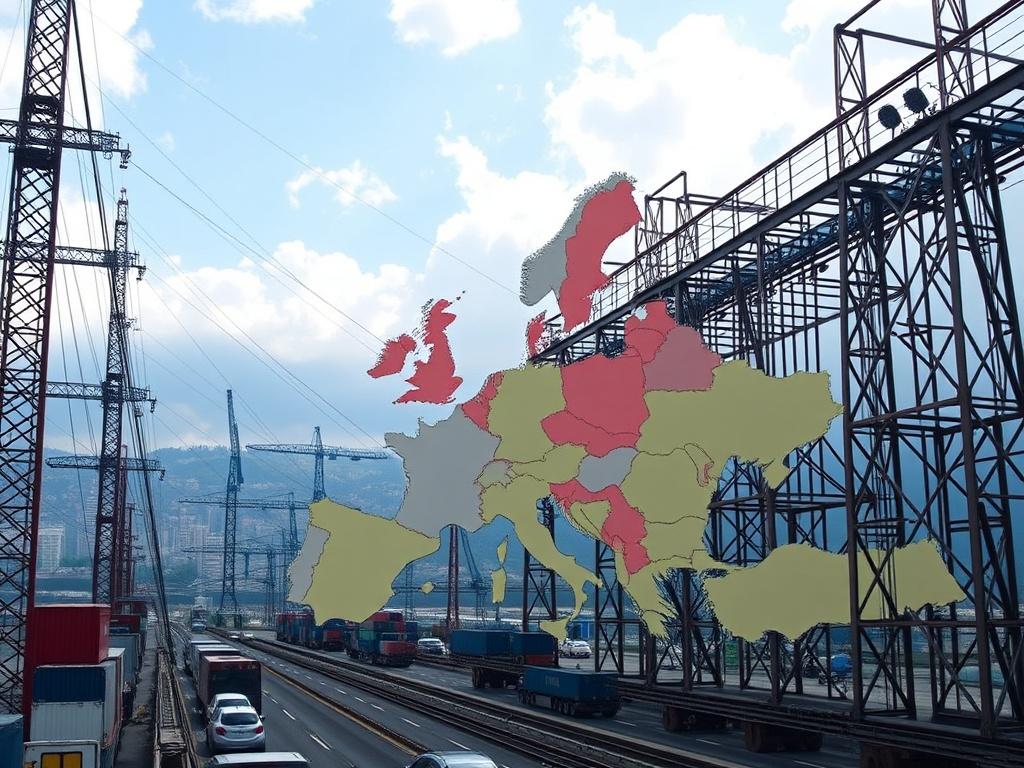
The rise of regional trade blocs and internal tariff elimination has reshaped global commerce over the last half-century, knitting neighbouring economies into denser webs of trade, investment, and regulation.
This article traces how and why countries create trade blocs, explains the mechanics of internal tariff removal, examines economic and political consequences, and surveys the paths forward as supply chains and digital trade rewrite the rules.
- A short history of regional economic integration
- From preference to deep integration
- Types of trade blocs and what internal tariff elimination means
- Why the distinctions matter
- Why countries form regional trade blocs
- Common drivers
- Mechanics of internal tariff elimination
- Phasing and sensitive products
- Rules of origin: the gatekeepers
- Customs cooperation and single windows
- Trade creation and trade diversion: the core economic logic
- Empirical patterns
- Winners and losers: distributional and political effects
- Industry and labor impacts
- Regional and urban-rural divides
- Beyond tariffs: tackling non-tariff barriers and regulatory barriers
- Services, investment, and digital trade
- Enforcement, dispute settlement, and governance
- Institutional capacity matters
- Case study: the European Union—an unusually deep experiment
- Case study: ASEAN—gradualism and diversity
- Case study: USMCA and North America’s pragmatic integration
- Case study: AfCFTA—ambition meets implementation challenges
- How firms adapt: supply chains, rules of origin, and sourcing strategies
- Challenges: complexity, overlapping memberships, and the spaghetti bowl
- Political backlash and the limits of tariff liberalization
- Integration and development: opportunities and pitfalls for poorer members
- Capacity building and technical assistance
- Relations with third parties and external trade policy
- Technology, nearshoring, and the changing drivers of regionalization
- Designing better agreements: practical policy recommendations
- For governments
- For firms
- For multilateral institutions
- What the future likely holds
A short history of regional economic integration
Regional integration is not new: local customs unions and preferential agreements date back centuries, but the modern era began after World War II when reconstruction and political stability pushed European countries toward cooperation.
The European Coal and Steel Community and later the European Economic Community provided a model: systematic tariff elimination among members combined with supranational institutions to coordinate policy.
From the 1960s through the 1990s, many regions experimented with similar arrangements—Mercosur in South America, ASEAN in Southeast Asia, and the North American Free Trade Agreement are prominent examples.
From preference to deep integration
Early agreements often focused narrowly on tariff cuts for goods, using schedules that phased reductions over years to protect sensitive industries.
Over time, blocs moved beyond tariffs into regulatory alignment, services liberalization, investment protection, and competition rules—essentially aiming to lower frictions that tariffs alone cannot address.
That shift reflected changes in trade itself: as global value chains spread, non-tariff barriers and rules of origin became more decisive than headline tariff rates.
Types of trade blocs and what internal tariff elimination means
Not all trade blocs are the same. They span a spectrum from loose preferential agreements to full economic unions with common policies and institutions.
Understanding that spectrum helps explain how internal tariff elimination works in practice and what additional commitments members must accept.
| Type of bloc | Internal tariff policy | Typical additional features |
|---|---|---|
| Preferential trade agreement (PTA) | Partial reductions for listed products | Limited scope; many exclusions; minimal institutional enforcement |
| Free trade area (FTA) | Elimination of tariffs among members on agreed products | Rules of origin; members keep independent external tariffs |
| Customs union | Internal tariff elimination plus a common external tariff | Some common trade policy coordination |
| Common market | Tariff-free trade in goods | Free movement of factors (labor, capital); regulatory harmonization |
| Economic union | Tariff removal plus deep policy integration | Fiscal coordination, monetary policy alignment, supranational institutions |
Why the distinctions matter
Removing internal tariffs is necessary but not sufficient for integration; differing external tariffs or lax rules of origin can blunt the intended benefits.
For firms, the difference between an FTA and a customs union affects supply chain design, paperwork, and the predictability of trade costs.
For governments, deeper integration requires ceding policy space and building institutions to manage conflicts and enforce rules.
Why countries form regional trade blocs
Countries form blocs for a mix of economic, political, and strategic reasons rather than a single straightforward motive.
Some aim to expand markets and achieve scale, others want to bind reformers to an institutional path or to hedge geopolitically by deepening ties with neighbors.
Common drivers
- Market access and economies of scale
- Political stability and security cooperation
- Attracting investment through larger integrated markets
- External bargaining leverage in global negotiations
- Harmonizing standards to reduce non-tariff barriers
These drivers often combine. A small economy may seek an FTA primarily to gain access to a large neighbor’s market, while a regional power may pursue deeper integration to project influence and coordinate industrial policy.
Political considerations can be as strong as economic logic; states sometimes tolerate short-term costs to lock in long-term alliances and domestic reforms.
Mechanics of internal tariff elimination
Dropping tariffs inside a bloc seems simple on paper, but the implementation requires careful technical work, legal drafting, and administrative capacity.
Phasing schedules, tariff harmonization, rules of origin, customs procedures, and dispute settlement systems all shape the real-world payoff.
Phasing and sensitive products
Most agreements phase tariff cuts over time to give firms and workers transition periods. Sensitive sectors—agriculture, automobiles, textiles—often receive longer timetables or exclusions.
Negotiators trade off speed of liberalization against political feasibility. Faster cuts yield quicker gains but can provoke domestic resistance from protected industries.
Rules of origin: the gatekeepers
Rules of origin determine whether a good qualifies for tariff-free treatment by showing sufficient local production or value addition within the bloc.
Stringent rules prevent transshipment—where goods from third countries get a tariff-free pass via members—but they also add compliance costs and can fragment supply chains.
Complex rules of origin can lead to firms redesigning production to meet thresholds, which can be costly but sometimes spurs deeper regional production networks.
Customs cooperation and single windows
Removing tariffs doesn’t remove the need for customs processes; it changes what those processes verify. Effective blocs invest in shared customs data, single-window systems, and mutual recognition of testing and certification.
That infrastructure reduces delays and corruption risks, making tariff elimination meaningful, not just theoretical.
Trade creation and trade diversion: the core economic logic
Economists distinguish between trade creation—where lower tariffs lead to more efficient cross-border trade—and trade diversion, where imports switch from global low-cost producers to higher-cost member suppliers because of preferences.
The net welfare effect depends on the balance between these two forces and on efficiency gains from scale, specialization, and integration of value chains.
Empirical patterns
Research shows that many successful trade blocs generate significant trade creation, especially when members are already complementary or geographically proximate.
But diversion is real, particularly in blocs where common external tariffs are high or where rules make sourcing from third countries cumbersome.
Developing countries joining blocs sometimes experience short-term disruption as protected industries shrink, even when aggregate gains emerge over time.
Winners and losers: distributional and political effects
Eliminating internal tariffs produces winners—exporters, consumers, and downstream producers—and losers—protected firms, certain workers, and regions tied to declining industries.
Understanding who gains and who loses is crucial for designing adjustment policies and for the political durability of integration.
Industry and labor impacts
Export-oriented manufacturers typically gain through lower input costs and larger markets. Consumers benefit from lower prices and greater product variety.
Conversely, import-competing manufacturers and associated workers can face layoffs and plant closures, particularly in industries where scale and capital intensity make rapid adjustment difficult.
Successful blocs often pair liberalization with retraining programs, social safety nets, and transitional assistance to smooth these shocks.
Regional and urban-rural divides
Integration tends to favor urban and coastal regions connected to transport networks. Interior or rural areas with weak logistics infrastructure can be left behind.
Policymakers who ignore these spatial disparities risk political backlash and fragmentation of support for the bloc.
Beyond tariffs: tackling non-tariff barriers and regulatory barriers
As tariffs fall, non-tariff barriers (NTBs) such as differing standards, licensing requirements, and sanitary measures become more binding.
Deep integration thus turns on regulatory cooperation—mutual recognition agreements, harmonized standards, or joint regulatory bodies.
Services, investment, and digital trade
Modern agreements increasingly cover services and investment because services and intangibles are central to contemporary value chains.
Digitally enabled trade—data flows, cross-border provision of IT and financial services—requires rules on data localization, privacy, and cybersecurity, which are hard to negotiate but decisive for future competitiveness.
Firms in online services, logistics, and finance press governments to include these topics to make integration meaningful for 21st-century commerce.
Enforcement, dispute settlement, and governance
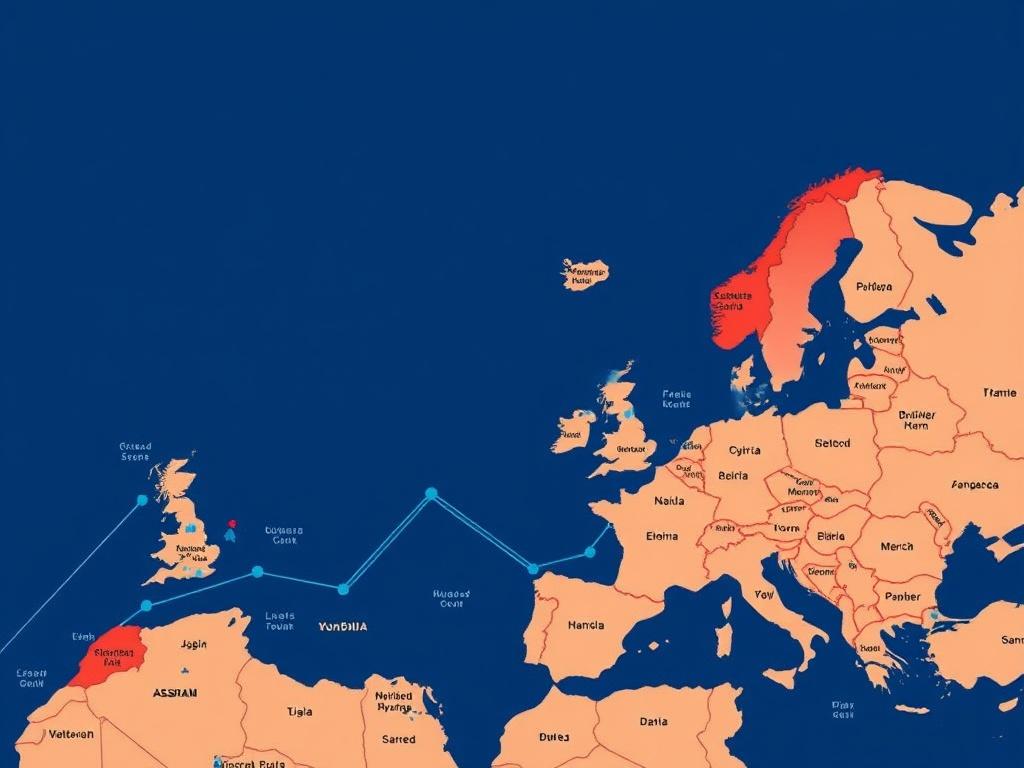
Tariff schedules are only credible if there are mechanisms to enforce commitments and resolve disputes. Strong blocs build independent dispute settlement systems to arbitrate claims.
The European Court of Justice and the WTO’s dispute settlement body are high-end examples; many regional agreements use arbitration panels with limited jurisdiction.
Sanctions, fines, and reputational costs all play roles in ensuring members comply, but weaker states may struggle to enforce rules against stronger partners.
Institutional capacity matters
Effective enforcement depends on legal expertise, administrative capacity, and political will. Building these institutions takes time and resources often underestimated at the start of negotiations.
Successful blocs invest early in technical assistance, training, and capacity-building to ensure that customs, regulatory agencies, and courts can operationalize agreements.
Case study: the European Union—an unusually deep experiment
The European Union stands apart for the depth of its integration: tariff-free movement of goods, a customs union, a single market for services, and partial political union in some fields.
The EU’s internal tariff elimination was the first major modern example where trade policy became a shared competence, requiring a transfer of sovereignty to supranational institutions.
That transfer allowed standardized regulations, mutual recognition, and a powerful dispute settlement and enforcement apparatus that reduced non-tariff frictions over time.
But the EU’s experience also shows the political strain of deep integration: fiscal transfers, migration, and regulatory centralization stir persistent debates about sovereignty and democratic accountability.
Case study: ASEAN—gradualism and diversity
ASEAN has pursued a deliberately gradual and flexible approach, prioritizing consensus and non-interference among its diverse members.
Internal tariff elimination under the ASEAN Free Trade Area came with many product exclusions and long transition periods reflecting differing development levels.
The bloc has focused heavily on connectivity, mutual recognition, and later on services and investment, allowing member states to integrate at different speeds.
Case study: USMCA and North America’s pragmatic integration
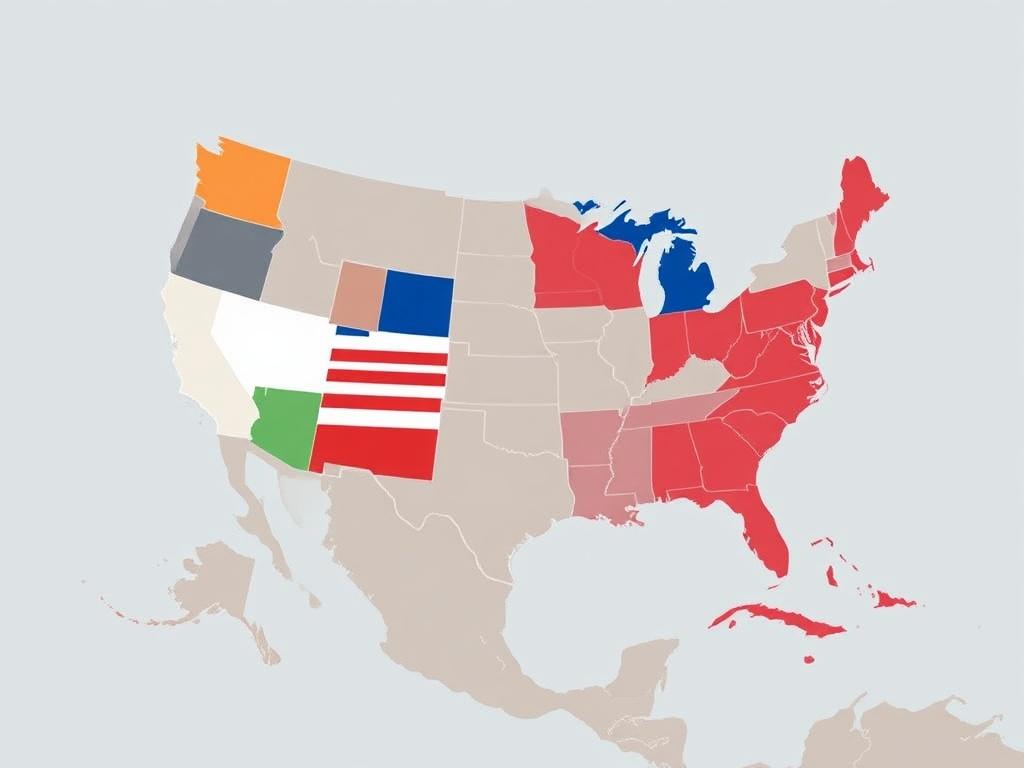
The United States, Mexico, and Canada have built a dense regional market anchored by investment flows and integrated manufacturing chains, particularly in automobiles and agriculture.
USMCA updated NAFTA to tighten rules of origin, introduce digital trade rules, and add labor and environmental commitments—illustrating the shift toward deeper, conditional integration.
Practical customs cooperation and common standards in key sectors made tariff elimination meaningful for firms operating across borders.
Case study: AfCFTA—ambition meets implementation challenges
The African Continental Free Trade Area aims to create the world’s largest single market in terms of members, with tariff elimination on many goods and commitments on services.
Implementation faces familiar hurdles: infrastructure gaps, differing regulatory regimes, capacity constraints, and rules of origin that many member countries must still operationalize.
Yet AfCFTA’s potential to reorient trade flows from extra-regional partners to intra-African suppliers—if effectively realized—could be transformative for industrialization and diversification.
How firms adapt: supply chains, rules of origin, and sourcing strategies
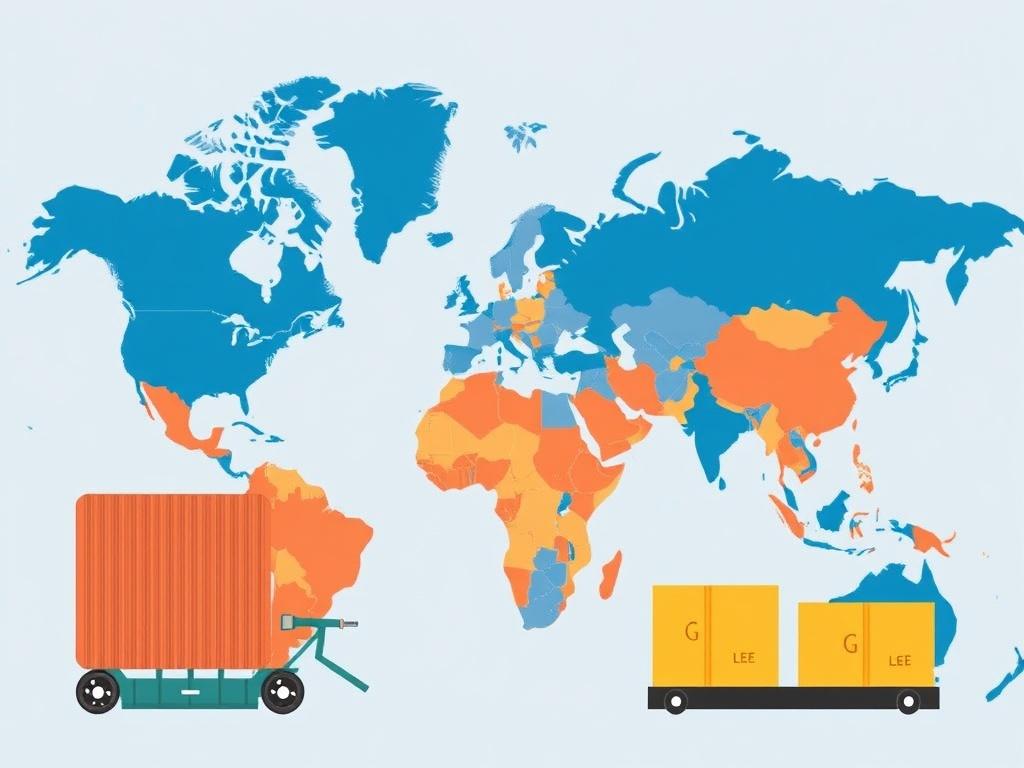
Firms reassess sourcing, production location, and logistics when internal tariffs are removed. That can mean consolidating production in lower-cost member countries or preserving plants for strategic reasons.
Rules of origin are a key constraint: complying with origin criteria can require firms to shift inputs or restructure processing steps to meet value-added thresholds.
In my work advising exporters, I’ve seen medium-sized manufacturers redesign bills of materials and renegotiate supplier contracts to retain preferential access—moves that require legal advice, new contracts, and investment in traceability systems.
Challenges: complexity, overlapping memberships, and the spaghetti bowl
Many countries belong to multiple overlapping agreements, each with different rules of origin, standards, and tariff schedules, creating a regulatory spaghetti bowl.
Firms sometimes face a compliance maze: choosing which agreement to use, maintaining separate production lines, or tracking cumulative origin across a chain of suppliers.
Harmonization or mutual recognition across agreements can mitigate these costs, but political and economic interests often slow such coordination.
Political backlash and the limits of tariff liberalization
Removal of internal tariffs can provoke nationalist and protectionist responses, especially where reforms are seen to threaten jobs or sovereignty.
Political leaders sometimes exploit these anxieties, arguing for renegotiation or opt-outs, which can erode trust and reverse integration gains.
Transparent compensation, transition assistance, and inclusive policy dialogues are essential to maintain public support for integration projects.
Integration and development: opportunities and pitfalls for poorer members
Regional integration can help developing countries by giving access to larger markets, attracting foreign direct investment, and enabling participation in regional value chains.
However, without adequate infrastructure, regulatory capacity, or active industrial policy, poorer members risk becoming low-value suppliers rather than moving up the value chain.
Targeted policies—investment in roads, ports, digital networks, and workforce skills—are required to convert tariff elimination into sustainable growth and jobs.
Capacity building and technical assistance
Donors, regional institutions, and richer members frequently provide technical assistance to help weaker states implement complex rules and modernize customs procedures.
These programs can accelerate benefits, but they must be tailored to local needs and include measurable benchmarks to be effective.
Relations with third parties and external trade policy
Blocs must decide how to interact with non-member countries and multilateral bodies. A customs union with a common external tariff speaks with one voice, while an FTA leaves members free to pursue separate third-party deals.
Mega-regionals and bilateral FTAs can complicate matters, as members juggle commitments and seek compatible standards across different partners.
Many blocs use external agreements strategically—to lock in market access for key industries or to project influence in global governance.
Technology, nearshoring, and the changing drivers of regionalization
Recent shifts—reshoring, nearshoring, and concern over supply-chain resilience—are renewing interest in regional blocs as instruments to shorten and secure supply links.
Digital platforms, automated logistics, and improved customs digitization make it easier to coordinate cross-border production, potentially increasing the payoff from tariff elimination.
Environmental goals also push policy: regional standards on carbon intensity or green goods can reshape comparative advantage within blocs.
Designing better agreements: practical policy recommendations
Well-designed blocs combine ambition with realism. They phase commitments, protect development space, and pair liberalization with investment in institutions and infrastructure.
Key elements include clear, simple rules of origin; strong customs cooperation; enforceable dispute settlement; and mechanisms for redistribution or adjustment support for losers.
For governments
- Prioritize complementary reforms: transport, digital customs, and standards alignment.
- Design transition assistance for affected workers and regions.
- Ensure transparent negotiations with stakeholder consultations to build durability.
For firms
- Map value chains against origin criteria and plan supplier adjustments early.
- Invest in compliance systems and digital traceability where rules demand proof of origin or standards.
- Use regional preferences strategically while maintaining optionality with global suppliers.
For multilateral institutions
- Support capacity-building for weaker members to implement agreements effectively.
- Encourage interoperability of standards and mutual recognition to reduce overlapping compliance burdens.
- Facilitate dialogue between regional blocs to prevent protectionist fragmentation.
What the future likely holds
Regional trade blocs will continue to proliferate but evolve in character. Expect more agreements that blend tariff elimination with deep rules on services, data, sustainability, and labor standards.
Geopolitical rivalry could push countries toward rival regional architectures, while business incentives for efficient supply chains will nudge firms toward practical integration solutions.
The most successful blocs will be those that reduce both visible and invisible trade costs, invest in connectivity, and provide credible mechanisms to manage distributional consequences.
The removal of internal tariffs is a powerful tool, but it is only a first step. The real challenge—and opportunity—lies in building the institutions, regulations, and physical networks that let integrated markets deliver growth, resilience, and inclusive gains across regions.