The clash that began over silver, tea, and contraband shaped the modern world in ways that still register in boardrooms, ports, and politics. What looks like a dispute about goods quickly became a collision between two systems: imperial Britain’s global commerce networks and the Qing dynasty’s imperial order. Behind the cannons and the treaties were tariffs, addiction, and a diplomacy that treated commerce as the instrument of state power.
- Tea, silver, and the roots of imbalance
- The opium solution: supply chains and complicity
- How opium reached China
- The Canton System and tariff politics
- Tariffs as leverage
- Lin Zexu, moral politics, and the build-up to war
- First Opium War: naval power and unequal outcomes
- What the Treaty of Nanking changed
- Key treaties and milestones
- The Second Opium War and the deepening of unequal treaties
- Legal changes and extraterritoriality
- Economic and social consequences in China
- The fiscal angle: indemnities and revenue loss
- Imperialism, ideology, and the rhetoric of free trade
- Global capitalism and a new pattern of integration
- Voices from the time: chroniclers and critics
- Memory, museums, and the personal perspective
- Cultural and political reverberations
- Regional consequences: Hong Kong and the treaty-port cities
- How ports changed local governance
- Reform, resistance, and the path to modernization
- The wider drug trade: ethics, enforcement, and modern parallels
- Long-term geopolitical effects
- Historiography and reinterpretation
- What the story tells us about power and commerce
- Final reflections: a contested legacy
Tea, silver, and the roots of imbalance
By the late eighteenth century, tea had become indispensable in British society. Cups of black tea were a daily ritual across classes, and demand ballooned with every passing decade.
China had the product Britain wanted but little interest in what Britain could offer in return. The resulting trade imbalance drained British silver into Canton and other ports, creating a persistent deficit that merchants and officials found increasingly intolerable.
Traditional explanations sometimes oversimplify the situation as mere consumer appetite. The reality combined taste, status, and imperial finance: tea anchored a market that required constant flows of bullion and commodities, and when those flows were disrupted, political pressure followed.
The opium solution: supply chains and complicity
British merchants found an answer in opium produced in Bengal under the supervision of the British East India Company. The Company regulated cultivation and export in India and sold opium to private traders who then smuggled it into China.
Smuggling networks expanded because Chinese authorities banned opium and taxed other imports heavily, making contraband both profitable and socially corrosive. Companies such as Jardine, Matheson & Co. took advantage of that calculus, funneling a product that reversed the silver drain.
Opium shipments, however, were not merely entrepreneurial maneuvers; they were embedded in imperial policy. Revenues from Indian opium bolstered the East India Company’s finances and, by extension, British fiscal health, blurring lines between private profit and state interest.
How opium reached China
Opium traveled from poppy fields to auction houses in Calcutta and then on clippers bound for Canton. The journey was long and risky, but the profit margins were enormous, and maritime trade routes were already secure under British naval protection.
Smugglers exploited both high seas and local markets. They hid opium in legitimate cargoes, bribed local officials, and used syndicates that crossed national boundaries, which made suppression difficult without a major political commitment from Beijing.
These networks created a dependency that was economic, social, and political. For some Chinese consumers, opium became a habit; for local elites, it became a source of corruption and revenue; for foreign traders, it was a simple financial instrument that fixed an otherwise intractable trade imbalance.
The Canton System and tariff politics
China managed foreign commerce through the Canton System, which confined most trade to the southern port of Guangzhou and placed foreign merchants under strict Chinese oversight. This concentrated interaction in a place where customs, duties, and regulations clashed daily.
Under the Canton arrangement, tariffs were a matter of imperial prerogative, and the Qing court maintained a tight control over where and how foreign goods entered. Western merchants found those controls restrictive and sought to expand access and reduce tariffs.
At the same time, British political rhetoric increasingly framed free trade as both morally and economically superior, even while British practices in India and other colonies relied on monopolies and state-supported cultivation that benefited from tariffs elsewhere.
Tariffs as leverage
Tariffs were more than revenue tools; they were instruments of sovereignty. By setting tariffs and controlling ports, the Qing asserted authority over trade and foreign interactions.
When Britain demanded lower tariffs or open ports, it was not just a commercial complaint—it was a challenge to imperial control. The insistence on tariff reductions would become a recurring theme in the subsequent treaties and the gradual erosion of China’s fiscal autonomy.
That loss of tariff autonomy translated into long-term effects: Chinese customs revenues, once under imperial direction, came increasingly under foreign-influenced regimes and international norms that favored external commercial interests.
Lin Zexu, moral politics, and the build-up to war
In 1839 the Qing court appointed Lin Zexu as imperial commissioner and charged him with stamping out the opium trade in Canton. Lin moved decisively, arresting merchants, seizing warehouses, and famously ordering the destruction of thousands of chests of opium.
Lin’s actions were morally driven and legally grounded within Qing law, but they simultaneously rattled British merchants whose livelihoods—and large investments—were now at stake. The destruction of British property became the spark that imperial policymakers used to justify naval reprisals.
Lin’s famous letter to Queen Victoria, generally known from later accounts, illustrates the diplomatic gap: Qing officials saw opium as an addiction and social threat, whereas many British actors saw its suppression as an affront to commercial rights protected by their government.
First Opium War: naval power and unequal outcomes
The war of 1839–1842 pitted the East India Company-backed mercantile interests and the Royal Navy against a Qing military unprepared for modern naval warfare. British gunboats and steamers had tactical advantages that quickly became strategic ones.
Engagements along the Pearl River and at ports such as Ningbo and Xiamen exposed the technological and logistical gaps between the belligerents. Britain’s objective was to force concessions that would secure trade rights and compensate for losses.
When the Qing sued for peace, the resulting Treaty of Nanking in 1842 imposed terms that crystallized the new order: indemnities, ceding of Hong Kong Island, and the opening of additional treaty ports to foreign merchants.
What the Treaty of Nanking changed
For the first time in modern Chinese history, territorial cession to a foreign power became formalized on a large scale. Hong Kong’s cession provided Britain with a strategic entrepôt and a base for expanding commercial operations in East Asia.
The treaty also included fixed indemnities and the opening of ports such as Shanghai and Ningbo. These concessions undermined Qing control, created enclaves of foreign commercial privilege, and began the pattern of extraterritoriality where foreigners were judged under their own laws.
Importantly, the treaty did not include comprehensive tariff autonomy. Subsequent negotiations and treaties further eroded China’s ability to regulate trade on its own terms, turning tariff policy into a contested space between domestic sovereignty and foreign pressure.
Key treaties and milestones
The period between the two Opium Wars features a string of agreements, incidents, and diplomatic escalations that widened the imperial footprint. Treaties and conventions rewritten Chinese foreign relations.
Below is a concise listing of major treaties and their immediate effects. This table highlights the legal milestones that remade trade and sovereignty.
| Treaty | Date | Primary effects |
|---|---|---|
| Treaty of Nanking | 1842 | Cession of Hong Kong, five treaty ports opened, indemnities paid |
| Treaties of the Arrow and Tientsin | 1856–1858 | Expanded diplomatic access, legalized opium trade, more ports opened |
| Convention of Peking | 1860 | Territorial adjustments, further privileges for foreign powers, ratified earlier treaties |
The Second Opium War and the deepening of unequal treaties
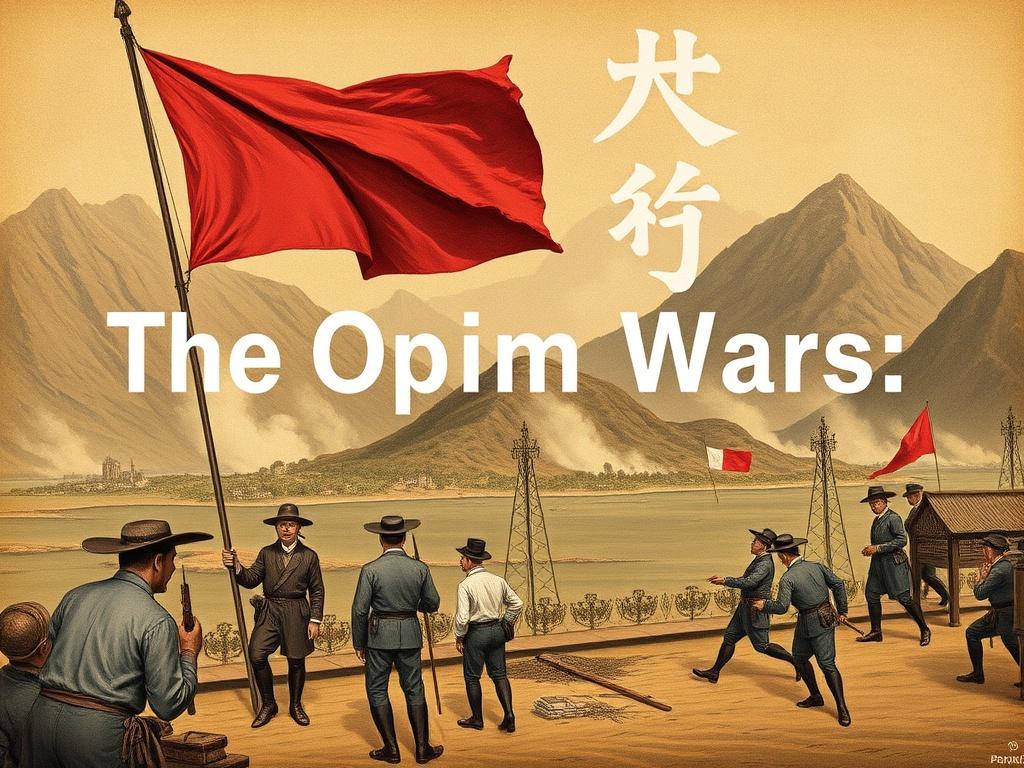
The second conflict (1856–1860) escalated after incidents such as the Arrow affair and expanded into a broader campaign by Britain and France to force more far-reaching concessions. Military campaigns reached Beijing itself, and the scope of intervention broadened to include diplomatic, legal, and cultural impositions.
The Anglo-French forces’ sack of the Old Summer Palace in 1860 remains one of the most vivid symbols of humiliation for the Qing court. The destruction was both punitive and demonstrative, a message intended to show the cost of resisting imperial demands.
Afterwards, treaties such as the Treaty of Tientsin and the Convention of Peking legalized many of the previously clandestine aspects of commerce, including the opium trade, and increased the number of treaty ports and consular privileges across China.
Legal changes and extraterritoriality
By forcing open China’s legal system to foreign courts and consuls, the treaties established extraterritorial rights that insulated foreigners from Chinese law. This turned commercial disputes into matters handled under European legal frameworks rather than by Qing magistrates.
These legal changes undermined imperial jurisdiction and fostered enclaves of foreign influence that could set tariffs, control customs, and shape local economies. The results were a patchwork of authority in which Qing sovereignty was frequently bypassed.
For ordinary Chinese, these legal and territorial ruptures meant that local governance became more complex and often less responsive to popular needs. In the long term, reformers and revolutionaries would point to these impositions as evidence that Qing institutions needed radical change.
Economic and social consequences in China
The opium trade and the wars that defended it had profound social effects. Addiction spread across urban and rural communities, affecting labor productivity and family finances in ways that were difficult to quantify but easy to perceive locally.
Economically, the forced opening of ports and the imposition of indemnities placed new strains on the Qing treasury. The state had to find revenues in a shrinking fiscal space, sometimes resorting to higher internal taxes that stoked discontent.
The overall result was a weakened state confronted with growing internal unrest. Movements such as the Taiping Rebellion overlapped chronologically and spatially with the wars, and while not directly caused by opium, they found a weakened state less able to respond effectively.
The fiscal angle: indemnities and revenue loss
Indemnities demanded by Britain and other powers were substantial and often required borrowing or reallocating existing resources. Funds that might have gone to infrastructure or local governance instead serviced foreign debt and reparations.
Moreover, foreign control over customs and port duties reduced Qing ability to set tariffs independently. Revenue that had once been an instrument of statecraft became entangled with foreign priorities, which altered incentives for economic policy.
As a result, the Qing state was drawn into a cycle where foreign-imposed economic arrangements constrained domestic policy choices, strengthening the case among reformers that modernization required sovereign control over trade and finance.
Imperialism, ideology, and the rhetoric of free trade
Britain presented its actions as the triumph of free trade and enlightened commerce. That rhetoric masked a selective application of liberal principles: Britain championed open markets in China while maintaining monopolistic and coercive practices closer to home in India and elsewhere.
Imperial expansion in the nineteenth century relied on a mix of military force, legal pressure, and economic leverage. The Opium Wars exemplified how commerce became a weapon of statecraft, with moral arguments deployed to sanitize coercion.
This contradiction—between free trade ideals and imperial practice—would shape debates about globalization for generations. The wars made clear that economic liberalism, without checks on power, could be molded into a tool for domination rather than mutual prosperity.
Global capitalism and a new pattern of integration
China’s forced insertion into world markets created new commercial linkages: steam shipping, treaty ports, and integrated finance opened the country to global flows on terms set largely by Western powers. These structures facilitated the spread of goods and capital but also deepened dependency.
For Britain and other Western states, China became a stage for demonstrating naval power and securing commercial access across Asia. For China, the cost was high: autonomy in trade and law diminished even as markets expanded.
The Opium Wars thus illustrate a core dynamic of nineteenth-century capitalism: integration and penetration often preceded equitable terms of exchange, leaving structural imbalances that fueled later resistance and reform movements.
Voices from the time: chroniclers and critics
Contemporary observers on both sides produced a mixture of moral outrage, justification, and pragmatic calculation. Western commentators often emphasized the civilizing mission or commercial necessity, while Chinese officials and literati documented destruction and humiliation.
Literary and diplomatic records reveal contested understandings of justice and sovereignty. Lin Zexu’s memorials, for example, are read as moral indictments, while British government documents frame military action as the defense of free commerce and national honor.
These competing narratives hardened into historical memory. For China, the period became a symbol of lost sovereignty; for Britain and other powers, it was often written as part of a successful expansion of global influence that secured national interests.
Memory, museums, and the personal perspective
I remember visiting the Humen Opium War Museum on a humid afternoon and walking through rooms filled with charts, weapons, and documents. Seeing models of clippers and reproductions of confiscated opium chests made the trade feel tangible in a way that statistics never did.
The museum emphasized national resistance and Lin Zexu’s moral leadership, while also presenting the scale of the foreign naval campaigns. Artifacts such as cannonballs and treaty copies brought the diplomatic texts off the page and into the realm of lived consequence.
Reading plaques in both English and Chinese, the lesson was clear: memory is contested, and how a society remembers a conflict shapes its future claims. Visiting museums taught me that history’s physical trace—objects, maps, and architecture—carries emotional weight that continues to inform politics.
Cultural and political reverberations
Beyond treaties and trade, the Opium Wars reshaped Chinese intellectual life. They catalyzed debates about reform, modernization, and the adoption of Western technologies and institutions.
Some elites argued for selective borrowing—importing industry and military organization while preserving Confucian values. Others called for deeper transformation. These debates would inform late-Qing reforms and the revolutionary movements that followed.
The wars also altered popular perceptions of foreign powers. The image of Western might and duplicity became embedded in cultural memory and political rhetoric, a legacy that influenced Chinese nationalism well into the twentieth century.
Regional consequences: Hong Kong and the treaty-port cities
Hong Kong’s transformation from a fishing island to a global port illustrates the asymmetric outcomes of the conflicts. What began as a military acquisition turned into a hub of international commerce and, later, a contested political space.
Treaty ports like Shanghai developed hybrid legal and economic systems that attracted foreign capital and migrants, creating cosmopolitan enclaves alongside Chinese neighborhoods. These cities became laboratories of modernity and, simultaneously, visible signs of imperial intrusion.
The co-existence of foreign-run concessions and Chinese districts created economic dynamism but also social fragmentation. Urban life in treaty-port cities reflected both the opportunities and the inequalities produced by the new international order.
How ports changed local governance
Foreign control over customs and extraterritorial rights meant that local officials could no longer unilaterally manage trade policy. Instead, international consulates and merchant councils influenced tariffs and port administration.
This shift reduced the fiscal autonomy of provincial governments and redirected revenue streams. Local elites had to navigate a more complicated political economy where foreign actors had direct influence over commercial regulations.
In many ways, the ports became early nodes of globalization: international law, modern banking, and cross-border commerce were all visible in the docks and warehouses, even as Chinese authority was recast.
Reform, resistance, and the path to modernization
The humiliation and disruption of the Opium Wars accelerated Chinese efforts to modernize the military and industry. Reformers pushed for new arsenals, modern schools, and diplomatic missions to learn foreign methods and technologies.
Yet reform was uneven and often half-measured, constrained by conservatism within the Qing court and competing priorities across the empire. The result was a patchwork of modernization that did not fully resolve the structural weaknesses exposed by foreign pressure.
Nevertheless, this period planted seeds of change: new institutions, translations of Western science, and the reconfiguration of government administration that would later feed into Republican-era reforms and the modernization drives of the twentieth century.
The wider drug trade: ethics, enforcement, and modern parallels
The opium trade of the nineteenth century offers lessons about the relationship between demand, supply, and state complicity. Prohibition on one side and commercial interest on the other create incentives for smuggling and corruption that are familiar to students of modern narcotics markets.
History shows that legal regimes alone are insufficient when powerful economic actors can leverage state support. The British example—a state enabling and protecting a trade it publicly disavowed—remains a cautionary tale about double standards in drug policy.
Modern parallels are complicated, but the dynamics persist: prohibition, strong demand, and international trafficking create cycles of violence and diplomacy that modern states continue to struggle with.
Long-term geopolitical effects
The Opium Wars marked a turning point in global geopolitics. They demonstrated the effectiveness of naval power in coercing trade concessions and set a pattern of unequal treaties globally that other imperial powers would emulate.
These events accelerated Western penetration of not just China, but of the broader Asian economy. Ports, telegraph lines, and steam routes knitted regions into networks controlled largely by European powers and later by the United States and Japan.
For China, the wars were the opening chapter in a century of external pressure that reshaped its territorial integrity, political development, and self-understanding—consequences that influenced the formation of the modern Chinese state.
Historiography and reinterpretation
Historians have debated the Opium Wars from moral, economic, and political angles. Early British accounts often celebrated the expansion of commerce, while Chinese scholarship emphasized sovereignty and national humiliation.
Recent work tends to complicate both narratives, showing how local actors, merchants, and provincial officials all had agency and how global economic structures constrained choices. The wars are best understood not as a single cause effect but as a set of interconnected processes.
Understanding these complexities helps explain why the wars resonate today: they are a prism through which to view questions about trade, power, and the ethics of international relations.
What the story tells us about power and commerce
The Opium Wars demonstrate that commercial interests can drive state policy and that economic instruments—tariffs, trade routes, subsidies—are often as decisive as armies. Control over trade became a means of projecting power across oceans.
At the same time, these conflicts show the limits of military coercion in producing stable, mutually beneficial arrangements. The treaties secured access but generated resentment and instability that required further adaptations and, eventually, reform.
That dual lesson matters for contemporary debates about globalization: opening markets without equitable governance, legal reciprocity, and sensitivity to local institutions produces short-term gains and long-term fractures.
Final reflections: a contested legacy
The Opium Wars changed the map, the law, and the everyday lives of millions. They are a story of commerce turned coercive, of tariffs and tea intertwined with addiction and empire, and of how global integration can be enforced rather than negotiated.
Visiting the sites, reading the treaties, and following the human stories remind us that policy choices ripple across generations. The unequal bargains struck in the nineteenth century left legacies of resentment, reform, and renewed assertion of sovereignty.
As we examine trade disputes, sanctions, or debates about drug policy today, the lessons of that era remain relevant: power shapes markets, and markets can reshape power. The history endures not as a closed chapter but as an ongoing conversation about how nations trade, hurt, and ultimately learn from one another.