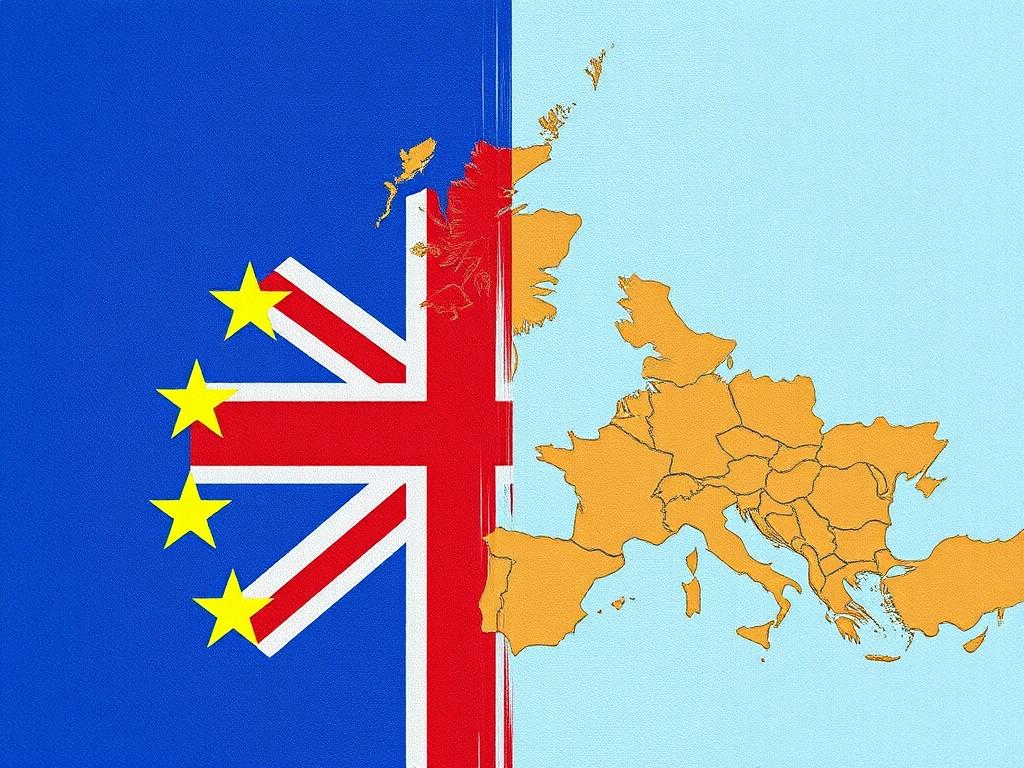
The moment Britain left the European Union’s customs union and single market, trade changed in ways that were not always visible. It wasn’t simply a matter of a headline tariff being slapped on British cheese or German cars. Instead, a web of legal changes, new paperwork, rules of origin, and legal alignments produced fresh tariff risks and practical charges that reshaped commerce on both sides of the Channel.
- Breaking the customs union: the legal shift that mattered
- The trade deal: conditional tariff-free trade and its consequences
- Tariffs in practice: when charges actually kick in
- Rules of origin: the hidden tariff-creating mechanism
- Different tariff schedules: UK Global Tariff vs. EU common external tariff
- When tariffs hit hardest: agriculture, processed food, and textiles
- The Northern Ireland Protocol: a special case for tariffs and checks
- Non-tariff barriers: paperwork, checks, and their price tag
- Practical examples: how tariffs and rules played out on the ground
- Trade diversion and rerouting: how tariffs change supply chain geography
- Administrative responses: customs agents, software, and paperwork training
- Tariff suspension and temporary measures: easing the shock
- How small businesses were disproportionately affected
- Compliance traps: certificates, origin myths, and common mistakes
- How businesses adapted their pricing and contracts
- Financial and cash-flow consequences of new tariff exposures
- Regulatory divergence: a long-run source of tariff-like effects
- How the EU handled tariff application and enforcement
- Public policy trade-offs: protection, revenue, and competitiveness
- Case study table: before and after at a glance
- Tariff avoidance strategies and their limits
- International trade law backstop: the WTO schedules
- Longer-term shifts: reconfiguration of supply chains and regionalization
- Advice for businesses navigating tariff exposure
- Government support and training: narrowing the information gap
- Financial planning and risk management under new tariff rules
- What changes could alter the tariff landscape again?
- Lessons for policymakers and businesses
- Parting thoughts on a changed trade landscape
Breaking the customs union: the legal shift that mattered
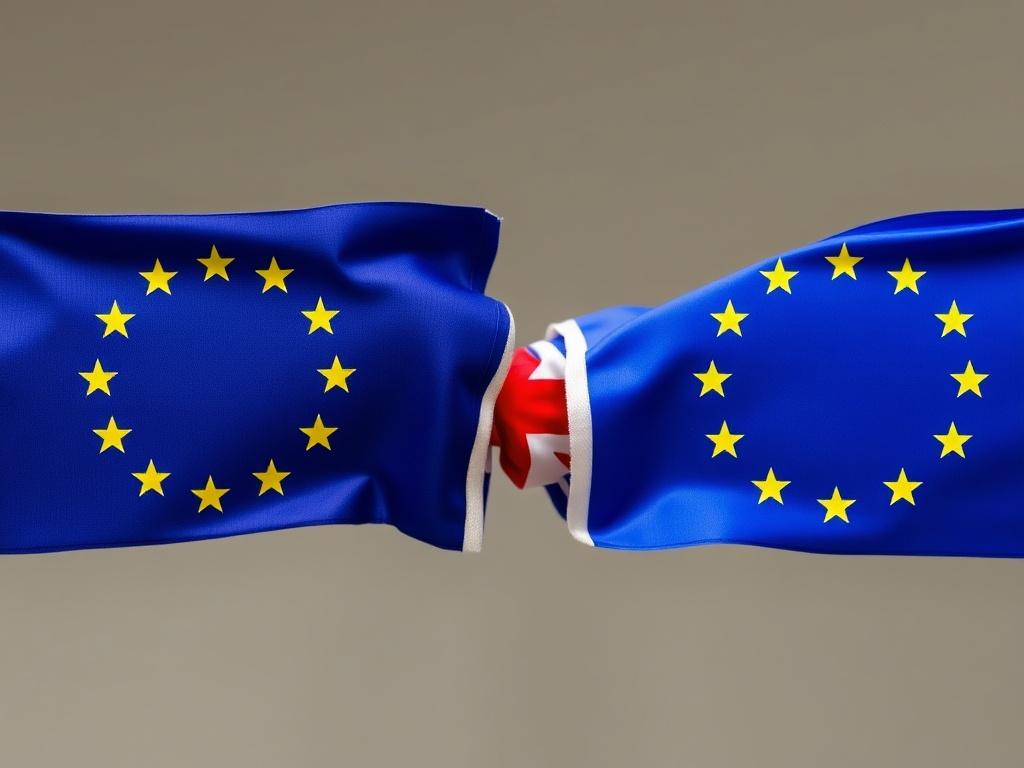
For decades the UK participated in the EU’s customs union and shared a common external tariff, which meant goods moved freely across internal borders without customs duties or routine tariffs. When the UK left the EU legal structures at the end of the transition period, regulation that had made intra-EU trade frictionless ceased to apply between the UK and EU.
That legal separation did not automatically mean tariffs would be imposed on every shipment, but it removed the blanket assumption of tariff-free trade. Instead, the right to tariff-free access became conditional, hinging on new agreements and on whether goods qualified as originating in the UK or EU.
The trade deal: conditional tariff-free trade and its consequences
The Trade and Cooperation Agreement (TCA), signed at the end of 2020, was a deliberate medicine—designed to avoid tariffs and quotas for most goods, but only if strict conditions were met. The headline was attractive: zero tariffs and zero quotas for goods that meet the agreement’s rules of origin and other requirements. That headline concealed a complex mechanism that would create tariffs in everyday commerce when conditions were not satisfied.
Practically, the TCA converted a universal internal-market arrangement into a conditional preferential one. Where before a product crossing from France to the UK was simply European commerce, it now required proof that the product had sufficient EU or UK content to benefit from the zero-tariff promise. Missing that proof meant a tariff could apply; paying and proving that duty might become an administrative maze.
Tariffs in practice: when charges actually kick in
Tariffs began to appear not so much as a new tax on everything but as a penalty for goods that did not meet preference rules or failed the paperwork test. If a shipment lacked the required proof of origin, or if it contained components made outside the preferential area, normal external tariffs could be charged at importation.
Importers also confronted tariff risk in transactions that looked benign. For example, if a British company incorporated parts made in a third country with no cumulation arrangement, that final product might no longer qualify for tariff-free entry into the EU. The same was true in the opposite direction for EU exporters selling into the UK.
Rules of origin: the hidden tariff-creating mechanism
Rules of origin (RoO) are technical criteria for deciding where a product “comes from” for trade purposes. The TCA’s RoO require a sufficient proportion of a product’s value to originate in the UK or EU, or for components to be substantially transformed under specified processes. This is not a trivial arithmetic exercise; it forces firms to map complex supply chains.
Where previously origin didn’t matter within the single market, exporters now had to trace suppliers, document inputs, and certify compliance. Those tracing and certification costs are themselves a form of tariff-like friction: time, customs agents’ fees, and delays all add to the landed cost and can act as a practical barrier resembling a tax.
Different tariff schedules: UK Global Tariff vs. EU common external tariff
With sovereignty over its trade policy restored, the UK replaced the EU’s common external tariff with the UK Global Tariff (UKGT). That meant the UK now sets its own tariff rates on third-country imports, potentially lower or higher than the EU’s rates depending on the product and policy aims. Divergent tariff schedules can create new economic incentives and new tariff liabilities along supply chains.
For example, a firm importing a component from outside both the UK and EU could face differing duties depending on where it first enters. If parts route via the UK and then move to the EU without satisfying origin rules, the final EU import could incur EU duties; conversely, rerouting via the EU could expose goods to the UK’s tariffs, causing complex routing arbitrage decisions.
When tariffs hit hardest: agriculture, processed food, and textiles
Certain sectors are particularly sensitive to tariff reintroduction because they face high external duties or require highly integrated cross-border supply chains. Agriculture and processed food are the most obvious examples: many agricultural commodities attract significant tariffs under both EU and UK external schedules, and sanitary and phytosanitary measures add another layer of checks and costs.
Textiles and clothing are another sector that felt the impact. Apparel supply chains are global, with fabrics, trims, and final assembly often crossing borders multiple times. Failure to meet the RoO can mean a sudden tariff on garments exported from the UK to the EU, or vice versa, making small margins evaporate overnight.
The Northern Ireland Protocol: a special case for tariffs and checks
The Northern Ireland Protocol created a unique arrangement by keeping Northern Ireland aligned with certain EU goods rules to avoid a hard land border with Ireland. This alignment means goods moving from Great Britain into Northern Ireland face additional checks and, in some cases, exposure to EU tariffs if the goods are considered “at risk” of entering the EU market without duties paid.
The protocol’s mechanics demand risk assessments and declarations. Businesses moving goods to Northern Ireland sometimes encounter tariffs or additional paperwork that did not exist before. That complexity has produced real costs for traders who must decide whether to route goods through Northern Ireland, mainland Britain, or directly from EU suppliers to avoid these new frictions.
Non-tariff barriers: paperwork, checks, and their price tag
Tariffs are only part of the story; non-tariff barriers like customs declarations, safety certificates, and border inspections have produced delays and costs often exceeding the monetary value of duties. Fresh food exporters, for instance, saw delivery schedules disrupted as additional sanitary checks were introduced, leading to waste and lost sales in tight-margin markets.
Even when preferential tariffs applied, firms often incurred administrative charges: customs agents’ fees, software and staff costs to file declarations, and working capital tied up by slower customs clearance. These overheads act like hidden tariffs, eroding competitiveness even in the absence of a formal duty.
Practical examples: how tariffs and rules played out on the ground
A small cheese producer I advised in 2021 learned this the hard way. The business had always shipped to a handful of restaurants in Paris; post-transition, their French customers expected an origin declaration that the company did not have. The shipment was delayed, storage fees accrued, and the restaurateur chose a local supplier instead—turning a small paperwork gap into lost long-term business.
In manufacturing, a tier-two supplier of car components found that a low-cost part sourced in Asia disqualified final assemblies from tariff-free status under the TCA. Producing the part in the UK or sourcing it from the EU would have resolved the issue, but both options increased costs. The supplier lost contracts as carmakers preferred simpler, tariff-neutral supply routes.
Trade diversion and rerouting: how tariffs change supply chain geography
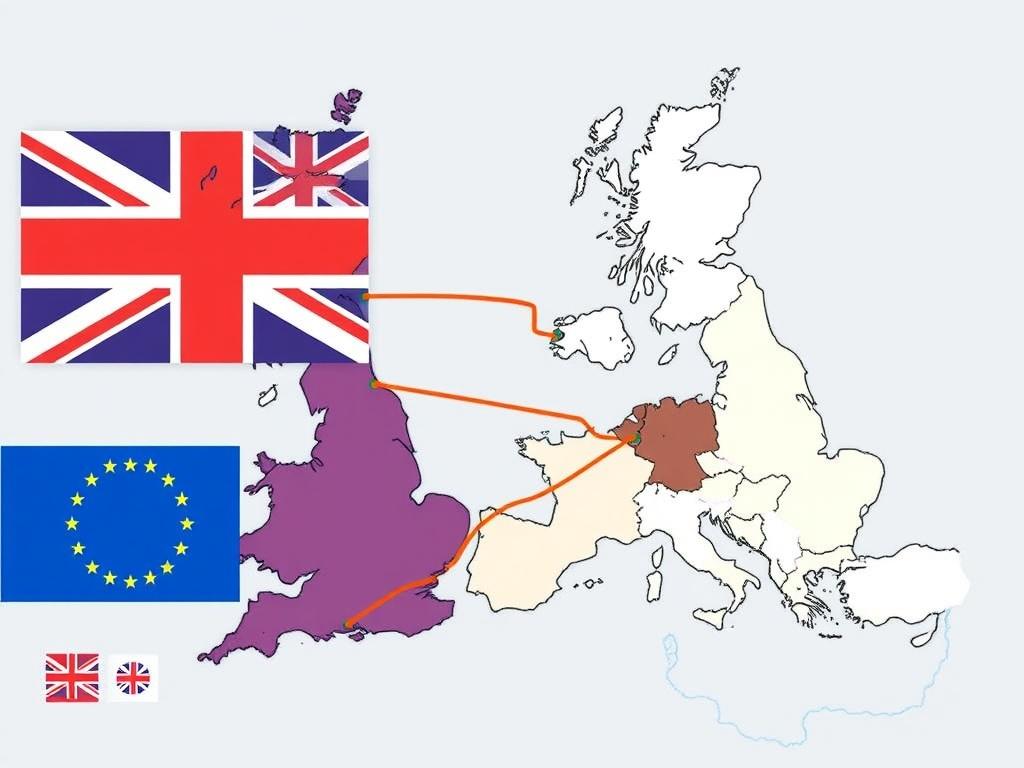
One immediate economic effect of new tariffs and RoO was trade diversion—companies rerouting imports to avoid barriers. Firms began to source materials from within the UK or the EU, or to import finished goods directly from countries with preferential arrangements to reduce paperwork and duty exposure.
Logistics patterns adjusted quickly. Ferry and trucking routes rebalanced, warehousing in hub locations grew in importance, and businesses used bonded warehouses and inward processing arrangements to manage duties while goods were finished or re-exported. These operational shifts are themselves costly and can disadvantage smaller firms without capital to redeploy.
Administrative responses: customs agents, software, and paperwork training
To handle new tariff risks, many companies invested in customs expertise. That meant hiring brokers, buying customs-declaration software, and training staff in tariff classification and valuation. The scale of investment depended on trade volumes, but even modest exporters found the fixed costs of compliance to be a heavy burden.
For some businesses, the immediate practical step was to declare consignments correctly and secure certificates of origin or statement-of-origin forms. For others, the solution was more strategic: changing inventory strategies, negotiating incoterms to shift responsibility for duties, or consolidating shipments to reduce per-unit compliance costs.
Tariff suspension and temporary measures: easing the shock
Governments on both sides introduced temporary measures to cushion the initial disruption. The UK published its Global Tariff schedule and, for some categories, chose lower or zero duties to keep consumer prices down and allow supply chains to adjust. Similarly, the EU and the UK both used targeted interventions—such as temporary duty relief on certain critical goods—to prevent immediate shortages or price spikes.
These policy choices reduced the immediate visible impact of rising tariffs in some sectors, but they did not eliminate the underlying structural change. The transitional fixes bought time for companies and customs services to adapt; they did not remove the need for long-term adjustments to trade flows and sourcing decisions.
How small businesses were disproportionately affected
Large multinationals often absorbed tariff-related costs through supply chain redesign or economies of scale. Smaller enterprises lacked that flexibility. SMEs struggled with the fixed costs of compliance: hiring customs intermediaries, understanding complex rules, and managing cash flow when duties had to be paid at import.
Many small exporters stopped selling to some EU customers altogether rather than face recurring complexity and costs. That structural shrinkage of market options is a form of barrier that manifests as lost relationships and foregone growth, not just as a single tax bill.
Compliance traps: certificates, origin myths, and common mistakes
Common errors created unexpected tariff exposure. Firms sometimes misclassified goods under the Harmonized System codes, used incorrect origin statements, or failed to account for third-country inputs in complex products. Customs authorities may levy duties and then require documentation after the fact, leading to retroactive charges and penalties.
Understanding the chain of inputs is often the hardest part. A processor assembling a product might assume the finished good meets origin requirements, only to discover that a small imported component pushes the product outside the rules. That surprise generates an immediate duty and a retroactive accounting headache.
How businesses adapted their pricing and contracts
To cope with unpredictability, companies revised prices and renegotiated supply contracts. Some shifted to delivered duty paid (DDP) terms, which placed the import duty and customs responsibility on sellers rather than buyers, simplifying matters for purchasers but increasing the seller’s risk exposure and administrative workload.
Others built contingency clauses into contracts to cover potential tariff changes or attribution of duties and delays. These contractual buffers redistributed risk but increased legal and administrative costs, particularly for firms without in-house legal teams.
Financial and cash-flow consequences of new tariff exposures
Paying duties at import requires working capital that many firms had not previously needed. Where previously goods moved across the Channel without duties, importers found themselves liable for immediate cash outlays and for delays in reclaiming any reliefs or refunds. That cash-flow pressure strained small firms and disrupted longer payment cycles in entire supply chains.
In some cases, suppliers demanded advance payments or shorter payment terms to manage their own exposure, worsening the cascade effect. Larger firms that could finance these costs did so, but the burden shifted down the supply chain to smaller participants with weaker balance sheets.
Regulatory divergence: a long-run source of tariff-like effects
Even where tariffs are not levied, regulatory divergence—different safety, labeling, or environmental standards—creates costs equivalent to duties. Producers facing two different regulatory regimes may need separate packaging lines, additional testing, or distinct certification processes to sell into both markets.
That duplication increases unit costs and complicates logistics, acting like a permanent tariff on cross-border trade. Over time, companies may decide to specialize for one market, reducing cross-market integration and further entrenching trade reorientation.
How the EU handled tariff application and enforcement
The EU continued to apply its common external tariffs to goods imported into its customs territory, and it enforced rules of origin to ensure preferential tariff treatment was not misused. Where an importer claimed preference under the TCA but could not demonstrate compliance, the EU retained the right to collect duties and verify documentation post-importation.
Enforcement mechanisms include audits and retrospective reassessments. For traders, that means a potential future tariff liability even if a shipment initially cleared without duty. The possibility of future claims encourages more conservative compliance behavior—an indirect but powerful incentive that shapes trade decisions.
Public policy trade-offs: protection, revenue, and competitiveness
Tariff policy is a blunt instrument that governments use to balance protection of domestic industries, revenue needs, and competitiveness. After Brexit, the UK consciously reset parts of its tariff regime to reflect new priorities, sometimes lowering duties to stimulate imports of inputs and sometimes retaining higher duties on agricultural products to protect local producers.
Those policy choices have distributional effects: lower input tariffs can benefit manufacturers that rely on imported components, while higher tariffs on finished goods can protect domestic supply chains or rural constituencies. The strategic mix of tariffs and regulatory alignment will continue to shape who gains and who loses from reoriented trade patterns.
Case study table: before and after at a glance
| Feature | Before Brexit (EU membership) | After Brexit (post-transition with TCA) |
|---|---|---|
| Tariff treatment for intra-EU goods | No tariffs, single external tariff | Zero tariffs possible under TCA if RoO met; otherwise external tariffs apply |
| Rules of origin | Not required for intra-EU trade | Required to claim tariff preferences |
| Customs declarations and checks | Minimal for EU trade | Declarations required; sanitary and safety checks increased |
Tariff avoidance strategies and their limits
Companies quickly explored routes to minimize tariff exposure. Strategies included relocating production, sourcing more inputs from preferential partners, and using bonded warehouses to delay duties. Some firms pivoted to diagonal cumulation opportunities where permitted, seeking to aggregate origin content across multiple jurisdictions.
All these strategies carry limits. Relocation is expensive and slow; sourcing shifts can affect quality or cost; bonded warehousing requires capital and facilities. Moreover, the TCA’s RoO and customs controls reduce the scope for simple ‘paper’ avoidance—the system is designed to detect and deter circumvention.
International trade law backstop: the WTO schedules
Had no agreement been reached, trade would have fallen back on World Trade Organization (WTO) schedules, meaning tariffs set unilaterally by each party would apply to one another. The possibility of WTO-level tariffs acted as a backdrop to negotiations and a reminder that, without agreement, broad tariff reintroduction would have been immediate and severe.
Even with the TCA, the potential for tariff changes remains. Either party could alter its external tariffs over time. Changes in tariff schedules—driven by domestic politics or new trade deals—could change the calculus for businesses that rely on stable preferential arrangements to avoid duties.
Longer-term shifts: reconfiguration of supply chains and regionalization
One lasting effect of new tariff realities is the pressure toward regionalization of supply chains. Firms increasingly prefer sourcing that minimizes cross-border friction, favoring suppliers within the same regulatory or preferential area. Over time, this can reduce cross-border interdependence and reconfigure the geography of manufacturing and trade.
Regionalization has winners and losers. Some sectors, clusters, and regions benefit from inward investment as firms relocate parts of production; others lose the competitive advantage they enjoyed from more integrated, pan-European supply chains. That strategic reorientation will play out over years, not months.
Advice for businesses navigating tariff exposure
- Map your supply chain end-to-end to understand where non-originating inputs might create tariff liability.
- Invest in robust customs classification and certificate-of-origin processes to avoid surprise duties.
- Work with experienced customs brokers and consider bonded warehousing to manage cash-flow timing of duties.
- Revisit contracts and incoterms to allocate tariff risks clearly between buyers and sellers.
- Consider diversifying supply sources or building alternative logistics routes to reduce dependency on any single channel.
Government support and training: narrowing the information gap
Recognizing the burden on traders, both the UK and EU provided guidance, helplines, and training resources to help businesses comply. Customs intermediaries and trade associations also stepped up to offer workshops and templates that demystified the most common pitfalls.
Practical support matters: correct paperwork prevents tariffs, and early education pays for itself by reducing mistakes. But training cannot remove structural costs, and many traders continued to face ongoing compliance overheads well after the initial transition period.
Financial planning and risk management under new tariff rules
Companies that successfully navigated the tariff transition treated it as a risk-management exercise. They built scenario analyses into planning, stress-tested cash flows for duty shocks, and created contingency plans for rerouting or product substitution. These measures reduced the financial volatility associated with new tariff exposures.
For businesses without deep pockets, risk management sometimes meant scaling back exports or focusing on domestic markets until clarity improved. That conservative response is rational but contributes to the long-term dampening of cross-border entrepreneurial activity.
What changes could alter the tariff landscape again?
Several factors could reshape tariffs and tariff-like barriers in coming years. New trade agreements between the UK and third countries, changes to the EU’s external tariff, or future UK-EU negotiations on services and alignment could all adjust the effective cost of cross-border trade. Political decisions about protection or liberalization will matter.
Meanwhile, technological improvements in customs processing—digital certificates of origin, automated checks, and improved data-sharing—could lower friction. If digital systems deliver on their promise, the functional cost of proving origin and clearing customs will decrease, even if the legal need for such proof remains.
Lessons for policymakers and businesses
One lesson is that tariff policy cannot be separated from administrative capacity. The existence of a zero-tariff promise is meaningless without efficient certification and reliable border infrastructure. Policymakers must invest in both the legal framework and the practical systems to make preferential arrangements usable for business.
For businesses, the key lesson is preparation. Mapping supply chains, investing in customs know-how, and building flexible contracts are costly but necessary responses to a world where conditional tariff-free access replaces blanket internal-market freedom.
Parting thoughts on a changed trade landscape
When people ask how Brexit created new tariffs between the UK and EU, the most useful answer is that it did so indirectly and pragmatically: by removing the blanket, rule-free environment of the single market and replacing it with conditional arrangements that require proof. That requirement opened many doors for tariffs to appear—sometimes as straightforward duties, sometimes as administrative costs, sometimes as delayed cash demands—but always as new commercial realities to be managed.
Businesses that treated those realities as a one-off shock missed the deeper point: tariffs and tariff-like frictions are now part of the operating environment for UK–EU trade. Over time, firms and policymakers will adapt, and some frictions will fall as systems improve. Others will remain, quietly shaping which products and supply chains thrive across the Channel and which ones retreat to simpler, more local arrangements.