India’s protectionist tariffs: Why they refuse to open markets is a question that comes up every time New Delhi raises duties on imports or stalls trade talks. On the surface the answer looks simple — protect jobs and nascent industries. Scratch the surface and you find a tangled mix of economic strategy, electoral politics, administrative incentives, strategic concerns, and the messy work of building an industrial base in the world’s most populous democracy.
- From colonial trade to sovereign caution: a brief historical arc
- Economic rationales for staying put on tariffs
- Balance-of-payments, currency buffers, and revenue needs
- Political economy: who benefits and who lobbies
- State governments and subnational politics
- Administrative incentives and the role of bureaucracy
- Strategic and security motivations
- Policy instruments beyond tariffs
- Case study: electronics and the PLI push
- Case study: agriculture and politically sensitive protection
- What trade partners see and how they respond
- RCEP, WTO posture, and bilateral deals
- Impact on consumers and inflation
- Effects on businesses and supply chains
- Measuring effectiveness: what works and what doesn’t
- Alternatives to blunt protection: smarter policy design
- Comparative perspective: China, Brazil, and selective liberalizers
- What it would take to open markets: preconditions and sequencing
- Voices from the ground: an author’s observation
- Future scenarios: cautious liberalization or deepening protection?
- Practical takeaways for businesses and observers
- Policy trade-offs: fairness, growth, and political feasibility
- How international partners can help
- Measuring progress: indicators to watch
- Final reflections on India’s trade trajectory
From colonial trade to sovereign caution: a brief historical arc
India’s modern instincts toward protecting domestic production did not appear out of nowhere. After independence the country pursued import substitution industrialization, aiming to reduce reliance on foreign goods while building a diversified industrial base. That era left institutional habits: an active role for the state in shaping industrial structure and a deep skepticism of unfettered imports.
Trade liberalization in the 1990s changed the trajectory, but it did not erase those older preferences. Liberal reforms reduced tariffs and opened the economy, but policymakers kept a toolkit of protections they could deploy when they judged domestic interests at risk. The trajectory since has been one of selective opening — rather than a clean break from protectionism, India adopted calibrated integration into the global economy.
Political memories matter. Sections of industry and labour that benefited from protectionism organized, and their demands continue to shape policy choices. Simultaneously, the experience of deindustrialization in some regions after faster liberalization in other countries reinforces the political caution among Indian leaders when considering sweeping tariff cuts.
Economic rationales for staying put on tariffs
Tariffs are blunt instruments but they still serve several economic purposes. First, they give breathing space to domestic producers facing sudden import competition, allowing time for investment and restructuring. Second, duties raise revenue in a country where expanding tax capacity across a vast informal sector remains a persistent challenge. Third, tariffs can be used strategically to nurture priority sectors—electronics, solar, and select manufacturing—until they reach scale.
These rationales co-exist because India is not a uniform economy. Some regions and industries are highly competitive internationally; others are still building clusters, supply chains, and managerial capabilities. National policymakers juggle these mixed realities, often preferring targeted protection to blanket openness. That choice reflects a pragmatic, incremental approach rather than ideological commitment to closed markets.
The “infant industry” argument retains practical appeal. It is not merely theoretical; building an industry in a country with high labor mobility costs, weak infrastructure, and fragmented supplier networks requires time and policy support. Tariffs can act as a temporary scaffold, though the track record depends on discipline in phasing protections away once objectives are met.
Balance-of-payments, currency buffers, and revenue needs
Emerging markets use tariffs defensively when balance-of-payments strains loom. Higher duties can discourage luxury or non-essential imports, exerting a modicum of pressure relief on foreign exchange reserves. While India’s reserves are substantial by historical standards, periodic pressures on the rupee keep policymakers alert to external vulnerabilities.
Tariffs also provide an administratively simple source of revenue. In an economy with complex indirect tax reform underway and where direct tax compliance remains a work in progress, customs duties are a reliable and visible inflow. This practical function colors tariff decisions, especially when fiscal space is constrained.
Political economy: who benefits and who lobbies
Trade policy emerges from bargaining among powerful domestic interests. Industrial federations, small and medium firms, agricultural blocs, labor unions, and state-level political leaders all weigh in. The structure of Indian politics—large coalition governments, strong regional parties, and periodic populist demands—creates incentives for protectionist measures that satisfy vocal constituencies.
Lobby groups are effective because trade policy is discrete and concentrated: a tariff change can dramatically affect the profitability of a handful of domestic firms but have diffuse effects on consumers. That asymmetry makes political pressure for protection particularly potent. Ministers and civil servants face clear, localized costs of opening markets and less visible benefits spread across millions of consumers.
Electoral cycles reinforce caution. Politicians accountable to workers in manufacturing hubs or to farmers in export-competitive regions are less willing to risk policy experiments whose benefits will only materialize after their terms. The short-term nature of political reward and punishment favors defensive trade measures.
State governments and subnational politics
India’s federal structure matters too. State governments control labor law implementation, land acquisition, and power supply—factors essential to competitiveness. States that have invested in local manufacturing capabilities press the federal government for protections that secure jobs and investment. This subnational pressure amplifies the political cost of rapid liberalization at the national level.
Where states and the center align politically, protectionist measures can be easier to pass. Conversely, when a state champions open market reforms, it still faces the challenge of competing with producers in other states that enjoy protective safeguards. This patchwork of incentives complicates any straightforward move toward tariff cuts.
Administrative incentives and the role of bureaucracy
Bureaucrats occupy a pragmatic middle ground. They prize stability and predictable revenue flows and are wary of policy choices that might trigger social unrest. Tariff changes have cascading implications—customs administration, enforcement architecture, and dispute resolution systems all must adjust. The administrative cost of dismantling protections gives civil servants a reason to favor incrementalism.
Moreover, enforcement capacity shapes the choice of instruments. In sectors with a high incidence of informal trade or misinvoicing, complicated tariff reductions without complementary regulatory reforms risk creating loopholes. In such environments, simple protectionist measures can seem to deliver more predictable outcomes.
Strategic and security motivations
Beyond economics and politics, India views trade policy through a strategic lens. Dependence on imports for critical goods can become a national security worry, whether the product is solar panels, active pharmaceutical ingredients, or telecom hardware. Tariffs and local content requirements are tools to diversify supply chains and build domestic alternatives to reduce strategic vulnerability.
The geopolitical environment—especially competition with China and regional supply chain realignments—has hardened thinking around self-reliance. Policies that might once have been framed as purely economic are increasingly portrayed as necessary for national resilience. That discourse resonates widely with both policymakers and the electorate.
Policy instruments beyond tariffs
India’s approach to protection is not limited to headline tariffs. Non-tariff barriers, public procurement preferences, certification rules, and subsidies often play a larger role than simple customs duties. These instruments can be tailored with greater precision to support targeted objectives while being less visible in headline trade statistics.
For example, government procurement rules that favor local suppliers effectively create protected domestic demand. Similarly, complex safety or standards requirements can act as implicit barriers, nudging importers to source locally or face regulatory hurdles. Such measures are part of a broader industrial policy toolkit that operates alongside tariffs.
| Instrument | Typical purpose | Effect on trade |
|---|---|---|
| Tariffs | Protect domestic producers; raise revenue | Directly reduce import competitiveness |
| Local content rules | Encourage domestic manufacturing and supply chains | Limit foreign suppliers unless they source locally |
| Subsidies and incentives (e.g., PLI) | Attract investment and scale up production | Improve competitiveness of domestic firms |
| Standards and certification | Protect consumers and regulate quality | Can become trade barriers if applied selectively |
Case study: electronics and the PLI push
Electronics manufacturing illustrates how tariffs and complementary policies combine. India has long been an import market for mobile phones and components. Policymakers responded with a mix of higher customs duties on certain parts and a Production Linked Incentive (PLI) scheme aimed at encouraging local assembly and component manufacturing. The result was a noticeable expansion of assembly capacity and investment commitments.
That success story, however, is conditional. Assembly can expand quickly when firms chase incentives, but upstream components and R&D require deeper industrial ecosystems—supplier clusters, engineering talent, and reliable logistics. Tariffs help create a market for local production, while the PLI aims to make investment in the ecosystem more attractive. Yet such policies must be sustained long enough to allow the supply chain to develop or risks remain that assembly operations stay shallow and easily reversed.
Case study: agriculture and politically sensitive protection
Agriculture presents a different set of constraints. Farmers are a large and politically potent constituency, and measures that expose them abruptly to world price volatility can provoke sharp backlash. Tariffs, quantitative restrictions, and state procurement policies are all tools used to shield farmers from sudden import competition.
At the same time, Indian agriculture is part of global value chains for some commodities, and occasional openness benefits certain exporters. The policy mix therefore oscillates: protection when domestic prices are under pressure, selective liberalization to take advantage of export opportunities. This transactional approach reflects political realities rather than economic purity.
What trade partners see and how they respond
Foreign governments and multinational firms interpret India’s protectionism as a mixed signal. On one hand, they see market potential and opportunities for joint ventures if local rules and tariffs are navigated skillfully. On the other hand, frequent tariff changes and an opaque mix of non-tariff barriers make long-term investment planning difficult.
These frictions affect negotiations. Trading partners press India for deeper market access, while New Delhi often seeks technology transfer, local manufacturing commitments, or safeguards for sensitive sectors. The outcome is usually a negotiated settlement that reflects India’s broader developmental objectives rather than a simple reduction in barriers.
RCEP, WTO posture, and bilateral deals
India’s decision to stay out of RCEP reflected economic and political concerns about opening up to larger neighbors without sufficient safeguards. Within the WTO, India has tended to defend policy space for developing countries and resisted disciplines that would limit its ability to use industrial policy tools. When it negotiates bilateral deals, India often seeks exceptions and phased access that protect vulnerable sectors.
This negotiating posture aligns with a broader strategy: use trade agreements selectively to gain market access where it helps domestic competitiveness, while preserving policy space to support strategic industries. That tradeoff explains why India pursues some agreements aggressively and resists others.
Impact on consumers and inflation

A common critique of protectionism is that tariffs raise prices for consumers. In India’s case, the impact varies by product. For goods where imports are a significant share of consumption—electronics, some processed foods, and consumer durables—higher duties can translate into higher retail prices. For other goods dominated by domestic production, tariffs have limited direct consumer effects.
Policymakers weigh these trade-offs. When inflation is high, raising tariffs becomes politically costly. Conversely, when domestic producers are struggling and inflation is contained, duties are easier to justify. This push-and-pull explains why tariff policy can change with macroeconomic conditions and political priorities.
Effects on businesses and supply chains
For domestic firms, protection can be a relief or a trap. Small and medium enterprises often welcome duties that shield them from foreign competitors, giving them time to upgrade. Larger firms seeking export competitiveness, however, may find protection distorts incentives and encourages inefficiency.
Global firms must adapt: they may set up local manufacturing to access India’s large market or adjust supply chains to comply with local content rules. That adaptation can be costly but also creates jobs and technological spillovers. The long-run benefit depends on whether India sustains a predictable policy environment that rewards investment in capability rather than short-term assembly wins.
Measuring effectiveness: what works and what doesn’t
Protection succeeds when it catalyzes structural change: meaningful domestic value addition, productivity improvements, and integration into export markets. It fails when it simply shelters firms from competition without incentives to improve. Evaluating policy requires patience and good metrics—capex growth, input-localization ratios, skill development, and export competitiveness.
Empirically, success stories in India have combined tariffs with complementary reforms: investment incentives, infrastructure improvements, and administrative streamlining. Where tariffs acted alone, outcomes have been less durable. That pattern suggests protection must be part of a coordinated industrial strategy rather than an isolated tool.
Alternatives to blunt protection: smarter policy design
If the goal is to build competitiveness without locking in inefficiency, policymakers have alternatives to high, permanent tariffs. Temporary and clearly time-bound protections tied to measurable targets can provide discipline. Adjustment assistance—training, relocation support, and targeted subsidies—can make liberalization politically feasible while cushioning affected workers and firms.
Another approach is to prioritize supply-side reforms that reduce the cost of doing business: logistics, ports, power, land markets, and simplified regulations. Those reforms lower the need for tariffs by allowing domestic firms to compete on efficiency rather than price alone.
- Time-bound safeguards linked to measurable performance
- Investment in supplier ecosystems and skills
- Targeted fiscal incentives instead of across-the-board tariffs
- Social protection and retraining for displaced workers
Comparative perspective: China, Brazil, and selective liberalizers
Comparing India to other emerging markets clarifies choices. China combined protection with massive state-driven investment, easy access to finance for key sectors, and an export-led strategy that pushed firms to become globally competitive. Brazil has oscillated between protection and opening, often constrained by structural inefficiencies and political fragmentation. India’s path is unique: a democratic polity with decentralized governance, limited fiscal levers in some areas, and a strong emphasis on social inclusion.
India’s selective liberalization differs from the rapid, broad-based opening some Asian economies pursued. That difference reflects choices about social priorities and the sequencing of reforms. India favors incrementalism, which reduces shock risks but can slow capability-building if protections outlast their usefulness.
What it would take to open markets: preconditions and sequencing
Opening markets sustainably requires a set of preconditions. First, credible social safety nets and retraining programs to support those displaced by competition. Second, investment in infrastructure and the business environment to make domestic firms competitive without constant protection. Third, institutional reforms to reduce regulatory unpredictability that deters foreign investors from building long-term supply chains.
Sequencing matters: liberalization alongside capacity-building rather than as a unilateral shock. Phasing tariff reductions with explicit timelines, supported by public investments and transparent monitoring, creates credibility and reduces political backlash. That approach also helps align industry incentives with national goals rather than encouraging rent-seeking around protections.
Voices from the ground: an author’s observation
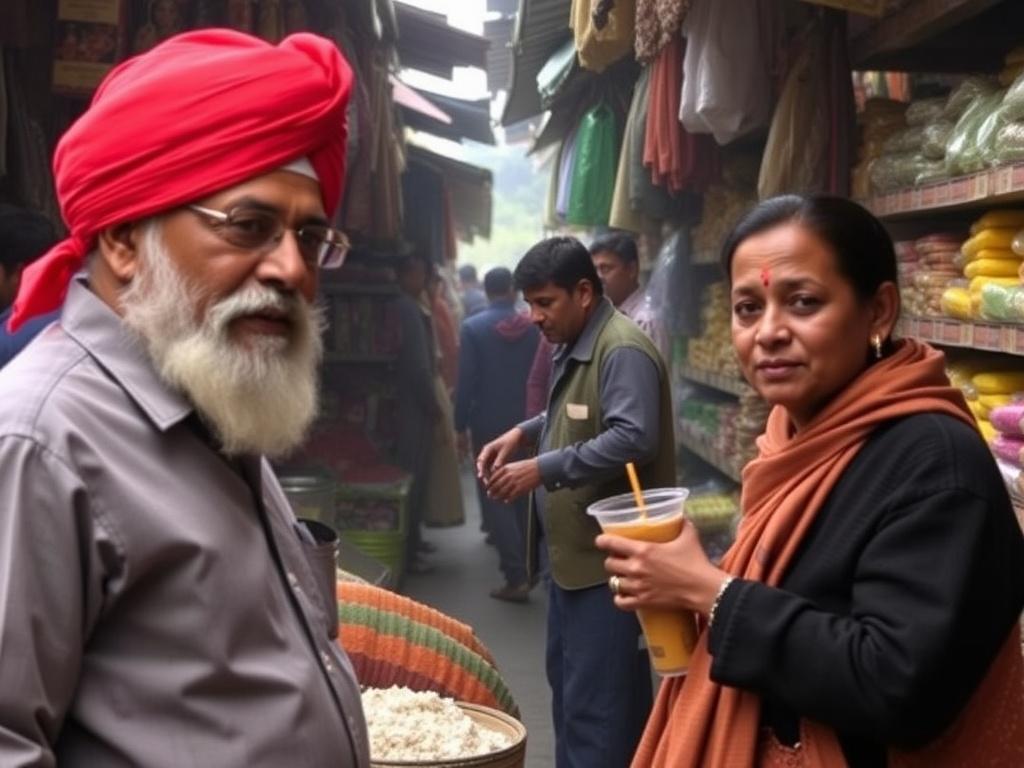
In reporting from India’s manufacturing clusters, I’ve seen how protection shapes decisions. A mid-sized electronics assembler in a satellite industrial park explained to me how a modest tariff on certain inputs made local assembly financially viable this year and allowed the firm to hire an extra shift. Yet the same manager worried that absent investments in local suppliers, the gains would be fragile. That ambivalence—gratitude for short-term relief and anxiety about long-term competitiveness—captures the on-the-ground reality.
Similarly, a farmer I spoke with in a grain belt region valued government procurement guarantees more than lower consumer prices. For many rural constituencies, the security of stable incomes outweighs the abstract benefits of cheaper imports, especially when price swings can wipe out household savings. Those conversations helped me understand why opening markets is as much about timing and trust as it is about economics.
Future scenarios: cautious liberalization or deepening protection?
India faces divergent paths. One path is cautious, targeted liberalization: incremental tariff reductions in sectors where domestic competitiveness is achieved, paired with sustained investment in infrastructure and workforce training. That route aims to widen market access gradually while maintaining political stability.
The other path is deepening protection: expanding tariffs and non-tariff barriers while intensifying industrial policy to build strategic autonomy. This scenario could accelerate domestic capacity in certain priority industries but risks inefficiency and higher consumer prices if shielded firms never face meaningful competition.
Which path prevails depends on politics, economic performance, and external pressures. Global supply chain decoupling and geopolitical tensions could push India toward tighter controls in strategic sectors. Conversely, a strong domestic push for higher growth and export performance might tilt policymakers toward measured openness.
Practical takeaways for businesses and observers
For firms, the policy environment calls for flexibility. International firms should design India entry strategies that allow for local sourcing where feasible, understand policy timelines, and engage constructively with government goals. Domestic firms should use protections as a bridge to invest in capabilities rather than as a permanent shelter.
Observers and negotiators must recognize the legitimacy of developmental aims in India’s trade posture while pressing for greater transparency and predictability. Building trust between trading partners can unlock deals that balance market access with development objectives, and that balance will be central to future negotiations.
Policy trade-offs: fairness, growth, and political feasibility
No policy is free of trade-offs. Tariffs can protect jobs today but impose costs on consumers and downstream industries. Opening markets can spur efficiency and growth but creates adjustment costs for workers and firms. India’s approach reflects a democratic calculus: navigate these trade-offs while preserving social cohesion and political stability.
The challenge is to align short-term protections with long-term growth. That requires clear sunset clauses for tariffs, measurable targets for local content, and investment in the enabling environment. Without such discipline, protectionism risks entrenching rent-seeking and slowing the very industrialization it aims to foster.
How international partners can help
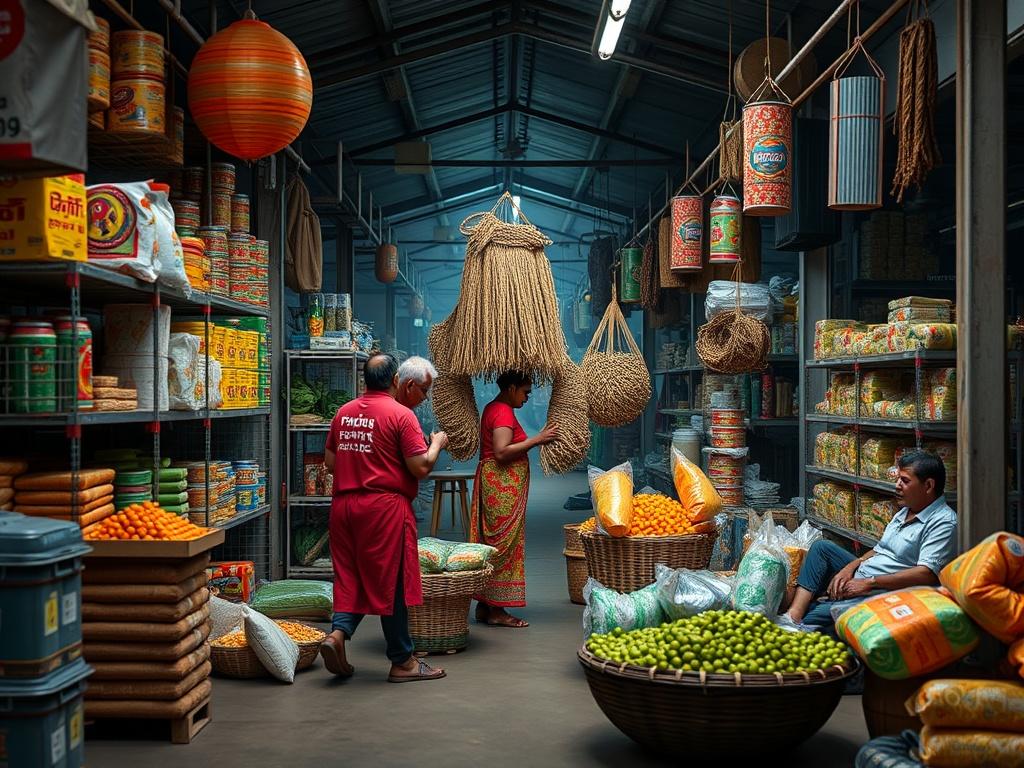
External partners can support India’s transition by offering technology partnerships, capacity-building assistance, and transparent investment that contributes to supplier ecosystems. Trade agreements that include clauses on technical cooperation and phased market access can ease Indian concerns about sudden exposure.
Multilateral institutions can also help by providing financing for infrastructure and programs to support displaced workers. These instruments make liberalization politically and economically more palatable by reducing immediate social costs and improving competitiveness over time.
Measuring progress: indicators to watch
To know whether protection is achieving developmental goals, watch several indicators: growth in local value addition, export share of manufacturing, productivity gains in protected sectors, and the durability of investments in upstream suppliers. Social indicators—household incomes in affected regions and labor retraining uptake—are equally important.
Transparency in policy implementation and a public dashboard tracking these metrics would improve accountability. If tariffs are defended as temporary scaffolds, stakeholders deserve to see evidence that the scaffolding is being dismantled as objectives are met.
Final reflections on India’s trade trajectory
India’s stance on tariffs is not simply stubborn protectionism; it is a reflection of a complex set of imperatives. Economic development in a vast, diverse democracy requires balancing competing objectives: protecting livelihoods, building industrial capacity, maintaining fiscal stability, and safeguarding strategic autonomy. These are hard trades, and tariffs are one of several levers available to policymakers.
Whether India will open markets more rapidly depends less on abstract advocacy and more on pragmatic sequences—tangible improvements in infrastructure, credible social safety nets, and political bargains that compensate concentrated losers. Observers who care about global trade should recognize the legitimacy of those conditions while encouraging reforms that make protection temporary, transparent, and tied to measurable outcomes. That middle path—neither naïve openness nor permanent closure—offers the best chance for India to integrate with global markets on its own terms and in a way that delivers sustainable growth for its people.