How tariffs triggered the American Revolution is a tidy phrase for a complicated story, but it points at a central truth: duties, customs enforcement, and the politics wrapped around them helped turn ordinary commercial friction into a crisis of empire.
- Setting the scene: an Atlantic economy under pressure
- Mercantilism, duties, and the logic of British policy
- Key revenue measures and how they worked
- Why tariffs felt different: enforcement, customs, and daily life
- Taxation and legal distinctions: duties, internal taxes, and representation
- Political language: taxation, representation, and rights
- Colonial responses: from petitions to boycotts
- Economic impacts: winners, losers, and unintended consequences
- Escalation: events that turned economic protest into open rebellion
- How tariffs became a symbol as much as a burden
- Timeline: acts and reactions
- Common misunderstandings
- Personal reflections from the road
- Why compromise proved so difficult
- Broader consequences: building institutions of resistance
- Echoes in modern debates
- Final reflections
Setting the scene: an Atlantic economy under pressure
By the mid-18th century the North American colonies were enmeshed in the Atlantic trade—exporting timber, fish, tobacco, and grain, and importing manufactured goods from Britain and the Continent.
That commerce supported wealthy merchants, small coastal traders, and whole towns whose wharves hummed with activity. Trade was also the key link tying colonial economies to British mercantile policy and parliamentary revenue needs.
Imperial wars in Europe and North America left Britain with large debts and an appetite for revenue. Policymakers turned to the colonies as a source of funds and, just as important, as a theater to assert authority.
What followed were a string of measures—some aimed at raising money, others at regulating commerce—that the colonists experienced as intrusive and intolerable.
Mercantilism, duties, and the logic of British policy
British officials believed in mercantilism: the idea that colonies existed to enrich the mother country and to supply it with raw materials while serving as markets for manufactured goods.
Under that system, tariffs and duties performed two jobs. They raised revenue and encouraged or discouraged particular trade flows to keep wealth—a rough proxy measured in specie and shipping tonnage—within the empire.
From London’s perspective, raising money from the colonies through duties was both logical and fair. Parliament had financed colonial defense during wars, and ministers argued that the costs should be shared.
From many colonists’ perspective, however, the logic looked different: the policies felt like outsider interference in local commerce and law, particularly since Americans lacked direct representation in Parliament.
Key revenue measures and how they worked
Between 1763 and 1774 Parliament adopted a sequence of laws that touched everyday trade. Some were explicit revenue measures; others sought to tighten enforcement of existing regulations.
A clear table helps keep the major acts straight and shows why ordinary merchants and consumers came to see tariffs as a recurring grievance.
| Act | Year | Type | Core effect |
|---|---|---|---|
| Sugar Act | 1764 | Revenue duty (indirect) | Reduced molasses duty but increased enforcement and lowered the threshold for prosecution, raising customs pressure. |
| Stamp Act | 1765 | Internal tax | Required stamped paper for legal documents, newspapers, and licenses; direct tax within colonies. |
| Townshend Acts | 1767 | Duties on imports | Levied duties on glass, lead, paints, paper, and tea; revenues used to pay colonial officials. |
| Tea Act | 1773 | Regulatory/revenue | Allowed the East India Company to ship tea directly to colonies and kept the existing tea duty, undercutting smugglers and asserting tax authority. |
| Coercive (Intolerable) Acts | 1774 | Punitive measures | Closed Boston’s port and altered Massachusetts’ charter in response to resistance; economic pain used as punishment. |
That sequence—controls followed by enforcement and then by punitive measures—meant that tariffs and related customs policies were never just abstract numbers on paper. They influenced prices, livelihoods, and legal exposure.
Why tariffs felt different: enforcement, customs, and daily life
A tariff in London might look like a line on an account. In Boston it meant customs officers boarding a ship, a seizure, or a suppressed cargo that deprived a shopkeeper of stock for the coming season.
Enforcement mechanisms made the problem personal. Writs of assistance—general search warrants used to hunt for smuggled goods—allowed customs officers to enter houses and businesses to search for contraband.
Customs officers and naval patrols were widely disliked, partly because enforcement intensified at the same time that Parliament tried to collect revenue more efficiently.
This was not only about money. The presence of officers, the threat of fines and imprisonment, and the specter of lost livelihoods turned routine economic policy into a perceived assault on liberty.
Taxation and legal distinctions: duties, internal taxes, and representation
One reason the story is complex is that not all levies were identical. Colonists made a sharp distinction between external duties—tariffs on imports—and internal taxes levied directly inside the colonies.
Many colonists accepted, at least in theory, Parliament’s right to regulate commerce and impose external duties designed to regulate trade. What they rejected was Parliament’s right to impose internal taxes for the purpose of raising revenue without colonial consent.
The Stamp Act cut across both debates. Because it was internal and placed a visible cost on documents and newspapers, it awakened political resistance in a new way.
Parliament tried to accommodate dissent with the Declaratory Act of 1766, asserting its authority even as it repealed the Stamp Act. That only hardened positions, since the principle of Parliamentary supremacy remained.
Political language: taxation, representation, and rights
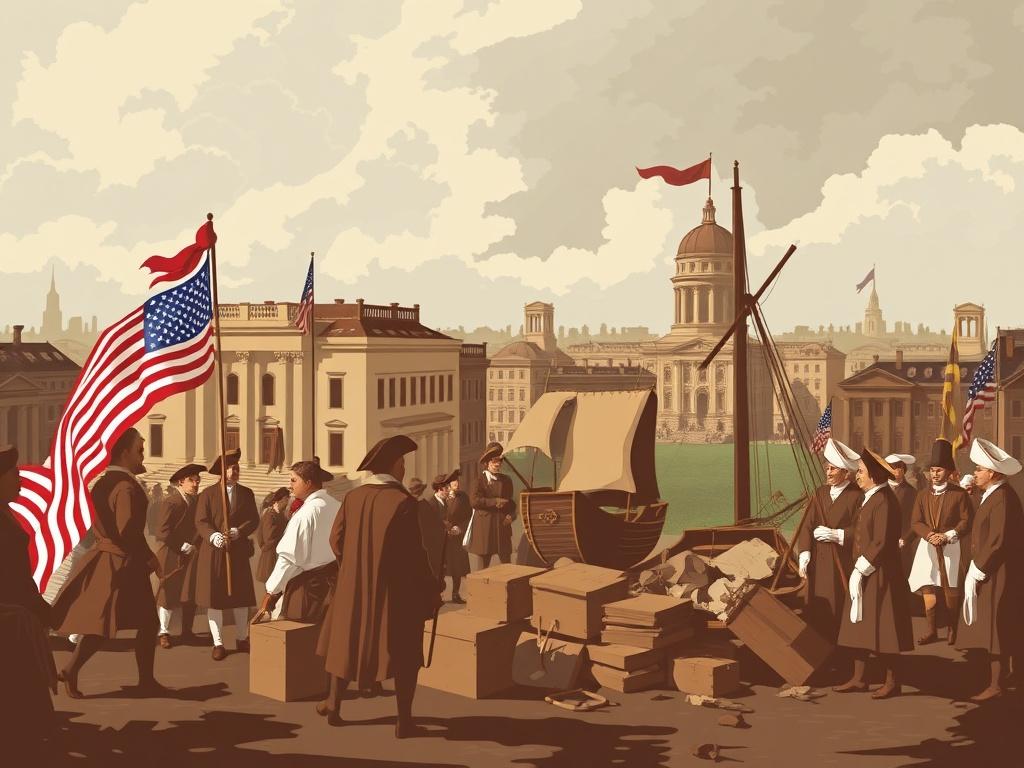
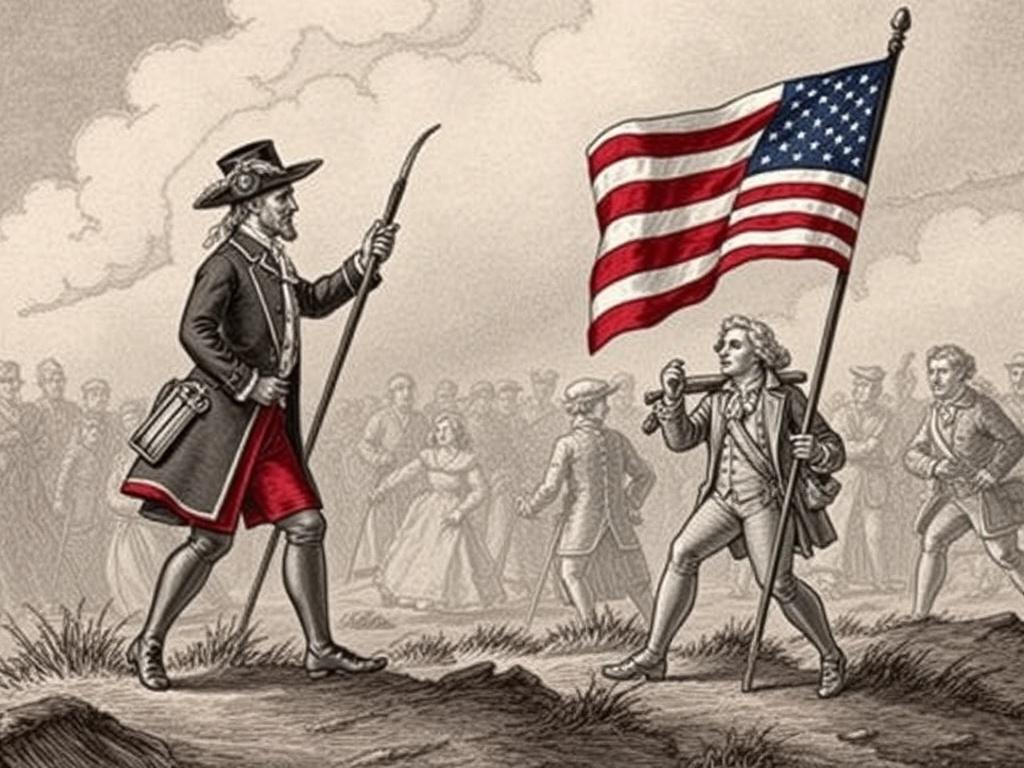
Words mattered. Colonial leaders framed the issue in constitutional language: “no taxation without representation” became shorthand for a broader claim about rights and how political authority should operate.
That slogan compressed a series of grievances into a moral and legal argument that could be communicated to ordinary people—shopkeepers, farmers, and sailors—who felt the pinch of taxes and duties.
Pamphlets, sermons, and town meetings translated legal abstractions into everyday stakes. The argument was simple to understand: if Parliament could tax the colonies, what else could it do?
That rhetorical framing helped turn disparate economic complaints into shared political identity and collective action.
Colonial responses: from petitions to boycotts
Colonists tried many strategies before open war. They petitioned, lobbied, held assemblies, and organized congresses. The Stamp Act Congress of 1765 produced a united petition and marked an early step toward coordinated resistance.
Boycotts, or nonimportation agreements, became the most effective economic weapon. Merchants agreed not to import British goods, striking at the heart of the mercantile exchange.
These nonimportation agreements were grassroots: artisans, wives of merchants, and consumers were asked to refuse British linens, tea, or luxury imports. The pressure was social as much as economic.
Committees of correspondence organized information-sharing and coordinated local resistance. They turned localized protests into a networked political movement capable of sustained action.
- Stamp Act Congress (1765): intercolonial petition and solidarity.
- Nonimportation agreements (1765–1770s): boycotts of British goods.
- Committees of correspondence (early 1770s): organized information and coordination.
- Boston Tea Party (1773): direct action against a taxed commodity.
These actions demonstrated that economic pressure could be applied to Britain and that colonists could organize across provincial boundaries.
Economic impacts: winners, losers, and unintended consequences
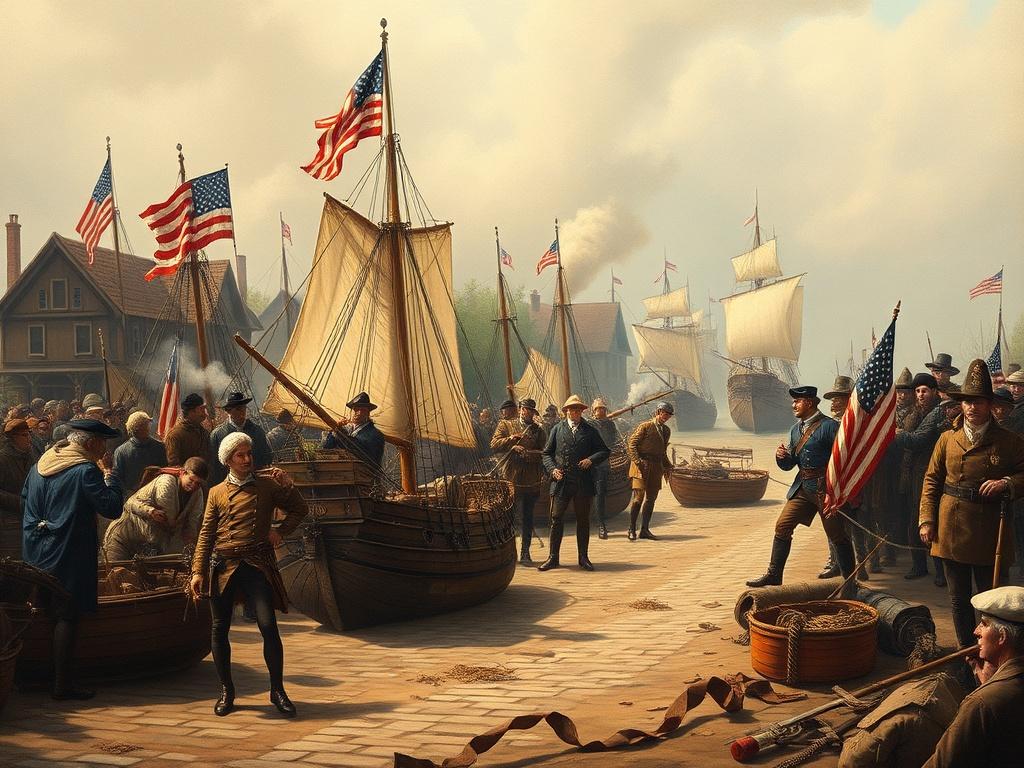
Tariffs and the reactions to them had real distributional effects. British exporters—textile and manufactory interests—lost market share from boycotts. Colonial merchants who relied on imports suffered immediate financial strain.
At the same time, some colonists benefited. Smugglers and traders who had previously avoided official channels temporarily profited from reduced competition. Shipbuilders and local artisans sometimes found new markets when imports became scarce.
Unintended consequences multiplied. British attempts to shore up revenue by strengthening enforcement often pushed more trade into illicit channels, which then justified more enforcement—a vicious cycle of tightening controls and rising resistance.
The result was an economy in which politics and trade were tightly entangled, making a negotiated settlement more difficult because economic incentives favored continued confrontation.
Escalation: events that turned economic protest into open rebellion
Small skirmishes and legal disputes built toward dramatic incidents that changed public sentiment. The Boston Massacre (1770) and the Boston Tea Party (1773) were not simply violent acts; they were spectacles that crystallized fears about power and injustice.
The Tea Act of 1773 provides a clear case of how a tariff-centered dispute turned explosive. The act lowered the total price of tea by underwriting the East India Company’s sales, but it preserved the tea duty Parliament insisted on collecting.
For many colonists the issue was symbolic: if they accepted taxed tea, they might be seen as acquiescing to Parliamentary taxation. In Boston a group of men boarded ships and dumped 342 chests of tea into the harbor, an act that crossed the line from economic protest into political theater.
Parliament’s response—the Coercive Acts of 1774—closed Boston Harbor and altered Massachusetts’ charter, intensifying the sense that economic penalties were being used to punish political dissent.
How tariffs became a symbol as much as a burden
At first tariffs were about money: revenue for the Crown and prices for consumers. Over time they became a symbol of sovereignty. A duty was no longer just a tariff; it was a test of who governed.
This symbolic shift matters because it changes incentives. When a tax denotes authority, resisting the tax becomes an expression of political autonomy rather than merely an effort to lower costs.
Political symbolism spread through rituals and performances: public readings of petitions, boycotts enforced by popular committees, and public punishments for violators. Tariffs were refigured as an affront to liberty and local law.
That reframing made reconciliation harder. Even if both sides had wished to compromise on amounts or timing, the charge of principle made small concessions appear like surrender.
Timeline: acts and reactions
| Year | Event | Significance |
|---|---|---|
| 1763 | End of Seven Years’ War | British debt and calls for colonial contributions increase. |
| 1764 | Sugar Act | Revenue duty with stricter enforcement on molasses trade. |
| 1765 | Stamp Act | Direct internal tax sparks widespread protest and Stamp Act Congress. |
| 1766 | Declaratory Act | Parliament asserts authority even as it repeals the Stamp Act. |
| 1767 | Townshend Acts | Duties on imports lead to renewed boycotts and tension. |
| 1770 | Partial repeal of Townshend duties | Most duties repealed, but tea duty retained as a claim to authority. |
| 1773 | Tea Act & Boston Tea Party | Tea Act preserved the duty; Boston’s protest provoked harsh reprisals. |
| 1774 | Coercive Acts | Port of Boston closed; Massachusetts government reshaped; colonies unite in protest. |
This timeline shows a pattern of policy, protest, and punitive response. Each step hardened positions and expanded the scale of coordination among the colonies.
Common misunderstandings
One common mistake is to reduce the cause of the Revolution to a single factor. Tariffs played a major role, but they intersected with legality, ideology, and local interests.
Another misconception is to treat all taxes as equal in colonial eyes. Colonists distinguished between internal taxes and external duties, a legal nuance that had real political weight.
It is also easy to overstate the purely economic damage. Many colonists still benefited from imperial ties, and only a portion of the population actively sought revolution in the 1760s and early 1770s.
What changed was not immediate impoverishment but the way tariffs and customs practices came to symbolize Parliamentary intrusion and the denial of local self-government.
Personal reflections from the road
As someone who has walked the wharves of historic ports—Boston, Newport, and Annapolis—the politics of trade feel tangible. Standing on those cobblestones, you can almost hear the creak of rigging and imagine the ledger books that recorded every imported bolt of cloth.
I have also spent hours in small museums reading letters from merchants whose livelihoods depended on timely cargoes and predictable duties. Those letters reveal a practical anxiety about enforcement as well as palpable anger at perceived injustice.
One afternoon in a Boston exhibit I saw a ledger with line items for duties and penalties alongside names of customers who had refused taxed goods. The entries were a reminder that politics was embedded in everyday business choices.
That intimacy between tax policy and daily life helps explain why tariffs, seemingly technical, could set entire communities against the imperial center.
Why compromise proved so difficult
Attempts to negotiate were undermined by the meanings attached to taxes. For Parliament, yielding on a revenue claim could weaken authority. For colonial leaders, accepting taxation without representation would have undercut the case for self-government.
Economic remedies alone could not repair a rupture that had become constitutional and cultural. A reduction in duties would not erase the memory of aggressive enforcement or punitive closure of ports.
Moreover, each side feared that concessions would encourage further demands. British ministers worried that a colony that negotiated away a tax might invite similar demands from others; colonists feared that any accommodation would legitimize Parliamentary taxation.
These mutual fears produced a stalemate that made political compromise increasingly unlikely and pushed both sides toward confrontation.
Broader consequences: building institutions of resistance
One legacy of the tariff disputes was institutional innovation. Committees of correspondence, provincial congresses, and intercolonial boycotts created mechanics of governance and communication that could be repurposed for revolutionary administration.
These ad hoc political bodies evolved into the Continental Congress and, eventually, into the organizational structures necessary to prosecute a war and govern newly independent states.
In that sense, economic conflict produced more than protest: it trained political actors, developed public opinion, and created channels for coordinated action.
The protest infrastructure that grew from tariff resistance became a vital resource as the colonies moved from petition to independence.
Echoes in modern debates
There are lessons that resonate today. Tariffs are not merely economic instruments; they are also political signals about who controls economic life and who has a say in policy decisions.
Contemporary debates about trade barriers or import duties still touch the old themes: distributional effects, local industries versus foreign suppliers, and how policy decisions map onto questions of democratic voice.
I often find visitors at museums surprised that a levy on tea could be the proximate cause of a political revolution. Yet the story shows how policy choices that combine economic impact with assertions of authority can have consequences far beyond revenue.
When modern policymakers consider tariffs, it is worth remembering how quickly financial measures can become matters of identity and sovereignty.
Final reflections
Tariffs in the years before the Revolution were not the sole cause of American independence, but they were a central catalyst. Customs duties and the enforcement around them converted ordinary commerce into a contested space of political meaning.
As protests grew, each side hardened its stance until compromise became improbable. The economic effects of tariffs mattered, but the symbolic weight attached to them—questions of who could tax, how authority was exercised, and what counted as consent—ultimately pushed the colonies toward separation.
Studying this period reminds us that fiscal policy and political legitimacy are deeply intertwined. Small changes in tax or duty collection can ripple into constitutional crises when they touch a population’s sense of rights and representation.
In the end, what began as disputes about cargoes and customs officers ended in a decision to remake political structures far beyond the reach of a single tariff ledger.