Tariffs sound simple on paper: a tax on imports meant to protect domestic industry, raise government revenue, or pressure trading partners. In practice they ripple through supply chains, change prices, alter market incentives, and redistribute economic gains and losses in ways that rarely line up with political promises. Understanding who truly bears the cost is less a matter of algebra than of tracing incentives, contracts, and human responses across the economy.
- What a tariff is and why governments impose them
- How tariffs actually affect prices: the mechanics
- Supply chains, pass-through rates, and who pays
- Winners: the concentrated beneficiaries
- Losers: consumers, exporters, and the broader economy
- Distributional effects across income groups
- Real-world example: U.S.-China tariffs (2018–2020)
- Supply chain anecdote from my reporting
- Historical example: Smoot-Hawley and its aftermath
- Measuring impact: models, empirical strategies, and their limits
- Key empirical findings and typical magnitudes
- Political economy: lobbyists, voters, and the persistence of tariffs
- Rent-seeking and regulatory capture
- Alternatives to tariffs that achieve similar goals
- When tariffs might be defensible
- How consumers can respond and protect themselves
- Practical checklist for consumers
- Industry responses and corporate strategies
- What future trade policy might hold
- Measuring outcomes: a simple comparative table
- Policy design principles to reduce consumer harm
- Balancing values: sovereignty, security, and consumer welfare
- Closing reflections on who really loses
What a tariff is and why governments impose them

A tariff is a tax or duty imposed on goods as they cross an international border. It raises the price of an imported good for domestic buyers and can take forms such as an ad valorem percentage of value or a specific amount per unit weight or item.
Governments levy tariffs for different reasons: to generate revenue, protect fledgling industries, retaliate against trading partners, or serve domestic political constituencies. Some tariffs are blunt instruments of economic protection; others are strategic tools linked to industrial policy or national security concerns.
Political motives matter as much as economic ones. Tariffs can be attractive because benefits—higher sales or market share for targeted firms—are concentrated and visible, while costs—slightly higher prices for millions of consumers—are dispersed and easy for policymakers to ignore. That distributional contrast helps explain why tariffs remain politically durable even when economists warn of net economic harm.
How tariffs actually affect prices: the mechanics
At its simplest, a tariff increases the importer’s cost. If a widget costs $10 abroad and faces a 20% tariff, the importer must pay an extra $2 to clear customs. The importer then decides how much of that $2 to pass on to consumers through higher retail prices.
That decision depends on competition, demand elasticity, and the structure of the supply chain. In highly competitive markets with many sellers, most of the tariff tends to be passed on to consumers. In business-to-business settings or markets where importers can absorb margins, producers might absorb some of the cost to maintain market share.
Other frictions complicate this neat story. Contracts priced in foreign currencies, multi-stage production across borders, and exchange-rate movements all affect how much of a tariff shows up at the checkout counter. Empirical studies often measure “pass-through rates” to estimate the share of a tariff absorbed by final consumers.
Supply chains, pass-through rates, and who pays
Pass-through is rarely 100 percent. Retailers may absorb part of a tariff to avoid losing customers, or producers may take a hit to maintain price stability. But pass-through rates vary by industry and product. Commodities with homogeneous pricing show higher pass-through than differentiated goods where brand power matters.
Multinational corporations often reorganize sourcing in response to tariffs. They can shift production, change suppliers, or reconfigure value chains to minimize exposure. That flexibility reduces some tariff effects but can take time and incur adjustment costs.
In short, who actually pays depends on bargaining power along the chain, the elasticity of demand, and the ability of firms to relocate or redesign production. For many everyday consumer goods, a significant proportion of the tariff ends up in final prices.
Winners: the concentrated beneficiaries
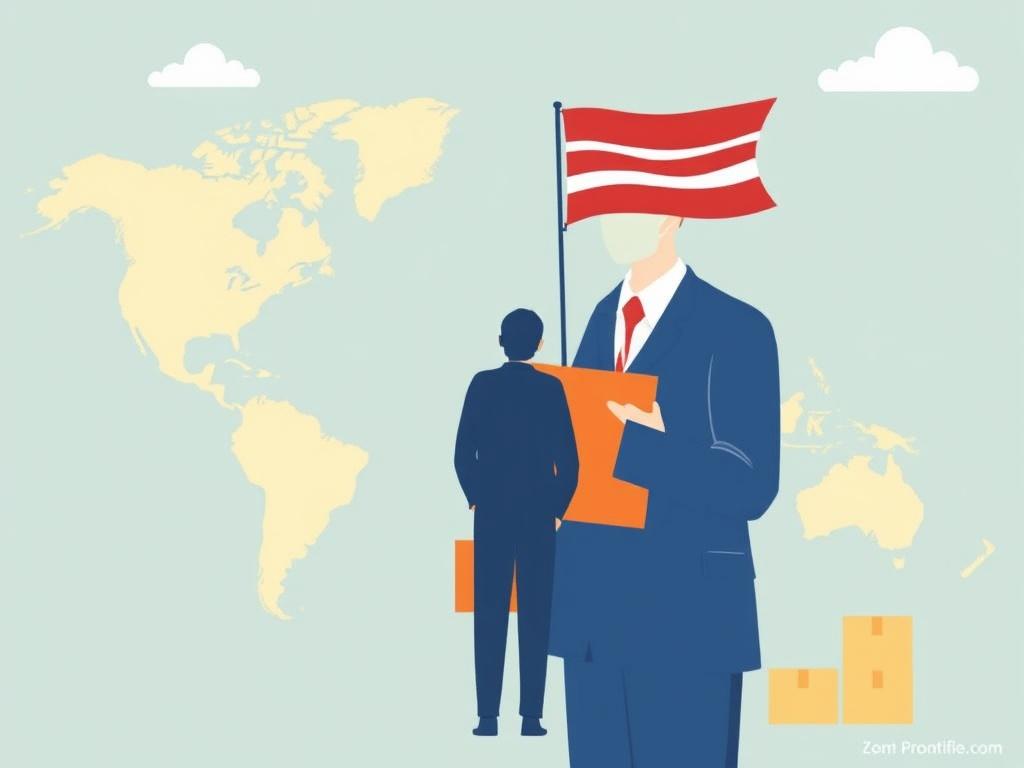
The most obvious winners are protected domestic producers. A tariff can raise the price of competing imports, allowing local firms to increase sales, raise margins, or survive against lower-cost foreign rivals. These gains are tangible and often concentrated within a handful of companies or sectors.
Governments also “win” in the short run through tariff revenue. That revenue can be politically attractive, especially for countries without a broad-based income tax system. However, tariff revenue is often volatile and can decline as imports fall or firms switch to domestic suppliers.
Certain workers and regions tied to protected industries may benefit from higher employment or more stable wages. When support is targeted—say, to steel mills in a particular county—the local political gains are visible and immediate, even if the broader economy faces losses.
Losers: consumers, exporters, and the broader economy
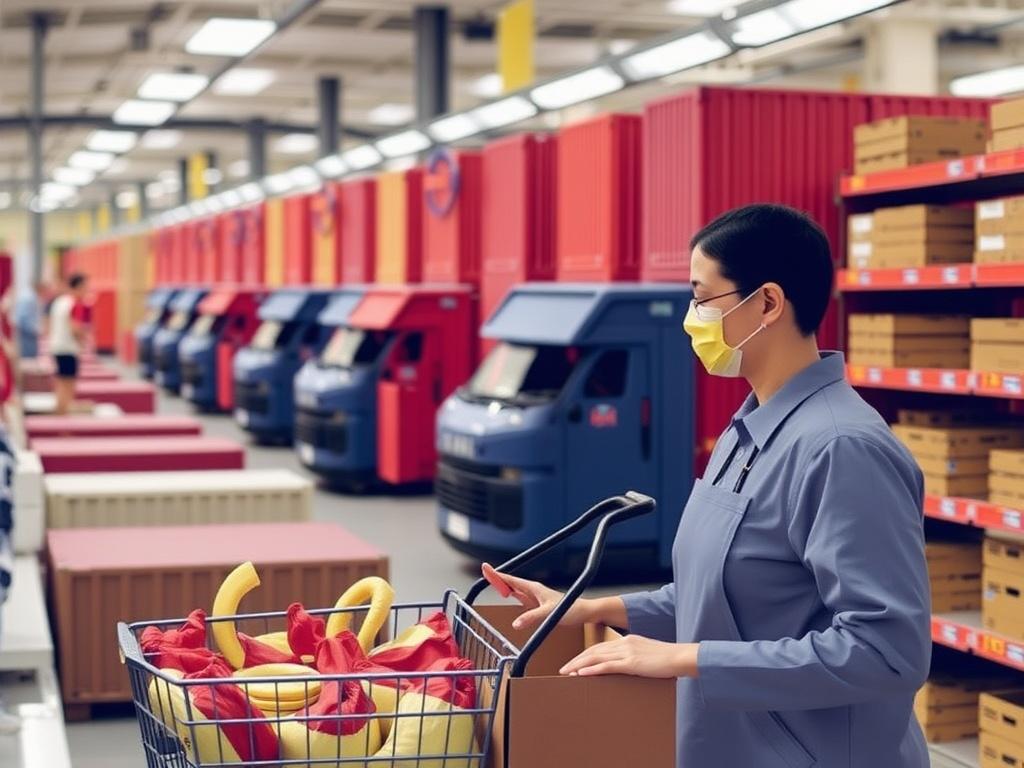
Consumers are the most diffuse group harmed by tariffs. Higher prices on imported goods reduce real income, shrink purchasing power, and can lead households to buy less or buy lower-quality substitutes. Those harms are especially acute for low-income families who spend a larger share of income on goods affected by tariffs.
Exporters can be collateral damage. When a country raises tariffs, trading partners may retaliate with their own tariffs, harming exporters who rely on open foreign markets. Even without retaliation, tariffs can raise input costs for domestic manufacturers that use imported parts, eroding competitiveness and profits.
Beyond immediate price effects, tariffs introduce inefficiencies. They encourage the allocation of resources toward protected industries and away from potentially more productive sectors, creating long-term losses in output and innovation. Deadweight losses—economic activity that never occurs because tariffs distort prices—are a classic consequence.
Distributional effects across income groups
Tariffs are regressive in many contexts. A flat tariff on consumer goods represents a larger share of expenditures for lower-income households than for wealthier ones. That makes tariff policy effectively a transfer from poorer consumers to relatively better-off producers in protected industries.
Higher-income households may offset some of the costs by shifting consumption toward services or domestically produced luxury goods, but lower-income families lack that flexibility. Studies of tariff episodes often find larger welfare losses as a share of income among the poor.
Policymakers occasionally pair tariffs with targeted relief—cash transfers or subsidies—to blunt regressivity. Those schemes can help, but they raise questions about whether direct assistance or tariffs are the most efficient way to achieve desired social or industrial outcomes.
Real-world example: U.S.-China tariffs (2018–2020)
The tariff escalation between the U.S. and China in 2018–2020 offers a recent, well-documented case. The United States imposed wide-ranging tariffs on Chinese imports, prompting China to retaliate and affecting millions of goods and businesses on both sides.
Empirical analysis found that U.S. consumers and businesses bore most of the cost. For many goods, studies estimated pass-through rates ranging from 60 percent to nearly full pass-through, meaning consumers paid higher retail prices or firms faced squeezed margins. Some U.S. producers gained market share, but the net effect across the economy was negative.
Supply chain adjustments followed. Some firms shifted sourcing to other countries, others raised domestic production where feasible, and some absorbed costs to maintain customer relationships. The disruption was uneven—software and services were largely unaffected, but electronics, machinery, and agricultural products experienced pronounced impacts.
Supply chain anecdote from my reporting
While reporting on this episode, I spoke with a midwestern appliance assembler who relied on imported motors from China. After tariffs hit, his supplier raised prices, and the assembler faced a choice: absorb higher costs, pass them to retailers, or find new suppliers in Southeast Asia or Mexico. He chose a mix—contract renegotiations and a gradual supplier shift—but told me the transition doubled lead times and required hiring more engineers to manage quality control.
That small business’s story illustrates a common pattern: tariffs can force costly adjustments that show up as slower deliveries, higher finished-goods prices, and administrative headaches that small firms are less able to absorb than large multinationals. The political narrative of “bringing production home” rarely accounts for those frictional costs.
At the macro level, the U.S.-China episode also highlighted the interaction between tariffs and exchange rates. A depreciating currency can offset some tariff effects by making domestic goods cheaper for foreign buyers, but it also increases the cost of imported inputs, complicating the net outcome.
Historical example: Smoot-Hawley and its aftermath
The Smoot-Hawley Tariff Act of 1930 is a canonical historical example often cited by economists. Enacted during the early stages of the Great Depression, it raised U.S. tariffs on thousands of goods and provoked retaliatory tariffs from trading partners.
Historians debate its precise causal role in deepening the Depression, but the consensus is that Smoot-Hawley worsened international trade relations and contributed to a decline in global trade volumes, harming exporters and reducing world output. The episode remains a cautionary tale about the perils of protectionism during economic downturns.
Smoot-Hawley also reveals how tariffs can be driven by political forces—agricultural and industrial lobbies seeking relief—that override broader economic considerations. The law’s legacy shaped post-war trade policy, helping to motivate institutions designed to lower barriers and reduce the risk of retaliatory spirals.
Measuring impact: models, empirical strategies, and their limits
Economists use a variety of tools to estimate tariff effects. Partial-equilibrium models focus on a single market and calculate changes in consumer and producer surplus. These models are useful for analyzing a particular industry but ignore general equilibrium feedbacks elsewhere in the economy.
Computable general equilibrium (CGE) models simulate the entire economy, tracing how tariffs ripple through sectors, labor markets, and wages. They often predict larger aggregate welfare losses but depend heavily on assumptions about substitution elasticities and factor mobility.
Natural experiments—instances where tariffs or trade shocks affect one group but not another—provide empirical leverage. Researchers have used these events to estimate real-world pass-through and employment effects, but results can vary across time periods and institutional contexts.
Key empirical findings and typical magnitudes
Across many studies, a recurring pattern emerges: tariffs reduce national welfare, raise prices for consumers, and provide concentrated gains for protected firms. Estimated welfare losses are often small as a share of GDP but meaningful in absolute terms, and they are not evenly distributed.
For example, studies of the 2018 U.S. tariffs estimated consumer welfare losses of tens of billions of dollars, with only a fraction of that amount offset by gains to protected industries. Other analyses show that small tariffs (a few percent) can still lead to measurable price increases in affected product categories.
Limitations matter. Measurement challenges include disentangling tariff effects from exchange-rate movements, contemporaneous policy changes, and firms’ strategic pricing. Empirical estimates are therefore best interpreted as bounds and tendencies rather than precise point forecasts.
Political economy: lobbyists, voters, and the persistence of tariffs
The politics of tariffs explain why they are used despite economic objections. Beneficiaries like steelmakers or farm groups lobby intensely for protection. Their gains are visible, concentrated, and politically mobilized. Consumers, in contrast, face small individual losses that rarely spur organized resistance.
Electoral incentives push politicians to favor policies with clear local benefits. A member of Congress can point to jobs saved in her district and claim credit. Diffuse national harms—slightly higher prices across millions of households—are politically invisible and difficult to attribute to a single policymaker.
Populist appeals also play a role. Tariffs become symbols of taking back control of trade and defending national industries. That narrative resonates emotionally, even if the economic mechanics are complex and the long-term effects ambiguous.
Rent-seeking and regulatory capture
Rent-seeking behavior intensifies tariff persistence. Firms invest resources in lobbying for protection, and those investments can yield large returns relative to the costs of tariffs. Over time, industries accustomed to protection may resist reforms that threaten their privileged position.
Regulatory capture occurs when agencies meant to administer trade policy become aligned with industry interests. Trade remedy laws—like anti-dumping and countervailing duty measures—are technically narrow but can be deployed broadly, effectively functioning as targeted tariffs under another name.
Understanding these dynamics helps explain why tariff reforms often need to pair liberalization with transitional assistance and political strategies that compensate concentrated losers while aligning broader public interests.
Alternatives to tariffs that achieve similar goals
When policymakers worry about national security or industry preservation, tariffs are not the only tool. Subsidies, targeted tax credits, and direct public investment in research and workforce training can strengthen domestic industries without the deadweight losses associated with protectionism.
Standards and regulations can also shape trade flows—safety, environmental, and labor standards set the terms of market access. These measures can raise barriers to specific products without appearing as direct taxes, though they should be designed transparently to avoid disguised protectionism.
Trade adjustment assistance offers a policy approach focused on workers rather than firms. By providing retraining, relocation assistance, and income support, governments can help affected workers transition, reducing the political appeal of blanket tariffs.
When tariffs might be defensible
There are scenarios where economists accept tariffs as the least-bad option. In the face of dumping—when foreign producers price below cost to drive competitors out—temporary duties can protect genuine domestic producers. National security exceptions can justify restrictions on imports of dual-use technologies.
But defensibility requires careful targeting, transparent sunset clauses, and a credible plan for phasing out protection. Permanent, broad-based tariffs are harder to justify because their long-run costs often outweigh short-run benefits.
Policy coherence matters. If the goal is to nurture an infant industry, combining temporary protection with active industrial policy—subsidies conditioned on performance, R&D support, and workforce development—tends to produce better outcomes than tariffs alone.
How consumers can respond and protect themselves
Consumers are rarely powerless in the face of tariffs, though options vary by product and income. Shopping across retailers, seeking domestic alternatives, and buying used goods can reduce exposure to tariff-driven price increases.
Collective action also matters. Consumer groups and chambers of commerce can lobby against harmful tariffs, making the diffuse costs visible. Voting and civic engagement remain essential levers to shape trade policy choices that affect household budgets.
For households sensitive to specific goods—electronics, apparel, or household appliances—timing purchases around tariff policy or taking advantage of sales can blunt immediate effects. Still, these are tactical responses and do not substitute for policy-level solutions.
Practical checklist for consumers
- Compare prices across domestic and international retailers before buying large-ticket items.
- Consider long-term warranties and repairability to extend the life of purchased goods.
- Support and participate in local advocacy efforts that highlight consumer impacts.
- Budget for potential price shocks in categories sensitive to international trade.
Industry responses and corporate strategies
Firms respond to tariffs in predictable ways: pass costs on, absorb margins, or restructure supply chains. Multinationals with global footprints can shift production and sourcing, while smaller firms often face harder choices and higher adjustment costs.
Vertical integration—bringing parts of the supply chain in-house—can be a strategic response when tariffs make external sourcing expensive. Conversely, companies may diversify suppliers geographically to lessen exposure to any single country’s trade policy.
Commercial contracts and long-term supplier relationships matter. Firms bound by fixed-price contracts may shoulder tariffs temporarily, leading to short-term profit compression that can be politically disruptive for publicly traded companies focused on quarterly results.
What future trade policy might hold

Trade policymaking increasingly operates under new pressures: geopolitical tensions, concerns about strategic supply chains for critical goods, and domestic demands for resilience. These forces could produce more targeted, sectoral interventions rather than blanket tariff waves.
Technology plays a role too. Better data on supply chains, increased automation, and changing cost structures may shift the calculus of protection. Some production may return closer to consumption markets, not because tariffs mandate it, but because logistics, customization, and speed matter more than labor cost arbitrage.
Yet the core political dynamics—concentrated winners and diffuse losers—are likely to persist. Effective policy will require mechanisms to make diffuse costs politically visible and to design transitions that compensate or retrain displaced workers.
Measuring outcomes: a simple comparative table
The following table summarizes typical effects of tariffs across major stakeholders.
| Stakeholder | Typical short-term effect | Typical long-term effect |
|---|---|---|
| Protected domestic firms | Higher sales, margin improvements | Weaker incentives to innovate; potential inefficiency |
| Consumers | Higher prices, lower real income | Reduced consumption, potential welfare loss |
| Exporters | Risk of retaliation, lost sales | Market share erosion abroad |
| Government | Increased tariff revenue | Political support from beneficiaries; possible economic drag |
| Workers in protected industry | Job preservation or growth | Potential stagnation and vulnerability if protection ends |
Policy design principles to reduce consumer harm
If a society decides that some trade restrictions are necessary, certain design principles help minimize harm. Transparency, narrow targeting, and temporary measures reduce deadweight losses and encourage efficient adjustment.
Accompanying measures—worker retraining, relocation assistance, and targeted subsidies for innovation—can cushion transitional pain and channel resources toward productivity-enhancing investments. Sunset clauses force periodic reassessment and limit permanent dependency on protection.
Finally, international coordination can prevent destructive retaliation. Bilateral or multilateral negotiations that address unfair practices, rather than unilateral tariff spikes, tend to produce more stable outcomes for consumers and firms alike.
Balancing values: sovereignty, security, and consumer welfare
Trade policy is not only about prices; it reflects values and strategic choices. Some societies prioritize industrial autonomy or national security over short-term consumer welfare. Others emphasize open markets and low prices as pathways to broad prosperity.
The key is explicitness. Policymakers should acknowledge trade-offs and design policies that transparently balance competing goals. Masking protectionist outcomes as defense or security measures breeds mistrust and can harm consumers without delivering clear public benefits.
Decisions about tariffs should therefore be political and democratic, not just technocratic. When citizens understand the costs and benefits, debate produces better outcomes than hidden measures that shift benefits to a few and burdens to many.
Closing reflections on who really loses
Tariffs redistribute wealth rather than creating it. They concentrate gains in protected industries and disperse losses across consumers and other sectors. The result is often a politically powerful minority that benefits, and a large but fragmented majority that pays through higher prices or slower economic growth.
This pattern does not mean tariffs are always unwarranted. There are circumstances—temporary protection for nascent industries, responses to unfair trade practices, or national security concerns—where carefully designed tariffs, paired with compensatory measures, can be justified. But those exceptions should be narrow, transparent, and temporary.
For consumers, the most important lesson is to watch both price tags and policy debates. Tariff battles are not abstract; they shape the contents of grocery carts, the prices of appliances, and the job prospects of neighbors. Understanding the mechanics, the politics, and the alternatives helps voters push for trade policies that protect national interests without needlessly burdening ordinary households.