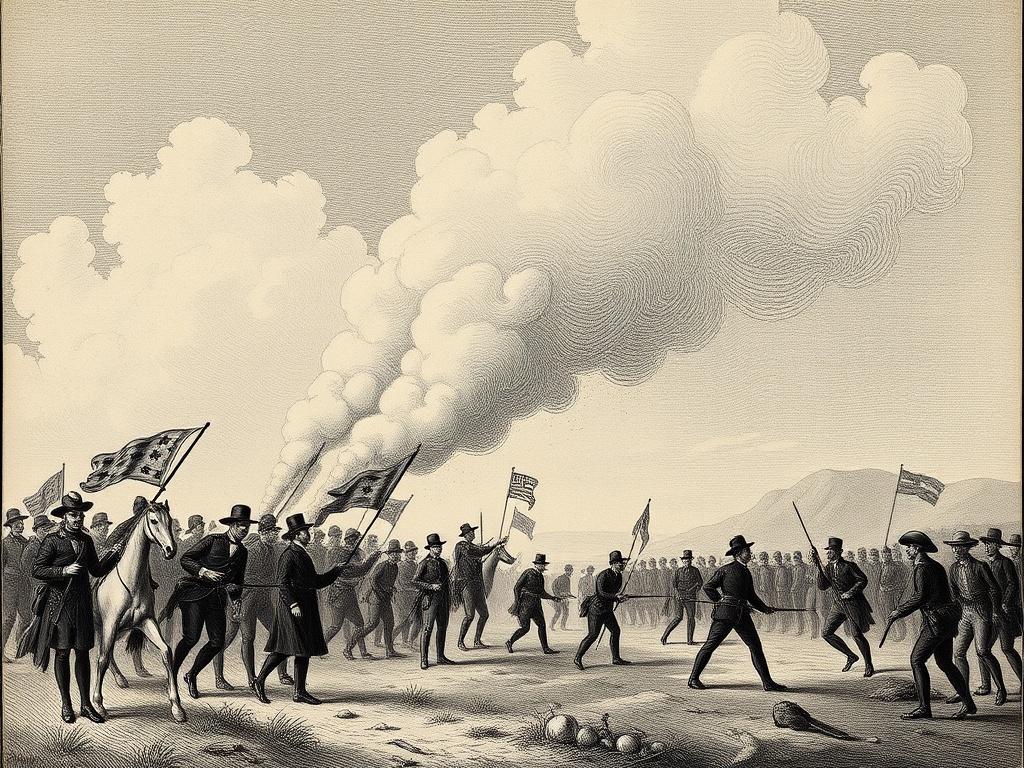
In the winter of 1828 Congress passed a tariff law that would be remembered with bitter passion in the cotton states, nicknamed by its opponents the “Tariff of Abominations.” That phrase captured more than economic grievance; it crystallized a sense that Washington policy favored northern manufacturers at the expense of southern planters. The law itself looked like a tangle of schedules and rates, but its political effects were vivid: protests, pamphlets, speeches, and eventually a constitutional showdown that helped reshape the republic.
- Setting the scene: economic and political fault lines in the 1820s
- What was a tariff and why did Americans care?
- The immediate origins of the 1828 act
- Provisions and consequences: what the 1828 law did
- Political flashpoint: the nullification crisis in South Carolina
- Calhoun, Jackson, and the personal politics of crisis
- Economic fallout across regions
- How tariffs interacted with the cotton economy
- Ideas and ideology: how the tariff fed constitutional thought
- Political realignments and the rise of sectional parties
- Beyond tariffs: slavery, expansion, and the deeper causes of conflict
- Historians’ debates: how important was the tariff?
- Case studies: South Carolina and the ripple effects elsewhere
- A short list: mechanisms by which the tariff fed sectional tension
- Long-term effects: law, politics, and memory
- Timeline: key dates from 1828 to 1861
- Counterpoints: why some scholars downplay the tariff
- Integrative view: combining economic and moral causes
- Personal reflections: encountering the past in place
- Echoes in modern politics: what the tariff controversy still teaches
- Lessons for students of history and politics
- Where the Tariff of Abominations (1828) and the US Civil War meet in historical argument
- Closing reflections: memory, responsibility, and the fragile republic
Setting the scene: economic and political fault lines in the 1820s
The United States in the 1820s was a fast-growing but fractious nation, with economies diverging between regions. The Northeast was industrializing, building factories and protective tariff constituencies, while the South doubled down on a plantation system tied to cotton, slave labor, and global markets.
Politically, the early republic’s party system was fraying. The Era of Good Feelings had papered over factional disputes, but new leaders and sectional interests were pushing politicians to stake claims not only for local advantage but for philosophically different visions of the Union.
Trade policy—tariffs, internal improvements, and banking—was now a field where these visions clashed, because what benefited one region often seemed to harm another. When Congress debated higher duties, the rhetoric quickly moved from dry economics to heated accusations about fairness, representation, and constitutional limits.
What was a tariff and why did Americans care?
A tariff is a tax on imported goods, and in the early 19th century it served two linked aims: to raise revenue for the federal government and, increasingly, to protect budding American industries from foreign competition. Protective tariffs made domestic textiles and machinery more competitive against British imports, encouraging factory growth in the Northeast.
Southerners, however, were troubled for several reasons. They imported a large share of manufactured goods, so tariffs raised the prices they paid. They also sold cotton on global markets and feared retaliatory tariffs or reduced demand if foreign partners were angered by U.S. trade barriers.
Beyond the pocketbook, tariffs touched on constitutional questions about federal power, state authority, and the proper balance between national interest and sectional priorities. Those legal debates would feed political movements that tested the Union itself.
The immediate origins of the 1828 act
Tariff policy in the 1820s did not spring fully formed from a single session in Congress; it was the outcome of a series of legislative moves tied to political bargaining. The protective impulse had been building after the War of 1812, when national leaders sought to lessen dependence on British manufactures.
By 1824, tariffs had become noticeably more protective under a coalition that wanted to encourage American industry and internal improvements. That act produced winners in manufacturing districts, and losses in import-dependent regions. Politicians kept pushing higher rates into the next term as electoral coalitions sought advantage.
The 1828 bill emerged from that momentum, amplified by competition between factions in Congress and the White House. Elements were added to satisfy different geographic constituencies, creating a final package that looked simultaneously like targeted protection and punitive commerce policy.
Provisions and consequences: what the 1828 law did
The Tariff of 1828 raised duties on a wide array of imported manufactured goods, textiles, and iron items, while also increasing rates on some raw materials. The new structure included particularly steep duties that northern manufacturers welcomed and southern consumers and merchants deplored.
Its architecture was complex, involving different rates for different classes of goods and temporary schedules meant to nudge domestic production. For farmers and planters who imported tools, cloth, or luxury items, the immediate consequence was higher prices and a sensation of being targeted by national policy tilted toward industry.
Politically, the act created a headline: opponents labeled it the Tariff of Abominations, and the name stuck. The language conveyed moral outrage as much as economic complaint, turning a piece of fiscal legislation into a test of national identity.
Political flashpoint: the nullification crisis in South Carolina
South Carolina’s response to the 1828 tariff transformed sectional grumbling into an organized constitutional challenge. Leaders there insisted that states could declare federal laws unconstitutional and void within their borders, a doctrine known as nullification.
John C. Calhoun, a native son and vice president under John Quincy Adams and Andrew Jackson, provided intellectual and political leadership for South Carolina’s position. He argued that the Constitution created a compact among sovereign states and that states retained ultimate authority to protect their interests against federal overreach.
The resulting standoff in 1832–1833 culminated in the state’s ordinance of nullification and a crisis that tested Andrew Jackson’s commitment to union and his view of federal authority. The episode ended with a political compromise and a force bill, but the underlying tensions remained unresolved.
Calhoun, Jackson, and the personal politics of crisis
The nullification crisis was as much about personalities as it was about policies. John C. Calhoun’s transformation from national politician to sectional champion personified the change in southern politics. His essays and speeches framed the tariff controversy in terms of liberty, minority rights, and constitutional defense.
Andrew Jackson, a southern slaveholder with strong nationalist instincts, reacted to nullification with fury. He saw threats to federal authority as threats to the nation’s survival and prepared to use military force if necessary to enforce federal law. The clash between two men of similar regional origins but divergent priorities highlighted how personal rivalries could magnify sectional disputes.
Ultimately a compromise tariff engineered by Henry Clay eased rates over the following decade, and South Carolina rescinded its nullification ordinance. Yet the underlying constitutional dispute—about the nature of the Union and the limits of state power—did not disappear.
Economic fallout across regions
Economically, the tariff’s effects varied by region and by sector, amplifying some local anxieties while creating new political constituencies. Northern manufacturers often benefited directly, receiving greater protection and markets for their goods. Investors in northern industry saw the law as encouragement to expand production.
By contrast, southern planters felt squeezed. Tariffs made imported goods more expensive and, in their view, reduced the South’s leverage in an international market where cotton demanded competitive pricing. Merchants who facilitated import-export trade also feared long-term damage to commerce if international partners responded to tariffs with retaliatory measures.
In the West, feelings were mixed: settlers wanted internal improvements and a stable national currency, but they also sought cheap manufactured goods. The tariff debates thus intersected with broader battles over federal spending, infrastructure, and the economic direction of a growing nation.
How tariffs interacted with the cotton economy
Cotton was the South’s engine, and the tariff influenced the terms under which cotton operated in a global market. Planters depended on British and European demand for their product and on imported manufactured goods. When policies seemed to favor the manufacturer, planters feared their relative position would erode.
Most historians agree that tariffs did not cause the cotton economy, but they did sharpen planter anxieties about dependency and fairness. Those anxieties made planters more willing to defend what they saw as an unjust economic order and to question the wisdom of enduring a federal system that treated their interests as tributary.
As northern industrial capital and southern agricultural capital diverged, economic grievance fed into a growing sense that compromise would be increasingly difficult to sustain in a polity where sectional fortunes and cultural outlooks pulled in opposite directions.
Ideas and ideology: how the tariff fed constitutional thought
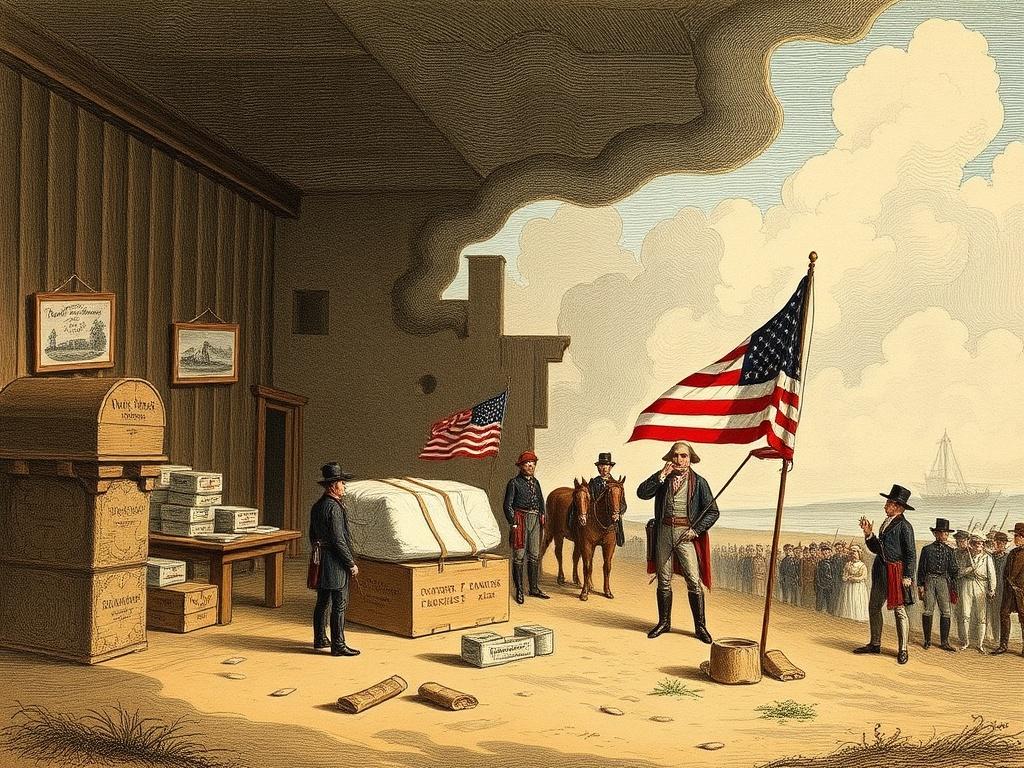
The tariff controversy forced Americans to ask what the Constitution permitted the federal government to do. For many southerners, high tariffs provided a clear example of federal policy that harmed a region and thus justified state-level resistance or even nullification. Those constitutional doubts gradually hardened into a theory of political defense that could be applied to other perceived assaults, including restrictions on slavery.
In the North, defenders of protective policy argued that a national government needed flexibility to nurture industry and ensure national self-sufficiency. They framed tariffs as sensible economic stewardship rather than sectional favoritism. That difference in framing—seen as stewardship versus persecution—helped turn a fiscal dispute into a moral and constitutional disagreement.
The constitutional debate over tariffs eventually bled into the larger dispute over slavery, federal power, and the rights of states. Once nullification entered political discourse as a living doctrine, it provided a template for subsequent assertions of state sovereignty in defense of institutions southerners believed vital to their social order.
Political realignments and the rise of sectional parties
The 1828 tariff episode coincided with an era of political realignment that culminated in the Jacksonian party system and, later, the sectional polarizations of the 1850s. As economic interests crystallized, politicians increasingly organized along sectional lines rather than traditional party cleavages.
New coalitions formed: northern industrialists and western internal improvement advocates sometimes allied against southern planters. Those shifting alliances made national politics less about philosophical debates and more about which region could secure the levers of federal policy.
This realignment hardened over decades, contributing to a political environment where compromise became more difficult and where elections started to look like existential contests over the nation’s future economic and social structure.
Beyond tariffs: slavery, expansion, and the deeper causes of conflict
It would be misleading to treat the Tariff of Abominations and its aftermath as the sole or even primary cause of the Civil War. Slavery, the expansion of slave territory into the West, cultural differences, and political power struggles were central drivers of the coming conflict. Yet the tariff episode fed into that larger stew of grievances and ideas.
For many southern leaders, the tariff controversy was symptomatic: proof that federal policies could be weaponized against their way of life. From that perception flowed a defensive posture on slavery and representation, making compromises over new territories and congressional balance harder to achieve.
Thus the tariff acted less as a direct trigger than as an accelerant: it intensified southern worries about domination by a majority that did not share their economic interests or social norms, and it gave intellectual practitioners of nullification and states’ rights a concrete precedent to cite.
Historians’ debates: how important was the tariff?
Historians differ about the weight to give the 1828 tariff in the march toward war. Some emphasize slavery and expansion as the unambiguous root causes, relegating tariff disputes to a secondary or symbolic role. Others argue that economic conflicts and constitutional doctrines emerging from tariff fights created political pathways that led directly to secessionist thought.
Recent scholarship tends to emphasize complexity: multiple, interacting causes that include economics, political institutions, cultural identities, and contingency. The Tariff of Abominations sits in that network of causes as a catalytic episode that revealed vulnerabilities in federalism and heightened sectional antagonism.
Understanding the tariff’s role, then, requires seeing it as part of a broader pattern of mistrust and competition—a significant episode not because it alone overturned the Union, but because it helped normalize the language and methods of sectional contestation.
Case studies: South Carolina and the ripple effects elsewhere
South Carolina provides the clearest case of the tariff producing constitutional crisis and open defiance. Its political elite crafted a robust intellectual case for nullification, mobilized public support, and threatened secession when push came to shove. That state’s actions showed how a tariff could be transformed into a test of sovereignty.
Elsewhere, responses were more tempered. States in the Upper South and some Western regions worried about tariffs but were less inclined toward nullification and more likely to seek legislative compromise or economic adjustment. Their moderation helped avert immediate disintegration after 1828, but differences in temperament foreshadowed later sectional fractures.
The disparate responses across states underlined how varied regional politics were, and they illustrated why the same policy could be a searing violation in one place and an irritant in another. Those divergent experiences fed into long-term patterns of alliance and estrangement.
A short list: mechanisms by which the tariff fed sectional tension
- Economic resentment—higher prices for Southern consumers and perceived favoritism to Northern industry.
- Constitutional argument—state-level doctrines like nullification gained legitimacy and practice.
- Political mobilization—tariff opponents organized politically, creating sectional parties and leaders.
- Cultural narrative—tariffs were framed as moral and political slights, hardening identities.
Each of these mechanisms reinforced the others, producing a feedback loop that escalated disputes from policy disagreement to political conflict. Small grievances accumulated until they gave way to broad, existential rhetoric about the meaning and future of the Union.
Long-term effects: law, politics, and memory
Over decades the tariff debates left legal doctrines, political habits, and memories that mattered in 1860. Nullification, even though contained by force and compromise in the 1830s, remained a rhetorical tool and a constitutional argument that reemerged in later controversies. Politicians remembered how quickly economic policy could inflame public opinion.
Tariff politics also taught both regions how to mobilize voters on sectional lines, to link local economic interests with national policy, and to use moral language to justify policy positions. Those techniques would reappear in debates over slavery, territorial expansion, and the balance of power in Washington.
Memory mattered: in the 1850s, southerners who recalled perceived betrayals by northern majorities found it easier to conjure arguments for secession. The 1828 episode, by entering the catalog of perceived federal injustices, provided rhetorical and intellectual ammunition for later calls to desert the Union.
Timeline: key dates from 1828 to 1861
| Year | Event |
|---|---|
| 1828 | Tariff of 1828 passed (Tariff of Abominations), provoking southern outrage. |
| 1832–1833 | Nullification crisis in South Carolina; Compromise Tariff of 1833 reduces rates. |
| 1846–1848 | Mexican-American War and territorial gains intensify disputes over slavery’s extension. |
| 1850 | Compromise of 1850 temporarily settles some disputes but leaves tensions alive. |
| 1854 | Kansas-Nebraska Act inflames sectional conflict; popular sovereignty brings violence. |
| 1860–1861 | Election of Lincoln triggers secession; Confederate states form, leading to Civil War. |
Those dates show that tariff disputes were part of a long sequence of crises, only one of which led directly to war. Each moment built on the last, turning disputes into habitual political practices that made compromise more fragile.
Counterpoints: why some scholars downplay the tariff
Many scholars insist that slavery, not tariffs, was the decisive fault line. They point to the centrality of slave labor to the southern economy, the moral debates that animated northern abolitionism, and the immediate trigger in 1860—the election of Abraham Lincoln, a candidate many southerners believed hostile to slavery’s expansion.
From this perspective, the Tariff of Abominations was an important episode but ultimately a diversion from the fundamental conflict over human bondage, political power, and integrity of democratic institutions. Tariffs may have encouraged sectional identity, but slavery gave it backbone.
This perspective cautions against monocausal histories and urges us to see the tariff as a contributing factor, not a decisive cause, in the broad and tragic arc that ended in war.
Integrative view: combining economic and moral causes
A balanced account accepts both insights: economic policy disputes like tariffs mattered because they intersected with slavery and representation. Tariffs sharpened sectional lines and taught political actors how to use constitutional arguments, while slavery provided the substantive core of southern political identity and economic interest.
Viewed together, tariff struggles and slavery debates constituted a political ecology where small policy fights could escalate into existential contests. The synergy between material grievances and moral claims created durable patterns of mobilization that carried the nation toward rupture.
This integrative approach helps explain why Americans then, just as now, could rarely separate economic policy from larger questions about identity, liberty, and national purpose.
Personal reflections: encountering the past in place
I remember visiting the Charleston area and standing outside the Calhoun family home, thinking about how a legal doctrine once argued within those walls resonated across decades. Walking through a museum exhibit that included pamphlets protesting the tariff, I felt how seemingly arcane fiscal schedules became full-blooded public causes.
On another trip to the National Archives, leafing through a few pages of congressional debate—beleaguered speeches, clipped rhetorical turns—I was struck by the intimacy of the process: the law was made by people with local loyalties, personal ambitions, and grudges that did not disappear with passage of time. Those human textures helped me see the tariff as more than dry policy: it was an engine of political transformation.
Such visits do not supply definitive answers, but they remind us that history is lived at ground level, where policy collides with ordinary life and where abstract doctrines find real-world consequences.
Echoes in modern politics: what the tariff controversy still teaches
There are resonances between the tariff debates of the 1820s and modern politics. Disputes about trade, regional inequality, and the reach of federal authority remain potent. Contemporary arguments about protectionism, outsourcing, and globalization replay some of the same tensions between local economic interests and national policy.
Moreover, the technique of translating economic grievance into constitutional argument and moral language continues to be politically effective. Political entrepreneurs can transform policy disputes into broader identity conflicts, and once identities harden, compromise becomes harder to achieve.
Remembering the Tariff of Abominations offers a cautionary tale about how fiscal policy can become a vehicle for deep-seated political realignment when combined with cultural differences and structural inequalities.
Lessons for students of history and politics
One lesson is the importance of contingency: small or localized policy disputes can sometimes cascade into systemic crises if they align with broader structural tensions. Another is the need to understand how policy feeds public imagination; law is not only a legal instrument but a narrative signal about who benefits in a polity.
Finally, the tariff episode shows the interplay of ideas and interests: doctrines like nullification gain traction not just because they are persuasive on paper but because they serve the needs and fears of particular social groups. Scrutinizing both motives and rhetoric gives us a fuller picture of why democracies sometimes unravel.
Students of history should therefore resist simple causal stories and attend to the tangled webs of culture, economy, personality, and contingency that produce political outcomes.
Where the Tariff of Abominations (1828) and the US Civil War meet in historical argument
When historians ask how the Tariff of Abominations (1828) and the US Civil War connect, they usually point to two kinds of linkage: direct and indirect. The direct link is short-term: the tariff prompted the nullification crisis, which showcased a constitutional strategy of state resistance that reappeared later. The indirect link runs deeper: the tariff helped sharpen sectional identity and political practices that made compromise less feasible when larger disputes over slavery and expansion erupted.
That dual pathway—immediate crisis and long-term cultural-political change—explains why the tariff often figures in broader accounts of antebellum polarization even as most historians insist it was not the sole cause of secession. It mattered as a precedent and a catalyst in a fragile constitutional arrangement.
Understanding this nuanced relationship helps us avoid overstatement while appreciating how ordinary federal laws can have extraordinary political consequences when they intersect with existing divisions.
Closing reflections: memory, responsibility, and the fragile republic
The story of the 1828 tariff and its aftershocks is one of unintended consequences. A law intended to protect industry reshaped political alignments and fed doctrines that later helped justify secession. The path from contested fiscal schedules to civil war was not straight, but the detours mattered: each crisis taught actors new tools and hardened identities that carried forward.
For citizens and leaders today, the episode is a reminder of how economic policy touches broader values and how quickly disagreement can escalate when constitutional theory is pressed into the service of sectional advantage. Historical memory asks us to regard policy not as isolated technocracy but as a potential catalyst for deep social change.
History offers no simple moral except the one it always offers: that political communities survive by continual effort at compromise, listening, and the willingness to subordinate immediate advantage to a shared future. The tariff debates of the 1820s show how fragile that bargain can be and how easily it can be tested when winners and losers draw different conclusions about what justice requires.