The idea of charging for the carbon embedded in traded goods — sometimes called climate tariffs or border carbon adjustments — has shifted from academic footnote to headline policy in just a few years.
Policymakers and businesses now face a knotty question: can we tax carbon at the border in a way that cuts emissions, protects domestic industry, and survives international law and politics?
- What is a border carbon adjustment?
- Why policymakers are considering climate tariffs
- How a border carbon tax would work in practice
- Measuring carbon content: benchmarks versus verified footprints
- Legal constraints and the WTO
- Practical enforcement and administrative hurdles
- Economic effects: prices, competitiveness, and leakage
- Distributional and equity concerns
- Case study: the European Union’s carbon border adjustment mechanism (CBAM)
- United States approaches and debates
- Examples from other countries and subnational actors
- Design choices that determine success
- Key policy design choices (list)
- Economic modeling and real-world impacts
- Political economy: winners, losers, and stakeholders
- Options for international cooperation
- Alternatives and complements to border taxes
- How revenue recycling can shape political feasibility
- Measuring success: emissions, trade, and political signals
- Administrative costs and the burden on businesses
- Data quality and fraud risks
- Real-world example: steel trade and variable carbon intensities
- Scaling up: from pilots to full systems
- Coordination with domestic climate policy
- Stakeholder engagement and transparency
- How businesses can prepare now
- A table: comparing major proposals and initiatives
- Potential pitfalls to watch
- How BCAs interact with supply-chain decarbonization
- Responding to diplomatic friction
- Paths forward: incrementalism vs. bold action
- My experience observing the policy debate
- What to watch in the coming years
- Final thoughts
What is a border carbon adjustment?
A border carbon adjustment (BCA) charges imported goods for the greenhouse gas emissions associated with their production when those emissions were not priced at the origin. The mechanism can also refund carbon costs for exports so domestic producers remain competitive abroad.
Most BCAs aim to level the playing field between firms that pay a domestic carbon price and foreign competitors that do not. They are not sales taxes on imports; they are adjustments meant to reflect a carbon policy that applies at home.
Different names and designs swirl around the same core idea. Some call them border carbon taxes, some call them carbon border adjustments, and others use the phrase climate tariffs. The technical choices behind each label matter a great deal.
Why policymakers are considering climate tariffs
One driver is carbon leakage: if a country sets a strict carbon price, energy-intensive industries may relocate to jurisdictions with weaker rules, shifting emissions rather than cutting them. A border charge can reduce that incentive to move production overseas.
Another motivation is to maintain competitiveness for domestic firms while ensuring environmental integrity. If domestic producers face costs to reduce carbon but imports escape those costs, political and economic pressure to dilute climate policy rises.
Finally, there is a diplomatic motive. By matching the carbon cost of imports to a domestic price, governments can make bold climate action more politically sustainable and, arguably, encourage other countries to adopt carbon pricing rather than rely on protectionism.
How a border carbon tax would work in practice
At the core, a BCA needs two ingredients: an accounting system for the carbon embodied in goods and a legal mechanism to apply a charge at the border. The accounting can be carbon footprints measured in tons of CO2-equivalent per unit of product.
Designers face a key choice between default benchmarks and product-specific calculations. Benchmarks simplify administration by using average emissions values for a product and region. Product-specific rules are more precise but far more resource-intensive to verify.
The charge itself can be expressed as a fee per ton of CO2-equivalent embedded in the good, multiplied by the domestic carbon price. Alternatively, some systems require importers to buy allowances equivalent to the embodied emissions from a domestic emissions trading system.
Export rebates are the mirror image: when domestic producers sell abroad, they can receive a refund or exemption so they do not face double taxation from the domestic carbon price and a foreign carbon measure.
Measuring carbon content: benchmarks versus verified footprints
Benchmarks rely on average emissions intensities for sectors like steel or cement. They reduce administrative burden and limit incentives to hide high emissions under opaque supply chains. Benchmarks are also easier to defend in trade fora because they apply uniformly.
Verified footprints track facility-level emissions through audits and supply-chain reporting. This approach is more accurate and can reward cleaner foreign producers, but it requires infrastructure for measurement, reporting, and verification that many countries lack.
Hybrid models combine benchmarks with the option for foreign producers to demonstrate lower emissions and receive a discount. This balances incentives and realism but raises questions about how to verify claims in practice.
Legal constraints and the WTO

Any border carbon measure must stand up to international trade rules, principal among them the World Trade Organization (WTO) agreements. These rules prohibit discrimination between “like” products and between domestic and imported products unless specific exceptions apply.
Proponents argue that a carefully designed BCA can be WTO-compliant if it treats domestic and foreign producers equally and is based on legitimate environmental objectives. The technical craft lies in tailoring the measure to be non-discriminatory and based on sound scientific criteria.
Legal scholars warn, however, that poorly designed BCAs could provoke disputes. A measure that effectively penalizes producers from particular countries or that is applied with inconsistent methodologies invites challenge. Transparency and objective criteria reduce this risk.
Practical enforcement and administrative hurdles
Applying a carbon charge at the border requires customs authorities to calculate and collect emissions-based fees — a major expansion of their traditional remit. Customs officials are experienced at tariff codes and declared values, but not greenhouse gas accounting.
Implementing BCAs also demands new data flows: upstream emissions information from suppliers, standardized reporting formats, and verification bodies able to audit claims. These systems can be built, but they take time and investment.
Smaller economies and many developing countries may struggle with such requirements. Without technical support and capacity-building, a global patchwork of BCA rules risks leaving some countries behind and sparking accusations of protectionism masked as climate policy.
Economic effects: prices, competitiveness, and leakage
A well-calibrated BCA internalizes the carbon cost into the price of imports, which can raise the cost of carbon-intensive foreign goods and thus dampen demand for them. This creates an incentive for foreign producers to reduce emissions to retain market access.
For domestic firms, border adjustments can protect against unfair competition while still preserving the carbon price’s incentive to decarbonize. The tricky balance is avoiding overcompensation that blunts incentives for domestic firms to cut emissions.
Evidence on leakage is mixed and industry-specific. Historical carbon pricing experiences suggest leakage risks are meaningful for sectors like steel, cement, and aluminum, but less so for less energy-intensive goods.
Distributional and equity concerns
Climate tariffs raise thorny fairness questions. If imported goods become more expensive, consumers may face higher prices, and low-income households can be disproportionately affected. Policymakers need mechanisms to shield vulnerable groups.
Developing countries worry a BCA might act as a new form of trade barrier that penalizes their export sectors. Many of these countries have lower carbon intensity in some sectors and higher in others; a one-size-fits-all charge can misallocate costs.
To address equity, proposals often include exemptions or phased approaches for least-developed countries, technical assistance to help exporters measure and reduce emissions, and revenue recycling that benefits affected communities.
Case study: the European Union’s carbon border adjustment mechanism (CBAM)
The EU’s CBAM is the most advanced real-world experiment. It started as a proposal to charge imports of iron and steel, cement, fertilizers, aluminum, and electricity based on their embedded emissions, with transition arrangements and reporting requirements.
CBAM initially uses reporting and benchmarking to gather data with a phased approach, moving toward financial settlement once accurate carbon accounting infrastructure matures. The EU links CBAM to its Emissions Trading System (ETS), using the ETS price as the basis for adjustment.
CBAM has triggered diplomatic reactions. Some trading partners have criticized the EU for unilateral action, while others see it as a model. The EU has committed to dialogue and technical cooperation to ease compliance for exporting countries.
United States approaches and debates
The United States has no federal BCA in place, but the topic features in policy debates. Proposals in Congress have ranged from border fees tied to a federal carbon price to targeted measures circumventing full carbon pricing that would aim to protect domestic manufacturers.
U.S. discussions emphasize design choices that protect domestic jobs and industry while avoiding trade conflicts. Some lawmakers prefer rebates for exports combined with sectoral agreements to raise standards abroad rather than unilateral tariffs.
At the administrative level, agencies including Customs and Border Protection and the Treasury have been consulted about how a BCA could be operationalized, but political divisions have slowed any consensus toward a federal scheme.
Examples from other countries and subnational actors
Canada and some provinces have flirted with border adjustments in policy documents, and a few countries have considered sector-specific levies. These initiatives often focus on high-emission, trade-exposed industries and emphasize cooperation over confrontation.
Subnational actors also move in this space. For example, state-level procurement rules have begun to factor carbon intensity into purchasing decisions for construction materials and electricity, creating market-based pressure that mirrors BCA objectives.
Private initiatives, like corporate carbon pricing and supply-chain decarbonization programs, also work toward the same end: aligning costs with carbon intensity so that cleaner products gain advantage in a competitive marketplace.
Design choices that determine success

Several pragmatic design choices determine whether a BCA will be effective and defensible. These include the scope of covered goods, the treatment of exports, the method of measuring emissions, and safeguards for vulnerable countries.
Some proposals limit BCAs to a handful of high-emission, trade-exposed sectors — steel, cement, aluminum, fertilizers — to focus administrative capacity where leakage risks are highest. Others argue for broader scope to avoid loopholes and shifting trade patterns.
Decisions about revenue use are also consequential. Revenues can be recycled into domestic decarbonization programs, returned to consumers to offset cost impacts, or used for international climate finance to support developing-country transitions.
Key policy design choices (list)
- Scope: which products and sectors are included
- Measurement: benchmarks, verified footprints, or hybrids
- Treatment of exports: rebates, exemptions, or no treatment
- Revenue use: domestic mitigation, compensation, or international aid
- Phasing and capacity building: timelines and support for exporters
Economic modeling and real-world impacts
Economists use models to estimate the price, trade, and emissions effects of BCAs. Results depend on assumptions about pass-through of costs to prices, the responsiveness of trade flows, and how foreign producers respond to incentives to decarbonize.
Many models find that a well-targeted BCA reduces domestic emissions leakage and modestly incentivizes global emissions reductions when combined with a credible domestic carbon price. But the magnitude of global change often hinges on broader policy adoption worldwide.
Importantly, modeling tends to assume rational market responses and adequate measurement. In practice, limited data, regulatory uncertainty, and political backlash can weaken intended effects and produce distributional outcomes that models do not fully capture.
Political economy: winners, losers, and stakeholders
Industry groups in energy-intensive sectors have mixed views. Some welcome BCAs if they reduce competitive pressure from jurisdictions without carbon pricing. Others fear unfair treatment or costly administrative burdens tied to compliance and reporting.
Environmental advocates generally favor measures that close the loophole of unpriced imports but tend to insist that BCAs complement strong domestic carbon pricing rather than replace it. Labor groups prioritize job protection components within any design.
Diplomats and trade partners may perceive BCAs as protectionist if poorly communicated. Building alliances, offering technical assistance, and pursuing multilateral forums to coordinate approaches helps lower the political temperature.
Options for international cooperation
One avenue is a plurilateral agreement among major trading partners to harmonize carbon pricing or mutual recognition of carbon policies. Such an approach reduces the need for unilateral border measures and eases compliance burdens.
Another is sectoral agreements that set international benchmarks for emissions intensity in industries like steel or cement, combined with trade preferences for compliant producers. These can be faster to negotiate than economy-wide treaties.
Technical cooperation is essential. Donor countries can fund measurement and verification infrastructure in developing economies so exporters can credibly demonstrate lower emissions and avoid punitive charges.
Alternatives and complements to border taxes
Carbon tariffs are not the only tool for addressing leakage and competitiveness. Output-based allocation, where domestic firms receive allowances or rebates tied to production, can protect competitiveness while preserving incentives to cut emissions.
Trade measures beyond carbon charges — such as green procurement standards, sustainability certificates, and climate-related labeling — can shift demand toward low-carbon products without direct border levies.
Ultimately, a combination of domestic carbon pricing, targeted industry support for decarbonization, and cooperative international measures will likely produce the most durable solution to the leakage problem.
How revenue recycling can shape political feasibility
Recycling revenues from a BCA can soften distributional impacts and build political support. Options include lowering other taxes, funding worker transition programs, or investing in domestic clean-energy projects.
Some proposals earmark revenue for international climate finance to assist exporting countries in decarbonizing, a move that strengthens diplomatic legitimacy and addresses equity concerns head-on.
Transparency about how funds are used is crucial. Voters and trading partners are more likely to accept a BCA when revenues visibly support climate mitigation, adaptation, or social protections.
Measuring success: emissions, trade, and political signals
Success is not just measured in averted leakage or reduced emissions; political durability and support for further climate action matter. A BCA that withstands legal challenge and remains politically viable can anchor stronger domestic climate policies.
Conversely, a poorly designed measure that sparks trade disputes or protectionist sentiment risks undermining broader cooperation on climate. The goal should be emissions reduction coupled with stable international relations.
Monitoring and evaluation frameworks should be built into any BCA from the start, with indicators for emissions impacts, trade distortions, administrative costs, and distributional effects.
Administrative costs and the burden on businesses
Businesses will face compliance costs to document the carbon content of their goods or to purchase the necessary allowances. Small and medium-sized enterprises (SMEs) often lack the resources of multinational firms to navigate new rules.
Policymakers can mitigate this by offering simplified reporting for SMEs, phased-in requirements, and technical help. Clear guidance and digital tools to calculate carbon footprints reduce uncertainty and lower compliance expenses.
Standardization of reporting protocols across jurisdictions also reduces cumulative burden. International bodies can help by offering templates, methodologies, and accreditation systems for verifiers.
Data quality and fraud risks
Reliable data is the backbone of any BCA. Weak or falsified emissions records could allow high-emitting products to avoid charges, eroding both environmental outcomes and public trust in the system.
Robust verification systems, penalty structures for fraud, and incentives for transparent reporting are essential. Third-party audits and international accreditation of verification bodies add layers of defense against manipulation.
Blockchain and other traceability technologies show promise for improving supply-chain transparency but are not a silver bullet. They still require credible input data and verified measurement standards to function effectively.
Real-world example: steel trade and variable carbon intensities
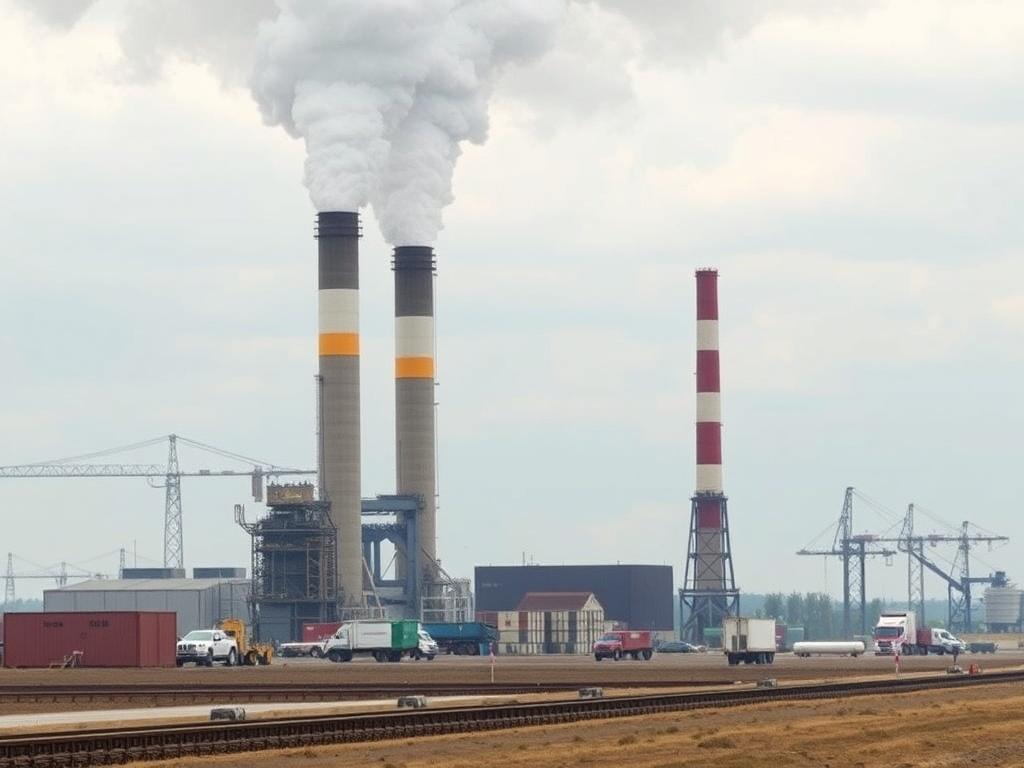
Steel illustrates the challenge. Two producers can make identical-looking steel with vastly different emissions depending on their energy mix and production technology. A BCA that recognizes cleaner processes rewards decarbonization.
For instance, a plant using low-carbon electric arc furnaces powered by renewables should be treated differently than a coal-fired integrated mill. Benchmarks and verification must be nuanced enough to reflect that reality.
When I reported on discussions between steelmakers and regulators, producers were often willing to disclose process emissions when assured the methodology was fair and replicable. Trust-building matters as much as technical detail.
Scaling up: from pilots to full systems
Most advocates recommend phased approaches: start with reporting obligations, build data sets, move to financial adjustments for a subset of sectors, and expand over time as capacity grows. Phasing reduces shocks and provides learning opportunities.
Pilot programs allow customs, environmental agencies, and firms to test methodologies and workflows. Pilots also reveal unintended consequences before full implementation, enabling course corrections.
Patience and iterative improvement pay off. A rushed rollout risks legal challenges, market disruption, and loss of credibility; a careful scale-up builds robustness and buy-in.
Coordination with domestic climate policy
BCAs are not substitutes for domestic climate policy. They function best when part of a coherent package that includes emissions pricing, regulation, and investment in clean technology.
Conversely, without credible domestic policies, BCAs can look like trade protectionism. A strong domestic carbon price provides the moral and legal backbone for border adjustments and sends consistent market signals.
Countries that combine a clear domestic carbon policy with a transparent, rule-based BCA enhance both environmental effectiveness and political legitimacy.
Stakeholder engagement and transparency
Successful implementation requires early and sustained engagement with industry, labor groups, trade partners, and civil society. Clear rules drafted with stakeholder input reduce uncertainty and resistance.
Transparency about methodologies, revenue uses, and compliance procedures builds trust. Publishing datasets and audit results allows external scrutiny and reduces the risk of arbitrary enforcement.
In my experience covering regulatory rollouts, agencies that open draft rules to public comment and publish impact assessments enjoy smoother implementation and fewer legal surprises.
How businesses can prepare now
Importers and exporters should begin mapping the carbon intensity of their supply chains, investing in measurement systems, and documenting emissions reductions. Early action gives firms a competitive edge under future BCAs.
Firms can also engage with policymakers to shape pragmatic rules and participate in pilot programs. Firms that collaborate on sectoral benchmarks and verification standards help create workable, industry-wide solutions.
Finally, companies should model possible cost impacts under different border-charge scenarios and explore hedging strategies, contractual terms, and supply-chain adjustments to manage exposure.
A table: comparing major proposals and initiatives
| Feature | EU CBAM | U.S. proposals (varied) | Other approaches |
|---|---|---|---|
| Scope | Initially energy-intensive sectors (steel, cement, aluminum, fertilizers, electricity) | Proposals vary from sectoral to economy-wide; no federal plan enacted | Sectoral agreements, procurement-based measures |
| Measurement | Benchmarks with reporting; moving toward financial settlement | Some proposals use ETS-equivalent prices; others favor simpler levies | Output-based allocations, certification systems |
| Exports | Export rebates under discussion to avoid double burden | Varied approaches; export treatment debated | Export support or exemptions common in design proposals |
| Legal framing | Designed to be WTO-compliant with environmental exceptions | Legal defensibility a major focus of proposals | Coordination via plurilateral agreements reduces legal risk |
Potential pitfalls to watch
Three pitfalls recur in debates: first, overcomplicated measurement regimes that raise compliance costs without improving outcomes; second, politically motivated carve-outs that undermine effectiveness; and third, poor communication that allows opponents to frame BCAs as protectionist.
Avoiding these requires clarity of purpose, a pragmatic balance between precision and administrative feasibility, and engagement with trading partners to explain objectives and offer cooperation.
While technical fixes matter, much of the risk lies in political choices. Transparent decision-making and predictable phasing reduce the chance of missteps that could sink otherwise sensible policies.
How BCAs interact with supply-chain decarbonization
Beyond prices, BCAs create market signals that can accelerate supply-chain decarbonization. Firms seeking to maintain market access will invest in cleaner production methods or source from lower-carbon suppliers.
These incentives can spur innovation in low-carbon technologies, like hydrogen-based steelmaking or carbon capture for cement. For countries hosting advanced production, the business opportunity is to export cleaner products to markets that apply BCAs.
Realistically, the pace of technological change depends on predictable market signals and supportive policy, not simply the existence of a border charge. Complementary investments and R&D policy are essential.
Responding to diplomatic friction
When BCAs generate diplomatic complaints, the best response is constructive engagement: explain methodologies, provide technical support, and negotiate transitional arrangements. Defensive posturing worsens tensions.
Offering capacity-building programs and phased compliance timelines helps exporting countries adjust. These measures reduce the political cost and strengthen the environmental case for border adjustments.
Building multilateral forums where countries can harmonize approaches or recognize each other’s carbon policies reduces conflict and provides stability for trade and climate objectives.
Paths forward: incrementalism vs. bold action
There is a tension between incremental pilots and immediate full-scale implementation. Incrementalism buys learning time and lowers political risk; bold action sends a clear market signal and may accelerate global decarbonization.
Policymakers often opt for a middle path: start with reporting and a narrow sectoral scope, then move to financial adjustments as methodologies and capacities improve. This sequence reduces upheaval while maintaining momentum.
Which path a country chooses depends on domestic politics, industry readiness, and international relations. Pragmatism in sequencing is as important as the ambition of the measure itself.
My experience observing the policy debate
As a writer covering climate and trade discussions, I’ve sat in rooms where steelmakers explained their investments in low-carbon furnaces and where customs officials asked practical questions about auditing. Those moments underscore how technical details drive politics.
I’ve watched negotiators pivot from broad statements of principle to nitty-gritty compromises over data formats, thresholds, and verification timelines. Those compromises often determine whether a policy becomes law or fizzles.
Seeing these conversations up close convinced me that the battle over climate tariffs is as much about institutional capacity and trust-building as it is about economics or law.
What to watch in the coming years
Watch the expansion of pilot programs, data collection efforts, and the first legal challenges. Early litigation outcomes will shape how aggressively governments proceed and how they design future measures.
Also watch technological shifts that alter emissions intensity in key sectors. If low-carbon steel production scales rapidly, the political case for punitive border measures weakens because competitive low-carbon products will be available worldwide.
Finally, observe diplomatic efforts: whether major emitters coordinate on common standards or pursue unilateral measures will determine the global profile of border carbon policies.
Final thoughts
Taxing carbon at the border — under whatever label — is no simple fix. It requires careful design to be both effective environmental policy and defensible under international trade law. The stakes are high: done well, a border charge can preserve domestic climate ambition and nudge global supply chains toward lower emissions.
Done badly, it risks trade retaliation, legal defeat, and wasted administrative effort. The sensible path combines transparent rule-making, phased implementation, technical cooperation with trading partners, and strong domestic climate measures.
Governments that take the time to get these details right — investing in data, verification, and dialogue — will be better positioned to reduce emissions while keeping trade open and fair. That pragmatic, steady approach stands the best chance of delivering real climate results without fracturing international cooperation.