Rare earth minerals and strategic tariffs have leapt from obscure technical briefings into boardroom war games and cabinet-level strategy sessions. The handful of elements buried in the earth’s crust now sit at the intersection of national security, clean-energy ambitions, industrial resilience and environmental dilemmas. This article walks through why these materials matter, how tariffs and other trade tools can be wielded, and what policymakers and businesses can do to reduce risk without breaking the global supply system.
- What are rare earth elements and why they’re distinctive
- How these elements shape modern industry
- Global production and the concentration problem
- Tariffs as a strategic instrument
- How tariffs ripple through supply chains
- Case study: China’s export restrictions and the WTO ruling
- Case study: industrial policy responses in the United States and Australia
- Who bears the economic costs of tariffs?
- Design principles for strategic tariffs
- Legal and multilateral constraints
- Economic modeling: measuring benefits and risks
- Environmental and social implications of rare earth extraction
- Recycling and substitution as lower-risk pathways
- Practical policy alternatives beyond tariffs
- Examples of coordinated approaches
- Industry responses and supply-chain strategies
- How businesses can plan under policy uncertainty
- Winners and losers under different policy mixes
- Technical challenges in re-establishing processing capacity
- Measuring strategic success: metrics that matter
- Policy mistakes to avoid
- A compact reference table of important rare earths and uses
- Policy recommendations for a balanced approach
- Cooperation with allies: building a resilient chain
- Real-world example: a project timeline and lessons learned
- How to communicate policy to markets and the public
- Looking ahead: technological and geopolitical trends
- Final thoughts on trade-offs and practical choices
What are rare earth elements and why they’re distinctive

Rare earth elements (REEs) are a group of 17 chemically similar metals that include neodymium, praseodymium, dysprosium, terbium, lanthanum and cerium. They are not actually “rare” in terms of crustal abundance, but they tend to occur in low concentrations and are costly to separate and refine to commercial purity. The technical difficulty of extraction and the processing steps required make the supply chain complex and capital intensive.
Several REEs are critical for permanent magnets, which power everything from electric-vehicle motors to wind turbines and guidance systems. Others enable high-performance electronics, catalytic converters, glass polishing, and phosphors for lighting and displays. The diversity of uses means that a squeeze in one part of the chain can ripple across multiple high-tech sectors.
How these elements shape modern industry

Permanent magnets made from neodymium and dysprosium are a prime example of how a handful of elements can define whole industries. These magnets offer high magnetic strength and thermal stability, traits that are essential in compact, energy-dense motors and generators. As electrification accelerates—cars, trains, aircraft systems, and renewable power—demand for these magnets has grown quickly.
Beyond magnets, lanthanum and cerium appear in battery electrodes, glass and ceramics, and oil refining catalysts; europium and terbium power color displays and lighting; yttrium and gadolinium have uses in medical imaging and electronics. The broad technological footprint makes REEs strategic inputs rather than just specialty commodities.
Global production and the concentration problem
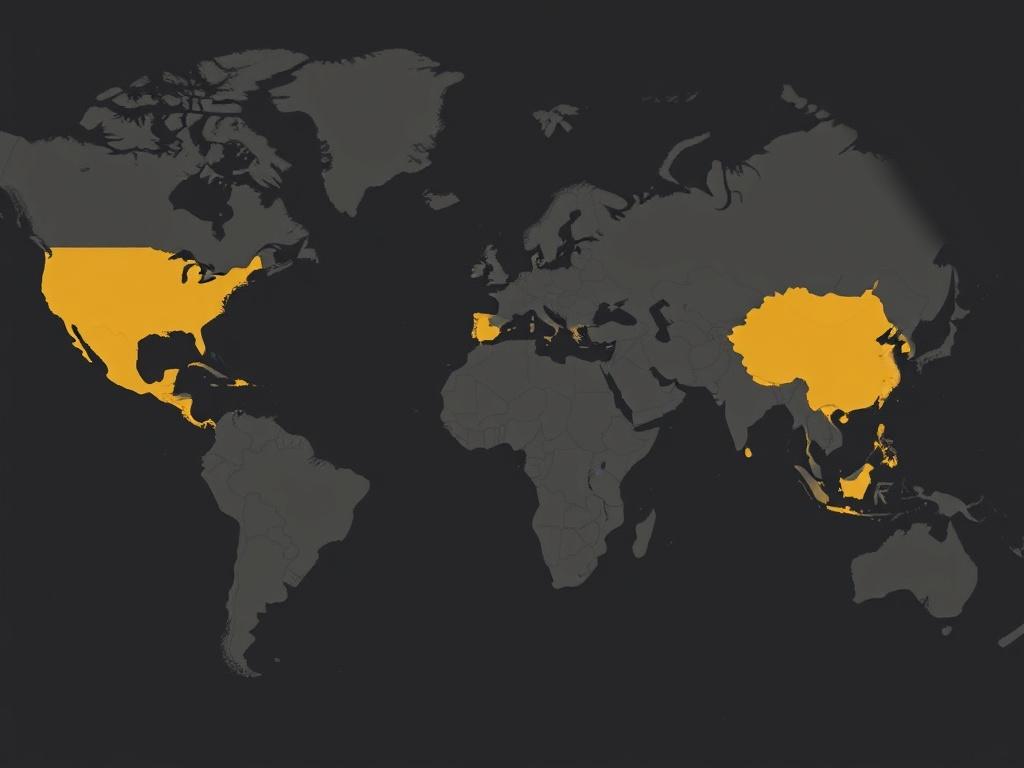
The global supply chain for rare earths is geographically concentrated. China dominates not just mining but most stages of processing and separation—the costly, dirty parts of the value chain. That concentration lowers costs through scale and vertical integration, but it creates systemic vulnerability when political tensions or domestic policy shifts occur.
Other countries are producers too—Australia, the United States, Myanmar, and parts of Africa and Southeast Asia—but their output historically focused on raw ore or intermediate materials. A handful of recent projects and investments are attempting to re-establish upstream and midstream capacity outside China, yet rebuilding trust, technical know-how, and processing infrastructure takes time and capital.
Tariffs as a strategic instrument
Tariffs are a blunt but visible tool policymakers can use to alter trade flows and to signal intent. In principle, levying duties on imported minerals or processed components can protect nascent domestic producers, buy time for industrial policy to take hold, and discourage reliance on a single foreign supplier. In practice, tariffs interact with market incentives, investment cycles, and geopolitical signaling in complicated ways.
When used selectively, tariffs can raise the price of imports, making domestic projects economically viable and encouraging recycling and substitution. They can also provoke retaliation, invite WTO challenges, or push buyers to vertically integrate overseas. The history of trade instruments shows how well-meaning tariffs can produce unintended shifts in supply chains that are hard to reverse.
How tariffs ripple through supply chains
Tariffs on intermediate goods or refined minerals often do not affect end-users in a simple, linear fashion. A tariff on refined neodymium oxide will increase costs for magnet manufacturers, who may in turn pass those costs to electric-vehicle makers or choose to relocate fabrication to lower-cost jurisdictions. That relocation changes where taxes are paid and where jobs are created.
Procurement managers react to price certainty as much as price levels. If tariffs are volatile or perceived as temporary, companies may prefer long-term supply contracts, equity investments in foreign assets, or stockpiling rather than new domestic investments. The net effect can be that tariffs delay the re-shoring of capacity rather than accelerate it.
Case study: China’s export restrictions and the WTO ruling
China’s informal export curbs on rare earths in the early 2010s—peaking in a widely reported 2010 episode involving a diplomatic dispute with Japan—exposed the vulnerability of global manufacturing to strategic supply policy. The restrictions took several forms over time: quotas, taxes, licensing, and informal administrative obstacles. The disruption pushed customers and governments to rethink supply diversification strategies.
The United States, European Union and Japan challenged China’s policies at the World Trade Organization, and in 2014 the WTO ruled that China’s export restrictions violated trade rules. The case underscored two points: first, that export controls can be contested in multilateral fora; and second, that political shocks often drive permanent shifts in procurement and investment behavior even if legal action ultimately reverses the policy.
Case study: industrial policy responses in the United States and Australia
Following the wake-up call of the 2010s, countries like the United States, Australia, and Japan began to finance processing, separation, and value-added capabilities. In the U.S., the Department of Defense and the Department of Energy backed projects to reconstitute domestic rare-earth supply chains and to improve recycling and substitution research. This public investment aimed to reduce strategic exposure for defense-critical systems and commercial supply chains alike.
Australia expanded its mining and processing partnerships; companies such as Lynas have been significant in maintaining non-Chinese processing capacity. Meanwhile, private firms took steps to reopen historically important sites—examples include efforts to revive Mountain Pass in California—which created a fragile but growing non-Chinese industrial base. Those projects often required both time and targeted policy support to be economically viable.
Who bears the economic costs of tariffs?
Designing tariffs without a clear view of incidence invites surprises. Consumers ultimately absorb higher prices when tariffs increase costs upstream, especially for products with thin margins. Manufacturers might be squeezed in the short run, and some specialized suppliers could lose business to competitors who source inputs elsewhere. Economists often stress that tariffs are a tax on domestic users as much as a shield for domestic industry.
Governments can mitigate this by combining tariffs with targeted subsidies, tax credits, or procurement guarantees that cushion downstream industries. Yet those hybrid programs must be carefully calibrated to avoid creating rent-seeking behavior or locking in inefficient producers. A strategic approach blends market discipline with targeted support rather than relying on broad duties alone.
Design principles for strategic tariffs
If policymakers choose tariffs as part of a broader strategy, several practical principles should guide them. First, clarity in intent matters: tariffs aimed at creating time-limited breathing room for domestic capacity should be accompanied by explicit investment and performance benchmarks. Vague or indefinite measures create planning uncertainty for private firms.
Second, targeted measures that focus on intermediate processed materials or certain forms of raw ore can reduce collateral damage. Third, exemption mechanisms for bona fide supply agreements or for sectors deemed critical can preserve essential manufacturing capabilities. Finally, tariff measures should be transparent and predictable so that businesses can structure long-term supply arrangements rather than play defense against regulatory whiplash.
Legal and multilateral constraints
Tariffs do not exist in a legal vacuum. WTO rules, regional trade agreements and bilateral treaties limit the scope and duration of discriminatory trade measures, particularly when they appear to be protectionist rather than corrective. Countries that apply tariffs broadly risk facing legal challenges or retaliatory actions.
Moreover, major trading partners are often also markets for finished goods. Tariff-driven retaliation can harm export sectors unrelated to rare earths, so policymakers must weigh the contagion risk. Engaging allies in coordinated industrial strategies—rather than unilateral tariffs—reduces the likelihood of escalatory trade disputes that erode mutual trust.
Economic modeling: measuring benefits and risks

Rigorous economic modeling helps quantify the trade-offs between tariffs and alternative interventions. Models can estimate welfare changes, shifts in production locations, and price impacts for downstream industries. They also help identify threshold points where tariffs might trigger investment responses versus points where they simply raise end-user costs without stimulating domestic capacity.
Yet models are only as good as their assumptions. Uncertainties around technological substitution, the pace of electrification, and geopolitical shocks mean that scenario analysis and stress testing should accompany any modeling effort. Policymakers should use models as decision supports rather than definitive forecasts.
Environmental and social implications of rare earth extraction
Mining and processing rare earth elements can leave a heavy environmental footprint if not managed with modern standards. The separation process often involves acid leaching and produces waste streams that, if poorly handled, contaminate water and soil. Social concerns include land use, impacts on local communities, and the labor conditions in some producing countries.
These environmental costs complicate the calculus for onshoring production. Establishing domestic or allied processing facilities requires robust environmental safeguards, community engagement and higher capital investment. Tariffs alone cannot offset the need for cleaner processes; policy packages must include environmental regulation and incentives for best practices.
Recycling and substitution as lower-risk pathways
Recycling rare earths from electronic waste and end-of-life products offers a way to reduce dependence on primary mining. The technology for efficient, large-scale recovery is improving, but it is not yet mature enough to replace primary supply for high-demand elements like neodymium in the near term. Building the collection systems and chemical processes at scale requires both private investment and public coordination.
Substitution—changing designs to use fewer or different materials—is another option. Engineers are developing magnet designs that require less dysprosium or that use alternative materials entirely. These innovations reduce exposure but often come with trade-offs in performance, cost or energy efficiency. A mixed strategy of recycling, substitution and diversified primary supply is therefore the most plausible path to resilience.
Practical policy alternatives beyond tariffs
Tariffs are only one lever. Governments can deploy industrial subsidies, research-and-development grants, tax credits, guaranteed public procurement, or public-private partnerships to accelerate domestic capabilities. Strategic stockpiles and joint reserves among allies can provide emergency buffers without distorting regular markets as sharply as permanent tariffs.
Diplomacy and trade agreements also matter. Negotiating supply arrangements, investment protections and standards with reliable partners reduces vulnerabilities. Investment screening rules can guard critical facilities from foreign control while still welcoming capital and expertise. These tools are more granular than tariffs and can be tailored to strategic priorities.
Examples of coordinated approaches
Some governments have pursued multilateral approaches: partner nations agree to co-invest in processing plants or to coordinate procurement to underwrite new capacity. For instance, trilateral initiatives among democratic allies have focused on joint investments, shared stockpiles and tech-sharing to rebuild separation and magnet supply chains outside high-risk jurisdictions. These cooperative models reduce the incentive to implement unilateral protectionist barriers.
Similarly, export-credit agencies and development banks have begun to fund projects that meet environmental and social standards, thereby promoting sustainable non-Chinese supply without relying on tariffs. These financial instruments can tip marginal projects into feasibility while setting expectations for governance and environmental performance.
Industry responses and supply-chain strategies
Companies in affected industries have reacted in several ways: diversifying suppliers, investing in upstream assets, re-engineering products, or increasing inventories. Procurement teams build dual-source strategies that balance cost with resilience; some firms accept higher near-term costs in return for predictable supply over decades. Those trade-offs are strategic rather than tactical.
I have worked with procurement managers who described the mental shift required: sourcing used to be an optimization exercise driven by price, but it has become a risk-management discipline focused on scenarios and optionality. That change alters how contracts are written, how capital is allocated, and how firms value long-term partnerships over spot-market bargains.
How businesses can plan under policy uncertainty
To survive policy swings, firms should stress test their inputs, hedge where feasible, and build contractual flexibilities. Long-term off-take agreements with embedded price mechanisms, minority equity investments in mining or processing projects, and participating in consortiums that share investment risk are practical tactics. These measures align companies’ incentives with those of governments seeking secure supplies.
Corporate R&D into materials science offers another lever. Firms that successfully reduce critical-element intensity in products gain a permanent competitive advantage and reduce exposure to tariffs or export shocks. That kind of innovation often requires multi-year efforts but yields durable benefits.
Winners and losers under different policy mixes
Certain actors stand to gain from tariffs and related industrial policies: domestic miners and processors, engineering firms that build new plants, and recycling enterprises. Conversely, downstream manufacturers that rely on low-cost inputs—consumer electronics makers, certain automakers and appliance producers—may face higher costs. The distributional impacts should inform compensation or transitional programs to protect vulnerable industries and workers.
Policymakers need to think about timing. If a tariff is imposed before domestic capacity is online, the burden falls heavily on manufacturers and consumers. Policies that sequence support—first financing and permitting new capacity, then providing temporary trade protection—are less disruptive than abrupt duties imposed without parallel supply expansion.
Technical challenges in re-establishing processing capacity
Processing and separation require specialized chemistry, skilled workers, and environmental controls—capabilities that eroded in many Western jurisdictions over decades. Restarting such industries entails not only building plants but also training technicians, securing reagent supplies, and achieving the economies of scale that make operations competitive. This is neither cheap nor fast, and expecting immediate results from tariffs alone is unrealistic.
Permitting and community acceptance are additional hurdles. Modern processing facilities must meet strict environmental standards, which adds cost but also reduces risks in the long run. Governments that underwrite initial projects should budget for these realities and resist downplaying environmental safeguards for the sake of speed.
Measuring strategic success: metrics that matter
Success cannot be judged solely by increased domestic production. Useful metrics include the diversity of sources for critical elements, the share of processing capacity under friendly control, lead times for critical components, the robustness of recycling systems, and the cost to key industries. Policymakers should track these indicators over time rather than relying on headline production figures alone.
Monitoring private-sector investment, patent activity in substitution and recycling technologies, and the number of long-term offtake agreements are also informative. These measures signal whether the market is adapting structurally or merely responding with short-term stockpiling.
Policy mistakes to avoid
Several pitfalls recur in historical episodes: overreliance on temporary tariffs without real investment, neglecting environmental safeguards to speed projects, and failing to coordinate with allies. Policies that appear protectionist rather than strategic invite retaliation and may fragment technology ecosystems at a time when cooperation would be more productive. Thoughtful sequencing and allied coordination reduce these dangers.
Another mistake is underestimating the adaptability of suppliers. Tariffs that are too high or too sudden can push sourcing to third-party countries that develop their own capabilities, thereby creating new competitors rather than strengthening domestic industry. Smart policy anticipates such supplier responses and shapes incentives accordingly.
A compact reference table of important rare earths and uses
| Element | Common uses | Industry criticality | Primary producing regions |
|---|---|---|---|
| Neodymium (Nd) | Permanent magnets for motors and generators | High | China, Australia, U.S. (limited) |
| Dysprosium (Dy) | High-temperature magnet performance | High (scarcer) | China, Myanmar |
| Lanthanum (La) | Battery electrodes, catalysts | Medium | China, Australia |
| Europium/Terbium | Phosphors for lighting and displays | Medium | China |
Policy recommendations for a balanced approach
A balanced policy mix includes targeted, time-bound tariffs tied to clear investment outcomes; R&D funding for recycling and substitution; public financing to de-risk early-stage processing; and international cooperation to fund shared capacity. Each measure addresses a specific failure—market short-termism, technical barriers, financing gaps, and geopolitical risk—without relying solely on protectionism.
Procurement policies can be decisive: government purchase agreements for military and civilian projects can create guaranteed demand that underwrites early-stage capacity. When combined with performance-based incentives and environmental standards, procurement becomes a lever that promotes sustainable industrial development rather than short-term rent seeking.
Cooperation with allies: building a resilient chain
No single country will fully internalize all stages of the rare-earth value chain cheaply. Cooperative frameworks among allies—sharing investment risk, standardizing environmental rules, coordinating stockpiles, and creating cross-border supply corridors—deliver resilience at lower cost than unilateral self-sufficiency. Such cooperation also reduces the temptation to resort to tariffs that fragment markets.
Joint ventures and multinational consortia that include private capital can accelerate capacity building while ensuring governance and transparency. These arrangements require patient diplomacy and common standards, but they offer a pragmatic path to diversify suppliers without triggering trade wars.
Real-world example: a project timeline and lessons learned
I once advised a consortium trying to finance a separation plant in a friendly country. The group underestimated the time required for permitting and local stakeholder engagement, and they relied too heavily on a single offtaker promise that was contingent on tariffs remaining in place. When those tariffs were adjusted, the offtaker withdrew, and the project needed fresh capital and renegotiated contracts to survive.
The key lesson was sequencing: secure definitive offtake agreements that are not unconditional on transient policy measures, invest in community relations early, and diversify financing sources. That experience reinforced my belief that tariffs can help, but only when they are part of a transparent roadmap with credible milestones and durable buyer commitments.
How to communicate policy to markets and the public
Clear communication reduces uncertainty. Governments should publish timelines, investment targets, and exit conditions for temporary tariffs or protections. Transparency about environmental safeguards and social benefits helps build local consent for new projects and reduces the political risk of delays. Markets respond favorably to predictability even if it comes with higher near-term costs.
Engaging industry early also matters. Open dialogues with manufacturers, recyclers and miners help design measures that actually change behavior rather than merely raise costs. When policy is co-designed with stakeholders, compliance improves and unintended consequences decline.
Looking ahead: technological and geopolitical trends
Two long-term forces will shape the next decade. Technological advances in recycling and magnet design can reduce demand intensity for certain elements, while the pace of electrification will keep absolute demand rising for others. Geopolitically, competition among major powers over critical-mineral supply chains will likely persist, but so will pragmatic cooperation where economic interests align.
Policymakers should therefore prepare for a moving target: strategies that are robust under multiple demand and technology scenarios work better than rigid plans designed for one forecast. Flexibility, investment in human capital, and alliance-building are the durable building blocks of a resilient approach.
Final thoughts on trade-offs and practical choices

The temptation to use tariffs as a simple fix to a complicated problem is strong, but history shows that tariffs alone seldom produce sustainable supply diversification. They are most useful when deployed as part of a broader, time-bound strategy that includes investment support, environmental standards, recycling initiatives, and international cooperation. This suite of measures addresses both the economic and ethical dimensions of rare-earth supply chains.
For businesses, the pragmatic path combines short-term risk management—diversifying suppliers and signing durable contracts—with investments in materials innovation and recycling. For governments, the prudent course blends modest, predictable trade measures with targeted finance, multilateral coordination and clear timelines so that markets and communities can plan accordingly. The goal is not to eliminate trade dependencies overnight, but to reshape incentives so that resilience, sustainability and strategic autonomy advance together.