Tariffs remain a visible, politically potent tool in many low- and middle-income countries, even as advanced economies have moved toward more sophisticated tax systems and deeper trade integration.
- Setting the scene: a simple observation with complex causes
- Tariffs as revenue machines where tax systems are shallow
- Administrative capacity and the logistics of collection
- History and policy legacies: how the past informs the present
- Infant industries, industrial policy, and the developmental temptation
- Political economy: concentrated benefits, dispersed costs
- The visibility and political salience of tariffs
- Trade-offs: why tariffs can be tempting despite known costs
- Global value chains and their asymmetric effects
- Informality and the tax base: why advanced economies can afford to give up tariffs
- Exchange rate management, balance-of-payments concerns, and tariff use
- Debt markets, access to finance, and revenue alternatives
- Trade agreements, external pressure, and policy space
- Corruption, smuggling, and the dark side of tariff reliance
- Tariff structure and incidence: who really pays?
- Case study: India’s gradual move away from tariff dependence
- Case study: East Asia’s selective protection and export push
- Case study: Latin America’s import substitution lesson
- Reform pathways: building tax capacity while managing political fallout
- Alternatives to tariffs: VAT, income tax, and property taxes
- International assistance and conditionality: help and limits
- Behavioral responses: firms, consumers, and shadow economies
- Measuring success: indicators beyond tariff rates
- Designing smart protection: temporary, targeted, and conditional
- Trade policy as part of a development strategy, not a substitute
- Local politics and narratives: how leaders frame tariffs
- Technology, digitalization, and the future of customs
- The role of regional integration and preferential trade agreements
- Equity considerations: who wins and who loses
- Practical checklist for policymakers considering tariff reform
- Table: comparing tariff reliance and alternatives (illustrative)
- Real-life anecdote: observing customs reform in practice
- International examples of successful transitions
- When tariffs are part of a pragmatic crisis response
- How civil society and business groups shape tariff policy
- Research insights: what academics tell us
- Practical example: sequencing a transition away from tariffs
- Regional disparities: rural areas and sectoral politics
- The role of public communication and transparency
- Future prospects: can tariff reliance decline rapidly?
- Final thoughts: policy realism over dogma
Setting the scene: a simple observation with complex causes
At first glance the pattern is straightforward: poorer countries rely more on tariffs than rich ones. This observation has important implications for public finances, industrial strategy, and political economy in developing countries.
But the causes are layered. Administrative constraints, historical trajectories, economic structure, and domestic politics all combine to make tariffs a tempting — and sometimes necessary — instrument for governments with limited options.
Tariffs as revenue machines where tax systems are shallow
One blunt reality of low-income economies is the limited reach of domestic tax systems. Large informal sectors, weak payroll and income reporting, and low rates of value-added tax (VAT) compliance mean governments struggle to raise broad-based taxes.
Customs points offer a relatively simple alternative. Import taxes are collected at a small number of border crossings and ports, which concentrates enforcement efforts and reduces the administrative burden of widespread auditing and collection.
International institutions such as the World Bank and IMF have repeatedly noted this dynamic: for many developing countries, trade taxes are still among the easier ways to secure predictable revenue without building an extensive domestic tax administration.
Administrative capacity and the logistics of collection
Collecting income and consumption taxes requires trained staffs, IT systems, and legal frameworks for audits, appeals, and enforcement—capacities that can take decades to develop. Customs, by contrast, can be staffed by fewer people and operated with simpler procedures.
From a practical standpoint, customs officers intercept goods at entry points. The physical chokepoints reduce opportunities to hide transactions compared with a sprawling informal market where sales happen in small, dispersed units.
This administrative convenience is not just a bureaucratic preference; it directly affects the fiscal balance. When a government cannot reliably tax domestic transactions, levying duties on imports becomes an immediate and concrete source of funds.
History and policy legacies: how the past informs the present
History matters. Many post-colonial states inherited customs systems designed to extract revenue for imperial administrations. Those systems remained useful after independence and became embedded in state practice.
During the mid-20th century, import substitution industrialization (ISI) added another layer: tariffs were deliberately raised to protect nascent domestic industries. Even when the economic rationale waned, the institutional habit and political coalitions that formed around tariff protection often persisted.
Transitions away from tariffs therefore require not only policy change but also institutional reforms and political realignments — a slow process that many governments are reluctant or unable to undertake quickly.
Infant industries, industrial policy, and the developmental temptation
Economic development often follows a path in which countries try to nurture domestic industries until they achieve scale and productivity. Tariffs provide a blunt but effective shield against foreign competition while local firms build capacity.
Across Latin America and parts of Africa and Asia, tariff protection formed part of broader industrial strategies. Policymakers argued that without temporary protection, fledgling producers would never survive against established foreign competitors.
That debate is nuanced. Some countries used protection prudently, combining it with performance incentives and export promotion. Others created sheltered domestic markets with limited pressure to reform, which slowed productivity growth.
Political economy: concentrated benefits, dispersed costs
Tariffs create concentrated rents for specific domestic producers and merchants who benefit from reduced foreign competition. Those groups can organize and lobby effectively to maintain protection.
Consumers, by contrast, bear the cost through higher prices but are a diffuse group that finds it harder to mobilize against protectionist measures. This imbalance shapes political incentives in many developing democracies.
Where interest groups have strong ties to political elites, tariffs become part of a mutually reinforcing exchange: protection in return for political support, which can entrench tariff reliance over time.
The visibility and political salience of tariffs
Unlike a small excise tax or an incremental payroll levy, a tariff is visible at the port and easy to explain to both political constituencies and international partners. Governments can point to a single policy as raising revenue or protecting jobs.
This visibility works politically. Ministers can credibly claim they are defending domestic industry, and opposition politicians can target tariff reductions as giveaways. That dynamic makes tariff decisions salient during campaigns and crises.
In short, tariffs are not only an economic instrument but also a political symbol, which increases their appeal in settings where legitimacy and electoral survival matter intensely.
Trade-offs: why tariffs can be tempting despite known costs
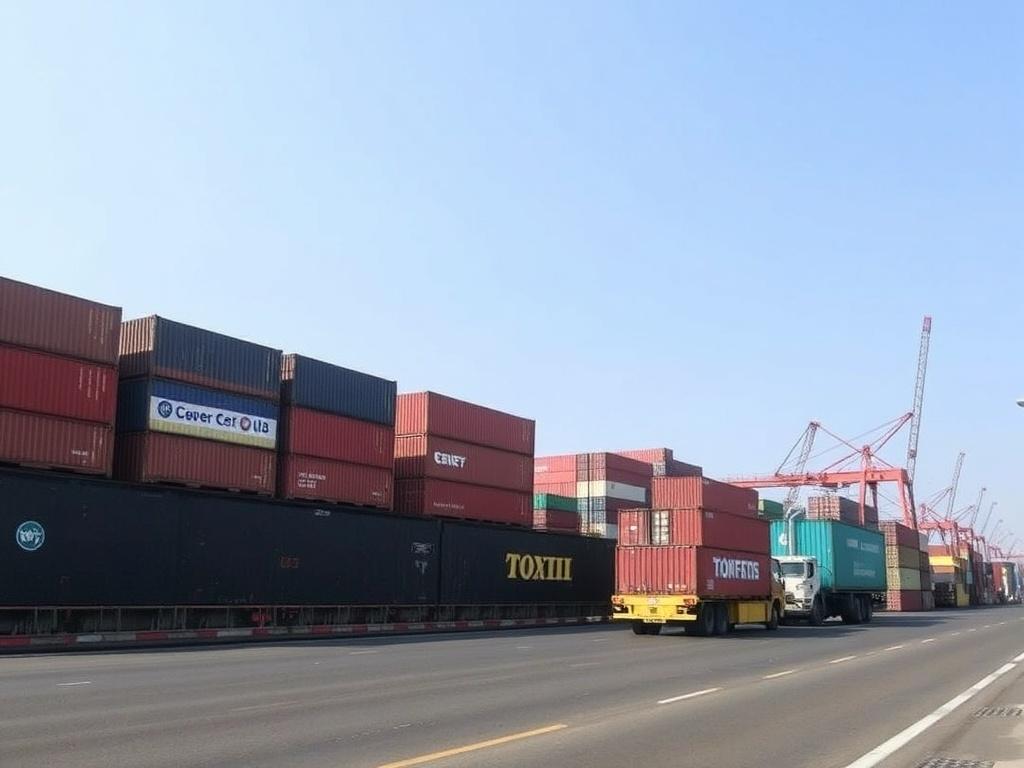
Tariffs generate revenue and protect producers, but they also raise consumer prices, distort resource allocation, and can reduce incentive to innovate. Understanding why governments still use tariffs requires weighing these trade-offs against short-term needs.
When governments face immediate fiscal shortfalls or sharp import competition threatening politically important firms, the short-term benefits of tariffs can outweigh long-term efficiency concerns in policymakers’ calculations.
That calculus is not irrational; it reflects real constraints and political timelines. However, repeated reliance on tariffs without complementary reforms can lock economies into suboptimal structures.
Global value chains and their asymmetric effects
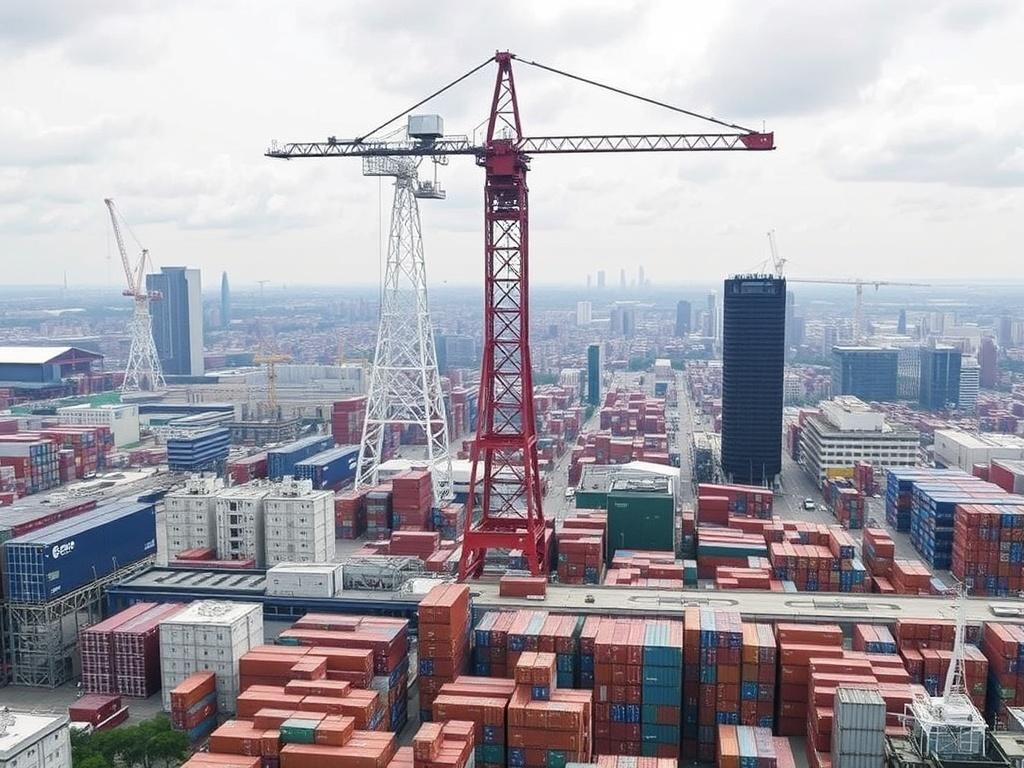
Advanced economies tend to be more integrated into global value chains, meaning tariffs can disrupt domestic production that relies on imported intermediate inputs. High-income countries therefore face higher indirect costs from levying tariffs.
Many developing countries, by contrast, have production structures where final consumer goods are imported and local value chains are less dependent on complex imported inputs. In those settings, tariffs on finished imports directly protect domestic producers and raise revenue with fewer second-round production effects.
As global supply chains deepen, the calculus changes. Countries that seek to join these chains must consider how tariffs raise costs for domestic firms that rely on imported parts — a consideration that explains some of the gradual tariff liberalization in export-oriented developing economies.
Informality and the tax base: why advanced economies can afford to give up tariffs
High-income countries typically possess a broader tax base: formal employment, comprehensive VAT systems, and higher compliance rates. These features make domestic taxes more feasible and less distortionary than trade taxes.
Developing economies often have large informal sectors where income is unreported and transactions occur outside formal channels. Creating a tax system that reaches these actors is politically and technically difficult.
Until those obstacles are addressed — through formalization of firms, better administration, and stronger legal institutions — tariffs will remain an attractive shortcut to revenue collection.
Exchange rate management, balance-of-payments concerns, and tariff use
Tariffs can influence trade balances and exchange rate pressures. In times of external vulnerability, governments sometimes use tariffs to discourage imports and conserve foreign exchange.
For countries with volatile export earnings or narrow export baskets, import compression via tariffs can be seen as a way to stabilize reserves and reduce short-term external financing needs.
While such measures are rarely a long-term solution and can hurt growth, they can be politically and economically expedient during crises, further explaining temporary surges in tariff reliance.
Debt markets, access to finance, and revenue alternatives
Rich countries can finance deficits more cheaply through deep capital markets, issuance of sovereign debt, and broad domestic savings. Poorer countries have limited access to affordable credit and often face higher borrowing costs.
When external borrowing is costly or conditional, governments lean on domestic revenue sources that are controllable — tariffs among them. In this sense, tariff reliance is partly a symptom of constrained fiscal space.
As access to concessional finance or sustainable domestic borrowing improves, the pressure to rely on tariffs can ease, but that transition requires credible macroeconomic management and institutional reform.
Trade agreements, external pressure, and policy space
Richer countries have long negotiated deep trade agreements that limit their ability to use tariffs; they also face domestic constituencies that benefit from openness. Developing countries negotiate from weaker positions and often retain broader tariff autonomy.
Multilateral disciplines under the World Trade Organization (WTO) and bilateral free trade agreements can constrain tariffs, but many developing states have historically used the policy space those agreements provide to preserve revenue and protect strategic sectors.
Negotiations and conditionality sometimes lead to tariff reductions over time, but the process is politically fraught and may provoke resistance if alternative revenue sources are not in place.
Corruption, smuggling, and the dark side of tariff reliance
High tariffs create incentives for smuggling and corruption. When the price difference between taxed and untaxed imports is large, evasion becomes profitable and enforcement becomes a constant battle.
Customs officials may find themselves at the center of rent-seeking opportunities, which can erode public trust and reduce the efficiency of revenue collection. Frequent tariff changes make administration harder and increase loopholes.
Reforming toward lower tariffs but higher domestic taxes reduces those incentives, but only if tax administration is strengthened concurrently — otherwise, the system may simply shift the problem to a different agency.
Tariff structure and incidence: who really pays?
It is tempting to think of tariffs as a simple tax on imports, but the incidence often falls on domestic consumers and firms through higher final prices. The burden depends on market structure, exchange rate adjustments, and the elasticity of demand.
In small open economies with competitive markets, much of a tariff can be passed through to consumers. In contrast, oligopolistic markets may allow producers to absorb part of the cost, altering the political and economic outcomes.
Understanding incidence matters because it shapes who mobilizes for or against tariff changes and determines the real welfare effects of protectionist policies.
Case study: India’s gradual move away from tariff dependence
India provides a useful illustration of how tariff policy is both a fiscal and developmental instrument. For decades after independence, India maintained high trade barriers as part of an inward-looking strategy to build domestic industry.
The 1991 reforms dramatically opened the economy and reduced tariff rates, but the shift required simultaneous improvements in tax administration, liberalization of domestic markets, and political consensus-building.
The Indian experience shows that moving away from tariffs is feasible, but it took economic crisis, international pressure, and sustained domestic reform to create the conditions for durable change.
Case study: East Asia’s selective protection and export push
Several East Asian economies combined protection for select industries with aggressive export promotion and performance requirements. Tariffs were part of a broader package of subsidies, credit allocation, and management of the exchange rate.
Crucially, protection in these cases was often conditional on export performance or productivity improvements, which limited the creation of purely sheltered firms. That discipline helped some countries graduate into competitive exporters.
These nuanced strategies differ from blanket protection and illustrate that tariffs can be used productively when accompanied by strong state capacity and clear performance expectations.
Case study: Latin America’s import substitution lesson
Much of Latin America pursued import substitution industrialization in the mid-20th century, raising tariffs to foster domestic manufacturing. The initial results included a rise in local industries and urban employment.
However, long-term outcomes were mixed. In many cases, protected firms lacked incentives to innovate, and economies struggled with inefficiencies and external imbalances that eventually forced policy reversals.
The Latin American experience highlights the risks of sustained protection without mechanisms that promote competitiveness and integration with global markets.
Reform pathways: building tax capacity while managing political fallout
Shifting away from tariff reliance requires simultaneous reforms in tax administration, legal frameworks, and social policies that compensate adversely affected groups. Piecemeal change risks fiscal shortfalls and political backlash.
Successful strategies often include phased tariff reductions, expansion of VAT with robust enforcement, improvements in customs technology to reduce smuggling, and targeted social transfers to offset short-term consumer losses.
External assistance can help, but domestic political management is essential. Reforms need to be credible, technically sound, and communicated clearly to stakeholders to build support.
Alternatives to tariffs: VAT, income tax, and property taxes
Broad-based consumption taxes like VAT are technically superior to tariffs in terms of neutrality and revenue potential, but they require administration and compliance capacity. Income taxes offer progressive revenue but demand sophisticated enforcement.
Property and wealth taxes can supplement revenue, but these too rely on registries, valuation systems, and legal institutions that are often underdeveloped in poorer countries.
Therefore, designing a credible shift away from tariffs typically involves strengthening institutions across multiple fronts rather than relying on a single replacement measure.
International assistance and conditionality: help and limits
Donors and international financial institutions can support tax reform by financing technical assistance, IT systems, and training for revenue authorities. They can also provide fiscal buffers that reduce the need to raise tariffs abruptly.
Yet conditionality can be counterproductive if it ignores domestic political realities. Successful aid programs calibrate expectations, support incremental reforms, and help build local ownership rather than imposing blueprints.
External advice is most effective when paired with domestic reform coalitions and clear institutional commitments to transparency and accountability.
Behavioral responses: firms, consumers, and shadow economies
Tax and trade policy changes provoke behavioral responses. Firms may restructure supply chains to avoid tariffs or shift invoicing practices to minimize duties, while consumers may substitute toward untaxed goods.
Informal markets can expand when formal taxes increase, so policymakers must anticipate and mitigate these risks with enforcement, incentives for formalization, and simplification of tax rules.
Understanding behavioral channels is crucial for designing reforms that minimize evasion and maximize compliance without unduly harming growth.
Measuring success: indicators beyond tariff rates
Lowering tariffs is not a sufficient measure of progress. Success also depends on whether governments replace lost revenue with sustainable sources, whether firms become more productive, and whether consumers benefit from lower prices and greater choice.
Indicators that matter include the share of revenue from domestic taxes, VAT compliance rates, the size of the informal economy, and changes in export diversification and productivity.
Policymakers should monitor these broader metrics to ensure reforms deliver improved fiscal health and economic performance, not just a headline tariff number.
Designing smart protection: temporary, targeted, and conditional
Where protection is necessary, evidence suggests it should be temporary, targeted, and contingent on performance. Blanket and indefinite tariffs tend to create dependency and weaken competitiveness.
Policies that link protection to explicit goals — technology adoption, export benchmarks, or productivity improvements — create clearer accountability and incentives for reform-minded managers.
This approach demands tougher monitoring and willingness to withdraw support, which in turn requires political courage and administrative capacity.
Trade policy as part of a development strategy, not a substitute
Tariffs can play a role in a broader development strategy, but they cannot substitute for investments in education, infrastructure, and institutions that drive long-term growth. Protection without these investments is a short-term bandage.
Countries that combine smart protection with public investment and export orientation tend to progress further than those that rely on isolationist policies alone.
Therefore, the question is not whether tariffs are inherently good or bad, but how they are used within a well-designed policy mix that promotes sustainable development.
Local politics and narratives: how leaders frame tariffs
Political leaders craft narratives to justify tariffs: saving jobs, defending national sovereignty, or achieving self-sufficiency. These narratives resonate when economic insecurity is high and credible alternatives are lacking.
Opposition to tariff reform often frames the issue as surrendering national interests to foreign firms or distant technocrats, which can be potent in nationalist contexts.
Effective reformers therefore need communication strategies that explain both the short-term costs and the long-term benefits, and provide tangible assistance to those hurt by reform.
Technology, digitalization, and the future of customs
Advances in digital customs processes, electronic documentation, and data analytics can reduce evasion and lower the administrative cost of customs administration. These improvements can make tariffs less distortionary by shrinking the gap between policy and practice.
Digital systems also enable better tracking of supply chains and more sophisticated tariff schedules that distinguish between inputs and final goods, reducing harm to domestic producers who rely on imports.
Investing in technology is therefore a critical complement to any strategy that reduces reliance on tariffs while protecting revenue streams.
The role of regional integration and preferential trade agreements
Regional trade agreements can influence tariff policy by creating larger markets that make protection less necessary or by allowing countries to source inputs more cheaply inside a trade bloc.
For some developing countries, regional integration has been a stepping stone to diversify exports and attract investment, reducing the political need for tariff-based protection at the national level.
Yet regional deals can also complicate revenue collection if tariff revenues fall before domestic tax systems are strengthened, creating transitional fiscal gaps.
Equity considerations: who wins and who loses
Tariffs typically protect capital and formal sector employers while raising prices for ordinary consumers, who spend a larger share of income on goods. This distributional impact raises equity concerns in poor countries.
Progressive alternatives, like expanding VAT exemptions for basic goods or strengthening cash transfer systems, can mitigate regressive effects if designed carefully.
Addressing equity explicitly during reform increases political acceptability and helps ensure that policy changes do not exacerbate poverty.
Practical checklist for policymakers considering tariff reform
Successful reform requires more than lowering rates. Key steps include: strengthening VAT administration, improving income tax systems, sequencing tariff reductions, and providing social safety nets for affected workers.
Policymakers should also invest in customs technology, enhance anti-smuggling efforts, and communicate reforms transparently to build public trust.
Finally, engaging stakeholders early and visibly linking tariff changes to broader industrial and social policies helps create durable support.
Table: comparing tariff reliance and alternatives (illustrative)
The table below summarizes common features of tariffs versus alternative revenue sources. It is intended as a heuristic rather than a precise empirical statement.
| Feature | Tariffs | VAT / Income tax |
|---|---|---|
| Ease of collection | Relatively easy at points of entry | Requires broad administration and compliance |
| Impact on consumers | Direct increase in import prices | Can be progressive or neutral depending on design |
| Incentive effects | Protects domestic producers; encourages smuggling | Less distortionary if well-administered |
| Political visibility | High; easy to communicate | Lower visibility but broader public impact |
Real-life anecdote: observing customs reform in practice
In field visits to port authorities in several coastal cities, I observed how a few well-placed scanners and electronic declarations transformed revenue flows. Where paperwork was digitized, clearance times fell and leakages declined noticeably.
One small customs office that embraced online invoicing cut opportunities for discretionary inspections and reduced petty corruption, which improved both compliance and public perception of fairness.
These experiences underscore that technology and process reform can make tariff systems less prone to abuse while creating room for broader fiscal reform.
International examples of successful transitions
Some middle-income countries have successfully shifted away from tariff dependency by sequencing reforms: they lower tariffs gradually while expanding VAT and strengthening tax administration. Supportive macroeconomic policy and targeted social programs ease the adjustment.
These transitions require sustained political commitment and often take a decade or more to materialize. Success stories typically involve parallel improvements in governance and trade facilitation.
The lesson is that tariff reform is rarely a quick win; it is a long-term project that needs coherent sequencing and practical safeguards.
When tariffs are part of a pragmatic crisis response
During sudden external shocks — a collapse in commodity prices, a pandemic-induced supply crunch, or capital flight — governments may reintroduce or raise tariffs to protect vulnerable sectors and conserve foreign exchange.
Such measures can be justified as temporary and targeted crisis responses, but they must be accompanied by transparent exit strategies to avoid permanent damage to competitiveness.
Designing credible sunset clauses and monitoring mechanisms helps ensure that crisis-driven tariff hikes do not calcify into permanent protection.
How civil society and business groups shape tariff policy
Business associations representing import-competing sectors often lobby for protection, while consumer groups and export-oriented firms push for liberalization. Civil society can play a role in advocating for transparency and equitable policy design.
Policy outcomes depend on the relative strength and organization of these groups and on the government’s responsiveness to public interest arguments. In some states, business capture of policy-making has maintained high tariffs despite economic costs.
Encouraging broad-based stakeholder engagement and strengthening independent policy analysis can improve the balance of interests in tariff debates.
Research insights: what academics tell us
Academic studies emphasize that the effects of tariffs depend on context: administrative capacity, market structure, and complementary policies shape outcomes. There is no universal rule that fits every country.
Empirical work supports the idea that tariffs can raise short-term revenue and protect jobs, but long-term growth typically requires deeper reforms that enhance productivity and integration into global markets.
Policymakers should therefore treat tariffs as one tool among many, not an end in themselves, and rely on evidence to guide the sequencing and design of reforms.
Practical example: sequencing a transition away from tariffs
A plausible sequencing might begin with targeted tariff reductions on intermediate goods, simultaneous investments in customs automation, expansion of VAT coverage with simplified filing for small firms, and modest increases in taxpayer services and audits.
Concurrently, social protection measures can soften the impact on the poorest consumers, and transitional support can help import-competing firms upgrade or shift to export markets.
Careful sequencing reduces fiscal shocks and builds political credibility for further reforms, while creating a more modern and equitable tax system.
Regional disparities: rural areas and sectoral politics
Tariff policy does not affect all regions equally. Areas with concentrated manufacturing or politically powerful import-competing elites may resist reform, while urban consumers and exporters may support liberalization.
Rural economies dependent on imported agricultural inputs can also be hurt by tariffs on fertilizers and machinery, complicating the politics of reform.
Addressing regional disparities requires place-sensitive policies and compensatory measures that acknowledge the uneven local impacts of tariff change.
The role of public communication and transparency
Transparent processes and clear communication about the rationale, timing, and expected effects of tariff reform improve public trust. Governments that hide tariff changes or fail to explain them often provoke suspicion and resistance.
Publicizing expected fiscal impacts, compensatory social measures, and monitoring indicators helps build accountability and reduces the influence of narrow interest groups.
Good communication is therefore a pragmatic necessity, not a cosmetic add-on, when moving away from tariff dependence.
Future prospects: can tariff reliance decline rapidly?
Rapid declines in tariff reliance are unlikely without concurrent improvements in tax administration, formalization of the economy, and political buy-in for reform. Sudden tariff cuts without replacement revenue create fiscal stress.
Nevertheless, technology, regional integration, and international support can accelerate change. Countries that invest deliberately in institutions and sequencing can reduce tariff dependence over a decade or two.
The future will favor states that balance fiscal prudence, social protection, and competitiveness while building the administrative muscle to collect broader domestic taxes.
Final thoughts: policy realism over dogma
Understanding why developing countries rely more on tariffs than rich ones requires realism about institutional constraints and political incentives. Tariffs are not merely a relic of protectionism; they are often a pragmatic response to hard problems in revenue collection and industrial policy.
That realism nonetheless points to a clear policy agenda: strengthen tax administration, invest in customs modernization, design temporary and conditional protection intelligently, and provide social supports during transitions.
Reform is possible, but it must be patient, evidence-based, and politically savvy — a combination of technical competence and political strategy that many developing countries are increasingly learning to deploy.