Tariffs are more than line items on trade agreements; they can redirect vineyards’ sales plans, squeeze margins at craft distilleries, and nudge drinkers toward different bottles. This article examines how tariffs affect the wine and spirits industry across pricing, supply chains, market strategy, and regulation, and offers practical examples of how producers, importers, and retailers respond.
- Understanding tariffs: what they are and why they matter
- Historical flashpoints and recent trade disputes
- How tariffs change pricing and profit margins
- Supply chain responses: sourcing, bottling, and routing
- Table: common supply-side strategies and trade-offs
- Small producers versus large multinationals: unequal impacts
- Channel effects: retail, on-premise, and travel market
- Consumer behavior: substitution, premiumization, and brand loyalty
- Currency swings and non-tariff barriers
- Policy tools and industry lobbying
- Mitigation strategies: practical steps firms take
- Case studies: real-world examples of disruption and adaptation
- Long-term structural shifts in the industry
- Supply, sustainability, and climate considerations
- Advice for exporters and importers
- How consumers will feel the effects
- How governments can design smarter policies
- Table: policy options and likely effects
- Real-life lessons from industry professionals
- Legal and compliance considerations
- Future scenarios: volatility or stability?
- Practical checklist for businesses
- Parting thoughts on adaptation and opportunity
Understanding tariffs: what they are and why they matter
A tariff is a tax a government places on goods as they cross its border. It can be ad valorem (a percentage of value), specific (a fixed amount per unit), or a complex hybrid; each type works differently for high-value spirits versus bulk table wine.
Governments use tariffs to protect domestic producers, raise revenue, or retaliate in trade disputes. For beverages, a tariff directly raises the landed cost of an imported bottle, but the ripples extend into pricing, distribution, and strategic decision-making.
Tariffs interact with other policy levers—subsidies, quotas, labeling rules, and sanitary standards—so their real-world impact depends on the whole regulatory environment. For businesses selling liquid goods with age, storage, and shipping considerations, these combined factors can be decisive.
Historical flashpoints and recent trade disputes
Trade tensions often put wine and spirits in the crossfire because they are both culturally symbolic and commercially valuable. In the last decade, several well-publicized disputes raised tariffs that hit beverages and changed market dynamics overnight.
For example, when governments impose retaliatory tariffs, luxury and premium categories like cognac or bourbon can be targeted precisely because they represent both economic and political statements. Those moves can make products substantially more expensive in affected markets or, in some cases, temporarily shut a market to certain brands.
Other episodes—such as anti-dumping and anti-subsidy investigations—have also targeted wine-producing regions. When a major importer applies duties or investigatory measures, exporters face a long, slow process that creates uncertainty and forces short-term workarounds.
How tariffs change pricing and profit margins
The immediate effect of a tariff is a higher cost at the border. That additional cost can be offset, partly or fully, by the importer, absorbed by the producer, or passed to consumers. Which route a supplier chooses depends on size, brand positioning, and market elasticity.
Premium brands often maintain price and accept lower volume because their consumers tolerate higher prices; entry-level wines and mass-market spirits are more sensitive. Smaller producers often cannot absorb tariff increases, and forcing price hikes can mean losing shelf space to larger, cheaper competitors.
Retailers and on-premise operators also react. A restaurant might remove a tariff-affected bottle from its list, substituting a domestic or alternative import. Retail margins compress when competition forces sellers to keep prices stable despite increased input costs.
Supply chain responses: sourcing, bottling, and routing
Tariffs encourage companies to rethink where and how they produce and bottle. For major brands, moving final bottling or labeling closer to the target market can avoid import duties on finished spirits and instead bring in bulk product, which may be charged at a lower rate.
Smaller producers sometimes seek local partners—contract bottlers, co-packers, or distribution deals—to maintain market access. That strategy reduces tariff exposure but can raise complexity: quality control, branding consistency, and logistics must be managed closely.
Some supply chain shifts include re-routing shipments through third countries, using free-trade zones, or altering packaging to meet tariff thresholds. Each workaround has costs and legal considerations, and governments often respond by tightening rules of origin.
Table: common supply-side strategies and trade-offs
| Strategy | What it does | Trade-offs |
|---|---|---|
| Local bottling | Imports bulk alcohol; bottles locally to reduce finished-product tariffs | Requires trusted partners, quality oversight, capital investment |
| Rerouting via third countries | Uses intermediaries to exploit lower tariffs or free-trade agreements | Risk of legal scrutiny, longer lead times, higher logistics cost |
| Product reformulation | Alters ABV or packaging to change tariff classification | May affect brand identity and regulatory compliance |
| Diversify sourcing | Source grapes, spirits, or components from other countries | Could change flavor profile and production consistency |
Small producers versus large multinationals: unequal impacts
Large multinational companies with deep pockets can wage tariff battles differently than a family-owned distillery or a regional winery. Big players negotiate with governments, shift production across borders, and use scale to absorb costs temporarily.
Conversely, small producers often lack the capital to restructure supply chains quickly. Export-dependent wineries that rely on a few foreign markets can be hit particularly hard when a tariff appears on a primary export route.
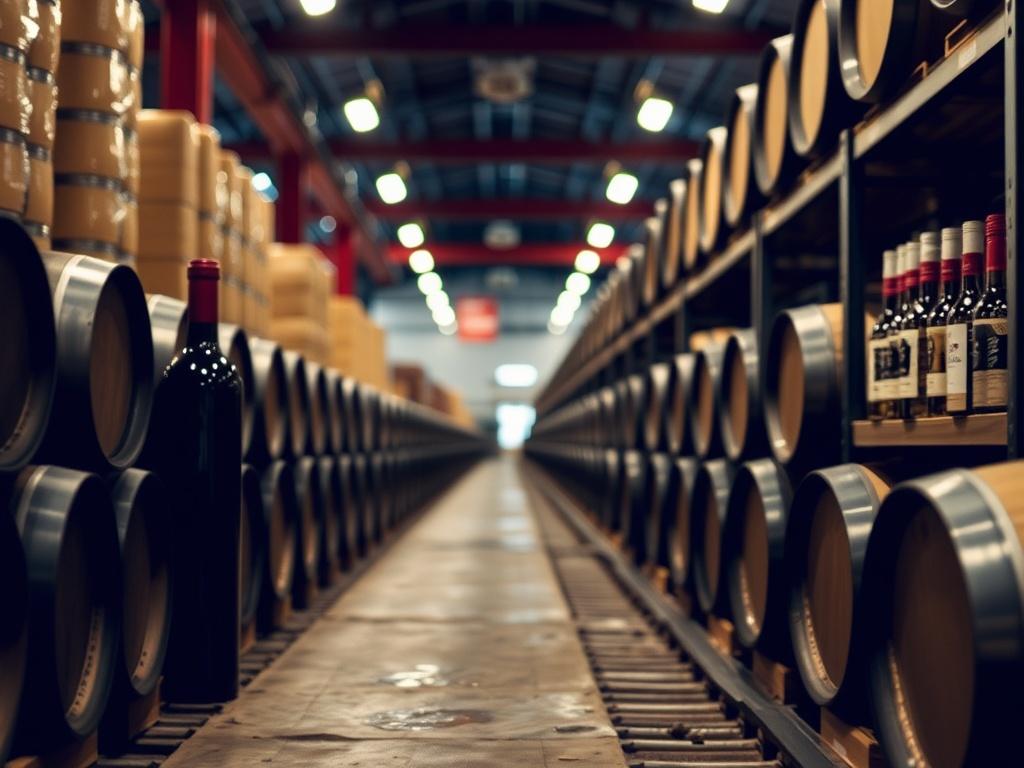
Micro-distilleries face another challenge: aged inventory. Spirits locked in barrels represent capital tied up for years. Sudden changes in export economics can force tough choices—hold inventory, sell at a loss, or find new markets.
Channel effects: retail, on-premise, and travel market
Tariffs filter through the distribution chain differently. Retail liquor stores can change assortment slowly and respond to competitive pricing, while bars and restaurants must react quickly to margin squeezes and guest expectations.
Duty-free and travel retail are particularly sensitive because consumers expect competitive pricing on imported luxury bottles. Tariffs can undermine the value proposition of travel retail, reducing impulse purchases at airports and shore shops.
Distributors and wholesalers often shoulder tariff risk with selective stock buys, hedging, and price-tier management. Their contracts and long-term relationships can buffer short-term shocks, but repeated tariff volatility increases working capital costs and reduces predictability.
Consumer behavior: substitution, premiumization, and brand loyalty
How drinkers respond to price changes determines whether tariffs cause permanent market shifts. Some consumers substitute: switching wine regions, choosing domestic spirits, or moving down a price tier. Others, particularly brand-loyal buyers, absorb higher costs.
Tariffs can accelerate trends already in motion. For instance, a tariff that raises prices on imported whiskies might speed up the rise of local craft whiskey in that market. Conversely, tariffs on domestic exports can diminish a country’s international prestige among connoisseurs.
Retailers cleverly manage perception through promotions, mixed-case pricing, and reconfigured displays to keep affected brands attractive. Nevertheless, persistent tariff-led price increases often lead to smaller bottle sizes, private-label growth, or greater emphasis on cocktails and blended products.
Currency swings and non-tariff barriers
A tariff is only one piece of the puzzle. Exchange rates can offset or amplify tariff effects. A stronger importing-country currency may mute the retail impact, while a weaker currency makes tariffs bite harder.
Non-tariff barriers—sanitary and phytosanitary checks, labeling rules, and certificate requirements—also shape trade. After Brexit, for example, paperwork and border checks introduced frictions that looked and felt like tariffs to many small exporters.
Exporters increasingly consider these non-tariff costs when choosing markets. Compliance costs, testing, and certifications can be as expensive as a small tariff, especially for boutique producers lacking regulatory teams.
Policy tools and industry lobbying
The beverage sector is active in trade policy debates because tariffs have outsized visibility and political resonance. Trade associations, guilds, and trade promotion bodies lobby governments for exemptions, provisional relief, or negotiated settlements.
Companies also use antidumping complaints or safeguard measures when they feel unfairly targeted by imports. Conversely, exporters push for inclusion in free-trade agreements that remove or phase out tariffs for certain product classes.
Public campaigns—highlighting jobs at stake or cultural ties—have proven effective at times. But policy change is slow, and companies must prepare for the long haul even while maintaining pressure through diplomatic and commercial channels.
Mitigation strategies: practical steps firms take
Businesses adopt a mix of short- and long-term strategies to blunt tariff shocks. Short-term responses include price promotions, absorbing margins, or shifting marketing emphasis to unaffected products.
Longer-term tactics are structural: changing production footprints, renegotiating supplier contracts, or pursuing tariff exclusions with customs authorities. Many firms build scenario plans that map tariff rates to pricing and volume outcomes.
Below is a concise list of commonly used strategies that companies deploy in tariff-prone markets.
- Localize final processing (bottling/labeling) in target market regions.
- Negotiate contractual terms with distributors to share tariff burden.
- Hedge currency and commodity inputs to stabilize costs.
- Diversify export markets to avoid overreliance on one destination.
- Invest in direct-to-consumer channels where regulations permit.
Case studies: real-world examples of disruption and adaptation
Some events are instructive because they show the range of impacts and responses across the industry. In several high-profile disputes, retaliatory tariffs aimed at political targets also included spirits and wines, producing tangible consequences.
Countries subject to punitive measures have seen sudden drops in volume; exporters scrambled to find new buyers or discounted stock heavily to maintain cash flow. Importers shifted lists toward products from less-affected origins and sometimes developed private-label alternatives to preserve margins.
One clear instance involved Australian wine in recent years. Political tensions led to significant duties on certain Australian wine exports into a major Asian market, prompting producers to pivot toward other export destinations, discount stock, or focus on domestic sales while the dispute continued.
Long-term structural shifts in the industry
Persistent tariff uncertainty accelerates consolidation. Larger companies with diversified operations and multi-market footprints have a strategic advantage, able to reallocate production and optimize tariffs through regional hubs.
At the same time, tariffs spur creative product and channel strategies: more contract bottling, expanded licensing deals, and deeper partnerships between producers and local distributors. Some brands invest in local facilities overseas to create a permanent presence that sidesteps future trade friction.
These adjustments reshape competitive dynamics. Over time, tariffs can reduce the prevalence of small, export-focused brands in affected markets and raise the barrier to entry for new international challengers.
Supply, sustainability, and climate considerations
Tariffs interact with broader industry challenges such as climate change. If a region faces production shocks—droughts or fires—exporters might already be operating on thin margins when tariffs hit, compounding vulnerability.
Sustainability initiatives can also affect tariff exposure. Products certified for organic or fair trade markets may command price premiums that absorb some tariff increases, while commodity, low-margin wines are less able to withstand price rises.
Producers balancing environmental investment and trade risk must prioritize carefully, because a sudden tariff can change capital allocation choices and accelerate decisions to diversify grape sourcing or adopt water-saving practices.
Advice for exporters and importers
Companies should develop clear scenarios that estimate the impact of different tariff outcomes on price, volume, and profitability. Those models inform decisions: whether to absorb costs, pass them on, or reorganize logistics.
Building flexible supply chains is crucial. Multiple bottling sites, alternative shipping routes, and contractual clauses that permit price adjustments reduce the shock of sudden tariff changes. Those steps carry costs but pay dividends when disputes flare up.
On the commercial side, invest in market intelligence and government relations. Early warning of potential tariff changes gives businesses time to reposition stock, renegotiate terms, and communicate clearly with buyers to preserve trust.
How consumers will feel the effects
For drinkers, tariff-driven changes often show up as higher shelf prices, fewer imports in some categories, or increased prominence of local and alternative products. Frequent travelers may see less value in airport liquor stores for certain countries.
That said, markets are resilient. When imports become expensive, opportunistic winemakers and distillers fill the void, and new styles or local brands gain traction. Consumers may discover interesting alternatives and, over time, recalibrate preferences.
Retailers and bartenders play an important role in guiding choices—highlighting value propositions, organizing tastings, and creating experiences that make higher prices feel justified, or that introduce attractive substitutes.
How governments can design smarter policies
Policymakers balancing protection of domestic industries against the benefits of open trade should target measures carefully. Broad tariff increases bluntly applied often harm small exporters and raise costs for consumers without delivering long-term gains.
Options like tariff-rate quotas, temporary relief for perishable goods, or targeted exemptions for small exporters can soften the impact while preserving policy objectives. Investment in export assistance and certification support helps producers meet foreign regulatory requirements more cost-effectively.
Trade diplomacy and multilateral engagement remain the most reliable ways to resolve tariff disputes. Rules-based frameworks and transparent dispute resolution reduce the probability of repeated, politically motivated tariff swings.
Table: policy options and likely effects
| Policy | Effect on exporters | Effect on consumers |
|---|---|---|
| Broad tariff increases | Raises costs, pressures margins, encourages relocation | Higher prices and reduced variety |
| Targeted exemptions/quotas | Protects certain suppliers, reduces sudden shocks | Limits price increases for exempted products |
| Trade facilitation (paperwork reduction) | Lowers compliance costs, benefits small exporters | Potentially broader selection at stable prices |
Real-life lessons from industry professionals
Speaking with producers and importers over the years, a few themes recur: plan for volatility, keep cash available, and invest in relationships. Distributors who know their importers’ inventory plans can act quickly when tariffs shift.
Some producers have told me that the most successful responses combined short-term promotions to clear exposed stock with a long-term pivot to different markets or local production. Those moves preserve brand equity while stabilizing cash flow.
Another practical lesson is transparency. When prices must rise, honest communication with buyers—explaining the tariff cause and outlining a plan—maintains trust. Customers often accept temporary price increases if they understand the reason and see a commitment to value.
Legal and compliance considerations
Tariff avoidance strategies come with legal risk if they cross the line into misclassification or fraudulent declarations. Importers must follow rules of origin and documentation rigorously; customs authorities increasingly scrutinize creative routing and labeling tactics.
Companies should invest in compliance expertise or work with reputable customs brokers. Small mistakes can trigger penalties that outweigh any tariff savings and damage reputations in key markets.
When in doubt, seek official tariff rulings or advance pricing agreements where available. Those formal rulings provide certainty and reduce the chance of retroactive duties that can be financially devastating.
Future scenarios: volatility or stability?
The near-term outlook for tariffs in beverages depends on geopolitical trends, electoral cycles, and economic pressures. Policymakers sometimes use tariffs as leverage in broader diplomatic negotiations, which means the industry must expect episodic turbulence.
On the other hand, the longer arc favors liberalization because consumers, producers, and many retailers benefit from open markets. Trade agreements, supply chain integration, and digital commerce create incentives for governments to avoid prolonged, destructive tariffs.
Yet even with a general trend toward openness, localized or temporary tariffs will remain a tool. Firms that build flexibility into logistics, pricing, and market strategy will consistently outperform those that treat tariffs as rare anomalies.
Practical checklist for businesses
To prepare for and respond to tariff shocks, firms can adopt a short, actionable checklist: scenario modeling, supply chain flexibility, legal compliance, market diversification, and proactive communication with partners.
Each item requires work: scenario models should be stress-tested, supply contracts rewritten to include tariff clauses, and compliance audits conducted regularly. These investments reduce reaction time and preserve margins when policy shifts occur.
Ultimately, resilience comes from a blend of financial prudence and strategic creativity—keeping options open and being willing to experiment with new production and marketing approaches.
Parting thoughts on adaptation and opportunity
Tariffs can be disruptive, but they also force clever responses. Over time, the industry adapts: new routes, new partnerships, and in some cases new product categories emerge because businesses seek ways to thrive under changed economics.
For consumers, the immediate result might be higher prices or different bottle choices, but the market rarely shrinks evenly. Local producers often gain footholds, and innovative brands find niches. Observing how companies adapt reveals much about resilience and the broader shape of global trade.
For anyone involved in wine and spirits—producer, importer, retailer, or drinker—understanding the mechanics of tariffs and preparing for change is not optional. It’s part of running a business or enjoying the category in a world where trade policy can change the story in a single headline.