The word “war” feels excessive when applied to crates of cod or pallets of shrimp, but the recent escalation of trade barriers affecting seafood has real teeth. Tariffs, sanitary checks, and sudden quota shifts have made fishermen, processors, and grocery buyers into involuntary participants in an international skirmish. This article walks through how these disputes unfold, who they hurt, and what the future might look like for the people and ecosystems on the front lines.
- How tariffs turned dinner plates into political leverage
- Why seafood is especially vulnerable
- Players on the high seas: who’s involved
- Non-state actors and certification schemes
- Recent flashpoints: notable disputes and how they unfolded
- Case study approaches: what to watch for
- Economic impacts: from the docks to supermarket aisles
- Effects on supply chains and labor
- Social and cultural consequences
- A personal fragment from the docks
- Environmental and sustainability trade-offs
- How management and trade policy should interact
- Legal avenues and disputes at the WTO
- Non-tariff measures and regulatory complexity
- Retailers, chefs, and consumer responses
- Marketing and labeling as adaptation tools
- Strategies fishermen and processors can use
- Role of government support and adjustment assistance
- Global seafood markets: winners and losers
- Technology, traceability, and competitive advantage
- Policy options to defuse conflicts
- Designing smarter trade measures
- What consumers can do
- Practical steps for home cooks
- Looking ahead: scenarios and risks
- Preparing for persistent uncertainty
- Quick reference: how tariff tools affect seafood
- Final thoughts: why the stakes are bigger than fish
How tariffs turned dinner plates into political leverage
Tariffs are simple in concept: taxes on imports intended to protect domestic producers or to punish foreign governments. In practice, they are blunt instruments that ripple through supply chains, inflate prices, and change sourcing decisions. With seafood, the effects are amplified because fish and shellfish are perishable, often highly regional, and linked to local livelihoods.
When a government slaps a tariff on a particular seafood product, it can be targeting a rival industry, signaling displeasure about unrelated policies, or trying to create bargaining chips for negotiation. That mixture of motives makes seafood an attractive target: visible, emotionally resonant, and economically significant in coastal communities. Buyers and fishers rarely get a say in the political calculus, but they feel the consequences immediately.
Why seafood is especially vulnerable
Seafood supply chains are complex. A single fillet might start life in an ocean, be processed in one country, frozen in another, and sold in a third. Each border crossing is an opportunity for tariffs, inspections, and slowdowns. Because many species are seasonal, a month-long delay can mean spoilage and lost income, not merely logistical inconvenience.
Perishability also forces markets to be tight and time-sensitive. High tariffs can eliminate profit margins overnight, forcing processors to seek alternative species or new suppliers. For small-scale fishermen and coastal processors, those alternatives are often unrealistic. The result is a concentrated impact that is both fast and painful.
Players on the high seas: who’s involved
The “war” is fought by countries, but its casualties are small businesses, communities, and ecosystems. Major industrial players include the United States, China, the European Union, the United Kingdom, Canada, and Russia. Each of these actors has both export-oriented seafood industries and domestic constituencies with political influence.
Regional fisheries can also be swept up in disputes between distant powers. For example, tariff decisions in Washington or Brussels may reverberate through supply chains in Southeast Asia, Africa, and Latin America. The global nature of seafood trade makes it a strategic lever for governments looking to exert pressure without cutting off broader economic ties entirely.
Non-state actors and certification schemes
Private standards and buyers have their own clout. Certification bodies, large retailers, and foodservice giants can impose de facto trade restrictions through procurement rules. When tariffs increase costs, supermarkets might tighten sustainability requirements or favor alternative suppliers, creating de facto market barriers. These private actions can compound the effects of government-imposed tariffs.
NGOs and consumer campaigns play a role too, sometimes amplifying tensions. A campaign against unsustainable aquaculture in one country can dovetail with tariffs from another, producing a multilayered barrier that is harder to untangle than a single tax line. The interplay between public and private pressures makes the landscape unpredictable.
Recent flashpoints: notable disputes and how they unfolded
There have been several high-profile episodes where seafood found itself at the center of trade fights. Governments have used tariff windows, retaliatory levies, and strict sanitary controls as political tools. These measures often begin as responses to broader trade friction and then become focused on particular commodities that are culturally or economically significant.
Rather than catalog specific tariff percentages, which change rapidly and vary by product and country, it’s more useful to look at patterns. Trade disputes typically move in phases: imposition, retaliation, negotiation, and adjustment. Seafood moves quickly through these stages because of its perishability, but that speed doesn’t translate into predictability for those affected.
Case study approaches: what to watch for
Watch for announcements tied to broader trade conflicts. When two countries engage in tariff escalation on metals, agriculture, or technology, seafood is often included as a counterpunch because it hits visible constituencies such as fishermen and restaurant-goers. These announcements tend to be political theater—meant to show resolve—rather than carefully calibrated economic policy.
Another common pattern is the use of sanitary and phytosanitary measures as non-tariff barriers. Governments may impose strict inspections or certifications that are difficult for exporters to meet quickly. On the surface these look like health protections, but they can function as de facto tariffs by delaying shipments or forcing costly compliance investments.
Economic impacts: from the docks to supermarket aisles
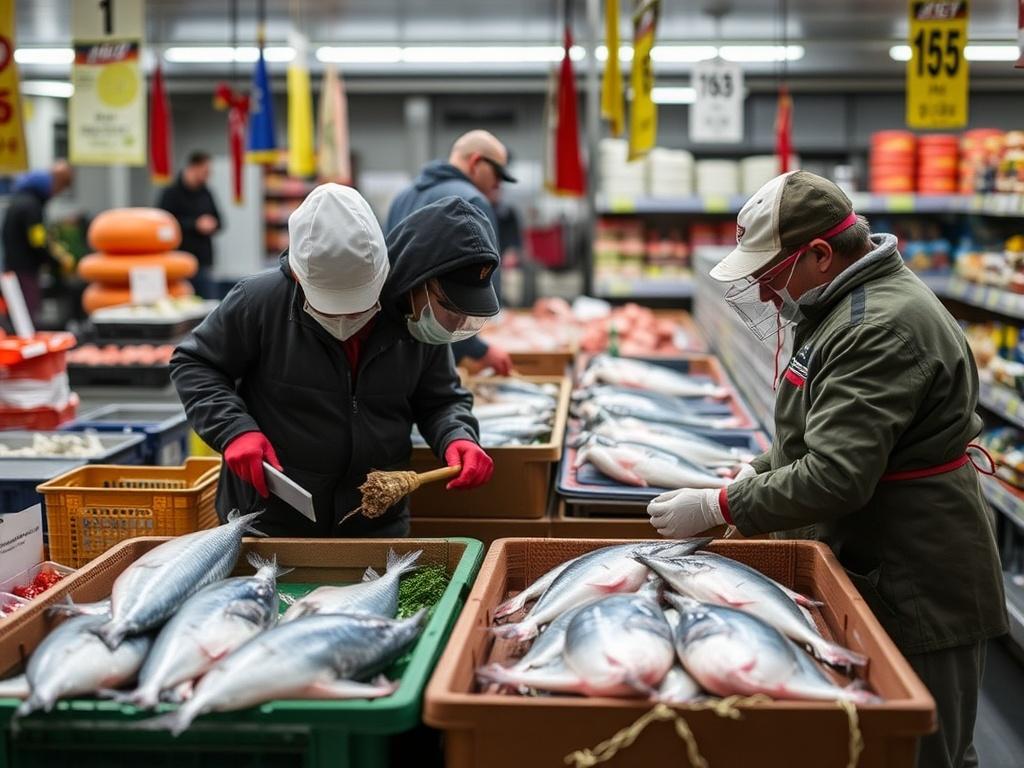
Tariffs quickly translate into higher prices at retail and lower returns for fishers. When import costs rise, processors either pass them to consumers or accept thinner margins. Restaurants and retailers must make choices: absorb the cost, raise prices, or switch to alternative species. Each choice reshapes demand patterns and can have lasting impacts on local industries.
For coastal communities reliant on a single species—think lobster towns or tuna ports—the stakes are existential. A sudden drop in foreign demand or a spike in tariffs can leave boats idle, crews without work, and processing plants shut. That economic pain can translate into political pressure to escalate or to make concessions, feeding back into the diplomatic cycle.
Effects on supply chains and labor
Processors often operate on thin margins and tight schedules. Tariffs that reduce demand can force layoffs or discourage investment in modernization. As plants shutter or cut hours, the downstream impacts hit shippers, cold-storage workers, truckers, and retail supply teams. The labor pain is diffuse but measurable in regional unemployment statistics and local budgets.
Conversely, importers may scramble to find new sources when tariffs make established suppliers expensive. That shift can benefit alternative seafood exporters, but the transition isn’t seamless. New sourcing relationships require negotiations, logistical setup, and sometimes infrastructural upgrades at the port—none of which happen overnight.
Social and cultural consequences
Seafood matters beyond calories and commerce; it carries cultural weight. Tariffs that restrict certain species can affect regional cuisines, festivals, and traditions. Consider a coastal town whose identity revolves around a seasonal catch—when that catch loses market access, the ripple affects restaurants, tourism, and community pride.
In some places, women and small-scale fishers bear a disproportionate share of the burden because they are more often involved in low-margin processing and local marketing. Tariff-induced disruptions can exacerbate existing inequalities and create social tensions in communities already facing economic decline.
A personal fragment from the docks
I once spent a dawn at a New England wharf, watching lobstermen swap stories while hauling in their catch. The conversation shifted to export markets, and you could see the worry as they explained how a single phone call from a foreign buyer could change a week’s pay. Policies debated in capitals felt very concrete right there on the gangway.
That scene—fishermen depending on timely shipments and steady demand—repeats across the world. When tariffs bite, those boat-side conversations become arguments about how to feed families and keep crews employed. Close-up, the geopolitical rhetoric turns into real human stress.
Environmental and sustainability trade-offs
Tariffs can have unintended environmental consequences. If a protective tariff boosts demand for a domestic species, pressure on local stocks may increase. Conversely, forcing importers to shift suppliers could push demand to fisheries with weaker management or less sustainable practices. Trade policy therefore intersects with conservation in complicated ways.
When certification and sustainability standards act as market access tools, they can help align trade with conservation goals. But if standards become protectionist tools in disguise, they risk shielding inefficient or poorly managed domestic fisheries at the expense of global sustainability. The regulatory intent matters as much as the outcome.
How management and trade policy should interact
Effective fisheries management requires science-based limits and enforcement, and those systems should be transparent to trading partners. When trade policy is used to reward or punish sustainability practices, it is most effective if grounded in clear, audited criteria. Otherwise, it devolves into arbitrary barriers that harm producers without improving conservation outcomes.
International cooperation—through regional fisheries management organizations and multilateral agreements—helps align management with trade. Where cooperation is weak, tariffs and other trade tools are likelier to be used as blunt instruments, with predictable negative side effects for both stocks and communities.
Legal avenues and disputes at the WTO
The World Trade Organization provides a forum for legal challenges to tariffs and other trade measures, but the process is slow. Disputes may take years to resolve, and interim harm to exporters and fishermen occurs in the meantime. For perishable goods like seafood, delayed remedies are, at best, cold comfort.
Countries sometimes prefer tit-for-tat tariffs to formal dispute settlement because coercive pressure can yield faster results. That strategy risks escalation and collateral damage, however, especially when tariffs are broad and impact many sectors beyond the original dispute. The legal route is principled, but politics often favors quicker, cruder measures.
Non-tariff measures and regulatory complexity
Sanitary and phytosanitary rules, labeling requirements, and traceability mandates can all function as trade barriers. These regulatory tools are legitimate when they protect health and safety, but they can be weaponized to impede competitors. The complexity of compliance requirements raises costs for small exporters and benefits larger firms with compliance departments.
Negotiations around equivalence—where one country recognizes another’s standards as comparable—are key to easing trade friction. Achieving mutual recognition can smooth trade in seafood, but it requires trust, capacity, and willingness to accept foreign audits and inspections.
Retailers, chefs, and consumer responses
Retailers and chefs react quickly to cost signals. A sudden tariff-driven price increase for a prized species prompts menu swaps and promotional changes. Some restaurants hedge by featuring local catches or frozen alternatives, while supermarkets reconfigure private-label lines to maintain margins.
Consumers also have agency. In markets where seafood is a discretionary purchase, price hikes can reduce demand. Where seafood is central to diets, consumers may switch species or accept higher prices. Public perception of tariffs—whether seen as necessary protection or cynical economic warfare—can influence political reactions and long-term market trends.
Marketing and labeling as adaptation tools
Producers and exporters often respond with storytelling: emphasizing origin, freshness, or sustainability credentials to maintain market share. Branding can insulate products from price competition to some extent, but it’s no guarantee. In the end, quality, price, and availability determine purchasing decisions for most buyers.
For exporters, building diversified markets is crucial. Relying heavily on one market makes a sector vulnerable to political shifts. Successful exporters pair quality improvements with market diversification to reduce the shock of tariffs and other trade disruptions.
Strategies fishermen and processors can use

Short-term tactics include shifting to frozen shipments, renegotiating contracts, and finding new markets. Freezing can extend a product’s window, allowing time to reroute shipments or wait for tariff relief. But freezing changes product value and sometimes requires different processing and packaging facilities.
Longer-term strategies emphasize diversification in species, markets, and product forms. Investing in value-added processing, direct-to-consumer sales, and co-operative marketing can increase resilience. These shifts take time and money, however—resources that small operators may lack without policy support.
Role of government support and adjustment assistance
Some governments offer compensation, low-interest loans, or retraining programs for impacted workers. These measures can blunt the immediate economic pain and provide time for structural adjustments. Well-designed assistance focuses on capacity building—helping processors meet new standards, improve cold-chain infrastructure, and access new markets.
Subsidies or protection without conditionality, however, can entrench inefficiency. The most constructive policies pair short-term relief with incentives for modernization and sustainability. That approach reduces vulnerability to future trade shocks while promoting long-run competitiveness.
Global seafood markets: winners and losers
Trade disruptions create relative winners as well as losers. Countries that can scale production quickly or that have flexible processing capacity may capture market share when others falter. Conversely, nations that rely on a narrow set of export destinations or species are exposed to sudden demand collapses.
Developing countries with export-oriented fisheries sometimes face particularly harsh outcomes because tariff changes from wealthy markets can severely limit their earnings. Diversification, investment in cold-chain logistics, and alignment with buyer requirements help, but these require capital and institutional capacity.
Technology, traceability, and competitive advantage
Investments in traceability systems and digital supply chains can be a differentiator. Buyers increasingly demand provenance information, and suppliers that can provide robust documentation stand a better chance when tariffs or sanitary checks threaten shipments. Technology can shorten response times and reduce documentation errors that otherwise become excuses for rejections.
However, technology adoption is uneven. Small-scale processors may lack the resources to implement comprehensive traceability systems, leaving them vulnerable to regulatory shifts that larger competitors can navigate more easily. Support for technology diffusion is therefore a strategic policy lever.
Policy options to defuse conflicts
Diplomacy remains the most straightforward path out of tariff fights. Bilateral talks, sectoral agreements, and temporary exemptions can ease pressure. Policymakers who prioritize stability over symbolic retaliation often pursue negotiated carve-outs for perishable goods like seafood, recognizing the disproportionate harm tariffs can cause.
Multilateral institutions and regional agreements can also help by establishing norms and dispute resolution mechanisms tailored to perishable commodities. The challenge is political will—governments frequently prefer to keep maximum flexibility for domestic bargaining at the expense of global predictability.
Designing smarter trade measures
Smarter policies might use targeted, time-limited measures tied to clear objectives rather than broad, indefinite tariffs. For example, temporary adjustments targeted to specific unfair practices could include sunset clauses and review mechanisms. Transparency and stakeholder consultation reduce the risk of collateral harm to small producers.
In the long run, aligning trade policy with sustainability goals can generate win-win outcomes. Incentives for well-managed fisheries, technical assistance for certification, and cooperative enforcement can make tariffs less necessary while improving resource stewardship and market access.
What consumers can do
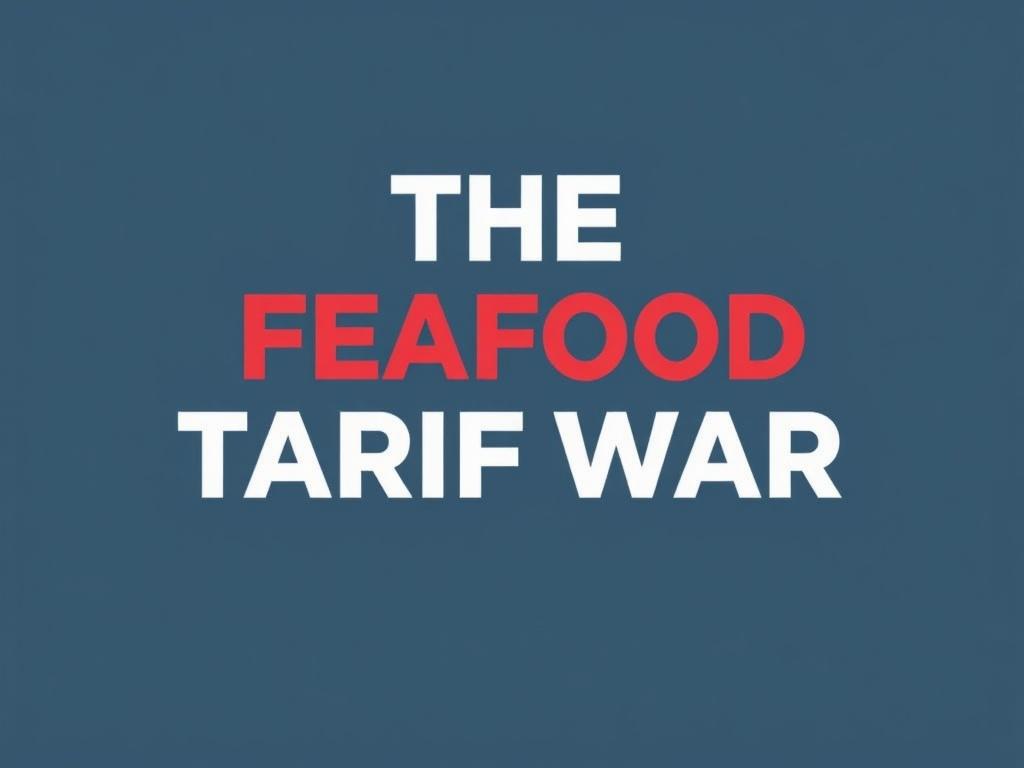
Consumers have more power than they often realize. Choosing diverse species, supporting local fisheries, and asking retailers about sourcing help shift demand away from concentrated supply chains that are vulnerable to tariffs. Voting with the fork can influence supermarket sourcing decisions and, indirectly, trade policy priorities.
Transparency matters too. When buyers and consumers insist on traceability and sustainability, it raises the cost of protectionist behavior and makes it harder for governments to use tariffs without political pushback. Civic pressure for responsible trade policies can be as important as business lobbying.
Practical steps for home cooks
Be flexible with recipes and seasons. Substitute species that are in local abundance or that have lower market exposure to international disputes. Learning to cook a wider range of fishes not only broadens diets but reduces market dependence on a single imported specialty.
Support small-scale and community-supported fisheries where possible. These operations often have tighter local feedback loops and are less susceptible to international tariff shocks. Buying directly from local sellers also builds resilience into regional food systems.
Looking ahead: scenarios and risks
Several trajectories are possible. In one, diplomatic backchannels and commercial pragmatism keep disruptions short-lived and limited. In another, rising geopolitical tensions and more assertive industrial policies make tariffs a recurrent tool, producing chronic instability for seafood markets. Which path prevails depends on political choices in capital cities and on the capacity of industries to adapt.
Climate change adds another layer of uncertainty. Shifting stock distributions will force new trade patterns, potentially generating fresh disputes over access and quota allocation. Policy frameworks that can adapt to both trade and environmental shocks will be increasingly necessary.
Preparing for persistent uncertainty
Resilience is the watchword. Diversifying markets, investing in processing and cold-chain infrastructure, strengthening local consumption, and improving traceability reduce vulnerability. For communities, the goal is not to eliminate exposure but to manage it so that a tariff shock does not become an existential crisis.
At the international level, building trust through transparent science-based fisheries management and equitable trade rules will reduce the temptation to weaponize seafood. That requires patience and effort, but the cost of failure—disrupted livelihoods and overexploited resources—is higher.
Quick reference: how tariff tools affect seafood
The table below summarizes typical trade measures and their practical effects on seafood trade and communities. It is meant as a qualitative guide, not a list of country-specific policies.
| Trade tool | Typical short-term effect | Likely long-term outcome |
|---|---|---|
| Ad valorem tariffs | Raises import prices; reduces demand | Shifts sourcing; pressure on domestic producers and consumers |
| Retaliatory tariffs | Targets politically sensitive exports | Escalation risk and cross-sector damage |
| Sanitary inspections | Delays shipments; compliance costs | Market segmentation; advantages for large exporters |
| Quota adjustments | Restricts supply; inflates prices | Domestic stock pressure; possible illegal trade |
Final thoughts: why the stakes are bigger than fish
Talking about a “seafood tariff war” might invite eye rolls, but the phrase captures the stakes: real livelihoods, fragile ecosystems, and communities that anchor cultural identity to the sea. Tariffs are political tools with social consequences that travel fast and hard in the seafood world. The drama isn’t just about trade balances; it’s about whether coastal economies can remain viable in a volatile global system.
Policymakers, industry leaders, and consumers each have roles to play. Better policy design, investment in resilience, and informed consumer choices can reduce the need for tariffs as political theater and help align trade with ecological sustainability. That would be a modest peace treaty for the docks, one that keeps boats working and dinner plates full.