
When people talk about trade wars they usually reach for Smoot-Hawley, the China tariffs of the 2010s, or the headline-grabbing steel fights. Few recall a quieter, more technical conflict of the 1980s between the United States and its closest competitors — a set of tariffs, voluntary restraints, and negotiating maneuvers that nudged entire industries onto a different path. That low-profile confrontation reshaped how chips are made, where cars get assembled, and how governments use trade rules to steer technology. It’s the trade war that nobody remembers (but changed everything), and its ripples are visible in every smartphone and factory floor today.
- Setting the scene: the global economy before the friction
- The flashpoints: autos and semiconductors
- Why these industries mattered more than they looked
- How the 1980s negotiations unfolded
- Timeline: key events that shifted the battlefield
- The mechanics: tariffs, voluntary restraints, and Super 301
- When negotiated fixes become industrial strategy
- The rise of the fabless-foundry model and TSMC
- Why the change mattered beyond chips
- Automotive consequences: local plants and new supply chains
- Ripple effects on labor and politics
- From bilateral disputes to multilateral rules: the Uruguay Round and WTO
- Intellectual property and the changing fight over technology
- Unintended consequences and the invisibility of the war
- Examples from my experience
- How this trade war shaped modern geopolitics
- Policy lessons for today
- What might have been done differently
- Why such alternatives were unlikely then
- Where the memory of this war went — and why it matters that we remember
- Practical steps for policymakers today
- Final reflections: how small policy battles become history
Setting the scene: the global economy before the friction
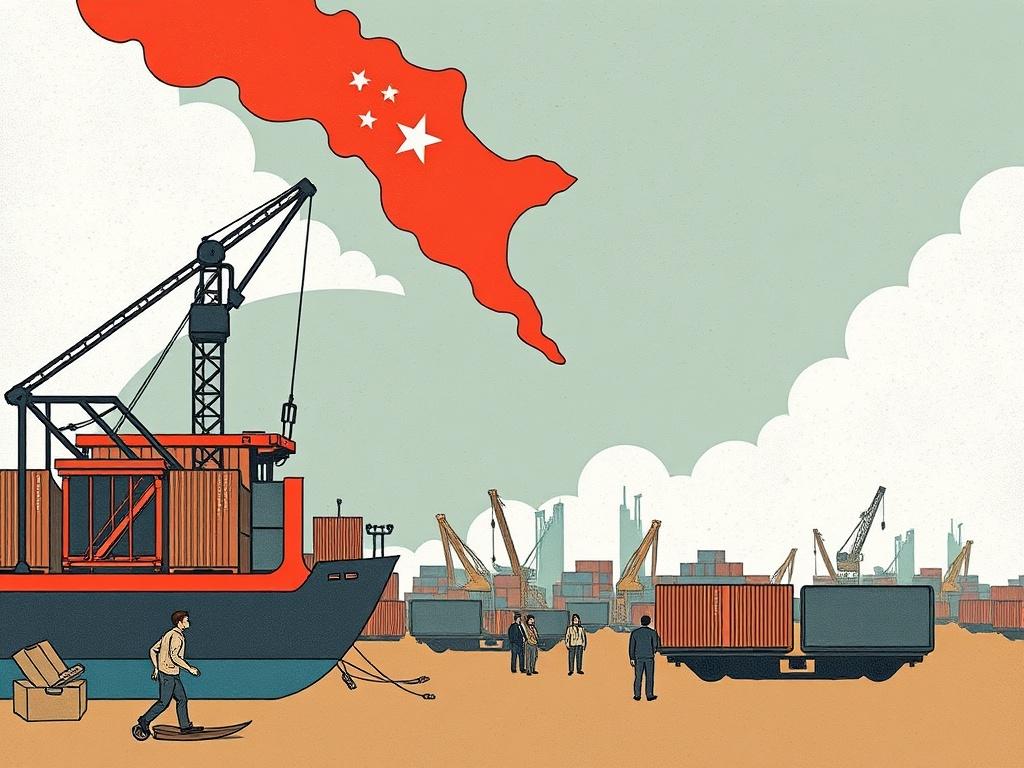
In the early 1980s the world trade map still looked familiar to a Cold War eye: advanced manufacturing clustered in the United States, Western Europe, and Japan, while much of Asia focused on labor-intensive exports. Japan had become a manufacturing powerhouse, producing high-quality consumer electronics and cars at scale and with apparent inevitability. U.S. policymakers and executives watched market shares slip and felt a mix of anxiety and disbelief, convinced that market rules either favored Japanese firms or left American industry exposed.
Technology was changing too. Chips were shrinking, factories grew exorbitantly expensive to build, and semiconductor design was advancing faster than many companies could afford to follow. The capital intensity of manufacturing meant that a successful firm needed deep pockets and enormous factories — or a new business model. This tectonic shift in industrial economics intersected with politics and trade policy and produced a cascade of choices with long-term consequences.
The flashpoints: autos and semiconductors
Two industries became emblematic of the tensions: automobiles and semiconductors. In cars, the dispute was visible and visceral: U.S. auto dealers saw rows of compact, fuel-efficient cars imported from Japan undercutting domestic producers. In tech, the fight was more arcane but no less consequential. American semiconductor companies accused Japanese producers of unfair practices, like cross-subsidization and closed distribution networks, that distorted competition.
The U.S. response took many forms. For autos, the most notorious instrument was the voluntary export restraint (VER), negotiated in 1981, which capped Japanese car shipments to the U.S. market and forced Japanese automakers to invest directly in American manufacturing facilities. For chips, the conflict culminated in negotiated agreements, most prominently the 1986 U.S.-Japan semiconductor accord, along with increasingly aggressive trade measures and the birth of statutory tools designed to identify and punish what Washington considered unfair practices.
Why these industries mattered more than they looked
Automobiles were not only consumer goods; they were hubs for thousands of suppliers and millions of jobs, with heavy multiplier effects across manufacturing and services. Semiconductors were even more consequential because they were the backbone of modern electronics — a small piece of silicon driving a huge range of products from cars to telephones. Control over chip supply chains meant leverage over emerging technologies and economic futures.
Policy choices in these two arenas therefore had both immediate economic effects and long strategic consequences. When a country alters trade barriers or negotiates export limits, firms respond by relocating production, reorganizing supply chains, or changing their business models. Those corporate choices lock in patterns that persist for decades.
How the 1980s negotiations unfolded
The semiconductor dispute peaked in January 1986 when the United States and Japan signed an agreement that aimed to restore market balance and prevent more punitive U.S. measures. The pact required Japanese companies to reduce excess capacity in certain segments and to refrain from engaging in distribution arrangements that the U.S. argued limited market access. On the surface it was a technical document about inventories and market share; beneath it were deep anxieties about strategic advantage and industrial policy.
At the same time, the U.S. Congress and administration were expanding the trade-policy toolkit. The Omnibus Trade and Competitiveness Act of 1988 added a “Super 301” provision that allowed the U.S. to name countries engaged in unfair trade practices and to impose countermeasures if negotiations failed. Super 301 was not only a bargaining chip; it signaled a willingness to use trade law proactively to shape foreign behavior rather than passively complain about it.
Timeline: key events that shifted the battlefield
It helps to see the sequence laid out plainly, because the conflict was less a single war than a succession of skirmishes and policy experiments that accumulated into a durable change.
| Date | Event | Immediate effect |
|---|---|---|
| 1981 | U.S.-Japan voluntary export restraint on automobiles | Limits on Japanese car imports; increased Japanese investment in U.S. plants |
| 1986 | U.S.-Japan semiconductor agreement | Commitments on market access and inventory management; cooling of immediate tensions |
| 1988 | Omnibus Trade and Competitiveness Act (Super 301) | New statutory tool for confronting unfair trade practices |
| 1987–1994 | Uruguay Round of GATT negotiations | Set the stage for WTO and new rules on intellectual property and dispute resolution |
| Late 1980s–1990s | Rise of East Asian foundries and U.S. fabless firms | Industry reshaped: manufacturing shifted offshore while design and IP concentrated in U.S. |
The mechanics: tariffs, voluntary restraints, and Super 301

Tariffs are blunt instruments, but policymakers often prefer subtler tools because they can appear less overtly protectionist. VERs like the U.S.-Japan automotive restraint were voluntary only in name; the political pressure behind them was unmistakable. They intentionally restricted exports to shield domestic producers and to encourage foreign firms to build factories on U.S. soil, which many Japanese automakers did.
Super 301 operated differently. It allowed the U.S. to identify priority foreign practices and to take unilateral action if negotiations didn’t lead to change. The mechanism combined the threat of tariffs with diplomatic leverage, and it served as a wake-up call to trading partners, pushing unresolved issues into negotiations and, crucially, into the multilateral system later during the Uruguay Round.
When negotiated fixes become industrial strategy
One of the unintended consequences of these policy moves was that firms adjusted not only to the measures but to the expectation that governments would intervene periodically. Japanese automakers, for instance, responded to VERs by relocating production to the U.S., which solved the immediate market access problem but also planted the seeds of the global auto industry’s regionalization. Those new American plants changed local labor dynamics and supplier networks, and they made the U.S. a manufacturing base for vehicles designed by Japanese companies.
In semiconductors, firms faced different pressures: declining margins in commodity chips, rising capital costs for fabs, and the need to focus on design and intellectual property. That environment favored two divergent strategic responses — vertical integration for some firms and a break-up between design and fabrication for others. The policy environment nudged companies toward the latter, which would prove transformative.
The rise of the fabless-foundry model and TSMC
The most consequential industrial shift from this period may have been the separation of semiconductor design from manufacturing. Before the 1980s, many chip companies did both; afterward, a distinct class of “fabless” companies focused on design, outsourcing fabrication to dedicated foundries. This was partly an economic response to the escalating costs of fabs and partly a strategic choice to concentrate on higher-margin design work.
TSMC, founded in 1987 by Morris Chang, became the archetype of the pure-play foundry. Its business model allowed design-focused firms to innovate without the burden of building billion-dollar fabrication plants. That technical and organizational innovation — a direct product of shifting economics and policy pressures — enabled a wave of chip startups in the United States that did not require heavy capital investment to scale.
Why the change mattered beyond chips
Splitting design from manufacturing did more than alter one sector’s cost structure; it rewired global technology leadership. Countries that hosted fabs gained control over physical production capacity and the skills associated with sophisticated manufacturing, while countries that kept design capabilities maintained control over intellectual property and standards. That separation introduced new dependencies: many American tech companies became reliant on foundries in Taiwan, South Korea, and elsewhere, creating vulnerabilities that matter deeply today.
Moreover, the foundry model encouraged specialization and competition in fabrication, which spurred rapid improvements in process technology. Firms like TSMC and Samsung invested heavily in yield improvement and advanced nodes, creating a technology moat that further cemented the new division of labor between design-rich and manufacturing-rich nations.
Automotive consequences: local plants and new supply chains
The auto VERs and related policy nudges moved production geographically. Japanese automakers responded by building plants in the United States and other Western countries, a decision that reduced trade tensions but also transformed local economies. These plants demanded local suppliers, boosting a network of Tier 1 and Tier 2 companies with new capabilities in stamping, electronics, and components.
The result was regionalized supply chains that favored proximity and just-in-time logistics. Over time, those networks hardened into long-term relationships and investment decisions that kept production close to final markets. While the immediate political aim — fewer imported cars — was achieved, the larger outcome was a global industry that no longer centered on a single national producer but on multinational networks of design, assembly, and component supply.
Ripple effects on labor and politics
Those new plants brought jobs and tax revenue, but they also altered labor relations and political expectations. Where a foreign plant became a major employer, local governments invested in training and infrastructure, and labor organizations recalibrated their strategies. The local benefits tempered earlier protectionist fervor, creating constituencies that favored stable investment over recurring trade conflict.
Politically, the pattern reinforced a pragmatic view: trade frictions could be resolved through investment and integration rather than through prolonged retaliation. That approach often reduced headline drama while deepening economic ties that made future conflict costlier and, therefore, less likely to escalate dramatically.
From bilateral disputes to multilateral rules: the Uruguay Round and WTO
These bilateral flashpoints fed into broader, multilateral negotiations. The Uruguay Round (1986–1994) of GATT talks tackled issues that had become acute during the 1980s: intellectual property, services, and more effective dispute settlement. Negotiators recognized that ad hoc deals and unilateral measures created uncertainty and could be gamed, so they sought deeper, enforceable rules.
The outcome was the creation of the World Trade Organization in 1995 and strengthened mechanisms for dispute resolution and trade policy surveillance. The new system did not eliminate economic rivalry, but it provided clearer procedures for raising issues, negotiating remedies, and imposing penalties. Those institutional changes owe part of their momentum to the irritants and innovations of the prior decade.
Intellectual property and the changing fight over technology
One notable feature of the Uruguay Round was the inclusion of the Agreement on Trade-Related Aspects of Intellectual Property Rights (TRIPS). Countries with strong design and software industries, especially the United States, wanted global rules that protected IP across borders. The rise of global supply chains and the strategic importance of technology made that demand pressing.
TRIPS and related disciplines helped to internationalize IP standards and gave firms clearer levers to protect their innovations. While these rules did not erase disputes, they shifted them from raw market access fights to debates over standards, enforcement, and licensing — a change with long-term implications for how technology competition is waged.
Unintended consequences and the invisibility of the war
Trade policies in the 1980s solved immediate political problems but produced less visible, longer-term outcomes. The growth of the fabless-foundry split, the regionalization of auto production, and the strengthening of multilateral institutions were all byproducts of a decade of friction. Because these changes unfolded gradually and often without dramatic headlines, the original “war” faded from public memory even as its effects became permanent.
Yet invisibility doesn’t mean insignificance. Hidden shifts in supply chains, production location, and contractual practice can create dependencies and bargaining positions that matter greatly when new crises emerge. The present-day scramble for semiconductor sovereignty and the renewed scrutiny of global supply chains are partly legacies of the choices made during that quieter trade war.
Examples from my experience
In the mid-1990s I worked for a small electronics company that designed communications chips but outsourced nearly all manufacturing. Watching the company grow taught me how profoundly the foundry model liberated design-focused firms while making them dependent on a handful of fabs. We could iterate designs quickly and negotiate favorable terms, but when a factory ran into problems or allocation constraints, our product road map hit a hard stop.
That tension felt personal in the daily scramble to secure wafer slots and in the strategic conversations about where to place long-term bets. The routine management pain I witnessed was a microcosm of a global shift: firms had gained flexibility and innovation speed at the cost of concentrated manufacturing risk — a bargain struck, in part, because of the policy environment of the 1980s.
How this trade war shaped modern geopolitics
Today’s geopolitical competition over technology cannot be understood without the institutional and industrial rearrangements of the 1980s. The concentration of advanced semiconductor fabrication in East Asia — particularly Taiwan and South Korea — is a geopolitical fact that informs defense planning, foreign policy, and corporate strategy. Countries dependent on those capabilities now think strategically about access, redundancy, and resilience in ways that would have been less urgent if fabrication capacity had remained more distributed.
Conversely, the United States retained strengths in design, software, and systems integration, creating a complementary but asymmetric global order. That asymmetry has been a source of leverage and vulnerability: firms and governments in design-centric economies rely on manufacturing partners abroad, which constrains their options in times of geopolitical strain.
Policy lessons for today
Several lessons emerge from revisiting this forgotten trade war. First, trade policy shapes industrial organization as much as it affects prices. Second, short-term fixes like VERs can produce long-term path dependencies that are hard to unwind. Third, legal and institutional reform matters; predictable rules and dispute mechanisms reduce the need for unilateral escalation. Policymakers confronting today’s technology rivalry should weigh the long-term structural effects of any intervention as carefully as its immediate political returns.
Those lessons suggest a more nuanced playbook than either pure protectionism or hands-off markets. Strategic investment in capacity, combined with robust multilateral engagement and clear rules, can build resilience without inducing excessive fragmentation. But these are hard choices and require sustained political will — which is often in short supply.
What might have been done differently

In hindsight there were alternatives to the path that unfolded. Instead of relying heavily on restraints and ad hoc negotiations, countries could have pursued coordinated investment strategies to manage transitions in capital-intensive industries. A joint approach to capacity-building and technology sharing might have reduced the incentives for firms to concentrate fabrication in a few jurisdictions while preserving innovation dynamics.
Another possible route would have been earlier and deeper cooperation on standards and transparent procurement to avoid protectionist brinkmanship. The Uruguay Round moved in that direction, but it was reactive. Proactive, cooperative frameworks designed to manage the industrial consequences of technological change might have softened later geopolitical frictions.
Why such alternatives were unlikely then
Political realities constrained options. Protectionist pressure was intense in some domestic constituencies, and the urgency of economic competition made quick remedies politically attractive. Governments facing electoral cycles and immediate job losses naturally favored visible outcomes, like new plants, over abstract cooperative investments whose payoffs would take years to appear.
Moreover, mutual distrust among major powers and differing economic models made comprehensive cooperation difficult. The structural incentives for firms and governments often pointed in different directions, and those divergences limited the feasibility of coordinated global strategies.
Where the memory of this war went — and why it matters that we remember
Historical memory tends to favor dramatic episodes with clear villains and heroes. A decade of technical agreements, investment decisions, and quiet legal reforms does not produce simple narratives. Thus the trade war of the 1980s receded into footnotes while its structural consequences continued to unfold. That disappearance from popular memory is itself instructive: it reveals how slow-moving economic shifts can be more influential than headline battles.
Remembering this period matters because it clarifies the origin of contemporary dilemmas. When policymakers debate supply chain resilience or consider tariffs on technology products, they are often responding to dynamics that were set into motion decades earlier. Understanding that lineage helps avoid repeating past mistakes and suggests more durable, forward-looking policies.
Practical steps for policymakers today
- Invest in diversified domestic capacity for critical manufacturing while encouraging collaborative alliances with trusted partners.
- Use multilateral institutions to codify rules for emerging technologies, reducing the temptation for unilateral, ad hoc measures.
- Support the resilience of supply chains through strategic stockpiles, redundancy, and transparent procurement practices, rather than reactive protectionism.
- Promote education and workforce development to ensure that relocated production benefits local economies and reduces political pressure for isolationist responses.
These steps reflect the hard-earned wisdom of a generation that saw policy nudges reshape global production. They don’t eliminate trade-offs, but they do orient policy toward long-term stability rather than short-term advantage.
Final reflections: how small policy battles become history
Trade wars that matter most are often the ones people forget. The skirmishes of the 1980s lacked the melodrama of headline tariffs but contained technical moves — VERs, negotiated accords, statutory tools — that quietly rewired industry. The decisions of firms and governments then built the scaffolding of today’s technological order, from the dominance of mainland factories to the strategic importance of singular foundries.
Understanding that history reframes contemporary debates. When we argue about reshoring or intellectual property or trade remedies, we are negotiating with ghosts of past policies and with the institutional legacies they created. A better debate starts with that historical humility and with policy choices aimed at creating resilient, open systems rather than temporary reprieves. The memory of that once-forgotten trade war helps explain why those choices matter now, in every chip, car, and policy meeting that decides the arc of global industry.