The medical device sector sits at the intersection of health, technology, and global trade, so changes at customs booths ripple through operating rooms and research labs alike. Import duties, quotas, and other trade measures may seem like dry policy instruments, but they can nudge prices, shift sourcing decisions, and alter the pace of innovation in ways that clinicians and patients feel. This article walks through the mechanics, examples, and strategic responses companies use when tariffs start to bite.
- Why trade policy matters to med tech beyond the balance of payments
- How tariffs are imposed and who ultimately bears the cost
- Border behavior: classification and valuation disputes
- Anatomy of medical device costs and where tariffs have leverage
- Components versus finished goods: different exposures
- Supply chain complexity: the global choreography of components
- Intermediates and cross-border value-added processing
- Case study: the US–China tariff episode and device sector effects
- Tactical shifts: nearshoring and supplier diversification
- Regulatory and reimbursement interactions: a subtle but powerful feedback loop
- International regulatory harmonization and its limits
- Who wins and who loses: firm size, product type, and market power
- Product differentiation and pricing power
- Real-world examples and author perspective
- Strategic responses companies use to blunt tariff impacts
- Common mitigation tactics
- Table: practical responses to tariff-driven risks
- Cost of mitigation: not free, but sometimes necessary
- Procurement behavior: hospitals, distributors, and payers respond
- Public procurement and strategic sourcing
- Innovation and R&D: indirect casualties or protected priorities?
- Innovation pathways that reduce tariff exposure
- Policy considerations: what governments should weigh
- Targeted measures and exemptions
- Financial and accounting implications
- Trade remedies and antidumping actions: deeper distortions
- Emerging technologies and tariff policy alignment
- International cooperation and supply chain resilience
- What companies should do now: a checklist
- Final thoughts on navigating an ever-shifting landscape
Why trade policy matters to med tech beyond the balance of payments
Trade policy influences more than national trade deficits; it shapes supply chains, investment choices, and the rhythm of product development in med tech. Devices range from simple disposables to highly engineered diagnostics and implants, and many of the parts, subassemblies, and raw materials cross borders several times before a finished product reaches a hospital.
Because margins in certain device categories are thin, even modest import duties can compress profitability or trigger price increases. At the same time, tariffs can prompt companies to rethink where they manufacture and assemble, which affects local jobs, regulatory filings, and time to market.
How tariffs are imposed and who ultimately bears the cost
Tariffs come in several flavors: ad valorem rates expressed as a percentage of value, specific duties charged per unit, and more complex trade remedies like anti-dumping or countervailing duties. Governments set these rates based on tariff schedules tied to Harmonized Tariff Schedule (HTS) codes, and those classifications are critical in determining whether a device or component is subject to duty.
The economic incidence of tariffs doesn’t always fall on the importer on paper. Manufacturers may absorb part of the cost to maintain market share, distributors might accept lower margins, and healthcare providers could end up paying more if suppliers pass costs on. In many cases the final consumer—patients or insurers—experiences the downstream effects through higher prices or reduced access.
Border behavior: classification and valuation disputes
Small shifts in an HS number or declared value can change duty liability dramatically. Manufacturers frequently engage customs specialists and legal counsel to argue for favorable classifications or valuations, because the stakes include not only current fees but potential penalties and back duties from audits.
Disputes over classification sometimes hinge on how a part is used within a finished device, whether a component is deemed industrial or medical, and on subjective determinations of value when cost, insurance, and freight (CIF) versus free on board (FOB) terms apply. These ambiguities create uncertainty that complicates procurement planning.
Anatomy of medical device costs and where tariffs have leverage
Understanding the device cost structure clarifies why tariffs can have outsized effects. Costs typically break down into materials and components, manufacturing and assembly, regulatory compliance, distribution, and R&D amortization. Tariffs increase the landed cost of imported inputs and finished goods, which then ripple through gross margins and pricing models.
For complex devices, components such as semiconductor chips, precision polymers, and specialty alloys can represent a high percentage of the bill of materials. Tariffs on these inputs inflate production costs even if the final assembled device is manufactured domestically, because many supply chains are transnational by design.
Components versus finished goods: different exposures
Finished apparatus shipped from abroad face direct duty at the rate applicable to the final product, which sometimes differs from the rates applied to the discrete parts used in domestic production. Companies that import finished goods will generally face clearer, single-point tariff exposure, whereas manufacturers relying on foreign components face layered duties as parts move through multiple cross-border stages.
This layering can compound costs. Imagine a sensor made in one country, a polymer housing in another, and final assembly in a third—duties may apply when components enter an assembly country and again when finished goods are exported, depending on trade rules and origin determinations.
Supply chain complexity: the global choreography of components
Modern device supply chains are networks stitched together by specialized suppliers. A pacemaker, for instance, may contain circuitry from Taiwan, a battery from Japan, and a titanium lead made in Europe. Each link in that chain introduces exposure to local trade measures, exchange-rate volatility, and logistical risk.
Businesses that rely on single-source suppliers for critical components are acutely vulnerable. A tariff targeted at a country producing a unique component can force urgent redesigns or make replacement sourcing prohibitively expensive, slowing down manufacturing and distribution timelines.
Intermediates and cross-border value-added processing
Many countries offer tariff relief for goods returned after processing or for components that are assembled and re-exported under bonded warehouse regimes. Manufacturers can use these mechanisms to limit duty payments, but they require rigorous documentation and can complicate production flexibility.
Furthermore, rules of origin under free trade agreements determine whether a product qualifies for preferential treatment, and complying with these rules can mean reshaping the supplier base to meet minimum value-added thresholds. That is a strategic decision rather than a simple accounting fix.
Case study: the US–China tariff episode and device sector effects
The tariff escalations between the United States and China in 2018–2019 offer a concrete example of how sudden duties can affect med tech firms. Some devices and components faced significant duties, and manufacturers scrambled to quantify exposure and adjust sourcing. The response varied by company size and product type.
Large multinational firms often absorbed short-term costs to preserve long-term market presence, while midsize and smaller companies found themselves forced to raise prices or accept squeezed margins. In some cases, product launches were delayed as companies recalculated costs and supply chain timelines.
Tactical shifts: nearshoring and supplier diversification
Following the tariff shock, many firms accelerated diversification efforts—sourcing from alternative countries, nearshoring assembly operations, or moving high-value steps like final testing closer to key markets. These moves reduced exposure to duties but introduced new setup costs and required fresh regulatory clearances.
Nearshoring can shorten logistics chains and reduce inventory buffers, but the transition requires capital expenditures and skilled labor. The net benefit depends on product lifecycles, reimbursement dynamics, and the durability of trade policy shifts.
Regulatory and reimbursement interactions: a subtle but powerful feedback loop

Tariffs affect regulatory strategy because device approvals and supply chain changes are tightly regulated. Shifting manufacturing locations may trigger new quality system audits, require submission of updated technical documentation to the FDA or other regulators, and prompt additional clinical or validation studies to demonstrate equivalence.
On the reimbursement side, payers and health systems are sensitive to price changes. If tariffs push manufacturers to increase prices, hospitals negotiating procurement contracts may push back, substitute lower-cost alternatives, or demand bundled pricing. In public healthcare systems, regulators may intervene to cap price increases or prioritize domestic suppliers.
International regulatory harmonization and its limits
Efforts to harmonize standards—like the Medical Device Regulation (MDR) in Europe and global alignment through the International Medical Device Regulators Forum—can ease cross-border production moves, but they don’t erase trade frictions. Compliance costs remain and must be factored into the calculus when deciding whether to move production in response to tariffs.
Companies moving assembly to avoid duties cannot simply rely on regulatory equivalence to expedite market re-entry; local registries and notified body assessments require time and may reveal unexpected technical compliance gaps.
Who wins and who loses: firm size, product type, and market power

Large multinationals often have the resources to weather tariff storms: global sourcing teams, legal budgets for customs disputes, and the cash to invest in relocation or duplication of production facilities. They can also leverage scale to negotiate better terms with suppliers and pass modest cost increases without losing market share.
Small and medium-sized enterprises, by contrast, typically operate with tighter cash flows and less negotiating power. A newly imposed duty on an imported component can convert a low-margin product into a loss center, forcing tough choices between absorbing costs, raising prices, or discontinuing a product line.
Product differentiation and pricing power
Firms that produce highly differentiated, clinically essential devices often enjoy pricing power that makes passing tariffs through to buyers feasible. In contrast, commodity-like disposables and generic components face fierce price sensitivity, and suppliers may be forced to absorb duties or risk losing contracts.
Market concentration also matters. A few dominant suppliers in a narrow therapeutic area can push through price increases, while crowded markets with many small suppliers tend to see margin erosion when tariffs are introduced.
Real-world examples and author perspective
In conversations with procurement managers and quality directors during reporting trips, I repeatedly heard a common theme: tariffs create uncertainty that is as damaging as the direct cost. One purchasing head at a regional hospital system described multiple supplier calls where the vendors could not guarantee price stability across a year-long contract, forcing the system to rely on larger distributors willing to lock prices for volume.
On the manufacturing floor, our visits to a midsize OEM found teams running scenarios to determine whether a particular component’s tariff exposure justified investing in a tooling change to accept an alternative supplier. The decision involved finance, regulatory, and engineering inputs and took months—time many product roadmaps cannot afford.
Strategic responses companies use to blunt tariff impacts
Firms deploy a mix of short-, medium-, and long-term strategies. Short-term responses include absorbing duties, renegotiating supplier contracts, and implementing temporary surcharges. Medium-term moves often involve diversifying suppliers and modifying product bills of materials. Long-term shifts might mean relocating manufacturing, securing preferential trade agreements, or changing product designs to use less tariff-exposed inputs.
The choice among strategies depends on product margins, demand elasticity, regulatory burden of change, and the predictability of trade policy. A disposable that cycles quickly through procurement decisions can be repriced faster than an implant requiring years of clinical validation.
Common mitigation tactics
- Reclassifying goods or requesting binding tariff rulings from customs authorities to reduce duty rates.
- Localizing final assembly in key markets to minimize duties on finished products while still sourcing specialized components globally.
- Expanding buffer inventories to smooth cost spikes—at the expense of working capital and potential obsolescence.
- Entering hedging contracts or long-term supply agreements to lock in prices and secure capacity.
Each tactic has trade-offs. For instance, building inventory reduces short-term exposure but ties up capital and creates risk if product specifications change or if technologies become obsolete.
Table: practical responses to tariff-driven risks

| Impact | Short-term response | Long-term response |
|---|---|---|
| Higher input costs | Absorb costs or apply temporary surcharges | Redesign BOM to use alternative materials or suppliers |
| Regulatory delays from moving production | Seek expedited audits and parallel regulatory filings | Build regulatory-ready facilities in target markets |
| Price-sensitive procurement | Negotiate volume discounts or bundled pricing | Differentiate product to reduce price elasticity |
| Single-source supplier disruption | Source temporary substitutes and use third-party certification | Dual-source critical components and secure capacity agreements |
Cost of mitigation: not free, but sometimes necessary
Mitigation carries costs. Setting up a new production line may take months and millions of dollars. Requalifying a medical component can require additional testing and documentation that slows market readiness. Those up-front costs must be compared against the projected lifetime tariff burden to determine whether a move makes economic sense.
Smaller firms often find themselves priced out of expensive mitigation. They may choose instead to form purchasing consortia, license product designs to local manufacturers, or exit affected product segments. Those moves alter competitive dynamics in the industry.
Procurement behavior: hospitals, distributors, and payers respond
Hospitals and group purchasing organizations react to tariff-induced price volatility by shifting procurement strategies. They may favor suppliers that can guarantee price stability or increase relative ordering from domestic producers to reduce exposure to international trade risks.
Distributors play a buffering role, absorbing some volatility and offering bundled services like inventory management to smooth costs for providers. However, when tariffs persist, even distributors must pass on increases or renegotiate contracts with hospitals that operate on tight budgets.
Public procurement and strategic sourcing
Governments that control large portions of healthcare buying power can influence outcomes by prioritizing local suppliers or using procurement rules to stabilize supply chains. While this can protect domestic employment, it may also raise overall system costs if local production is less efficient than global alternatives.
Some public purchasers add clauses that allow price adjustments tied to clear indices, giving suppliers a predictable mechanism to recover tariff-related cost increases without breaching contract terms.
Innovation and R&D: indirect casualties or protected priorities?
Tariffs can indirectly affect innovation by changing how companies allocate capital. If duty increases reduce cash available for R&D, long-term product pipelines might slow. For smaller companies, cash constrained by tariff shocks may delay clinical trials or regulatory submissions for new devices.
At the same time, firms often protect core R&D investments because the future pipeline is essential to competitive survival. The decision to preserve R&D spending while cutting lower-priority operational costs reflects a strategic choice to safeguard long-term growth at the expense of short-term margins.
Innovation pathways that reduce tariff exposure
Designing products with modular architectures or sourcing standardized, off-the-shelf components can reduce exposure to duties on specialized inputs. Similarly, embracing digital and software-centric features that are less tariff-prone creates value that is not easily taxed at the border.
However, shifting toward software also brings its own regulatory and reimbursement complexities, and the transition is not trivial for firms built around hardware manufacturing expertise.
Policy considerations: what governments should weigh
Policymakers need to balance industrial policy goals—like protecting local manufacturing—with the need to maintain affordable access to medical technologies. Tariffs can shore up domestic production but at the cost of potentially higher healthcare spending and slower technology diffusion.
Transparent, predictable trade policy tends to be better for medical supply chains than ad hoc measures. Firms need time to adjust sourcing and investment decisions, and sudden tariff swings create snap risks that incentivize holding higher inventories and underinvesting in long-term capabilities.
Targeted measures and exemptions
Some governments recognize medical devices as strategic and provide exemptions or reduced duties for certain categories, especially during public health emergencies. While these carve-outs can protect access, they also create administrative complexity and can be politically controversial if perceived as favoring certain suppliers.
Binding tariff schedules and advance rulings can reduce uncertainty by clarifying treatment for specific products. Governments that engage industry stakeholders when designing tariffs reduce the likelihood of unintended damage to critical healthcare supply chains.
Financial and accounting implications
Tariffs affect financial statements in tangible ways. Increased cost of goods sold reduces gross margin, while investments in mitigation show up as capital expenditures. For publicly traded companies, these shifts can affect earnings guidance, investor expectations, and, in some cases, share price volatility.
Companies often model scenarios with different tariff regimes and disclose material trade risks in regulatory filings. Sensitivity analysis helps executives and boards make informed decisions about whether to pass costs to customers, absorb them, or invest to change supply chains.
Trade remedies and antidumping actions: deeper distortions
Beyond standard tariffs, antidumping and countervailing duties can impose large retroactive liabilities if customs authorities determine unfair pricing or government subsidies in exporting countries. These remedies are often targeted and can be harder to predict, causing particular worry for importers of niche components from single countries.
Legal challenges to trade remedy findings can take years, and while duties may be suspended or refunded if a decision is overturned, the interim cash burden and business disruption can be severe for vulnerable companies.
Emerging technologies and tariff policy alignment
New device categories—like AI-enabled diagnostics, personalized implants, and 3D-printed components—blur traditional tariff classifications that historically separated goods and services. Customs authorities may not have clear guidance on how to treat such hybrid products, creating classification risks for firms pushing technological frontiers.
Manufacturers of these emergent technologies should work proactively with customs authorities and trade advisors to establish binding rulings that reflect the hybrid nature of their products and avoid surprise duty assessments.
International cooperation and supply chain resilience
Building resilient medical supply chains requires more than unilateral tariff decisions; it benefits from international cooperation on standards, transparency, and contingency planning. The COVID-19 pandemic highlighted the fragility of some supply chains and led to calls for strategic stockpiles and coordinated cross-border manufacturing networks.
Resilience means accepting some redundancy and higher baseline cost in exchange for reliability during crises. Tariff policy should be part of a broader resilience framework that includes investment incentives, workforce development, and shared regulatory pathways.
What companies should do now: a checklist
Companies facing tariff uncertainty should take several practical steps to protect margins and maintain market access. First, perform a detailed tariff exposure analysis by HTS code to quantify current and potential cost impacts. Second, evaluate alternative suppliers and the regulatory implications of switching. Third, model the cash flow effects of inventory build-up versus price adjustments.
Finally, engage with policymakers and industry associations to seek clarifications, exemptions, or phased implementations. Collective industry action can often produce more sensible policy outcomes than isolated appeals, and it helps align business expectations with the likely direction of trade policy.
Final thoughts on navigating an ever-shifting landscape
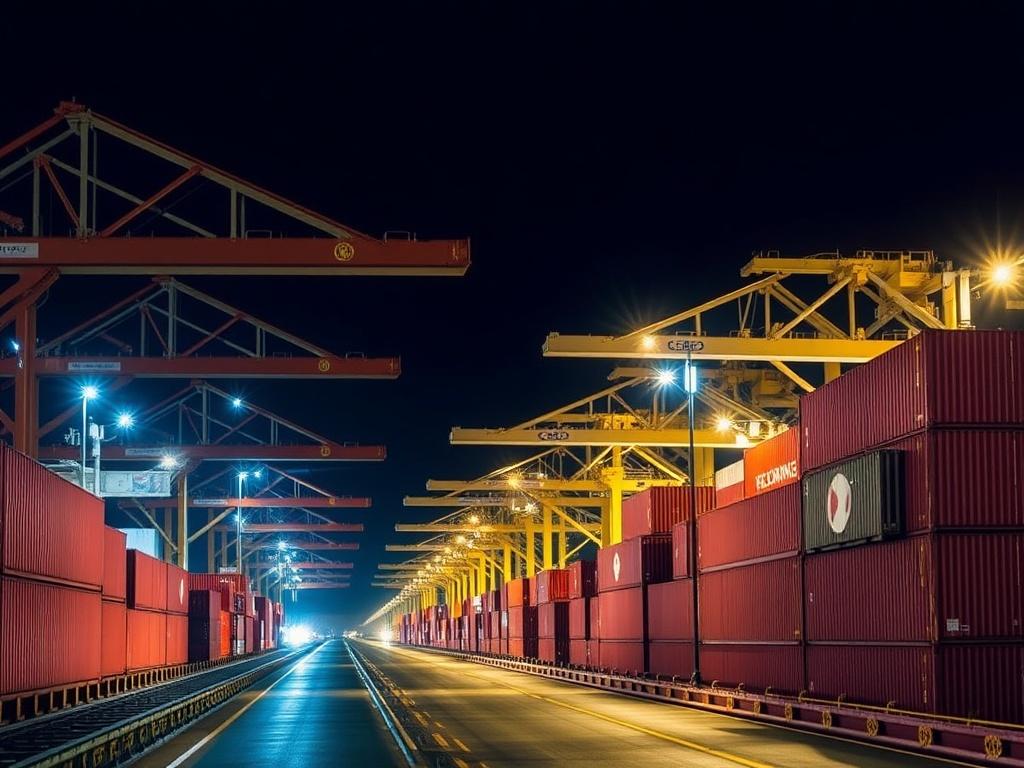
Tariffs are not merely an accounting tax; they shape strategic decisions that ripple through design choices, manufacturing footprints, and clinical access. For managers in the medical device industry, understanding the interplay between customs rules, regulatory obligations, and market dynamics is now a core capability rather than a niche function.
Those who prepare — by modeling exposures, diversifying supply bases thoughtfully, and engaging both regulators and customers transparently — are better positioned to turn trade friction into an impetus for smarter, more resilient operations. In the end, sensible policy and pragmatic company strategy together offer the best path to ensuring that innovations reach patients without unnecessary delay or cost.