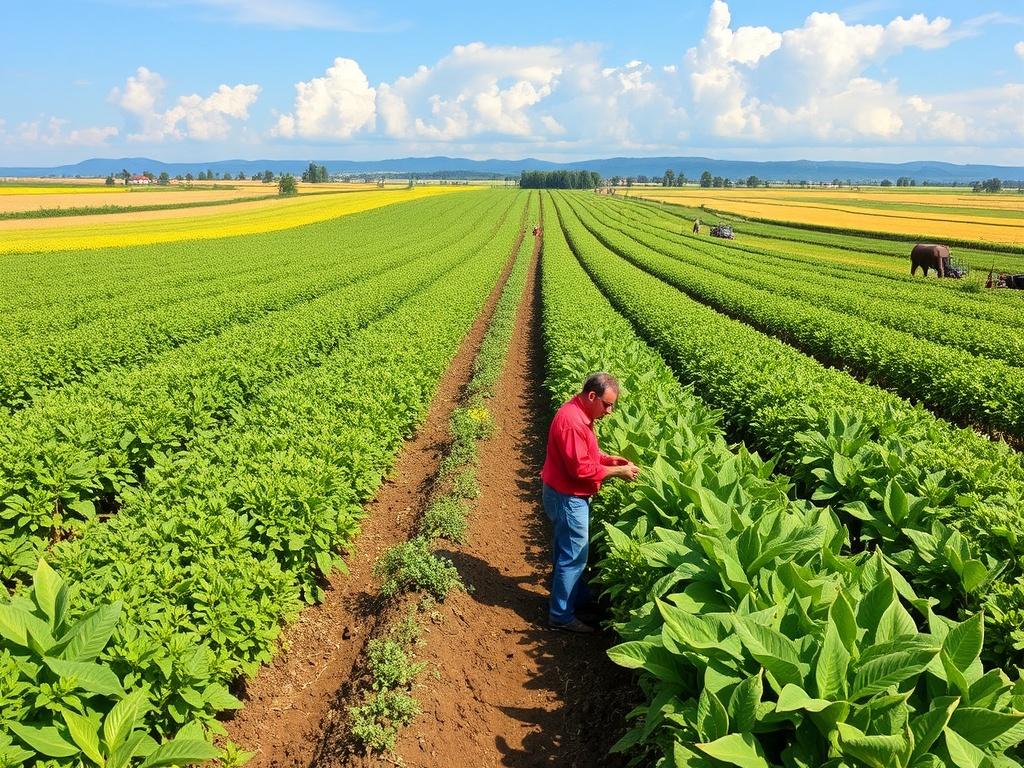
Tariffs are simple in concept: a tax at the border. In practice, when applied to food and farm inputs they can twist supply chains, reshape markets, and deliver price shocks that reach kitchen tables thousands of miles from where the tariff was imposed.
- Why tariffs still surface in food policy debates
- How tariffs affect prices in theory
- Pass-through and market power
- Elasticities and substitution
- Different policy tools, different price effects
- Short-term emergency measures versus structural protection
- Historical episodes: what past crises teach us
- The 2010 Russian grain case
- U.S.–China trade tensions and soybean markets
- How tariffs interact with other cost drivers
- Transportation and transaction costs
- Winners and losers at every step
- Impacts on farmers and rural communities
- Effects on consumers
- Measuring the price impact: what the data show
- Evidence from econometric studies
- Distributional and geopolitical consequences
- Implications for developing countries
- Policy trade-offs and practical politics
- The role of international institutions
- Alternatives to blunt trade measures
- Targeted support instead of broad tariffs
- How to design smarter border policies
- International coordination and early warning
- The private sector’s role and supply chain resilience
- Vertical integration and market responses
- Lessons for negotiators and advocates
- Communication matters
- Practical checklist for policymakers
- Real-world examples from my reporting
- Future risks: climate, geopolitics, and technology
- Climate shocks and the temptation to restrict trade
- Balancing sovereignty and global responsibility
- Designing flexible but accountable measures
- Final thoughts on navigating a complex terrain
Why tariffs still surface in food policy debates
Governments put up tariffs for many reasons: protecting domestic producers, generating revenue, or shielding consumers from perceived volatility. In agricultural politics, these motives often collide, because producers want protection while urban consumers demand low prices.
Political calculus plays a heavy role: farmers are organized and vocal, and the impulse to “do something” during a bad harvest often leads to trade measures. Those measures may appear beneficial locally but can create unintended consequences across borders.
How tariffs affect prices in theory
A basic mechanism is straightforward: an import tariff raises the cost of foreign goods at the border, pushing up domestic prices if imports are a significant source of supply. Export taxes or bans, by contrast, reduce the global supply available to other countries and tend to lift world prices.
But international agricultural markets are interconnected, and pass-through is rarely one-to-one. The degree to which a tariff changes consumer prices depends on market structure, inventories, and whether buyers can substitute between suppliers or products.
Pass-through and market power
When a country imposes a tariff, the impact on retail prices depends on who absorbs the cost—the importer, the exporter, or intermediate traders. In competitive markets, a large share of the tariff is often reflected in higher consumer prices; in concentrated markets, firms may cut margins instead to maintain market share.
Commodity markets with a few dominant exporters or global traders can mute or amplify tariff effects, depending on strategic responses. For instance, if major exporters divert supplies to higher-paying markets, prices can spike where buyers are most constrained.
Elasticities and substitution
Price elasticity matters: if consumers readily switch products, the tariff’s effect on any one product may be smaller. But basic staples—rice, wheat, maize—have low short-term elasticity, so even modest barriers can produce large welfare effects for low-income consumers.
Over time, substitution and supply responses may soften the initial shock, but the adjustment can be slow and socially painful, especially in regions where food accounts for a large share of household budgets.
Different policy tools, different price effects
Import tariffs, quotas, export taxes, and subsidies each shift incentives in distinct ways. Import tariffs make foreign food relatively expensive inside the imposing country; export restrictions lower global supply and raise world prices; subsidies encourage production and can depress world prices if large enough.
Understanding these distinctions is crucial because political narratives often lump trade measures together even though their international impacts differ markedly. A request for protection can be framed as “supporting local farmers,” but its spillovers often hurt distant consumers.
Short-term emergency measures versus structural protection
Governments sometimes use temporary tariffs or bans as emergency tools during price spikes or poor harvests. Those measures can reduce domestic price volatility briefly, but they tend to amplify global volatility by sending price signals that trigger hoarding or diversion of exports.
On the other hand, permanent tariffs aimed at long-term structural protection create predictable distortions that affect investment, cropping choices, and trade patterns for years, with consequences that ripple through supply chains.
Historical episodes: what past crises teach us

Several episodes over the last two decades illustrate how trade measures interact with global food markets. During the 2007–2008 food crisis, a mix of poor harvests, high oil prices, and export restrictions created a sharp spike in cereal prices worldwide.
In later years, selective export bans and duties by some producers during tight supply periods exacerbated price volatility and reduced access for import-dependent countries. These reactions demonstrate the contagious nature of protectionist measures in stressed markets.
The 2010 Russian grain case
A severe drought in 2010 led Russia to restrict wheat exports in an effort to stabilize domestic supplies. That decision tightened global supplies and contributed to price rises in affected markets, revealing how a large producer’s emergency actions can influence food security elsewhere.
The episode showed the speed with which policy choices travel across markets; traders and governments recalibrated quickly, and the price response was visible in futures markets long before physical shipments adjusted.
U.S.–China trade tensions and soybean markets
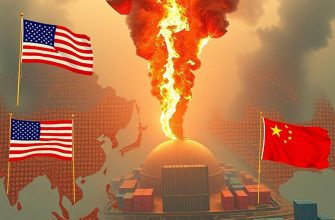
The 2018–2019 tariff standoff between the United States and China shifted global soybean trade flows dramatically, as China imposed retaliatory tariffs on U.S. soy. Markets adjusted: Asian buyers sourced soy from Brazil and Argentina, while U.S. farmers faced a sudden loss of demand and steep price pressure.
That disruption illustrates how tariffs aimed at broader geopolitical objectives can create sectoral shocks with substantial distributional consequences for farmers, processors, and consumers in different regions.
How tariffs interact with other cost drivers
Tariffs don’t act alone. Exchange rate movements, fuel and fertilizer costs, and logistical bottlenecks often determine whether a tariff matters much. A depreciating currency can magnify the domestic price effect of an import tariff, while cheap shipping can partially offset it.
Fertilizer tariffs or input restrictions increase production costs and feed into farm-level supply curves, which eventually affect food prices. Similarly, trade facilitation measures that cut port delays can reduce the effective cost of tariffs by speeding turnover and lowering storage needs.
Transportation and transaction costs
High transport costs can insulate domestic markets from world prices, making tariffs less decisive in some settings. Conversely, when shipping is cheap, tariffs become a more visible fraction of the landed cost and thus a stronger determinant of price.
Policymakers sometimes overlook these interactions, setting border taxes without considering infrastructure, which can lead to surprises when price transmission behaves differently than expected.
Winners and losers at every step
Tariffs redistribute income: producers benefiting from protection often gain at the expense of consumers who pay higher prices. Export restrictions can help domestic consumers in the short run but harm farmers and foreign buyers.
In low-income countries where food constitutes a large share of spending, even small price increases can push vulnerable households into poverty. For wealthy agricultural exporters, tariffs elsewhere may create new market opportunities, but those are rarely evenly distributed.
Impacts on farmers and rural communities
Some farmers gain from tariffs that raise domestic prices; others lose if input costs rise or if retaliatory measures cut export markets. The net effect at the farm level depends on whether a country is a net exporter or importer of the particular commodity.
Over time, persistent border protection can distort cropping patterns toward protected crops, reducing diversification and resilience to shocks, and often favoring larger farms with the capacity to navigate subsidies and trade rules.
Effects on consumers
Urban consumers typically experience the direct sting of higher food prices, and poor households are disproportionately affected because they spend more of their income on staples. Tariffs intended to protect national food supplies can therefore be regressive unless offset by targeted social programs.
In many countries the political tension lies between vocal agricultural constituencies and dispersed consumers whose worries are harder to organize, which helps explain why tariff policies often favor producers.
Measuring the price impact: what the data show
Empirical studies on trade measures and price transmission reach nuanced conclusions: import tariffs generally raise domestic prices, but the magnitude varies by market conditions and product characteristics. Studies often report partial pass-through and heterogeneous effects across countries.
Cross-country analysis suggests that export restrictions are especially damaging for global price stability because they produce supply squeezes in international markets while doing little to alleviate domestic scarcity in the long run.
Evidence from econometric studies
Researchers use models ranging from partial equilibrium simulations to global computable general equilibrium frameworks to estimate the effects of tariffs. Results consistently highlight the importance of inventories and trade responsiveness in moderating price shocks.
While precise numeric estimates depend on assumptions, the qualitative lesson is robust: trade barriers can amplify volatility and redistribute welfare away from consumers toward certain producers or intermediate actors.
Distributional and geopolitical consequences
Tariffs and export measures can aggravate tensions between trading partners, especially when food security concerns are involved. Import-dependent countries may view protectionist moves as threats to their livelihoods and respond with their own trade measures or diplomatic actions.
At a geopolitical level, food-related trade frictions can become leverage in broader disputes, making de-escalation politically fraught even when everyone would benefit from stable cross-border flows.
Implications for developing countries
Countries that rely heavily on imports for basic staples are particularly vulnerable to third-country export restrictions or tariff shocks. Limited fiscal space also constrains their ability to deploy compensatory subsidies or safety nets during crises.
These dynamics can entrench inequalities between importer and exporter regions and complicate development strategies that depend on stable access to affordable food.
Policy trade-offs and practical politics

Policymakers face difficult trade-offs: protecting farmers can preserve rural incomes and political support, but the broader economy and consumers pay the price. Short-term emergency measures often look politically expedient even when they are economically costly.
Building durable policies requires understanding both market mechanisms and the political incentives that drive decision-making. International rules help, but enforcement and flexibility for emergencies remain contentious issues.
The role of international institutions
Organizations like the World Trade Organization set rules that constrain tariffs and export restrictions, but exceptions exist for food security and balance-of-payments crises. The effectiveness of these rules depends on member countries’ willingness to cooperate and on timely dispute settlement.
Multilateral coordination during food crises—encouraging transparency, discouraging export bans, and pooling reserves—can mitigate the worst effects, but political will is often scarce when domestic voters feel threatened.
Alternatives to blunt trade measures
Rather than resorting to tariffs and bans, governments can invest in targeted safety nets, strategic grain reserves, and market information systems that reduce the temptation to adopt disruptive trade measures. These instruments can protect vulnerable households without disturbing global supplies.
Productive policies—such as improving agricultural productivity, reducing post-harvest losses, and investing in rural infrastructure—address the root causes of domestic scarcity and lower the political pressure for protectionism.
Targeted support instead of broad tariffs
Cash transfers, vouchers, and targeted food programs reach the poor directly and avoid the market-distorting effects of general price interventions. Such measures can be scaled up quickly during spikes and scaled back once conditions normalize.
Combining targeted assistance with policies that facilitate trade and market access tends to deliver better social outcomes than broad tariffs that benefit some producers while harming many consumers.
How to design smarter border policies
When trade measures are unavoidable, transparency and temporary design matter. Clear criteria for emergency tariffs or export restrictions, explicit time limits, and commitments to report measures publicly reduce uncertainty and allow trading partners to plan.
Policy rules that tie measures to objective indicators—like stock-to-use ratios or verifiable production shortfalls—can reduce arbitrary or politically motivated interventions that damage global markets.
International coordination and early warning
Early warning systems and regular sharing of stock and production data improve market confidence and reduce the likelihood of knee-jerk export bans. International platforms that monitor food availability help distinguish between temporary disruptions and structural shortages.
Practical coordination need not be perfect to be useful; even modest commitments to refrain from export restrictions during acute shocks can dampen speculative behavior and stabilize prices.
The private sector’s role and supply chain resilience
Companies and traders adjust to tariffs by reorganizing supply chains, seeking alternative suppliers, or hedging in futures markets. Those adaptive behaviors can lessen immediate price impacts, but they also reallocate economic opportunities globally.
Investments in diversified sourcing, better storage, and contract design can increase resilience to policy shocks. However, building that resilience takes time and capital that not all firms or countries possess.
Vertical integration and market responses
In some cases, processors and retailers vertically integrate to secure supplies and manage costs when tariffs raise uncertainty. Such integration can stabilize supply for consumers but may also consolidate market power and reduce competition.
Regulatory oversight must balance the efficiency gains from integration with the risks of concentrated market power that could extract surplus from producers or consumers.
Lessons for negotiators and advocates
Negotiators seeking to reduce food price vulnerability should push for greater market openness while safeguarding the means to support vulnerable populations. Advocacy that highlights the regressive nature of tariffs can shift political incentives if communicated effectively.
Trade agreements that include mechanisms for emergency assistance and technical cooperation on agricultural productivity are more likely to deliver long-term benefits than those focused solely on tariff cuts without support for adjustment.
Communication matters
Explaining the long-run costs of tariffs to the public is difficult but essential. Framing alternatives—like targeted support and diversification—so they appear practical and immediate can reduce the political appeal of costly protectionist measures.
Policymakers who pair trade liberalization with visible social protections are often more successful than those who attempt unaccompanied abrupt reforms.
Practical checklist for policymakers
Before imposing a tariff or export restriction, authorities should assess several factors: the share of imports in domestic supply, expected duration of the shock, likely international spillovers, and affordability of compensatory social programs. A brief, structured checklist can make decisions more deliberative and less reactive.
Transparency about the intended scope and duration and commitments to regular review reduce uncertainty and may prevent retaliatory measures from other countries.
| Measure | Main domestic intent | Typical international effect |
|---|---|---|
| Import tariff | Protect producers or raise revenue | Raises domestic prices; small effect on world price if market is large |
| Export restriction | Secure domestic supplies | Reduces world supply, raises global prices and volatility |
| Subsidy | Support incomes/production | Can increase exports and depress world prices if scale is large |
| Quota | Limit imports for political or health reasons | Creates scarcity domestically or rents for quota holders; mixed global effects |
Real-world examples from my reporting
While writing about grain markets in the Midwest, I watched how quickly local prices moved when trade headlines shifted. Conversations with elevator managers and smallholders revealed vulnerabilities that raw statistics miss: credit cycles, storage constraints, and the human toll of volatile prices.
In towns dependent on a single crop, a tariff-induced price swing can mean the difference between reinvesting in equipment and delaying payments. Those local stories anchor the abstract logic of trade policy in lived reality.
Future risks: climate, geopolitics, and technology
Climate change increases the frequency of extreme weather events, raising the chance of sudden shortages and politically tempting trade restrictions. Geopolitical tensions can prompt targeted tariffs that cascade into broader food market disruptions.
At the same time, technological advances—precision agriculture, improved storage, and better data—offer tools to reduce vulnerability if deployed widely and equitably. Policies that accelerate adoption can be an indirect but powerful hedge against tariff-driven instability.
Climate shocks and the temptation to restrict trade
As major producers face heat waves, droughts, or floods, the political pressure to limit exports will grow. Designing frameworks that allow for relief while preserving market integrity is therefore increasingly urgent.
International cooperation on sharing climate-resilient seeds, agronomic practices, and emergency stocks can reduce the reliance on trade barriers as a first response to shocks.
Balancing sovereignty and global responsibility
Every sovereign state must safeguard its food security, yet unilateral measures that ignore global spillovers can be collectively harmful. The challenge is to craft policies that protect vulnerable citizens without triggering destructive international spirals.
Practical governance recognizes that national resilience comes partly from healthy international markets; policies that ignore that interdependence risk backfiring.
Designing flexible but accountable measures
Flexibility can be built into trade rules through calibrated escape clauses, with trigger conditions and sunset clauses to avoid open-ended disruptions. Accountability measures—such as notifications and data sharing—help build trust among trading partners.
These design elements make emergency tools less prone to abuse and more likely to win international acceptance when they are genuinely needed.
Final thoughts on navigating a complex terrain
Trade measures in agriculture are never just technical choices; they are political acts with deep economic and human consequences. A tariff here or an export tax there can shift global food prices, alter livelihoods, and reshape diplomatic relationships in ways that persist long after the headlines fade.
Smart policy blends immediate protection for the vulnerable with long-term investments in productivity, transparency, and cooperation. That balance is difficult but achievable if decision-makers resist quick fixes and pursue durable, evidence-based strategies that respect both national needs and global responsibilities.