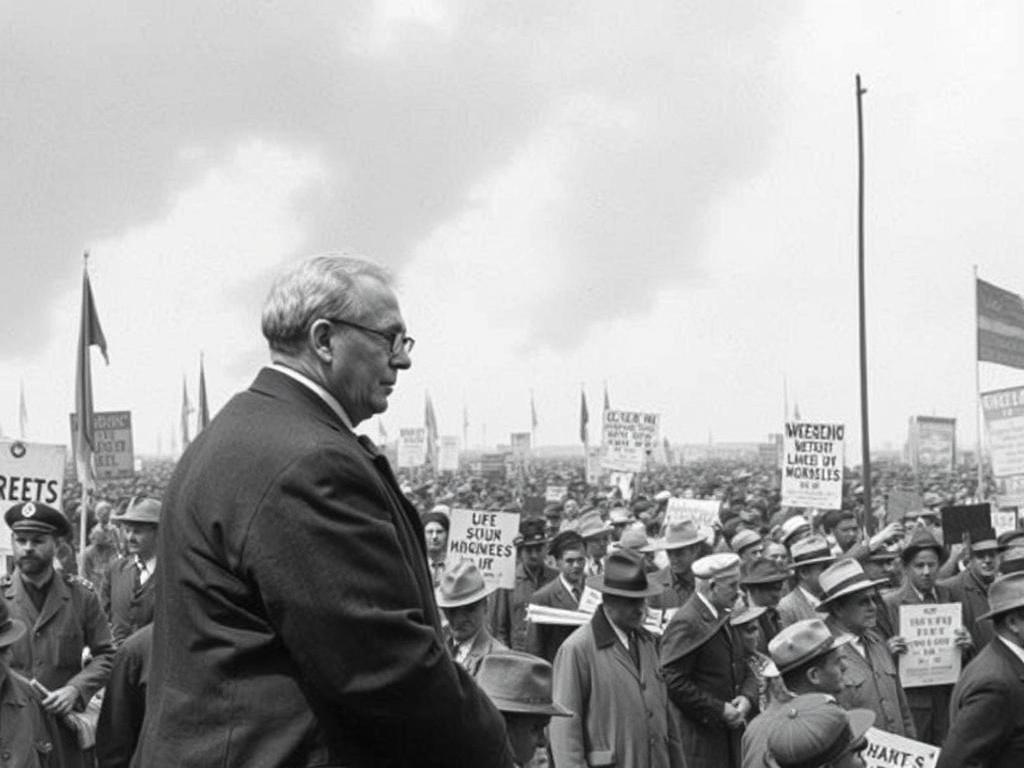
The Smoot-Hawley Tariff: How it made the Great Depression worse has become shorthand for a policy that backfired spectacularly. Enacted in the depths of a banking panic and a collapsing market, the tariff was supposed to shelter American workers and producers from foreign competition, but instead it helped shrink trade, provoke retaliation, and deepen an already catastrophic decline. The story is complicated: the tariff did not cause the Depression by itself, yet its political ripple effects and economic consequences amplified the crisis in ways that still matter to policymakers today.
- Setting the stage: America and the global economy before 1930
- What the Smoot-Hawley Tariff actually did
- Why politicians supported it
- Immediate international fallout
- How tariffs translate into economic decline: the main channels
- Trade collapse: numbers that matter
- Tariff effects versus monetary and banking forces
- What contemporary economists have said
- Case studies: sectors and communities hit hardest
- A personal classroom moment
- Political and diplomatic consequences
- From protection to reciprocity: policy lessons learned
- Measuring the tariff’s quantitative impact
- Why uncertainty persists in quantification
- The human cost beyond GDP figures
- Comparisons with other protectionist episodes
- Modern parallels and policy relevance
- Policy alternatives that were available then — and now
- Lessons for democracies
- A teacher’s closing anecdote
- Timeline: key events from crash to recovery
- Common misconceptions and clarifications
- How historians frame responsibility
- What recovery looked like and the tariff’s fading role
- Final reflections
Setting the stage: America and the global economy before 1930
In the 1920s the United States was both an industrial powerhouse and a major exporter of capital. American farms and factories had become tightly integrated into global markets, and credit flows crisscrossed the Atlantic and Pacific. For many sectors, export markets were not peripheral; they were essential to price stability and to the incomes of producers in the Midwest and Northeast.
That decade also left unresolved imbalances. Postwar reconstruction debt, unstable exchange rates, and protectionist instincts simmered in political life. Tariffs had long been part of US policy, but by the late 1920s the international consensus around free trade had frayed, and political pressure to “protect” domestic industries grew louder. These are the conditions in which Smoot-Hawley would emerge.
What the Smoot-Hawley Tariff actually did
Passed by Congress and signed by President Herbert Hoover in June 1930, the Smoot-Hawley Tariff raised duties on thousands of imported goods. Lawmakers targeted a wide array of products — from textiles to farm implements — aiming to shield domestic producers from foreign competition. The legislation incorporated generous protection for certain American industries and agricultural products that had lobbied for higher duties.
Rather than a narrow tweak to a few items, the act produced substantial increases in tariff protection across many categories. Duties reached record highs on some goods, and the law reversed earlier trends toward modest tariff reductions. Its broad scope and the political atmosphere surrounding its passage made it a signal, not just a policy change: it was a statement that protectionism had regained the upper hand in Washington.
Why politicians supported it
Supporters argued the tariff would preserve jobs and incomes at a time when unemployment was already rising. Many legislators were responding to constituents — farmers in the Midwest, manufacturers in certain regional strongholds — who pressured them to act. Protectionist rhetoric played well in congressional districts where imports were visible and painful to voters.
There was also a political dynamic inside Congress. A coalition of senators and representatives who favored higher tariffs, together with agriculture and manufacturing interests, managed to defeat executive and business opposition. The result was a bill that bore the fingerprints of numerous special interests rather than the streamlined compromise of careful economic reform.
Immediate international fallout
The Smoot-Hawley Tariff arrived on the world stage at a fragile moment. Markets had already been shaken by the stock market crash of October 1929, and governments abroad were quick to respond defensively. Many trading partners announced retaliatory duties or quotas aimed at protecting their own industries and, in some cases, punishing the United States for its move toward protectionism.
Retaliation was not uniform, but it was widespread enough to matter. Even relatively small trade barriers erected in response could compound the global contraction. For exporters dependent on volume rather than high margins, the sudden loss of access to major markets translated quickly into falling prices, lost revenue, and reduced ability to service debts.
How tariffs translate into economic decline: the main channels
Tariffs affect the economy through predictable economic channels: they raise import prices, reduce the quantity of trade, and change relative prices across sectors. When a large economy imposes broad tariffs, foreign producers lose access to markets, prompting them to lower production or find other — often smaller — markets. For countries that rely on exports for income, diminished external demand tightens domestic spending.
Those contractions feed into a second channel: retaliation. If other countries respond with their own tariffs, then exports fall further. A fall in exports is not merely a shift of goods across borders; it is a reduction in aggregate demand for domestic products. In an economy already suffering from declining investment and collapsing confidence, the loss of export demand can be a substantial additional blow.
A third channel is prices and debt. Many exporters had borrowed against future revenues. When prices and volumes collapsed, debt burdens became more onerous. Defaults rose, undermining banks and credit availability. This linkage is not theoretical: in the early 1930s, declining trade and rising defaults combined with bank failures to choke off credit across multiple countries.
Trade collapse: numbers that matter
Between 1929 and the early 1930s, global trade plunged dramatically, shrinking by roughly two-thirds at its nadir. That collapse outpaced the fall in global output, which underlined how sensitive trade is to shifts in tariffs, confidence, and financing. For economies with significant export sectors, the drop in trade translated into sharper declines in employment and incomes than GDP figures alone would suggest.
The United States experienced steep declines in both exports and imports. For many American farmers and manufacturers, foreign markets evaporated just as domestic demand contracted, creating a double squeeze. The immediate consequence was a deeper and more prolonged slump than would have occurred had trade remained more resilient.
Tariff effects versus monetary and banking forces
Scholars and policymakers have debated how much weight to place on Smoot-Hawley versus the monetary contraction and banking crises that characterized the early 1930s. Those other forces were undeniably powerful: collapsing bank confidence, runs, and the adherence to the gold standard transmitted shocks across borders and limited central banks’ ability to stabilize economies.
Nonetheless, tariffs amplified those forces in important ways. By shrinking trade and incomes, tariffs reduced the tax base and eroded bank collateral values, making banking crises more likely and deepening the deflationary spiral. Tariffs didn’t act in isolation, but they shifted the balance: instead of a painful but potentially shorter adjustment, many countries slid into a deeper slump with longer recovery horizons.
What contemporary economists have said
A broad range of economists and historians recognize that Smoot-Hawley worsened the Depression, though they differ on magnitude. Douglas Irwin, one of the most prominent scholars on this topic, has argued that the tariff mattered and that the retaliation it provoked reduced world trade substantially. Others, including Barry Eichengreen, emphasize the interaction between tariffs and the international monetary system.
Even critics of simplistic narratives concede the tariff was a harmful policy choice at a vulnerable moment. The academic debate centers chiefly on how large the effect was relative to monetary contraction, fiscal policy, and structural weaknesses in banking systems, not on whether the tariff had damaging effects at all.
Case studies: sectors and communities hit hardest
Farmers were among the earliest and most visible victims. U.S. agriculture depended on export markets to absorb surpluses, and the sudden retreat of foreign buyers pushed prices down further. Many rural communities that had borrowed to expand during the 1920s suddenly faced falling incomes and mounting debts.
Manufacturing regions with significant exposure to exports also suffered. Industries that sold commodity-like products — steel, textiles, and certain machinery — found buyers shifting away or unable to pay previous prices. Where tariffs insulated domestic producers from foreign competition, they often did so at a cost: consumers paid higher prices, and exporters lost vital markets.
A personal classroom moment
I remember teaching a seminar where students mapped county-level voting patterns against tariff support in the late 1920s. Watching them connect political pressure to concrete economic outcomes crystallized the human dimension of policy choices for me. It’s one thing to read statistics; it’s another to see how local economies bent under national decisions and how that fed back into politics.
That exercise also exposed a second lesson: policy can be both local and global. Representatives responding to the immediate needs of constituents may unintentionally contribute to outcomes that worsen those same communities when the global economy reacts. Smoot-Hawley is a vivid example of that paradox.
Political and diplomatic consequences
The tariff damaged the United States’ standing as a leader in international economic cooperation. Diplomats and businesses abroad saw a shift in U.S. policy away from openness, which discouraged cooperation at a time when coordinated responses were sorely needed. The climate of mutual suspicion made negotiated solutions harder to achieve.
This loss of trust had practical outcomes. In the early 1930s, coordinated efforts to stabilize currencies and trade faltered. Countries reacted in kind — raising barriers, imposing quotas, and defaulting on international obligations — which produced a downward spiral that was political as much as it was economic.
From protection to reciprocity: policy lessons learned
The political reaction to the tariff changed U.S. trade policy for decades. Under Franklin D. Roosevelt, Congress passed the Reciprocal Trade Agreements Act in 1934, which reversed the unilateral protectionist impulse by authorizing negotiated tariff reductions. This mark of pragmatism recognized that bilateral negotiation and reciprocity were more effective tools than steep, blanket duties.
That shift transformed American trade policy into a more cooperative model and set the stage for postwar institutions that would promote lower tariffs and liberalized trade. The meaningfelt result was not immediate recovery from depression, but a long-term institutional pivot away from the kind of protectionism Smoot-Hawley embodied.
Measuring the tariff’s quantitative impact
Estimating the exact contribution of Smoot-Hawley to the depth of the Depression is tricky because many forces collided simultaneously. Researchers use counterfactual models, historical trade flows, and econometric techniques to parse the tariff’s role. Most studies find it was a nontrivial contributor to the collapse in trade and to the decline in output in affected sectors.
Where estimates differ is in scale: some place the tariff’s contribution to GDP decline in single-digit percentages, while others suggest larger sectoral impacts. The key takeaway is consistent across methods: the tariff magnified the downturn where international trade mattered most, especially for agriculture and export-heavy manufacturing.
Why uncertainty persists in quantification
Part of the difficulty is disentangling cause and effect in a period of cascading failures. Bank runs, deflation, debt restructurings, and policy blunders interacted with tariffs in ways that amplify each other. Any model that isolates one factor must make assumptions about how these channels interlink, and different assumptions yield different quantitative estimates.
Yet robust qualitative findings remain: increased protectionism reduced trade, retaliation followed, and economies that relied on external demand saw sharper contractions. Those patterns appear regardless of the exact percentage assigned to Smoot-Hawley’s role.
The human cost beyond GDP figures
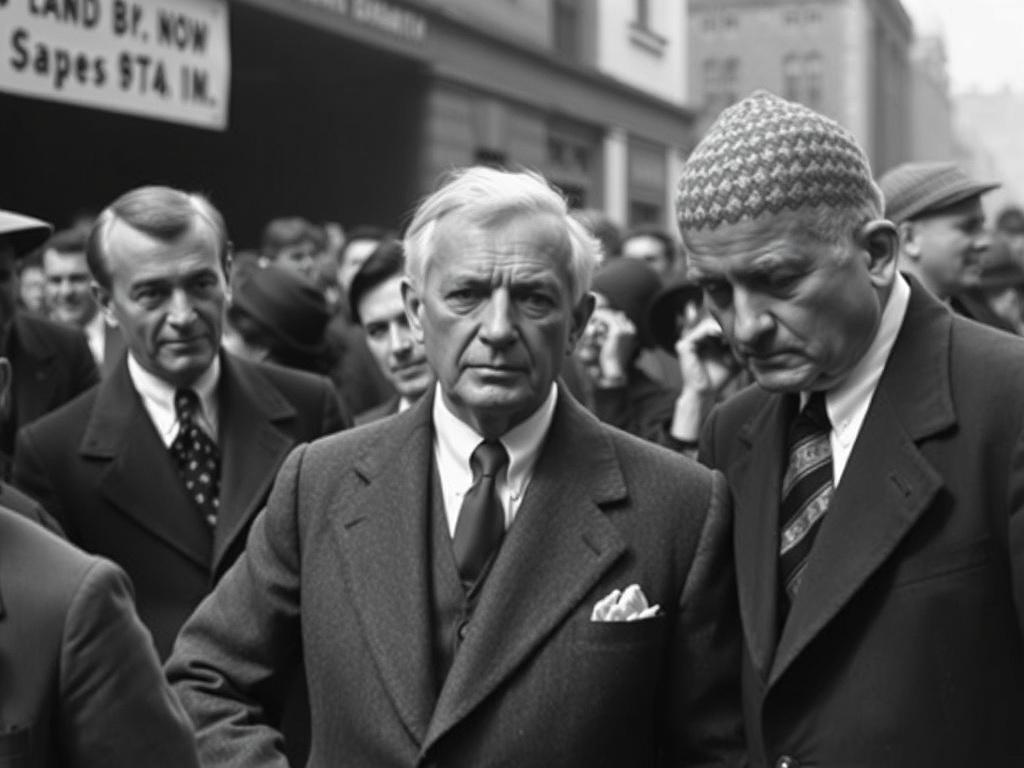
Numbers on trade and output are necessary but not sufficient to capture the human cost. When exports fall, entire towns lose the orders that kept factories open or that paid for seed and fertilizer. Bank failures wiped out life savings. Unemployment destroyed careers and strained families, with effects that reverberated for generations.
These are the stories behind the statistics: families who left farms, towns whose mills shut down, children who never returned to school because economic necessity pressed them into work. Policy debates sometimes focus narrowly on macro aggregates, but Smoot-Hawley’s legacy is also measured in those personal trajectories.
Comparisons with other protectionist episodes
Smoot-Hawley is not unique in history as a protectionist misstep, but its timing and scale make it especially consequential. Other episodes — like interwar protection across Europe or late-20th-century trade wars — share features: political pressure from concentrated interests, short-term gains that give way to broader pain, and international retaliation dynamics.
The striking lesson from comparative history is consistency: when a large economy raises broad tariffs in a fragile international environment, the odds increase that the outcome will be contractionary, not protective. Modern policymakers confront similar tradeoffs when considering tariffs as industrial policy or negotiating tools.
Modern parallels and policy relevance
Contemporary debates over tariffs and trade policy often echo the issues of the 1930s: how to balance domestic political concerns with the broader health of the economy. Though the world economy is far more integrated today, the basic mechanics—retaliation, channeling of prices, and distributional effects—remain relevant. Policymakers who ignore those mechanics do so at their peril.
One useful difference today is the set of institutions and empirical tools available. Multilateral frameworks, faster communication, and richer data make it easier to predict and mitigate the collateral effects of protectionist moves. Yet institutions are only as effective as the political will behind them.
Policy alternatives that were available then — and now
At the time the United States could have pursued alternative policies that would have been less damaging. Targeted domestic relief, temporary subsidies, or negotiated reciprocal reductions could have addressed specific complaints without broad market closure. Similarly, using monetary and fiscal policy to stabilize demand would have reduced pressure on trade as an adjustment mechanism.
Today’s policymakers have a clearer toolkit: temporary adjustment assistance tied to retraining, trade adjustment assistance, and carefully negotiated reciprocity that avoids wholesale market closure. The guiding principle is that trade policy should be part of a broader economic strategy, not the sole instrument for addressing complex structural issues.
Lessons for democracies
The political economy angle is crucial. Democracies respond to concentrated interests, and policies like tariffs often reflect that influence. Smoot-Hawley shows how democratic institutions can still produce outcomes that harm the broader public when short-term local pressures dominate national strategy. Recognizing and correcting these incentives is as important as technical economic reforms.
Institutional safeguards — transparency in policymaking, robust legislative debate, and mechanisms for international negotiation — can reduce the chance that well-intentioned but ultimately harmful measures become law. The reciprocity framework adopted after the 1930s was one such corrective, born from bitter experience.
A teacher’s closing anecdote
When I lecture on Smoot-Hawley now, I try to bring the episode alive by asking students to imagine a lifeline suddenly cut. Many of the protectionist measures that seem abstract in textbooks translate into lost orders, idled mills, and unpaid loans. That image helps explain why political pressure for protection can be so powerful — and why policymakers must weigh the long-term consequences of short-term fixes.
Those discussions remind me that policy is not just about numbers but about human decisions, tradeoffs, and responsibility. Smoot-Hawley is a case study in how good intentions, poor timing, and political compromise can combine into policy that makes a bad situation worse.
Timeline: key events from crash to recovery
Below is a concise timeline to orient the major milestones in the period.
| Year | Event |
|---|---|
| 1929 | Stock market crash in October initiates global economic downturn. |
| 1930 | Smoot-Hawley Tariff is passed and signed into law in June; international retaliation ensues. |
| 1931–1933 | World trade collapses markedly; many countries suffer banking crises and deflation. |
| 1933 | Roosevelt takes office; U.S. begins to abandon gold-standard constraints. |
| 1934 | Reciprocal Trade Agreements Act empowers negotiated tariff reductions and reverses unilateral protectionism. |
Common misconceptions and clarifications
One misconception is that Smoot-Hawley was the single cause of the Great Depression. It was not. The Depression had deep roots in financial imbalances, speculative excess, and structural weaknesses, and monetary contraction and banking panics played central roles. Smoot-Hawley, however, worsened trade collapse and reduced the available policy space for coordinated international recovery.
Another misconception is that tariffs help workers by creating jobs. Tariffs can protect certain jobs in the short term, but they raise costs for consumers and other businesses and invite retaliation that destroys export-driven employment. The net effect in a fragile global downturn tends to be contractionary.
How historians frame responsibility
Historians differ in emphasis. Some focus on the political responsibility of U.S. lawmakers for passing a protectionist law in such a precarious moment. Others point to broader systemic failures: an international monetary system that prioritized gold parity over domestic stability, or financial regulation that failed to prevent bank collapses.
Most agree on a shared verdict: Smoot-Hawley is a cautionary tale. It reveals how policy choices can interact with international dynamics to amplify harm, especially when domestic pressures push toward visibly protective measures without full regard for global repercussions.
What recovery looked like and the tariff’s fading role
Recovery from the Depression was uneven and protracted. Once countries began to abandon the gold standard, exchange rate flexibility allowed some stabilization, and demand slowly returned. U.S. policy shifted away from unilateral protectionism toward negotiated tariff reductions, and the world eventually moved toward new multilateral institutions after World War II.
Smoot-Hawley’s direct influence faded as new policies took hold, but its symbolic weight lingered. It became shorthand for the perils of protectionism and for the need to embed trade policy within a broader, cooperative framework.
Final reflections
The Smoot-Hawley episode offers two clear lessons. First, economic policy does not operate in a vacuum: timing and international context matter. Second, political incentives can drive policy toward locally appealing but globally destructive choices. These lessons are not merely historical; they apply whenever governments contemplate broad protectionist measures during fragile economic times.
History does not condemn interest in protecting domestic workers or industries. It does warn against blunt instruments that close markets and provoke retaliation at moments when cooperation could preserve demand and jobs. The tariff’s legacy is a reminder that good intentions require careful design, and that the global economy responds to both economics and politics in ways that are often counterintuitive.