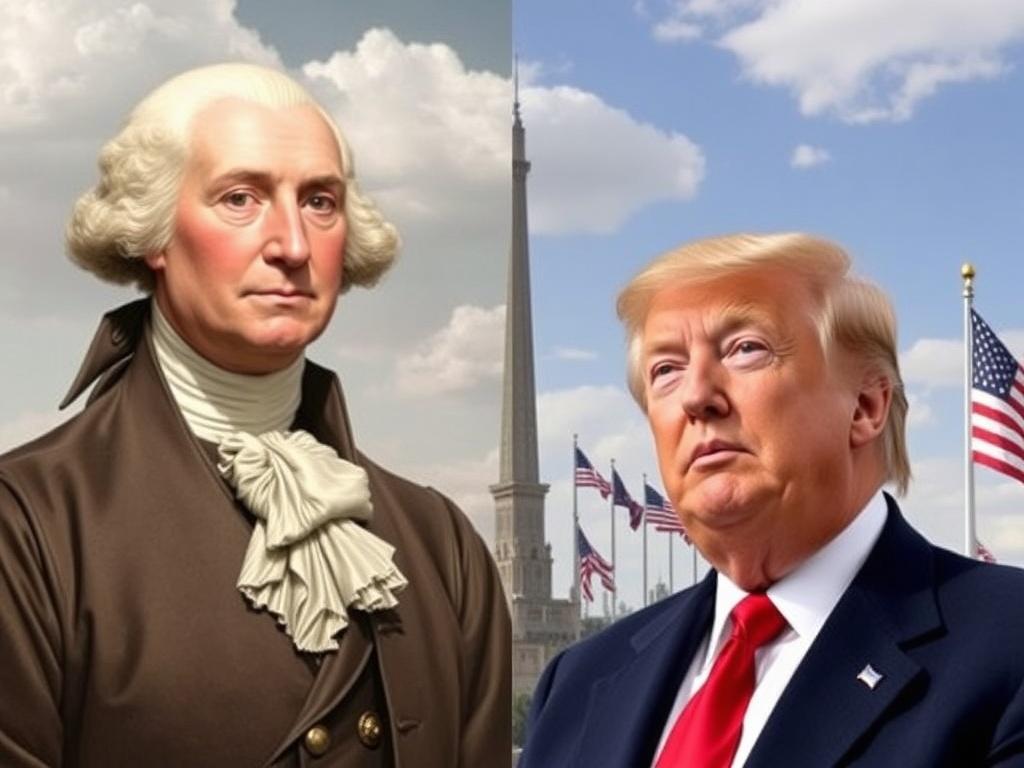
The history of US tariffs from George Washington to Donald Trump traces a long, uneven journey from a fledgling republic dependent on import duties to a global economic powerhouse that uses tariffs as a mix of revenue, protection, and leverage.
This narrative crosses constitutional debates, sectional conflicts, industrial booms, depressions, two world wars, multilateral bargains, and a 21st-century return to unilateral measures. It is a story about politics as much as economics—about who gains, who loses, and how leaders sell trade policy to voters.
- The constitutional origins and Hamilton’s blueprint
- The Tariff Act of 1789 and the early revenue state
- The antebellum tug-of-war: industrial protection versus free-trade agrarianism
- The Tariff of 1816, the Tariff of Abominations, and nullification
- From tariffs to war: Civil War and the high-tariff consensus
- The Gilded Age: tariff politics and industrial consolidation
- Tariffs and the rise of modern business lobbying
- Progressive reforms, income tax, and the early 20th century
- Interwar turmoil: Smoot-Hawley and the Great Depression
- From GATT to the WTO: a new multilateral order
- Tools beyond tariffs: quotas, voluntary restraints, and anti-dumping
- Cold War, competition with Japan, and the age of managed trade
- Globalization, NAFTA, and China’s WTO accession
- Early 21st century trade policy: enforcement and political backlash
- The Trump turn: broad tariffs and a new strategic narrative
- Economic effects and contested evidence
- Major tariffs and acts: a compact timeline
- How tariffs worked in practice: winners, losers, and politics
- Personal perspective: seeing tariffs at work
- Tariffs in the 21st century: shifting tools and the return of strategic competition
- Legal pathways and international responses
- Alternatives and complements to tariffs
- Lessons from two centuries of tariff politics
- Where things stand now and what comes next
- Final reflections
The constitutional origins and Hamilton’s blueprint
From the earliest days the American government faced a basic fiscal problem: how to raise revenue without wrecking a fragile union. The Constitution gave Congress the power to levy duties, imposts, and excises, and the new federal government leaned heavily on tariffs because they were easy to collect at ports and politically tolerable.
Alexander Hamilton, as secretary of the treasury, saw tariffs as more than a revenue source. He argued for a policy that would nurture American manufacturing, providing temporary protection until domestic industry could stand on its own.
This approach—protection for infant industries combined with revenue needs—shaped the first federal tariffs and set the pattern for recurring debates about whether tariffs served national security, raised government income, or favored particular regions.
The Tariff Act of 1789 and the early revenue state
Congress passed the Tariff Act of 1789 within the first months of the new government, setting basic rates on imported goods. The young federal government relied on customs duties for around 90 percent of its revenue for much of the 19th century, a fact that tied trade policy directly to fiscal survival.
Because the income tax did not exist until 1913, tariffs played a unique role: they funded the federal government while shaping industrial policy. Revenue motives often intertwined with protectionist pressures from nascent manufacturers.
The antebellum tug-of-war: industrial protection versus free-trade agrarianism
As the United States expanded, internal economic divisions hardened. Northern industrialists wanted high tariffs to shelter factories; Southern planters sought low tariffs to keep import costs down and to preserve foreign markets for cotton.
These competing interests produced a roller-coaster of tariff legislation in the early 19th century, culminating in high protective rates in some years and bitter political conflicts in others.
The Tariff of 1816, the Tariff of Abominations, and nullification
The Tariff of 1816, passed after the War of 1812, marked a clear turn toward protection, designed to stimulate domestic manufacturing that had suffered during the war. Prices and political loyalties shifted as industries and workers benefited from import barriers.
In 1828 the so-called Tariff of Abominations imposed especially high duties and provoked a fierce backlash in the South. South Carolina articulated the doctrine of nullification in response, arguing states could reject federal laws they deemed unconstitutional.
The crisis peaked in 1832 and nearly led to armed confrontation before a political compromise lowered rates in 1833. The episode revealed how tariffs could fracture the republic and how central trade policy was to sectional identity.
From tariffs to war: Civil War and the high-tariff consensus
The Civil War decisively reshaped tariff policy. The Union government raised duties drastically to fund the war and to protect burgeoning Northern industry, with the Morrill Tariff of 1861 representing a major hardening of protectionist policy.
After the war, Republicans retained a high-tariff stance, which fit an industrializing economy that favored manufacturing growth over cheap imports. Tariffs remained a dependable source of federal revenue while serving industrial consolidation.
This postwar alignment—Republican protection, Democratic preference for lower tariffs—endured into the late 19th and early 20th centuries, coloring almost every national election and policy debate.
The Gilded Age: tariff politics and industrial consolidation
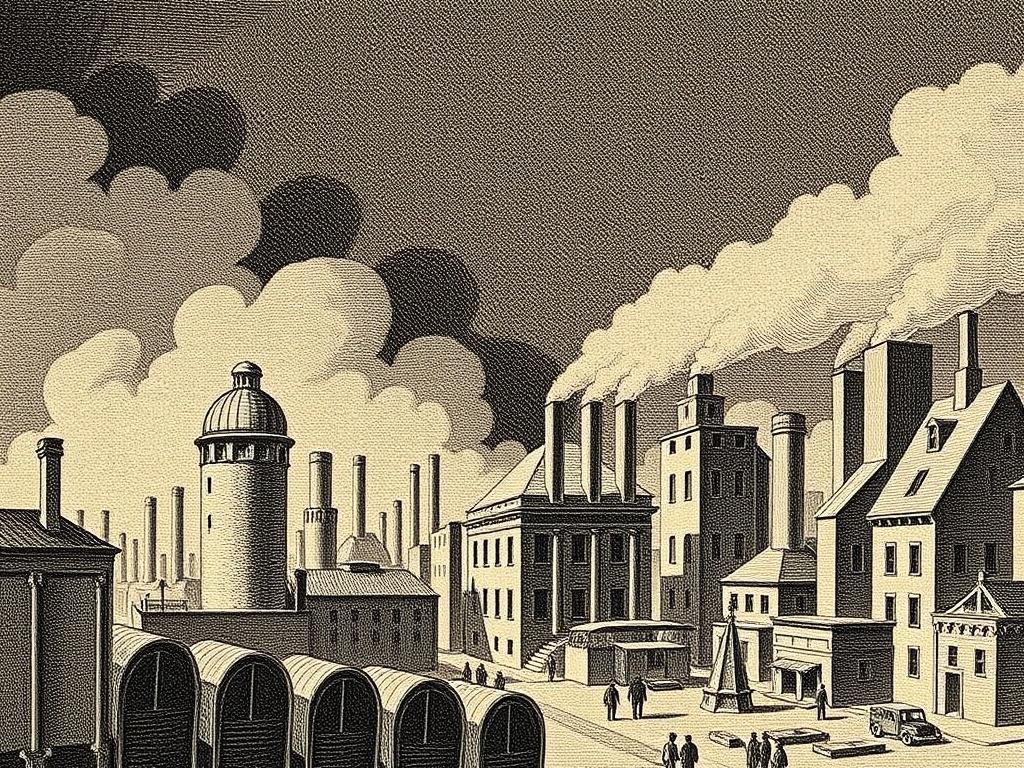
The late 19th century saw tariffs reach some of their highest peacetime levels. Acts like the McKinley Tariff of 1890 and the Dingley Tariff of 1897 reflected strong protectionist sentiment and the influence of industrial lobbies that sought shelter from foreign competition.
High tariffs insulated many American firms during rapid technological change and market expansion, but they also raised costs for consumers and for industries that needed imported inputs. Critics argued tariffs were regressive taxes that benefited concentrated industrial interests at the expense of diffuse consumers.
The tariff became a central fault line in politics: reformers pushed for rates to be lowered or made more uniform, while protectionists defended tariffs as engines of prosperity and national strength.
Tariffs and the rise of modern business lobbying
During this era, business became better organized and more adept at shaping policy. Industrial trusts and associations lobbied for duties that favored their products, while consumers and farm organizations struggled to counterbalance concentrated capital.
These dynamics entrenched tariff politics as a realm of influence peddling and alliances, setting patterns—coalitions of regional interests and industry groups—that would shape American trade politics for generations.
Progressive reforms, income tax, and the early 20th century
The Progressive Era brought new arguments for tariff reform, combining calls for consumer relief with broader concerns about concentrated corporate power. Reformers pushed to reduce rates and to shift the federal revenue base away from regressive import duties.
The Underwood-Simmons Tariff of 1913 marked a significant reduction in average duties and coincided with the enactment of the 16th Amendment, which permitted a federal income tax. The new tax freed the government from near-total reliance on customs revenue.
World War I, however, changed priorities again: the income tax and wartime demands reshaped fiscal strategy, temporarily sidelining tariff politics as revenue sources diversified.
Interwar turmoil: Smoot-Hawley and the Great Depression
Economic panic and political pressure produced one of the most notorious tariff episodes in U.S. history—the Smoot-Hawley Tariff Act of 1930. Intended to protect American farmers and manufacturers, it raised duties on thousands of items during an economic collapse.
International retaliation followed, and many historians argue Smoot-Hawley exacerbated the global downturn by shrinking world trade, raising prices, and deepening protectionist sentiment. The episode discredited broad, indiscriminate tariff hikes among many policy elites.
In response, Congress passed the Reciprocal Trade Agreements Act in 1934, delegating authority to the president to negotiate bilateral tariff reductions. This law laid the groundwork for a more multilateral, negotiated approach to lowering trade barriers.
From GATT to the WTO: a new multilateral order
After World War II the United States led efforts to create institutions that would prevent destructive trade wars and lower tariffs through rounds of negotiation. The General Agreement on Tariffs and Trade (GATT) in 1947 embodied this new multilateralism.
Through successive negotiation rounds—Geneva, Kennedy, Tokyo, Uruguay—tariffs were gradually reduced and many trade disciplines established. The Uruguay Round produced the World Trade Organization in 1995, formalizing a rules-based system that extended beyond tariffs to services and intellectual property.
Multilateralism reflected American strategic and economic interests in an open, rules-based global order, even as sectoral politics at home continued to push for special protection where firms felt threatened.
Tools beyond tariffs: quotas, voluntary restraints, and anti-dumping
As tariffs declined, other trade instruments proliferated. Quotas and voluntary export restraints (VERs) limited quantities rather than raising prices directly, often negotiated to avoid litigation or broader retaliation.
Anti-dumping and countervailing duty laws provided legal routes to punish unfair competition—real or alleged—leading to a proliferation of trade remedies used by industries seeking relief. Section 301 became a political lever to pressure trading partners over a range of grievances.
These non-tariff measures often had the same distributive effect as tariffs: protecting select domestic industries at a cost to consumers and trading partners while complicating international commerce.
Cold War, competition with Japan, and the age of managed trade
During the 1970s and 1980s, the U.S. confronted new challenges from Japan and later from other export-oriented economies. Concerns about unfair competition and deindustrialization prompted a mix of protection and accommodation.
The Reagan administration publicly championed free markets but used trade tools pragmatically, negotiating voluntary export restraints on automobiles and other goods and pushing Japan to open markets. Congress passed the Omnibus Trade and Competitiveness Act in 1988 to strengthen U.S. trade law and enforcement.
The period demonstrated how geopolitical and strategic considerations melded with economic ones, and how policymakers alternated between multilateral bargaining and bilateral pressure to manage competition.
Globalization, NAFTA, and China’s WTO accession
The 1990s accelerated tariff reductions through regional and global agreements. NAFTA, implemented in 1994, created a broad free-trade zone across North America and signaled a bipartisan consensus in favor of deeper market integration at that moment.
China’s accession to the WTO in 2001 opened vast new markets and supply chains but also unleashed competitive pressures on many American industries and communities. Tariffs on Chinese goods fell under WTO rules, but the scale and speed of China’s export growth intensified debates about adjustment, labor standards, and trade enforcement.
As tariffs fell, trade policy battles shifted toward subsidies, intellectual property, investment screening, and the rules shaping global supply chains—issues that would resurface politically in the 21st century.
Early 21st century trade policy: enforcement and political backlash
In the 2000s and 2010s, both the Bush and Obama administrations used tariffs and trade remedies selectively—steel tariffs in 2002 being a notable example under President Bush. Enforcement became a central theme, with Section 301 and other statutes used to address perceived unfair practices.
At the same time, trade’s distributive consequences—factory closings, wage pressures, and community dislocation—created political backlash. Populist movements criticized trade deals and globalization as benefiting elites while leaving many behind.
These currents produced a political environment in which promises to “bring back jobs” through tougher trade measures gained traction among voters across regions and parties.
The Trump turn: broad tariffs and a new strategic narrative
When Donald Trump took office in 2017 he dramatically reshaped trade policy, emphasizing tariffs as a primary tool of strategy and negotiation. The administration justified many tariffs on national security grounds using Section 232 and on unfair practices using Section 301.
Steel and aluminum tariffs in 2018, tariffs on solar panels and washing machines under Section 201, and sweeping tariffs on roughly $250 billion of Chinese goods under Section 301 exemplified a more unilateral, confrontational approach. The administration also threatened further tariffs and withdrew from multilateral commitments in some cases.
The tariff actions provoked retaliatory duties from trading partners, a partial decoupling of supply chains, and a broad debate about the efficacy and costs of such measures. Supporters argued tariffs pressured trading partners and revived domestic industry; critics warned of higher consumer prices and damage to global cooperation.
Economic effects and contested evidence
Scholars and policy analysts have produced mixed findings about the economic impact of the Trump tariffs. Some studies find modest boosts to output and employment in protected sectors, while many others document price increases for consumers and negative spillovers to downstream industries.
A notable feature of the Trump-era tariffs was their use as a bargaining chip—some tariffs were exempted for specific countries or firms, and negotiations led to tariff adjustments or bilateral agreements. Yet the overall pattern showed increased trade friction and greater unpredictability for businesses reliant on global supply chains.
The complex effects underline a recurring theme: tariffs can offer quick political signaling and narrow industry relief, but they often impose diffuse costs that are harder to trace and more politically invisible.
Major tariffs and acts: a compact timeline
Below is a compact table highlighting key tariff acts and turning points in U.S. history. It is not exhaustive but provides a framework for understanding continuity and change over centuries.
| Year | Measure | Significance |
|---|---|---|
| 1789 | Tariff Act | Early revenue source for federal government |
| 1816 | Tariff of 1816 | Early protective tariff after War of 1812 |
| 1828 | Tariff of Abominations | Sectional crisis; nullification conflict |
| 1861 | Morrill Tariff | High Civil War-era protectionism |
| 1890–1897 | McKinley and Dingley Tariffs | High protection during industrial consolidation |
| 1913 | Underwood-Simmons | Tariff reductions + income tax |
| 1930 | Smoot-Hawley | Deep tariff hikes; contributed to trade collapse |
| 1934 | Reciprocal Trade Agreements Act | Shift to negotiated tariff reductions |
| 1947–1994 | GATT rounds | Multilateral tariff reductions |
| 1994 | NAFTA | Regional tariff elimination |
| 2001 | China enters WTO | Major liberalization with global consequences |
| 2018 | Section 232 and 301 tariffs | Broad unilateral tariffs under Trump |
How tariffs worked in practice: winners, losers, and politics
Throughout U.S. history tariffs have produced concentrated winners and dispersed losers. A steel plant or textile mill shielded by a duty enjoys clear benefits, while consumers pay higher prices and firms using imported inputs face increased costs.
This distribution shapes political incentives. Industries with concentrated employment or local presence tend to lobby effectively; consumers, who individually lose small amounts, rarely organize with equal force. As a result, tariffs often persist despite broader economic costs.
Electoral politics amplifies these incentives. Regions hit by import competition may swing politically and demand relief, while national policymakers weigh electoral calculus, campaign contributions, and narratives about national security or fair trade.
Personal perspective: seeing tariffs at work
Over the years I’ve visited factory towns where tariff debates felt less like academic discussions and more like questions of daily survival. I remember a New England mill where managers and workers both told me how imports had changed their business over decades—sometimes saving jobs when managed trade limited competition, sometimes forcing painful adjustments when foreign competitors cut costs aggressively.
Those conversations convinced me that trade policy cannot be reduced to abstract models alone: its human face—communities, skill sets, and institutions—matters. Policies that ignore transition assistance and the politics of adjustment are unlikely to be sustainable, no matter how economically sound in the aggregate.
Tariffs in the 21st century: shifting tools and the return of strategic competition
In recent decades tariffs became one instrument among many—investment rules, sanctions, export controls, and subsidies also shape economic competition. The rise of digital trade, complex global supply chains, and strategic technologies has broadened the policy agenda beyond simple import duties.
The return to high-profile tariffs under President Trump reflected a broader concern: that existing rules and institutions were inadequate to handle state-directed economic competition, particularly from China. Tariffs were deployed both as punishment and as bargaining leverage in negotiating new terms.
Policy debates now ask not just whether tariffs are economically efficient, but whether they are politically effective and how they fit within a broader strategy for technology, industrial policy, and alliances.
Legal pathways and international responses
Tariff actions are constrained and shaped by law and by partners. The WTO and prior GATT rules limited the kinds of tariffs countries could impose without negotiated exceptions. Many disputes over U.S. tariffs during the Trump era moved to the WTO or prompted retaliatory tariffs from affected partners.
Domestic law also matters: statutes like Section 301, Section 232, and escape-clause provisions give the president or the Commerce Department specific authority to act. How those provisions are interpreted and applied determines the scope and durability of tariff measures.
Legal challenges and diplomatic resistance mean tariffs are rarely a purely domestic tool; they reverberate through alliances, trade flows, and international institutions.
Alternatives and complements to tariffs
History suggests several policy alternatives and complements that can address the goals often cited for tariffs—protecting jobs, ensuring security, or correcting unfair practices—without the blunt instrument of broad import duties.
- Targeted anti-dumping and countervailing duties: more surgical remedies for unfair pricing or subsidies.
- Adjustment assistance: retraining and community support to help workers transition to new industries.
- Industrial policy and direct support for R&D: to build competitive advantage rather than just shielding firms from competition.
- Multilateral enforcement and alliance-based approaches: to coordinate pressure on unfair trade practices.
Each approach has trade-offs. For example, industrial policy can be politicized, and enforcement can be slow. But the variety of tools widens policy options beyond a simple tariff headline.
Lessons from two centuries of tariff politics
Several lessons stand out from this long arc. First, tariffs are political instruments as much as economic ones: they reflect power, coalitions, and electoral politics. Second, the economic consequences are uneven—short-term sectoral protection can impose long-term costs on consumers and downstream producers.
Third, multilateral rules and negotiated reductions have often succeeded in lowering tariffs, but they require sustained political commitment and credible institutions. When those institutions weaken, unilateral measures tend to return.
Finally, successful trade policy must reckon with the distributional consequences of trade. Policies that combine openness with meaningful support for adjustment tend to be more durable and politically palatable.
Where things stand now and what comes next
The arc from Washington to Trump shows recurring patterns: fiscal necessity, protectionist pressures, reform cycles, and occasional multilateral breakthroughs. Today’s debates carry echoes of earlier eras but occur in a denser, faster-moving global economy.
Policymakers face hard choices: how to respond to strategic competitors, how to manage domestic adjustment, and how to use tariffs without provoking costly retaliation. The choices will shape industries, communities, and the international order for years to come.
History suggests prudence: tariffs can be useful tools in narrow circumstances, but they are rarely a silver bullet. Blending targeted trade measures with investment in people, technology, and alliances offers a more sustainable path forward.
Final reflections
Watching how tariffs have been used across American history reveals a constant tug between short-run politics and long-run economic interest. From Hamilton’s compromises to Trump’s headline-grabbing levies, tariffs have been adapted to changing needs and narratives.
As the United States moves into a new era of strategic competition and technological change, policymakers would do well to learn from the past: use tariffs thoughtfully, recognize their limits, and pair them with policies that help workers and firms adjust. Trade policy, after all, is both a means and a story—about how a nation balances openness with the protection of its people and industries.