Tariffs look like tidy little cash registers at the border: goods enter, duties are collected, and the treasury gets paid. That image is comforting to finance ministers and politicians who need visible, immediate revenue. Yet the tidy picture hides a tangle of trade-offs, hidden costs, and political incentives that turn what looks like easy money into a policy trap.
- A short history of tariffs as revenue tools
- How tariff revenue works in practice
- Tariff types and practical trade-offs
- Tariffs versus other taxes: visibility and politics
- Political economy: Why governments love them
- Concentrated benefits, dispersed costs
- Short-term gains, long-term costs
- Myth versus reality: revenue expectations and outcomes
- Enforcement, corruption, and administrative realities
- Table: quick comparison of tariff revenue features
- Designing smarter tariffs and alternatives
- Policy tools to reduce dependence
- Real-world examples and anecdotes
- How citizens and businesses feel the pinch
- International response: WTO rules and tariff commitments
- Tariffs in the 21st century: new tools, same temptations
- Practical checklist for policymakers
- Balancing fiscal needs and economic openness
- Final thoughts on the allure and limits of tariff revenue
A short history of tariffs as revenue tools
For centuries, rulers relied on customs duties because they were straightforward to measure and hard to hide. Before modern income taxes and value-added taxes, tariffs were among the few practical ways to raise state funds without sophisticated bureaucracies. Merchants arriving by sea presented goods at ports; officials stamped papers and collected duties. This made tariffs a foundational element of state-building.
In the 19th century, many states used tariffs not only to raise revenue but also to shield nascent industries. The combination of protection and revenue became a political formula: protect key voters, extract duties, and claim economic strength. Colonial administrations also leaned heavily on tariffs, often because they could not or would not develop broad-based domestic tax systems.
Even after countries developed income and consumption taxes, tariffs persisted. In many developing economies, customs administrations remained the most capable revenue collectors long after other tax agencies lagged behind. That institutional inertia keeps tariffs in play, even when economic logic suggests alternatives would be better for long-term growth.
How tariff revenue works in practice
Tariffs are typically imposed either as a percentage of the import value (ad valorem) or as a fixed fee per quantity (specific duty). Both systems are simple in concept but can be complex in execution. Accurate valuation, classification of goods, and effective enforcement are critical to actually realize the projected revenue.
The incidence of a tariff—the question of who ultimately pays—matters. Consumers often see higher retail prices, while importers absorb part of the cost depending on market competition and supply-chain dynamics. For intermediate goods, tariffs raise production costs for domestic manufacturers that rely on imported inputs, eroding competitiveness in sectors that were not the intended targets.
Collection is not costless. Customs administrations require personnel, equipment, valuation expertise, and anti-smuggling measures. In many countries a significant share of nominal tariff revenue disappears to collection inefficiencies, delays, or even corruption. The headline number in a budget can therefore mask a slimmer net gain once enforcement costs and leakages are counted.
Tariff types and practical trade-offs
Ad valorem duties adjust with prices and are easy to scale with inflation; specific duties are predictable but can become distorted by price changes. Importantly, different tariff structures create distinct incentives for misinvoicing and classification manipulation. Firms that can shift their invoicing practices will find ways to minimize ad valorem duties, while low-priced goods may be disproportionately affected by specific duties.
Governments sometimes use surtaxes, seasonal duties, or temporary emergency tariffs. Those instruments act like fiscal fast-acting tools but are politically fraught. The temporary nature can give a false sense of control—firms reconfigure supply chains slowly, and temporary protections can morph into long-term privileges for well-connected industries.
Tariffs versus other taxes: visibility and politics
Compared with income or value-added taxes, tariffs are highly visible. Every tariff bill is attached to an imported shipment, which makes the policy easy to communicate: “We taxed foreign goods to protect domestic jobs.” That clarity is politically potent. Voters can point to a protected factory or a tariff line and see a cause-and-effect that intangible tax policy rarely provides.
That visibility creates a distortion in democratic politics. Politicians reward concentrated, organized groups—import-competing firms—with targeted protection, while the costs are diffused across millions of consumers paying slightly higher prices. The result is a classic distributional asymmetry: concentrated benefits and scattered costs, which favors the maintenance and expansion of tariffs regardless of their efficiency.
Administrative simplicity also matters. Implementing a tariff can be quicker than overhauling a tax code or building the institutions needed for VAT or income tax enforcement. For governments facing urgent fiscal shortfalls, the speed of tariffs rhythmically wins out over longer-term capacity building—even when the latter would produce greater net revenue in the future.
Political economy: Why governments love them
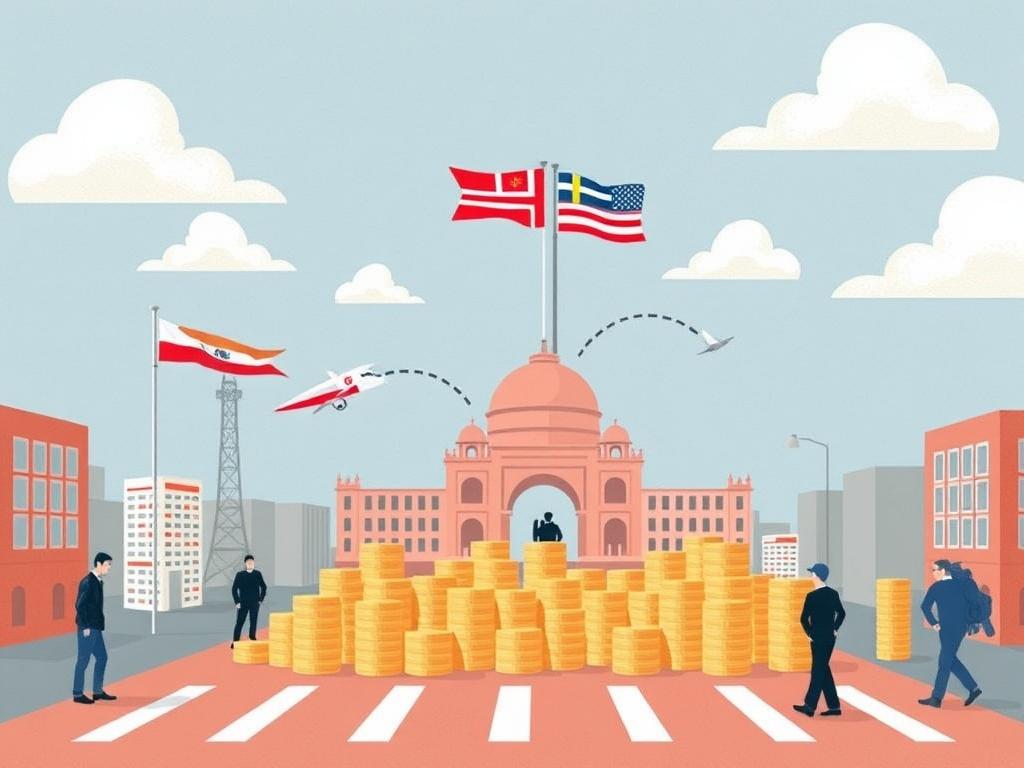
There are at least five political reasons policymakers keep returning to tariffs. First, they deliver immediate, visible revenue. Second, tariffs can be framed as protecting national industry, a narrative that plays well with voters. Third, tariffs create bargaining chips in trade negotiations. Fourth, border controls concentrate discretion in customs agencies, which can be traded for political loyalty. And fifth, tariffs allow selective favors to politically influential firms while letting governments claim fiscal responsibility.
Tariffs also feed clientelism. Customs posts and exemptions become sites of patronage: appointments, waivers, and enforcement decisions can reward allies. In many countries, this informal political economy is as important as the formal rules, because it converts tariff lines into leverage for governing coalitions. That path dependence is difficult to reverse without addressing the associated political networks.
Moreover, tariffs are often easier to sell to domestic constituencies than revenue reforms that broaden the tax base. Proposals to raise VAT or modernize income taxes trigger technical debates and distributional concerns. Tariffs, by contrast, are cast as blunt instruments of sovereignty: the state defending jobs and industry. For leaders seeking short-term political wins, that narrative is powerful and immediate.
Concentrated benefits, dispersed costs
When a tariff protects a particular industry—steelworkers in a rust belt town, for example—the beneficiaries can organize, lobby, and mobilize politically. That concentrated group has clear incentives to protect the tariff. Consumers, who pay a slightly higher price, often lack the organization or salience to oppose the duty. Elected officials instinctively favor the vocal beneficiaries over the silent majority.
This imbalance morphs into policy stickiness. Once tariffs are granted, they rarely disappear on their own. Exemptions creep in, temporary measures harden into permanent support, and industries adapt their business models to rely on protection. Undoing those arrangements requires strong political will and credible compensation mechanisms—neither of which come easily.
Short-term gains, long-term costs
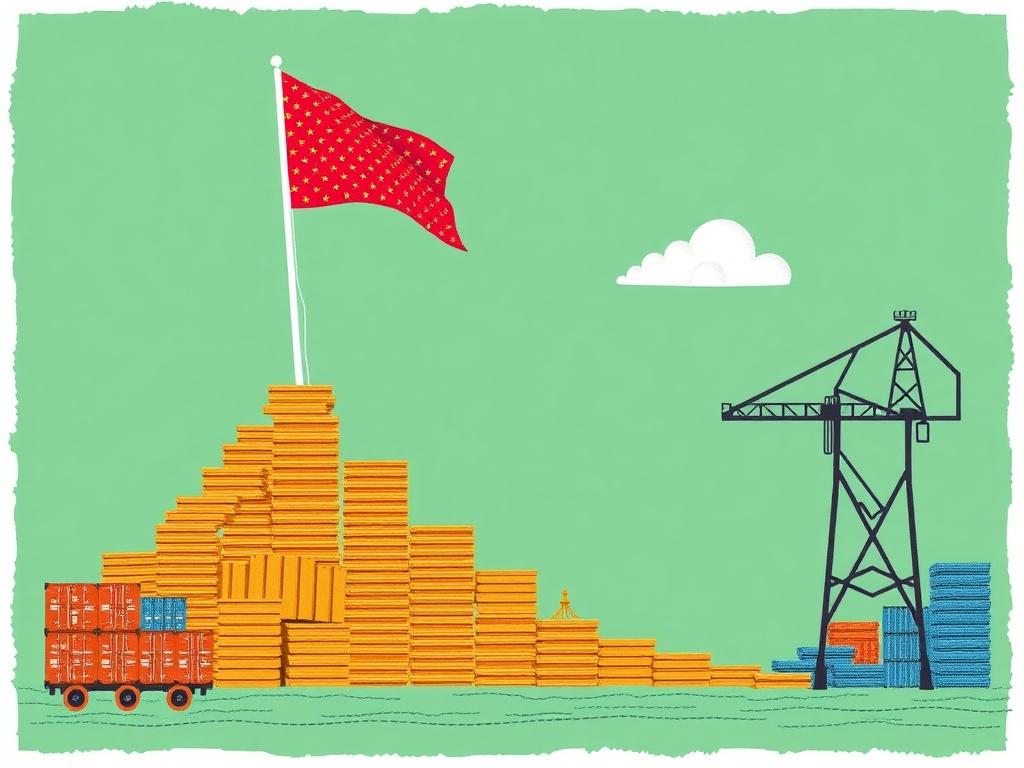
Tariffs can boost revenues in the short run—imports fall, but the taxes on the residual trade can bring quick cash. That short-term gain tempts finance ministries facing immediate budgetary constraints. But as tariffs rise or persist, imports shrink further, and the tax base erodes. Over time, the revenue curve can peak and then decline even as the tariff rate stays high.
The broader economic cost is more insidious. Tariffs distort production decisions, divert resources to less productive sectors, and raise the price of inputs. Small businesses and exporters suffer when their supply chains become more expensive. Those micro-level frictions aggregate into slower growth, which reduces the tax base across the board and hampers the very fiscal health the tariffs were meant to shore up.
Trade retaliation is an additional hazard. When a country raises tariffs, trading partners often respond in kind. Tit-for-tat escalation reduces export opportunities and harms industries that rely on foreign markets. Trade wars also create uncertainty, disrupting investment decisions and supply-chain planning with long-run negative effects on growth and therefore on sustainable revenue.
Myth versus reality: revenue expectations and outcomes
The phrase “the tariff revenue myth: Why governments love them” captures the paradox: governments admire tariffs for revenue, but admiration often misjudges their fiscal reliability. The myth lies in assuming tariff receipts are stable and costless. In reality, they can be volatile and come with hidden economic and administrative costs that eat into the apparent yield.
It helps to think in terms of base erosion. Tariffs tax imports. If tariffs suppress imports or drive substitution toward domestic or smuggled goods, the base contracts. The elasticity of imports to changes in tariff rates—how responsive import volumes are to price changes—determines whether a rate hike raises or reduces total revenue. In many instances, high tariffs generate less revenue than expected because the base shrinks faster than rates rise.
There are real-world stories that make this clear. Some countries observed that large protective tariffs accompanied by growing smuggling and misinvoicing left customs receipts smaller than projected. Other economies discovered that once they liberalized trade and improved domestic tax capacity, total revenue rose because the economy expanded and consumption taxes were more effectively collected. Those experiences illustrate that tariff revenue is not a simple fiscal lever; its performance depends on broader economic and institutional context.
Enforcement, corruption, and administrative realities
Customs is a frontline state institution with an outsized role in revenue and security. That position makes it both essential and vulnerable. Where rule of law is weak, customs posts become bottlenecks where officials can extract bribes, grant exemptions, or delay clearances to create scarcity and rents. Such behaviors erode trust, raise costs for businesses, and turn an intended revenue source into a cost center of patronage.
Smuggling and misinvoicing are persistent problems. Traders can underdeclare value, misclassify goods, or use transit arrangements to avoid duties. In some border regions, informal trade networks are robust, and tariffs push transactions out of formal channels. Governments that rely on customs for a disproportionate share of revenue thus face a perverse incentive: maintaining high tariffs sustains smuggling networks that undermine the formal economy.
Investment in customs modernization—electronic filing, risk-based inspection, and transparent valuation methods—can mitigate some of these problems. But such reforms challenge vested interests and require political capital. A competent customs agency reduces leakages, but it also reduces the discretionary power that certain political actors may prefer to keep.
Table: quick comparison of tariff revenue features
| Feature | Typical outcome |
|---|---|
| Visibility | High—easy to publicize and link to protection |
| Short-term revenue | Often positive and quick |
| Long-term stability | Vulnerable to base erosion and volatility |
| Administrative cost | Can be high; requires specialized enforcement |
| Distributional impact | Regressive—consumers and producers face diffused costs |
Designing smarter tariffs and alternatives
Not all tariffs are created equal. Thoughtful design can reduce distortions: lower, broad-based tariffs are less damaging than high, targeted ones; transparent valuation rules limit misinvoicing; and strong origin rules prevent tariff circumvention. Policy should prioritize revenue instruments that minimize economic harm while delivering stable fiscal outcomes.
Alternatives include broad-based consumption taxes like VAT and improving income tax collection. VAT behaves like a tariff in taxing consumption, but it does so regardless of where goods are produced, avoiding the protectionist distortion. Improvements in tax administration, digital reporting, and taxpayer services can gradually reduce dependence on border taxes in favor of more efficient, equitable fiscal systems.
Where tariffs are used as part of industrial policy, they should come with sunset clauses, adjustment support for affected workers, and clear performance benchmarks. Too often, protective duties are granted indefinitely without accountability. Linking tariffs to measurable objectives and time limits can produce better policy outcomes and reduce the temptation for permanent protectionism.
Policy tools to reduce dependence
Several practical reforms can help governments rely less on tariff receipts. First, modernize domestic tax administration with digital filing and analytics to widen the tax base. Second, implement a neutral consumption tax like VAT with mechanisms to protect low-income households. Third, strengthen customs audits and anti-corruption measures to recover lost revenue. Each of these takes time and political effort, but together they diminish the fiscal allure of tariffs.
International assistance can accelerate reform. Donor-funded modernization programs and technical cooperation on valuation and classification have improved customs performance in many countries. But external help must be paired with domestic political consent; without local buy-in, technical fixes flounder against entrenched interests. Political economy matters as much as technical competence.
Real-world examples and anecdotes
I once spent weeks reporting at a busy port in a coastal West African country. Trucks lined up for days; customs clerks sifted through stacks of invoices, and a dozen brokerage firms negotiated exemptions with varying success. Many small importers described paying unofficial fees and delays that raised their costs more than the published tariff rates ever did. The nominal tariff was one story; the lived experience of trade was every bit another.
In another assignment, I interviewed a medium-sized manufacturer who relied on imported inputs to produce goods for export. She told me how a sudden increase in input tariffs doubled her cost base overnight, making her uncompetitive in foreign markets. The policy was meant to protect domestic sectors, but it choked off the very firms that made the country competitive abroad. The political promise and economic reality were misaligned.
These anecdotes are not isolated. Across different regions, I found the same pattern: tariffs produce concentrated winners, hidden costs, and friction that slows commerce. Where reformers worked patiently to broaden the tax base and streamline customs, they saw more stable revenue and healthier trade flows. Where short-term fixes dominated, volatility and rent-seeking followed.
How citizens and businesses feel the pinch
Consumers pay more for imported goods, from electronics to clothing, and for products made with imported inputs. Those price increases are often small in percentage terms, but they accumulate across many goods and hit lower-income households relatively harder. For people living paycheck to paycheck, slight price hikes matter.
Small and medium enterprises are disproportionately affected because they lack the bargaining power of larger firms to navigate exemptions or secure privileged logistics. A manufacturer that cannot source affordable inputs loses orders; a retailer that cannot match prices sees customers shift to competitors. In this way, tariffs can indirectly shrink the domestic business ecosystem.
Exporters also suffer when tariffs provoke retaliation or when upstream costs make them less competitive. Policies aimed at “protecting jobs” in one sector may cost jobs elsewhere in the economy as production shifts and investment flows respond to altered incentives. The net employment effect can be ambiguous and sometimes negative.
International response: WTO rules and tariff commitments
The World Trade Organization and its predecessor systems introduced rules to constrain unilateral tariff policy. Tariff bindings, most-favored-nation obligations, and dispute-settlement mechanisms impose limits on how and when countries can raise duties. Those rules aim to reduce beggar-thy-neighbor policies and to provide predictability for cross-border commerce.
Binding tariffs in schedules means countries legally commit not to exceed negotiated ceilings. That discipline can be valuable for governments seeking to lock in lower protection, but it also reduces the quick fiscal levers available to finance ministers that rely on border taxes. As countries liberalize, they sometimes compensate by strengthening domestic taxation to preserve fiscal capacity without resorting to protectionism.
Exceptions exist—anti-dumping, countervailing duties, and safeguard measures give governments tools to react to perceived unfair competition or sudden import surges. While legitimate in many cases, such trade remedies can be abused as de facto protection and create complexity in the tariff regime that benefits well-placed firms at the expense of broader competition.
Tariffs in the 21st century: new tools, same temptations
Modern economies complicate the tariff picture. Services, digital goods, and complex global value chains are harder to tax at the border. For instance, a smartphone assembled locally might contain components sourced from multiple countries, complicating valuation and origin determination. Tariffs designed for simple, finished goods struggle to fit this more intricate reality.
At the same time, tariffs remain politically expedient. Recent episodes show governments using tariffs as negotiating tools or as part of industrial strategy. The temptation to favor visible tariffs over less tangible tax reforms persists, even as the economic structure evolves. That persistence reflects not just inertia but active political choice.
Additionally, asymmetric technology adoption creates leverage. Electronic customs systems reduce some corruption points, but new forms of misinvoicing and trade-based money laundering emerge. The policy challenge is dynamic; every technological improvement prompts new adaptations by those seeking to bypass rules.
Practical checklist for policymakers
Policymakers can use a pragmatic checklist when considering tariffs as a revenue source. First, ask whether the tariff is intended primarily for revenue or protection. Second, estimate the behavioral response: how much will imports fall? Third, measure enforcement capacity and likely leakages. Fourth, assess distributional impacts on households and industries. And finally, design sunset provisions and compensation when protection is justified.
- Define clear objectives for any tariff measure.
- Conduct impact assessments before implementation.
- Prioritize administration reforms to reduce leakages.
- Consider alternative revenue sources for long-term stability.
- Include time limits and review mechanisms for protective duties.
Following such a checklist does not eliminate trade-offs, but it reframes the decision from an instinctive revenue grab to a considered policy choice. That reframing matters because it acknowledges the political economy and invites accountability from those who benefit.
Balancing fiscal needs and economic openness
For many countries, the immediate fiscal reality confronts policymakers with stark choices. Cutting public spending, raising domestic taxes, or increasing tariffs each carries political and economic consequences. The seductive simplicity of tariffs makes them a default option, especially in crises or fiscal shortfalls.
The smarter long-run path is often to strengthen tax systems and reduce dependence on trade taxes. That path involves investment in institutions, taxpayer services, and enforcement, which are politically difficult and slow to yield visible wins. But as economies grow and diversify, broader tax bases produce more stable and equitable revenue without the distortions that high tariffs create.
Ultimately, the choice between tariffs and other fiscal instruments is not purely technical. It is a choice about the kind of society leaders want to build: one that resolves short-term pressures through visible measures that may harm long-term growth, or one that makes harder institutional investments to create sustainable, inclusive prosperity.
Final thoughts on the allure and limits of tariff revenue

The tariff revenue myth persists because it tells a straightforward story: defend domestic industry, collect money at the border, and show voters you acted. It is a powerful narrative, especially where tax administration is weak and immediate budgetary needs are acute. But the tale is incomplete; it leaves out the secondary effects that weaken growth, invite rent-seeking, and ultimately hollow out the tax base.
Recognizing the political logic behind tariffs is essential to reform. Any successful strategy must address the interests that benefit from the status quo while offering credible alternatives for revenue and protection. That typically requires phased reforms, better institutions, and transparent accountability for targeted support.
Tariffs will not disappear overnight, nor should they always. There are legitimate uses for border measures in certain circumstances. The critical point is to treat tariff revenue as a temporary fiscal tool rather than a permanent, cost-free source of funds. When governments acknowledge the trade-offs and design policies with eyes open, they are more likely to secure both fiscal health and economic openness for the long run.