Tariffs are noisy: they headline headlines, reorder supply chains, and become shorthand for presidents’ approaches to trade. The American public sees the numbers at the pump, the price on a steel beam, or the cost of a refrigerator and often wants a single explanation. In practice, tariffs are a knot of law, diplomacy, industry politics, and electoral calculation. Understanding how the Biden administration’s approach to tariffs differs from Donald Trump’s requires untangling legal choices, strategy, and the broader set of tools each administration used to pursue industrial goals.
- Tariffs as a policy tool: legal authorities and practical effects
- What the Trump administration did: disruption, leverage, and blunt instruments
- Biden’s tariff policy: retention with recalibration
- Why Biden kept some of Trump’s measures
- Where the two administrations diverge: goals and methods
- Side-by-side comparison
- Industries on the receiving end: steel, solar, EVs, chips
- The economics: prices, trade flows, and inflation
- Political economy: who wins and who loses domestically
- International reactions and legal challenges
- Tariffs and the technology contest with China
- Practical advice for businesses navigating tariffs
- Policy alternatives and complements to tariffs
- Legal and administrative subtleties that shape outcomes
- Costs, benefits, and the politics of unwinding tariffs
- What to watch going forward
- Real-world examples from reporting and conversations
- Final reflections: nuance matters
Tariffs as a policy tool: legal authorities and practical effects
Tariffs are simple in concept — taxes on imported goods — but they operate through a tangle of legal authorities that give the president and trade agencies different levers. Three authorities matter most in modern U.S. practice: Section 232 of the Trade Expansion Act (national security); Section 301 of the Trade Act (retaliatory measures for unfair foreign practices); and the anti-dumping/ countervailing duty (AD/CVD) system run by Commerce and the U.S. International Trade Commission.
Section 232 lets presidents restrict imports on national-security grounds, which gives broad discretion but also invites pushback over what counts as “security.” Section 301 lets the United States punish or coerce trade partners in response to unfair practices, and it was the statutory basis for large tariffs on Chinese goods in the late 2010s. AD/CVD remedies are more traditional antidumping tools: they respond to unfair pricing or subsidies and follow a more rule-bound administrative process.
Beyond law, tariffs ripple through the economy in predictable and less predictable ways. They raise the domestic price of targeted imports, which can protect certain producers but also push up costs for downstream manufacturers and consumers. Tariffs can be temporary bargaining chips or long-term structural barriers, depending on how they’re deployed and whether other tools — subsidies, regulatory changes, diplomatic deals — are used alongside them.
What the Trump administration did: disruption, leverage, and blunt instruments
Donald Trump made tariffs a signature tool. His presidency turned tariffs from a technical trade-policy instrument into a broad political strategy. The most visible moves came in 2018 and 2019: a 25% tariff on steel and a 10% tariff on aluminum under Section 232, and sweeping Section 301 tariffs on hundreds of billions of dollars’ worth of Chinese goods backed by an explicit goal of forcing trade concessions.
Trump’s arguments were straightforward and public-facing: tariffs would shrink the trade deficit, revive American manufacturing, and punish nations that he said played unfairly. The administration used tariffs to win bargaining leverage in bilateral discussions and to project toughness toward China. The measures were often announced quickly and tied to the president’s negotiating timeline, which added uncertainty for importers and manufacturers.
The consequences were immediate. U.S. trading partners — including the European Union, Canada, and China — retaliated with tariffs on American goods. Farmers, who had previously been insulated from retaliatory levies, bore a large share of the pain; the administration used emergency aid and direct payments to offset that harm. Businesses that relied on imported inputs faced sudden cost increases, and some firms restructured supply chains or passed costs on to consumers.
Trump’s approach also blurred legal lines. Section 232 was used in ways critics described as expansive, and the administration often pursued tariffs before fully working through multilateral forums. The Twitter-fueled cadence of announcements, threats, and deals made policy difficult to forecast and complicated compliance for companies that needed lead time to adjust sourcing and contracts.
Biden’s tariff policy: retention with recalibration
When Joe Biden took office, his team inherited the tariff architecture created or expanded under Trump. The Biden administration did not immediately roll back the high-profile tariffs; rather it largely kept the Section 301 tariffs on China in place while promising a more strategic, multilateral, and industrial-policy-oriented approach. That combination — retention of Trump-era duties plus new priorities — is the clearest feature of Biden’s tariff story.
Early on, the Biden administration ordered reviews of several tariff actions and used the U.S. Trade Representative (USTR) to assess whether targeted adjustments could better serve broader policy goals. The administration signaled a preference for using tariffs as one tool among many — not the primary instrument — and emphasized coordination with allies, supply-chain resilience, and domestic investment incentives as complementary strategies.
In practice, that meant the Biden team preserved much of the China tariff architecture but coupled it with large domestic subsidies (notably the CHIPS Act and provisions in the Inflation Reduction Act) and export-control measures targeting technologies rather than whole sectors. This blended approach sought to reduce the reliance on tariffs as a blunt trade weapon and to leverage domestic industrial policy to reshape where advanced manufacturing happens.
Why Biden kept some of Trump’s measures
Politically and economically, keeping tariffs had advantages. Many Democrats, especially labor unions in manufacturing-heavy states, welcomed protectionist pressure that could preserve jobs. The tariffs also functioned as leverage in negotiations with China, especially as concerns over technology transfer and forced industrial upgrading persisted.
On the economic side, removing tariffs overnight would have risked political backlash in regions that had framed their recovery around trade protection. The Biden administration therefore adopted a cautious posture: review first, then decide whether some tariffs should be modified or phased out depending on whether other policy tools were providing the same protections.
Where the two administrations diverge: goals and methods
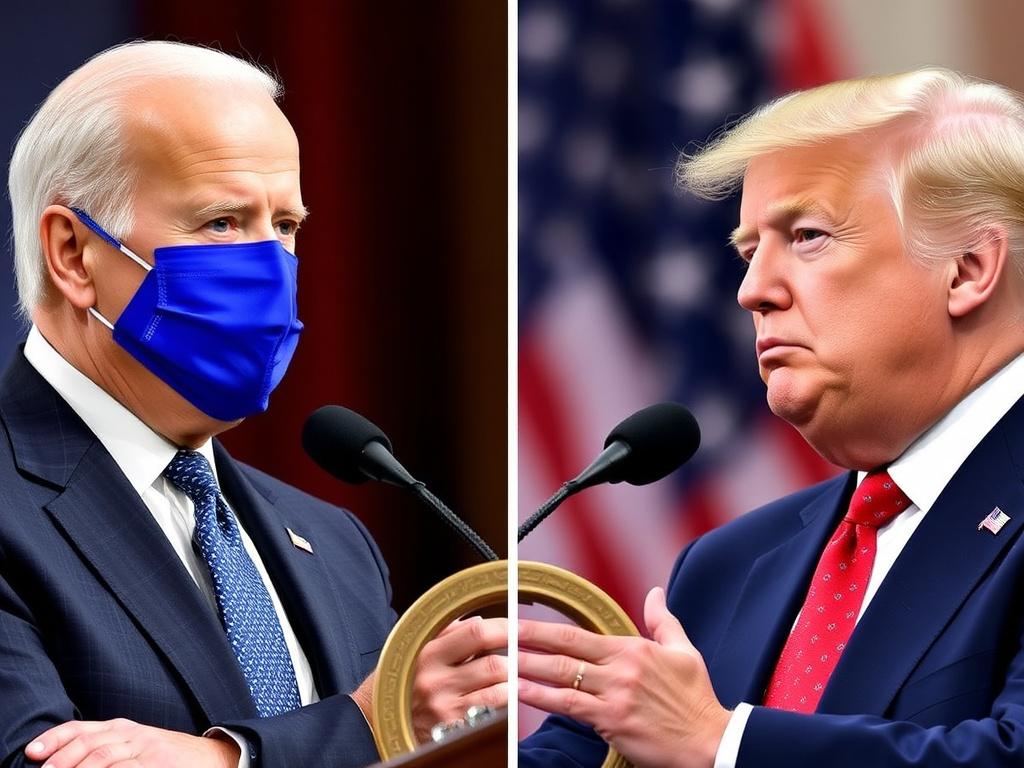
At the highest level, both presidents used tariffs to defend American industry. The differences lie in the endgame and the toolkit. Trump presented tariffs as direct, binary solutions: impose duties to pressure others and protect domestic producers. Biden sees tariffs as part of a broader industrial strategy that includes subsidies, tax policy, procurement rules, and coordination with allies.
That divergence matters because tariffs alone are a blunt instrument that can provoke retaliation. Biden’s emphasis on linking tariffs with domestic investment — for example, tying subsidies and tax credits to local production or assembly — aims to create lasting capacity rather than temporary shelter. The outcome is more bureaucratic layering around trade policy and a willingness to use softer instruments — export controls, investment screening, procurement preferences — in tandem with tariffs.
Another important difference is diplomatic posture. Trump often acted unilaterally and used tariffs as a personal negotiation lever. Biden has prioritized working with allies where possible, arguing that a coordinated approach is more effective in addressing systemic challenges such as China’s industrial subsidies and intellectual property practices. That coordination is imperfect, but the intent to multilateralize pressure is a throughline in Biden’s rhetoric and policy choices.
Side-by-side comparison
A compact comparison helps clarify the practical distinctions. The table below outlines key dimensions where the administrations’ tariff policies differ in tone and technique.
| Dimension | Trump (broad characterization) | Biden (broad characterization) |
|---|---|---|
| Core aim | Reduce trade deficits, win bilateral concessions | Build domestic capacity, secure supply chains, and use tariffs as leverage |
| Signature tools | Section 232 steel/aluminum; Section 301 tariffs on China | Retained many Section 301/232 measures; paired with subsidies, procurement rules, export controls |
| Diplomacy | Unilateral pressure, ad hoc deals | Emphasis on coordination with allies and multilateral pressure |
| Use of tariffs | Broad and abrupt | More targeted and integrated with industrial policy |
| Political framing | Nationalist, populist, deal-centric | Worker-centered industrial policy, supply chain security |
This comparison simplifies complex bureaucratic realities, but it captures the central intuition: Trump used tariffs as the main instrument; Biden uses them as one instrument among several aimed at reshaping industrial outcomes.
Industries on the receiving end: steel, solar, EVs, chips
Not all industries feel tariffs the same way. Steel and aluminum producers benefited clearly from Trump’s Section 232 tariffs, and many of these firms continued to support lingering duties under Biden. The tariffs raised domestic prices and helped margins for some U.S. mills, at least in the short run.
Solar panels are an instructive case because they show how policy mixes can produce contradictory effects. During the Trump years, tariffs on solar cells and modules raised costs for installers in the U.S., slowing deployment while protecting some domestic manufacturing. Under Biden, the administration has been wrestling with similar trade-offs: promoting a domestic clean-energy supply chain requires protecting nascent factories while also keeping component prices low to encourage deployment.
Electric vehicles and semiconductors illustrate the modern twist. The Biden administration’s industrial policy — including tax credits conditioned on North American assembly or sourcing — is designed to create local production without relying solely on tariffs. For semiconductors, export controls and investment screening have been as important as tariffs in limiting technology transfer and incentivizing domestic fabs with public subsidies.
The economics: prices, trade flows, and inflation
Tariffs raise prices on the goods they target. That simple truth drives many downstream responses: manufacturers look for alternative suppliers, pass costs to consumers, or shrink margins. Trump-era tariffs raised input costs for U.S. firms that relied on imported steel, aluminum, and components, and those costs fed into certain sectors’ price levels.
Critics of tariffs point to two economic downsides. First, tariffs are regressive insofar as consumers, including lower-income households, pay higher prices. Second, they invite retaliation that can hurt exporters in agriculture and manufacturing. The 2018–2019 trade fights produced concrete damage to U.S. farmers through retaliatory tariffs, which the administration partially offset with direct payments.
Biden’s approach sought to limit these downsides by targeting tariffs where they were politically or strategically useful while using subsidies and tax incentives to build capacity. That reduces direct dependence on tariff protection for domestic industries and aims to lower long-term costs. Still, tariffs that remain in place — especially on Chinese goods — have a measurable impact on firms that import from those supply chains.
Political economy: who wins and who loses domestically
Trade policy rarely maps cleanly onto partisan lines. In both Republican and Democratic circles there are protectionist instincts and free-trade impulses. The Trump years exposed and amplified coalitions of voters and interest groups that favored tariffs: manufacturing workers, certain domestic producers, and regions that felt left behind by globalization.
Biden leaned into those constituencies while also appealing to environmental and technology constituencies with incentives and regulatory measures. That created a policy constellation where unions and some manufacturers found common cause with an administration that was otherwise pro-global-cooperation on climate and alliances. The result is a hybrid coalition that supports industrial intervention but not necessarily unilateral tariffs divorced from allied action.
At the same time, exporters and industries dependent on global value chains often resist tariffs. Agricultural exporters were a high-profile example of this friction during the trade wars. Under Biden, efforts to coordinate with allies and to use targeted tools aimed to reduce the collateral damage to exporters, though tensions persist.
International reactions and legal challenges
Tariffs almost always produce international pushback. The Trump administration drew retaliation from the EU, Canada, China and others; those retaliatory tariffs hit U.S. exports like bourbon, motorcycles, and agricultural goods. The Biden administration sought to repair some of those fissures and to work collaboratively with allies on shared concerns about China’s trade practices.
Legal challenges at the World Trade Organization and domestic litigation also followed the tariffs of the late 2010s. Some trading partners argued that broad use of national-security exceptions and retaliatory tariffs did not comport with WTO rules. These complaints are part of a long-run friction between domestic political prerogatives and the rules-based system; neither administration fully resolved that tension.
Tariffs and the technology contest with China
One of the clearest continuities across the two presidencies was concern about China. Trump’s Section 301 tariffs were explicitly aimed at addressing unfair practices China was accused of engaging in, including forced technology transfer and subsidized industrial upgrading. Biden retained much of that pressure while retooling strategy to emphasize technology controls and allied coordination.
Where Biden differed was in deploying export controls (for semiconductors and advanced computing chips) and using investment screening to block sensitive transfers. Those tools target technology flows rather than simply raising costs on consumer goods. This combination — tariffs plus targeted controls and subsidies — is designed to limit China’s access to cutting-edge technology while building domestic capacity where it matters most.
Practical advice for businesses navigating tariffs
For companies, tariffs create uncertainty. The practical responses fall into a few categories: diversify suppliers, assess tariff engineering opportunities (changing product classifications or production processes), use available exclusion or refund mechanisms, and factor policy risk into pricing and contracts. Firms with thin margins are especially vulnerable to tariff shocks.
Regulatory processes can offer relief. Both administrations had mechanisms for exclusions and reviews that importers can use to seek relief from duties. Those processes are slow and require detailed evidence, but they are a viable path for businesses for which tariffs impose significant burdens.
From my reporting and conversations with procurement managers and supply-chain executives, firms that proactively engaged with trade counsel, hedging strategies, and alternative sourcing tended to fare better than those that waited. A Midwest manufacturer I spoke with in 2021 described how shifting a portion of its supply base out of a single Asian country reduced its tariff exposure and improved lead times — at the cost of some short-term complexity and investment.
Policy alternatives and complements to tariffs
Tariffs are only one arrow in the quiver. Subsidies, tax incentives, Buy American procurement rules, export controls, and investment-screening tools can be more surgical ways to achieve domestic-industrial outcomes. The Biden administration leaned heavily into these alternatives because they can create durable changes in production patterns without incentivizing as much retaliation.
Public investment in research and in physical infrastructure also changes the calculus. Building semiconductor fabs, supporting workforce training, and ensuring energy infrastructure stability are long-term bets that reshape supply chains. Tariffs can provide temporary protection, but lasting competitiveness comes from sustained investment and human capital development.
Legal and administrative subtleties that shape outcomes
The way tariffs are implemented matters. Exclusions, carve-outs, and temporary suspensions soften impacts and can target relief to industries that need it most. Administrative choices about how strictly to enforce classification rules, how quickly to process exclusion petitions, and how to coordinate with other agencies determine whether tariffs protect or simply create winners and losers at random.
Moreover, trade law is procedural: AD/CVD cases require investigations by Commerce and the ITC, while Section 301 actions are administratively directed by USTR. The Biden administration emphasized interagency coordination — bringing commerce, industry, and foreign-policy officials into shared frameworks — which changes how decisions are made and the criteria used beyond immediate protection for a domestic industry.
Costs, benefits, and the politics of unwinding tariffs
Removing tariffs is politically fraught. Industries that benefit naturally resist rollbacks, and politicians from manufacturing districts are reluctant to expose employers and workers to sudden competition. On the other hand, leaving tariffs in place can produce long-term inefficiencies and higher consumer costs. This political trap helps explain why Biden kept many Trump-era tariffs — withdrawal is rarely painless.
Policymakers who favor rolling back tariffs often argue that doing so while simultaneously offering compensating domestic investments is the most politically viable path. In other words: ease tariff protection if you can provide credible alternatives for workers and firms. That logic underpins many of the subsidy and procurement strategies pursued in Washington after 2021.
What to watch going forward
Several indicators will tell us whether the U.S. is moving toward a tariff-light or tariff-heavy trade regime. Watch for changes in exclusion rates, announcements of new tariffs in response to geopolitical events, and whether subsidy-led strategies succeed in bringing manufacturing back onshore. The outcome will also depend heavily on how other major economies — the EU, Japan, South Korea — align with the U.S. on industrial policy toward China.
Election cycles and partisan shifts matter too. Trade policy is elastic to electoral politics. A future administration with a different political mandate could either double down on tariffs or dismantle existing ones. That makes durable industrial-policy tools — subsidized factories, workforce programs, and secure supply chains — preferable for creating lasting change that is less vulnerable to political whiplash.
Real-world examples from reporting and conversations
In my reporting across manufacturing towns and import-dependent firms, the human consequences of tariff policy are rarely abstract. I remember speaking with a small appliance importer who described a cascade: a tariff on a key compressor increased costs, which reduced the retailer’s ability to discount, which then slowed inventory turnover at a family-run store. The tariff achieved an industrial objective but shifted cost burdens down the chain to businesses with little ability to absorb them.
Conversely, I also spoke with a steel mill manager who welcomed tariffs as breathing room to modernize and invest. That firm used the higher margin window to upgrade equipment and pledge new hires. These two anecdotes show the zero-sum and the potential win-win aspects of tariffs: protection can buy time to build competitiveness, but it can also transfer costs to others in the economy.
Final reflections: nuance matters
When people ask, “Biden’s tariff policy: How is it different from Trump?” the right answer is not a single line but a pattern. Trump weaponized tariffs as a primary, visible instrument for rebalancing trade and demonstrating toughness. Biden, inheriting those measures, opted for more restraint and integration: keeping tough measures where politically and strategically useful while emphasizing subsidies, coordination with allies, and technology controls as the pillars of a refreshed industrial strategy.
The practical effect is a mixed landscape. Some tariffs remain, especially those aimed at China, and they continue to shape sourcing decisions. But there is also a greater emphasis on building capacity through investment and using a wider toolkit to secure industries deemed critical to national interests. For firms and workers, that means preparing for a policy future where tariffs can still bite, but where subsidies, procurement rules, and export controls matter as much — if not more — in shaping where production happens.