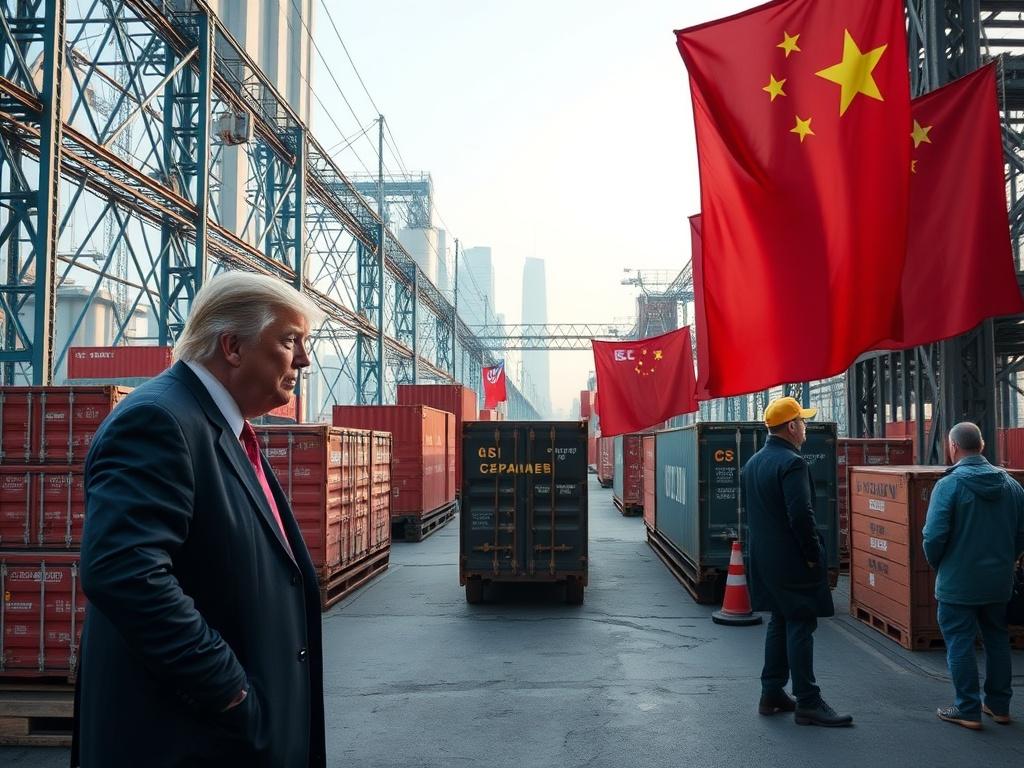
The trade confrontation that began in 2018 between Washington and Beijing has become one of the defining economic events of the last decade, raising questions about trade policy, national security, and the costs of confrontation. The headline phrase — Trump’s tariffs on China: a success or failure? — captures the binary way many people discuss the episode, but the real answer is more nuanced and stubbornly mixed. This article walks through the origins, mechanics, winners and losers, and longer-term consequences of those tariffs to offer a clear, evidence-based assessment.
- How the conflict began: context and catalysts
- What the tariffs actually were: timeline and scope
- What the tariffs were intended to achieve
- How the tariffs affected U.S. consumers and firms
- Did the tariffs revive U.S. manufacturing and employment?
- Effects on the trade deficit and trade flows
- How China responded and adjusted
- Sectoral winners and losers
- Who actually paid the tariffs?
- Government spending to offset pain: the agricultural bailouts
- Macroeconomic consequences: growth, inflation, and investment
- How the tariffs influenced global supply chains
- Legal and institutional fallout: the WTO and multilateral institutions
- The phase one deal: what was gained and what was left unresolved
- Measuring the success: metrics and evidence
- Economic studies: what the research generally finds
- Political consequences: domestic and international
- Unintended consequences and long-term risks
- Alternatives the administration could have pursued
- Balancing national security and economic efficiency
- How businesses adapted: strategies and resilience
- Lessons learned for future U.S. trade policy
- Assessing success: a balanced verdict
- What I saw on the ground: practical effects and human stories
- Is there a future beyond tariffs for U.S.-China economic relations?
- Final thoughts on whether the strategy worked
How the conflict began: context and catalysts
The story begins before President Trump took office. For years, U.S. officials and business groups complained about China’s industrial policies, intellectual property practices, and forced technology transfer linked to market access. Those complaints gained political traction across both parties, turning into public frustration over large bilateral deficits and lost manufacturing jobs.
When the Trump administration arrived, it treated tariffs as a blunt instrument for both economic correction and geopolitical leverage. Tariffs were presented as a way to punish unfair behavior, incentivize domestic production, and force Beijing to change long-standing practices. The strategy was straightforward: impose pain on Chinese exports and use that leverage at the bargaining table.
What the tariffs actually were: timeline and scope
The Trump administration relied on several legal authorities and a series of sequential actions. In March 2018 it invoked national security powers to place a 25% tariff on steel and a 10% tariff on aluminum from most countries, a move aimed more broadly than just China. Later that year, the administration used Section 301 of the Trade Act of 1974 to target China directly.
Over 2018 and 2019 Washington imposed tariffs on hundreds of billions of dollars of Chinese imports in multiple tranches. Initial lists covered tens of billions of dollars and eventually expanded to affect roughly $250 billion in goods, with rates commonly at 10% or 25% depending on the tranche and year. A proposed additional list covered nearly everything else and was discussed publicly but never fully implemented.
| Date | Action | Representative scope |
|---|---|---|
| March 2018 | Steel and aluminum tariffs | 25% steel, 10% aluminum (global, with some exemptions) |
| July–September 2018 | Section 301 lists 1–3 | Tariffs on roughly $50 billion in targeted industrial and tech goods |
| 2018–2019 | Tariffs on broad consumer and intermediate goods | Tariffs expanded to cover about $200–250 billion of imports; many at 10–25% |
| January 2020 | Phase one deal | Limited commitments by China on purchases and IP; most tariffs remained |
The “phase one” agreement of January 2020 did not remove the majority of tariffs. It contained Chinese purchase commitments and some promises on intellectual property and market access, but it left most tariffs in place and deferred hard enforcement questions. The outbreak of COVID-19 shortly thereafter further complicated measurement of cause and effect.
What the tariffs were intended to achieve
Official goals were a mix of economic and strategic aims. Administrators framed tariffs as a way to extract concessions on IP theft, forced technology transfer, and other industrial policies. The tariffs were also pitched domestically as a tool to rebuild American manufacturing and reduce the bilateral trade deficit with China.
Mechanically, tariffs raise the cost of imports and are supposed to reduce demand for foreign goods, shift production to domestic firms, and impose economic pain on the targeted country. In practice, tariffs are also leverage: the threat or imposition of tariffs can be a bargaining chip in negotiations that aim for regulatory concessions or contractual commitments.
How the tariffs affected U.S. consumers and firms
One immediate effect of tariffs is higher prices for imported goods and for products that use imported inputs. Virtually every importer became an intermediary, deciding whether to eat higher costs, pass them to customers, or shift sourcing. For many consumer items and intermediate parts, prices rose; many businesses reported squeezed margins or higher costs of production.
Small manufacturers and retailers often lacked the clout to force suppliers to change prices, so they bore costs directly. When I interviewed several midwestern metal fabricators during that time, owners described rapid increases in input prices for steel and aluminum that hurt competitiveness on thin-margin contracts. Some found ways to pay temporarily, but several said they delayed hiring or capital investment.
Did the tariffs revive U.S. manufacturing and employment?
The political rhetoric promised a renaissance of American manufacturing jobs. The evidence, however, was mixed. Manufacturing employment trends are influenced by automation, demand cycles, and global competition, not tariffs alone. During the tariff years, manufacturing payrolls showed modest fluctuations but no dramatic reversal of long-term declines caused by automation and globalization.
Academic studies found that while some sectors and firms gained protection, other firms and downstream industries faced higher input costs and reduced demand. Net job gains were small or negligible in aggregate. Economists highlight that tariffs are a blunt tool: they may protect particular producers but harm others in the same economy.
Effects on the trade deficit and trade flows
One stated objective was to reduce the U.S. trade deficit with China. Bilateral trade balances did change: imports from China fell for some products, and the deficit narrowed somewhat in specific periods. But the overall U.S. goods deficit did not fall dramatically because imports shifted toward other countries rather than being replaced by U.S. production.
Trade diversion was a major consequence. Brands and retailers sought alternative suppliers in Vietnam, Mexico, Malaysia, and other economies to keep prices stable. That substitution reduced the intended pressure on China while simultaneously boosting exports from other lower-cost manufacturing locations.
How China responded and adjusted
China retaliated with tariffs on U.S. goods, targeting agricultural products, automobiles, and other politically sensitive categories. Those retaliatory tariffs hit American farmers and specific exporters, prompting federal relief programs to soften the blow. Beijing also relied on fiscal and monetary tools to cushion its own economy.
Beyond tariffs, China accelerated industrial policy efforts, subsidized affected exporters, and diversified supply chains outward. Beijing also used the period to strengthen domestic capabilities in semiconductors, advanced manufacturing, and other strategic sectors — a response intended to reduce vulnerability to future foreign pressure.
Sectoral winners and losers
The effects were uneven across sectors. Steel and aluminum producers benefited directly from higher tariffs on foreign metals, but many downstream manufacturers confronted higher input prices. Farmers, particularly soybean growers, suffered from China’s retaliatory tariffs and saw shipments collapse in 2018–2019 before some recovery under the phase one deal.
Technology firms faced a different dynamic. Tariffs affected physical goods such as electronics, but U.S. actions also included export controls and blacklists (for example, on Huawei) that targeted high-tech flows more precisely than broad tariffs. Those controls sometimes had more lasting impacts on supply chains and the global competitiveness of specific companies than the tariffs themselves.
Who actually paid the tariffs?
Despite political narratives that blame China for the tariffs, the short-run economic incidence mostly fell on U.S. importers and consumers. When tariffs raise the price of a good, the importing company may lower its margin, raise prices, or switch suppliers. In many cases, U.S. firms and households experienced higher prices, which reduces real incomes and shifts purchasing behavior.
There were, however, instances of Chinese exporters absorbing some cost through lower margins, especially where competition was intense. The distribution of the burden depended on price elasticities, market structure, and the ability of importers to find alternative suppliers.
Government spending to offset pain: the agricultural bailouts
One striking policy response was the series of U.S. government programs to compensate farmers for lost sales to China. The Market Facilitation Program and related programs provided billions of dollars in direct payments to agricultural producers in 2018 and 2019. Those payments mitigated short-term pain but were targeted relief rather than long-term structural solutions.
These subsidies also blurred the picture of who ultimately paid for the trade conflict. Taxpayers assumed part of the financial burden of the tariffs through direct farm aid, while consumers and businesses bore the rest through higher prices and disrupted supply chains.
Macroeconomic consequences: growth, inflation, and investment
At the macro level, tariffs were one shock among several in the late 2010s and early 2020s, including monetary policy shifts and the pandemic. Tariffs exerted a modest downward pressure on U.S. GDP and a small upward pressure on consumer prices. They also introduced uncertainty, which can depress investment decisions and reallocate capital across sectors.
Business investment surveys reported higher uncertainty during peak tariff episodes, and that uncertainty can be as damaging as direct tariff costs because it delays hiring, capital purchases, and strategic investments that build long-term productivity.
How the tariffs influenced global supply chains
Rather than returning large swaths of production to the United States, many multinational firms adopted a China+1 approach: keep operations in China while developing additional capacity in lower-cost countries to reduce exposure. Vietnam, Mexico, India, and Southeast Asian nations benefited as firms diversified risk and optimized costs.
These incremental shifts reduced the utility of tariffs as a tool for reshoring. Firms found it more economical to move parts of their supply chain to nearby countries than to undertake the full costs of reshoring manufacturing back to the U.S.
Legal and institutional fallout: the WTO and multilateral institutions
The Trump administration’s tariffs strained the rules-based trading system. The United States filed and lost certain disputes at the World Trade Organization concerning the legality of broad tariffs, and it also blocked appointments to the WTO appellate body, weakening dispute settlement. Those moves reduced the WTO’s ability to adjudicate future trade fights.
In effect, this period nudged trade policy toward bilateral and unilateral action rather than multilateral negotiations and enforcement. That shift has institutional consequences because it changes the incentives around cooperation and predictability in international trade.
The phase one deal: what was gained and what was left unresolved
In January 2020 Washington and Beijing signed a “phase one” agreement that contained Chinese purchase commitments and limited reforms around intellectual property and financial services access. China pledged to buy large volumes of U.S. goods and to take some regulatory steps in key areas.
Critics argued the deal did not address the structural issues driving long-term U.S. concerns, and enforcement mechanisms were unclear. The commitments came at a tense moment and were quickly overtaken by the global pandemic, which made it difficult to evaluate whether China would have met its purchase targets under normal conditions.
Measuring the success: metrics and evidence
How do we measure the success of the tariffs? Candidates include changes in bilateral trade balances, concrete regulatory or legal reforms by China, shifts in supply chains back to the United States, and the welfare impact on U.S. consumers. On each metric the results were mixed or modest.
Bilateral imports from China fell in several categories, but much of the decline was offset by increased imports from other nations. China did make some commitments on intellectual property in the phase one deal, yet many observers found those provisions lacking in enforceability and limited in scope. On reshoring, the changes were incremental rather than transformative.
Economic studies: what the research generally finds
Academic and think-tank research converges on a few broad conclusions. Tariffs raised prices for U.S. consumers and businesses, created trade diversion, and generated mixed effects on domestic employment. The net welfare effects for the U.S. economy were typically small but negative in many models, once retaliation and higher prices were included.
Notable studies, including work by economists at NBER and trade policy scholars, find that while some industrial sectors gained temporary protection, the aggregate cost in terms of higher prices and inefficiencies exceeded the benefits to protected producers. Econometric work also shows that firms that relied heavily on imported inputs were sometimes hurt more than the sectors the tariffs sought to protect.
Political consequences: domestic and international
Domestically, tariffs became a divisive political symbol. Supporters praised the administration for confronting China and promising to revive manufacturing; opponents criticized the economic cost and the uneven distribution of harm. For some constituencies, notably certain manufacturing workers and steel producers, the rhetoric and policy had tangible appeal.
Internationally, tariffs contributed to a deterioration of U.S.-China relations and raised global anxiety about decoupling. Allies were sometimes unsettled by unilateral tariffs, particularly the steel and aluminum measures that affected many U.S. partners, straining diplomatic and trade relations at key junctures.
Unintended consequences and long-term risks
Unintended effects included accelerated Chinese investment in domestic capabilities, deeper geopolitical competition in strategic technologies, and emboldening other nations to pursue their own protective measures. Over time, these dynamics can reduce global economic efficiency and fragment trade along political lines.
There is also a risk that normalizing unilateral tariffs as a standard tool lowers the bar for future trade conflicts. When economic sanctions or tariffs become routine, businesses face chronic uncertainty that can depress innovation and long-term planning.
Alternatives the administration could have pursued
Critics have suggested alternatives that might have been more narrowly targeted and politically sustainable. These include stronger use of export controls and investment screening for strategic technologies, more aggressive enforcement of existing trade rules through multilateral channels, and targeted industrial policy to finance domestic R&D and workforce training.
Another alternative would have been forming coalitions with allies to apply coordinated pressure on problematic practices. Multilateral or coordinated approaches tend to be more effective at changing systemic behavior because they reduce the ability of a target country to play one country off another.
Balancing national security and economic efficiency
A persistent tension in this episode is the overlap between economic policy and national security. Some tariffs had clear security rationales, such as limiting certain technology flows or protecting sensitive supply chains. Others were cast as security measures but had primarily industrial-policy motives.
Policy design that mixes security and protectionism risks diluting both goals. Clear, targeted measures focused on actual vulnerabilities, coupled with investments to reduce dependence, can be more effective than broad duties that principally redistribute economic pain without solving the underlying strategic problem.
How businesses adapted: strategies and resilience
Companies handled the tariffs with pragmatic strategies. Many diversified suppliers, negotiated with existing vendors for shared cost absorption, or invested in automation to reduce reliance on costly inputs. Some used pricing power to pass costs to consumers; others redesigned products to use alternative materials or components.
These adaptations increased business resilience but also raised adjustment costs. Smaller firms with limited bargaining power and tight cash flow were often the least able to absorb shocks, demonstrating that trade policy effects redistribute burdens in ways that matter politically and socially.
Lessons learned for future U.S. trade policy
Several lessons are apparent. First, unilateral tariffs are a blunt instrument that produce predictable economic costs and unpredictable political effects. Second, durable change on issues like IP protection and forced technology transfer will likely require multilateral cooperation and enforceable rules rather than episodic tariffs. Third, policymakers need to pair any protection with domestic investment in competitiveness to make protection meaningful.
Finally, transparency and targeted relief can help manage distributional effects. Compensatory measures for the most affected workers and communities, combined with investment in retraining and new industries, make trade adjustment more politically feasible and economically sensible.
Assessing success: a balanced verdict
If success is measured by forcing Beijing to abandon its industrial strategy and immediately reshoring large swaths of manufacturing to the United States, the tariffs failed. The structural drivers of China’s model — large state support for key sectors, a deep domestic market, and long-term industrial planning — remained largely intact, and some Chinese policy adjustments were cosmetic or limited in scope.
If success is judged by extracting short-term concessions, capturing headlines, and signaling that the U.S. would use economic tools to confront strategic competition, the tariffs produced partial success. The phase one agreement included commitments and the confrontation raised global awareness of underlying concerns. It also forced firms and governments to reassess supply chains and strategic dependencies in ways that may have long-term consequences.
Economically, the burdens were real and concentrated: higher prices for consumers and businesses, strain on specific sectors like agriculture, and modest gains for some protected domestic producers. The overall welfare calculus for the U.S. economy leans toward net cost rather than clear net benefit, especially when the costs of retaliation and higher prices are accounted for.
What I saw on the ground: practical effects and human stories
Reporting and conversations with business owners, farmers, and factory managers revealed a pattern you cannot see in aggregate statistics. Small suppliers often bore the brunt of higher input costs, while global brands absorbed or passed on costs flexibly. Farmers in parts of the Midwest felt betrayed: they had been promised better trading terms, yet their immediate incomes were hit by retaliatory tariffs.
One small parts manufacturer I spoke with described reworking contracts with customers and carefully timing orders to avoid the worst tariffs, a process that required extra administrative work and created stress for the staff. These micro-level burdens add up and help explain why aggregate models find negative welfare effects even when headline trade balances shift a little.
Is there a future beyond tariffs for U.S.-China economic relations?
Moving forward, the U.S.-China economic relationship is unlikely to return to business as usual. Strategic competition over technology, supply chains, and influence has deep roots. Tariffs were one instrument in a larger toolbox that includes export controls, investment screening, targeted subsidies, and diplomatic engagement. The smarter path is selective decoupling where necessary and cooperation where possible.
That means protecting critical technologies and supply chains but not treating all trade as a security threat. It also means building alliances to manage competition and invest in the domestic capabilities required to compete without resorting to broad, economy-wide tariffs that redistribute costs unevenly.
Final thoughts on whether the strategy worked
The answer to whether Trump’s tariffs on China were a success or failure depends on the benchmark. They succeeded in drawing attention to longstanding problems and in extracting some concessions, but they did not deliver a structural reversal of China’s industrial trajectory nor a clear, lasting economic benefit to the United States. They imposed costs unevenly, spotlighted the limits of unilateral action, and accelerated complex shifts in global supply chains.
Policymakers who want different outcomes should prioritize targeted measures, allied action, and domestic investments that address competitiveness directly. Tariffs can be a tool, but they are not a substitute for coherent industrial strategy, predictable rules, and the political patience required to build durable reforms. Trade policy that combines firmness with strategic partnership and investment will likely produce better results than blunt economic confrontation alone.