The Corn Laws are one of those historical episodes that sound dry on the surface but, when you pull the thread, reveal a story of hunger, politics, and the birth of modern economic policy. These protectionist tariffs on imported grain reshaped British society during the long 19th century, touching landlords, mill workers, urban consumers, and the very structure of political parties. Repeal did not solve every problem overnight, but it rerouted Britain onto a course toward industrial expansion, cheaper food, and a new global economic role.
- What the Corn Laws were and why they mattered
- Roots: the postwar economy and landed interests
- The human cost: bread, hunger, and unrest
- Organized opposition: the Anti-Corn Law League
- Political conflict and the split of a party
- The economics of repeal: why open grain mattered
- Short-term disruptions and long-term gains
- Why the Irish famine was a turning point
- Mechanics of the repeal bill and Parliamentary struggle
- Immediate aftermath: markets, prices, and imports
- Social and political consequences beyond economics
- Lessons in policy design: trade-offs and transition
- Comparative perspective: Britain and continental protections
- Misconceptions and myths
- A personal note: seeing the legacy in modern Britain
- How the repeal shaped Britain’s global role
- Policy echoes today: tariffs, politics, and populism
- Timeline: key moments in the Corn Laws story
- Persistent debates among historians and economists
- Practical takeaways for modern policymakers
- From tariffs to transition: what would a modern repeal look like?
- Final reflections: why the repeal still matters
What the Corn Laws were and why they mattered
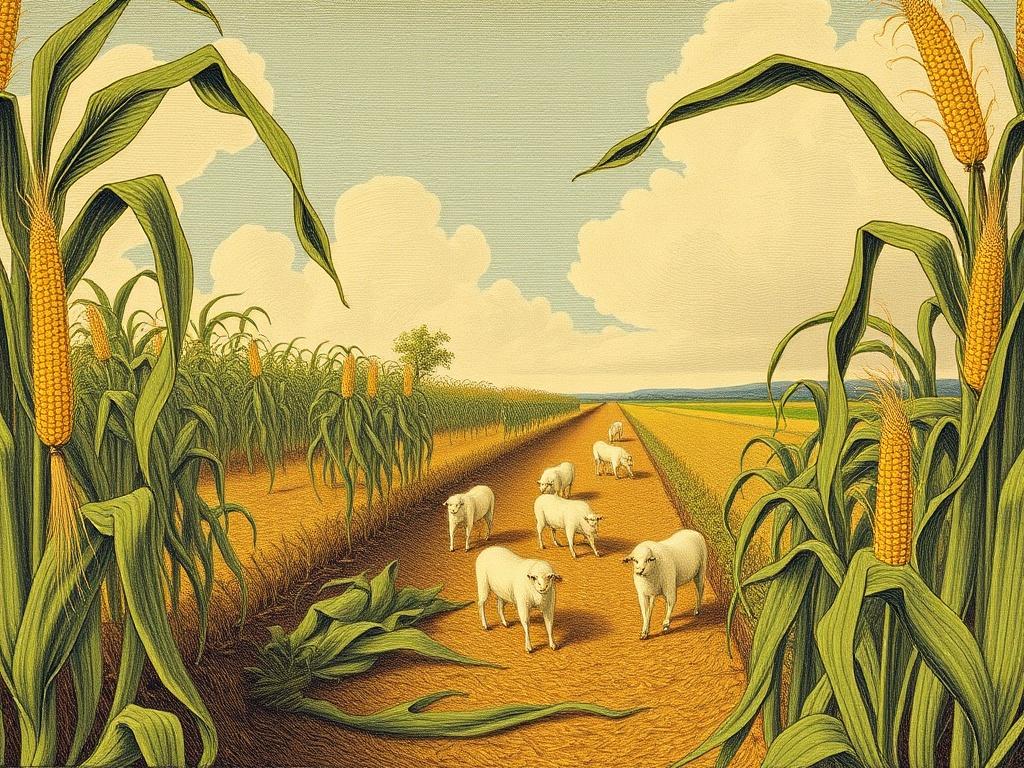
At their core, the Corn Laws were a set of tariffs and measures designed to protect domestic agriculture by restricting the import of foreign grain. “Corn” in this period meant all cereal grains—wheat, barley, oats—rather than the modern American sense of maize. The laws aimed to keep domestic prices high so that British landowners could maintain profits and rents after the upheaval of the Napoleonic Wars.
Those prices mattered because grain underpinned the diet of the working and lower-middle classes. Bread was central to calories and social stability; when bread prices rose, discontent spread quickly. The Corn Laws therefore had an outsized impact not only on market outcomes but on politics and public order.
Beyond immediate consumption, the laws shaped capital allocation. High food prices meant British industry needed to pay higher wages to workers simply to keep households fed. That dynamic influenced manufacturing costs, competitiveness, and the pace of industrial investment—so the Corn Laws were not a niche agricultural policy but a lever pulling on the whole economy.
Roots: the postwar economy and landed interests
The Corn Laws emerged in context. After the Napoleonic Wars ended in 1815, British agriculture faced a slump as wartime demand and high prices evaporated and imports resumed. Landowners, who dominated Parliament and local power structures, pressed for legal protection from cheaper foreign grain. The political system of the time—limited franchise and rural-dominated representation—favored their interests.
That period also saw an uneasy social balance. The landed elite wielded cultural, economic, and political influence, and they justified protection as necessary for national security and social order. Industrialists, however, wanted cheaper food for workers, both to reduce wage bills and to enlarge domestic demand for manufactured goods. These opposing priorities set the stage for a bitter political conflict that lasted decades.
The laws were more than a single statute; they evolved. Early 19th-century measures established high fixed duties, and later adjustments introduced graded or sliding scales that adjusted duty levels according to domestic prices. The technical complexity of the legislation reflected an attempt to manage grain markets while placating different interest groups.
The human cost: bread, hunger, and unrest
Talking about tariffs can feel abstract, but the consequences were visceral. When harvests failed or international supplies tightened, sharp increases in the price of bread hit urban households hard. The memory of bread riots from the French Revolution loomed large in British elites’ thinking; the fear of unrest often informed policy debates on both sides.
One stark moment was the Irish Potato Famine beginning in 1845. While the potato blight primarily affected Ireland and the failure of a single crop caused catastrophic death and migration, the broader context of British food policy and trade restrictions became politically explosive. The famine made the moral and practical arguments for repeal harder to ignore.
The human costs were not evenly distributed. Rural laborers sometimes benefited from higher agricultural wages during protectionist periods, but those gains were uneven and often short-lived. Urban poor bore most of the burden during price spikes. Those patterns made the Corn Laws a flashpoint for class conflict and humanitarian arguments alike.
Organized opposition: the Anti-Corn Law League
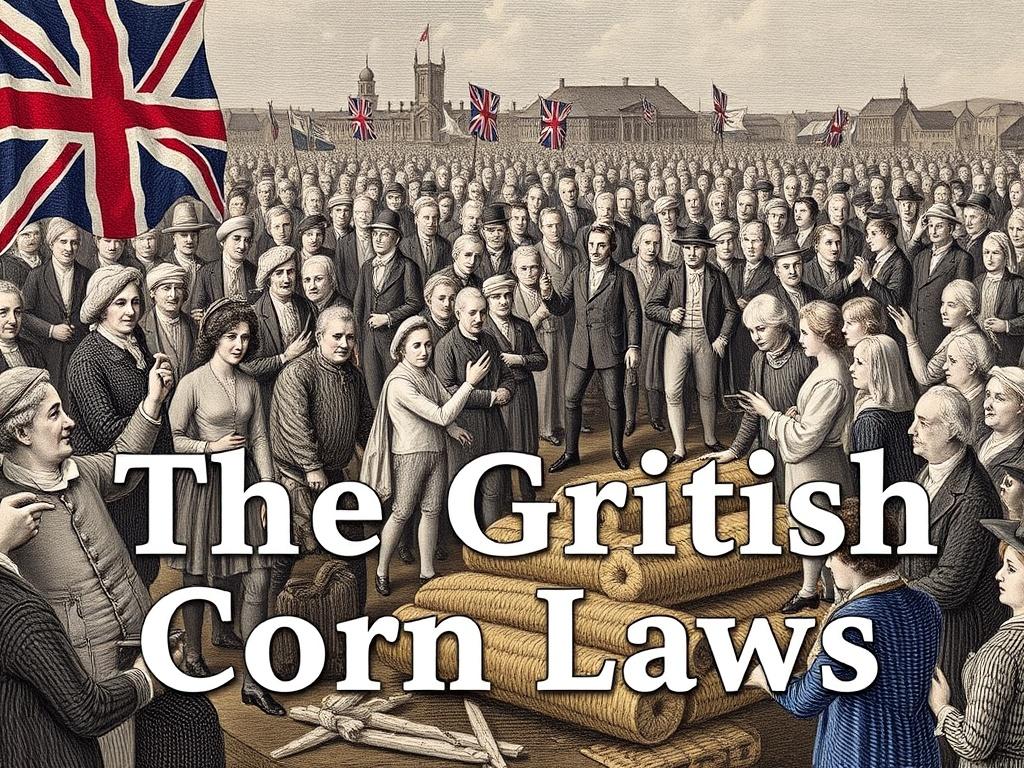
If the Corn Laws produced social pain, abolition found a remarkable engine in civic mobilization. The Anti-Corn Law League, founded in 1838 by industrialists and middle-class reformers, became a model of modern political campaigning. It combined funding, public meetings, newspapers, pamphlets, and targeted lobbying to build national pressure for repeal.
Leaders such as Richard Cobden and John Bright brought a mix of moral argument and economic reasoning to the campaign. Cobden emphasized free-trade principles and the benefits of cheaper food for industrial competitiveness, while Bright linked repeal to political reform and moral duty toward the poor. Their speeches and writing helped convert economic theory into popular sentiment.
The League’s methods were relatively novel for the time: subscription-based funding, electoral mobilization, and extensive use of the press. Its success showed how organized, sustained middle-class activism could challenge entrenched elites in a way that the older, patronage-based politics had not anticipated.
Political conflict and the split of a party
The road to repeal tore at the fabric of party politics. Sir Robert Peel, a Conservative prime minister who had defended protection earlier in his career, eventually came to see repeal as necessary. That decision split his party and ended his government, at least in its original form. The episode demonstrated how economic ideas could override party loyalty and force political realignment.
Peel’s volte-face alienated many Conservative MPs who represented agricultural constituencies, and it cost him vital support. Yet Peel judged that the national interest—particularly in the face of famine and shifting economic realities—demanded open markets. His willingness to act against his party’s base remains one of the most controversial choices in 19th-century British politics.
The aftermath accelerated the fragmentation of old alignments. Peelites moved toward the Whigs and later the Liberals, while protectionist Conservatives reorganized into a new form that would eventually become the modern Conservative Party. In short, the repeal reshaped the party system as much as it reshaped policy.
The economics of repeal: why open grain mattered
Economically, repeal aligned Britain with the emerging classical case for free trade. Thinkers like David Ricardo had argued that countries should specialize according to comparative advantage and trade rather than try to be self-sufficient in every commodity. For Britain, the advantage lay in industrial goods, not necessarily in competing with cheap agricultural imports.
Removing tariffs on grain lowered food prices, which in turn eased pressure on wages and allowed capital to flow more freely into manufacturing and infrastructure. That reallocation supported the rapid expansion of industry and trade through the mid and late 19th century. Cheaper food also increased disposable income for many households, stimulating demand for manufactured goods.
There is a caveat: the gains were not instantaneous and were uneven. Agriculture adjusted through contraction in some segments and investment or specialization in others. But the broad pattern favored urban industrial growth and accelerated Britain’s integration into global commodity markets.
Short-term disruptions and long-term gains
When the Corn Laws fell, short-term disruptions followed. Landed incomes dropped, some farms failed, and rural communities faced uncertainty. Opposition politicians labeled repeal as economic betrayal, and those local dislocations were real and politically painful for affected constituencies.
However, the longer-term effects favored national prosperity in several measurable ways. Urban living standards rose as food became more affordable. Industrial exporters benefited from lower domestic input costs for labor. Britain’s trade balance and global economic reach expanded as it imported raw materials and food while exporting manufactured goods.
Historical economists caution against simple cause-and-effect claims; many factors shaped Britain’s 19th-century growth. Yet repeal is widely regarded as a necessary condition for the particular pattern of British industrial leadership that followed, enabling a freer flow of goods and capital that industry needed.
Why the Irish famine was a turning point
The potato famine should be recognized as a crucial accelerant in the repeal debate. The scale of suffering in Ireland, and the inadequate mechanisms for relief, presented an acute moral crisis for British policymakers. The circumstances forced the question: could a nation justify blocking cheaper food from reaching the hungry?
Political actors used the famine to intensify pressure on Parliament. The humanitarian argument complemented the economic case: repeal would make food more affordable and accessible, at least in principle. For Peel, the moral imperative added weight to his economic calculations and helped him justify drastic political steps.
While repeal did not alleviate the full horror of the famine—structural failures and policy choices elsewhere played tragic roles—it changed the ethical contours of trade policy. From that point on, free-trade arguments had a moral as well as economic vocabulary.
Mechanics of the repeal bill and Parliamentary struggle
The law that ultimately removed the tariffs was the Importation Act of 1846. Its passage was the result of parliamentary maneuvering and cross-party voting under extraordinary pressure. The bill dismantled the sliding scale and opened Britain to foreign grain under significantly reduced duties.
The parliamentary debate was tempestuous. Peel relied on a coalition of free-trade Conservatives, Peelites, and Whigs, and he had to navigate amendments, rebellions, and public agitation. Passing the bill required political courage, calculated risk-taking, and a readiness to pay a heavy personal price for what he believed the national interest required.
The episode underscores a political lesson: sometimes policy decisions that align with long-run economic interests threaten short-term political survival. Peel’s fate is a reminder that statesmanship and electoral calculation can pull in opposite directions.
Immediate aftermath: markets, prices, and imports

After repeal, grain imports increased markedly. Cheap American and Eastern European grain flowed into British ports, reducing domestic prices. For urban consumers this meant relief; for some landowners, it meant a squeeze on profitability and the need to adjust production methods.
Markets adjusted to a new international price regime. Shipping and trade sectors expanded to handle increased volumes. Merchants, financiers, and industrialists generally welcomed the change because it favored trading networks and export-oriented production.
It’s worth noting that the global context mattered: cheap grain imports were possible because of improvements in shipping, the opening of new agricultural frontiers (for example, the American Midwest), and changing patterns of global migration and investment. Repeal exploited technological and geographic shifts already underway.
Social and political consequences beyond economics
The repeal of the Corn Laws had cultural and political ripple effects. It strengthened the intellectual and moral authority of the free-trade school of thought in Britain, which influenced later policy decisions on tariffs and trade. The idea that Britain should be an open market for goods became a defining feature of mid-Victorian political economy.
Politically, the repeal helped catalyze the realignment of parties and interests. It encouraged middle-class political activism, validated mass petitioning and movement-building, and demonstrated the potency of organized civil society. That legacy carried into subsequent reform campaigns on suffrage, factory conditions, and public health.
There were also geographic consequences. Regions specialized differently: industrial areas expanded, while some rural districts contracted. Migration from the countryside to cities accelerated, feeding industrial labor forces and reshaping urban demographics and politics for decades.
Lessons in policy design: trade-offs and transition
The Corn Laws episode offers a pragmatic lesson: policy change often requires managing distributional effects even if the aggregate benefits are clear. Repeal brought national gains but imposed concentrated losses on certain groups. Modern policymakers should expect similar trade-offs when opening markets or removing subsidies.
A smoother transition could have reduced the human pain in the countryside, but few policy instruments were available then that combined political feasibility with targeted compensation. Today, instruments such as retraining programs, phased adjustments, and income support are standard policy tools to ease such transitions.
The episode suggests that when reforms are necessary for long-run prosperity, coupling them with measures to mitigate short-term harm enhances social stability and political legitimacy. The absence of such cushioning in the 1840s helps explain the emotional heat the debate generated.
Comparative perspective: Britain and continental protections
Comparing Britain to other European powers highlights the distinctive path the country took. Many continental states maintained agricultural protection well into the 19th and 20th centuries, and their industrialization followed different timelines and structures. Britain’s early embrace of free trade gave it a competitive advantage in export markets for a time.
That advantage was not permanent. By the late 19th and early 20th centuries, other nations industrialized rapidly and adopted their own protectionist measures in response. Still, Britain’s earlier pivot toward open markets shaped capital accumulation, market integration, and international financial dominance in the mid-19th century.
The lesson is nuanced: free trade can be a powerful engine under certain conditions—transportation improvements, competitive industries, and access to capital—but it is not a universal recipe. Domestic political structures and the capacity to adjust matter greatly for outcomes.
Misconceptions and myths
Several myths swirl around the Corn Laws. One is that repeal alone “saved Britain” in a single stroke. That overstates the case. Repeal was a powerful pivot but worked alongside technology, empire, finance, and entrepreneurship to produce modern Britain. It removed an important constraint but did not create prosperity by itself.
Another misconception is that repeal was universally welcomed by industry. Some industrialists feared cheap grain might dampen domestic demand temporarily, and others worried about foreign competition in manufactured goods as global markets adjusted. The politics were more complex than a simple rich landlord vs. virtuous industrialist binary.
Finally, it’s inaccurate to treat the repeal as a tidy moral victory that immediately solved humanitarian crises. While repeal was morally persuasive and economically sensible, implementation and relief in crises like the Irish famine involved many failures and complications beyond trade policy alone.
A personal note: seeing the legacy in modern Britain
I once stood in the old industrial quarter of Manchester, where the Anti-Corn Law League held many of its meetings, and imagined the crowds listening to Cobden and Bright. The brick warehouses and textile mills still bear the marks of a city that thrived on the economic dynamics the League championed. Walking those streets makes the abstract turn into something you can almost touch.
Local museums in Manchester and elsewhere preserve speeches, pamphlets, and petitions that show how ordinary citizens engaged the debate. Those artifacts remind me that big policy shifts come from stitches of local activism—meetings, letters, and subscriptions—not solely from grand theorizing in university halls.
Seeing small plaques and street names honoring league leaders underlines a simple truth: political change often starts in civic spaces where citizens argue, persuade, and organize. The repeal was won as much in meeting halls and presses as across the floor of Parliament.
How the repeal shaped Britain’s global role
Once tariffs fell, Britain deepened its role in global trade networks. Imports fed urban populations and industrial growth, while exports carried British manufactured goods across the world. That pattern made Britain a central hub in the international division of labor during the 19th century.
British financial institutions, shipping companies, and merchant networks grew alongside these trade patterns. London became a global financing center in part because trade expanded and capital sought efficient markets for investment. Repeal helped create the conditions under which finance could flourish internationally.
That global role had costs and contradictions, particularly tied to imperial relationships and uneven development abroad. Yet the immediate economic consequence was clear: Britain leveraged free trade to transform itself into the world’s leading commercial economy for several decades.
Policy echoes today: tariffs, politics, and populism
The Corn Laws are relevant to current debates over tariffs and trade policy because they illustrate how distributional effects drive politics. Arguments about protecting “national” industries or vulnerable workers are perennial, and they resonate across centuries. The balance between national interest and special interests remains a central political challenge.
Modern policymakers can learn from the repeal about the need for political coalitions and public persuasion. The League mobilized public opinion to shift political incentives, and successful reform often requires both intellectual clarity and organizational muscle. In the age of social media, the tools differ, but the underlying dynamics are similar.
Finally, the Corn Laws remind us that economic policy cannot be divorced from moral considerations. Decisions about whether to restrict markets touch living standards and public welfare, and that dimension often shapes the political feasibility of reforms.
Timeline: key moments in the Corn Laws story
The following timeline highlights critical dates that shaped the trajectory of the Corn Laws debate and repeal.
| Date | Event |
|---|---|
| 1815 | Initial Corn Laws enacted after the Napoleonic Wars to protect domestic agriculture. |
| 1828 | Introduction of sliding scale adjustments to import duties (attempt to moderate extremes). |
| 1838 | Founding of the Anti-Corn Law League, marking a coordinated middle-class campaign for repeal. |
| 1845 | Onset of the Irish Potato Famine, intensifying calls for cheaper imports. |
| 1846 | Importation Act passed; most protective duties on grain were removed—formal repeal. |
Persistent debates among historians and economists
Historians and economists continue to debate the precise magnitude of repeal’s effects. Some argue it was decisive in allowing Britain’s industrial preeminence, while others emphasize complementary factors such as steam power, colonial markets, and financial institutions. Both perspectives are valid because complex historical outcomes rarely have single causes.
Recent scholarship tends to place repeal in a web of interacting forces. Food prices, wages, technology, and institutions shaped one another in dynamic ways. The repeal mattered because it removed a constraint and allowed these processes to operate more freely, rather than because it single-handedly generated growth.
That nuanced view helps avoid teleological narratives in which repeal is the sole hero or villain. Instead, it sits among a suite of changes that collectively remade Britain and the 19th-century world economy.
Practical takeaways for modern policymakers
From this history, policymakers can draw practical lessons. First, economic policy must anticipate distributional winners and losers; transparent compensatory measures can ease transitions. Second, building broad coalitions—across industry, civil society, and media—helps legitimize difficult reforms. Third, technological and geopolitical contexts matter: policy that aligns with technological trends is more likely to succeed.
Policymakers also need to pay attention to narrative. The Anti-Corn Law League succeeded because it framed free trade as both efficient and moral. Persuasion and clear communication can turn technical reforms into broadly supported programs when tied to values and immediate benefits.
Finally, crises can accelerate reform but also demand caution. The Irish famine pushed repeal forward but also exposed the limits of policy and compassion when systems fail. Crisis-driven reforms need careful design to avoid ad hoc measures that leave long-term problems unaddressed.
From tariffs to transition: what would a modern repeal look like?
Imagining a modern analogue to the Corn Laws helps illuminate how political economy has changed. Today, removing protection for a whole sector would involve complex trade negotiations, domestic transition programs, and likely international legal commitments. Digital communications and rapid financial flows would accelerate adjustment but also amplify political backlash.
Contemporary policymakers have more policy tools—unemployment benefits, retraining programs, targeted subsidies—to cushion losers. The sophistication of these tools matters: without credible transition assistance, reforms generate populist resistance. The Corn Laws show that economic logic alone rarely overcomes political reality.
In short, a modern repeal would likely be faster to implement but would need a fuller safety net and a more robust political strategy to avoid leaving communities behind. The moral—design and communication matter as much as technical economics—remains the same.
Final reflections: why the repeal still matters
The story of the Corn Laws is not only a historical curiosity; it’s a case study in how societies balance competing interests when the stakes are high. Repeal reshaped economic incentives, political alignments, and moral vocabulary in ways that echo into our present debates over trade, inequality, and the role of government.
What stands out most is the combination of moral urgency, organized civic action, and political risk-taking that propelled change. Those elements—arguing persuasively, organizing effectively, and finding leaders willing to bear political costs—remain essential to meaningful reform today.
We can see the legacy in the global trading system that followed and in the civic techniques perfected by the Anti-Corn Law League. Repeal did not instantly solve Britain’s problems, but it removed a major barrier to industrial dynamism and cheaper food, changing the country’s trajectory for generations to come.