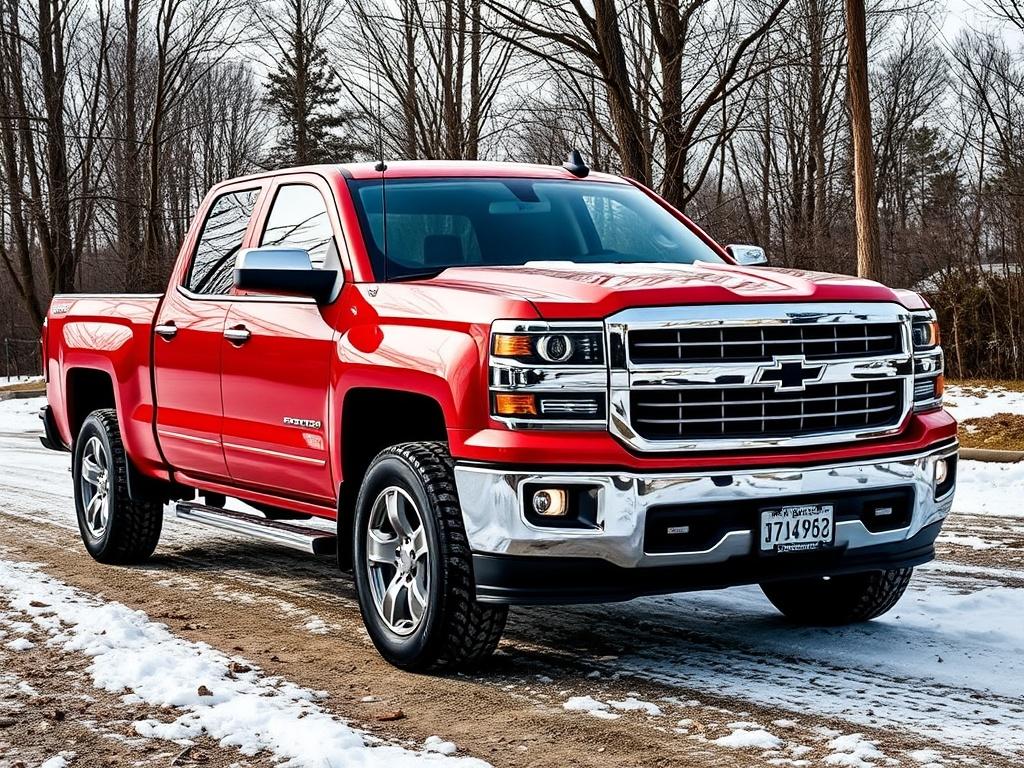
There’s a story behind the sticker shock when you step into a pickup showroom: it begins with frozen chicken, a presidential patch, and a 25 percent tariff that never went away. That relic of trade politics has quietly sculpted the American truck market for six decades, nudging manufacturers toward U.S. plants, encouraging creative legal workarounds and inflating the cost drivers that riders and businesses now accept as normal. The result is an automotive ecosystem where pickups are expensive by design, not just by demand.
- What exactly was the Chicken Tax?
- How a trade spat became a long-term protection
- Why the tariff matters for prices today
- How automakers adapted: investment, reclassification and tariff engineering
- Examples of workarounds and their consequences
- Table: Common strategies to avoid the tariff
- Demand, profit margins and the luxury of option lists
- Regulation and classification: why trucks were treated differently
- How the Chicken Tax affected global supply chains
- Case study: Toyota’s pathway to U.S. pickup production
- Case study: Ford, GM and the entrenched domestic advantage
- Global comparisons: why pickups can be cheaper elsewhere
- Numbers matter: market share and profitability
- How tariffs and modern supply shocks interact
- Policy debates: repeal, reform, or status quo
- What buyers actually pay for beyond the tariff
- Real-life shopping: an author’s dealership visit
- Alternatives and loopholes for consumers and fleets
- The electrification era and the Chicken Tax challenge
- Is there a realistic path to lower pickup prices?
- How the tariff shapes the market for used pickups
- Industry consolidation and the barrier to entry
- Legal and political efforts to revisit the tax
- Myths and misunderstandings about the Chicken Tax
- Practical takeaways for buyers and policymakers
- Final thoughts on an old tariff and modern trucks
What exactly was the Chicken Tax?
The Chicken Tax was a retaliatory tariff imposed by the United States in 1964 that levied a 25 percent duty on imported light trucks. It was part of a package of tariffs responding to European policies that were squeezing American poultry producers. The tariff applied to a handful of product categories, but its impact on vehicles has been the most enduring and economically meaningful.
At its simplest, the Chicken Tax turned foreign-built trucks into far more costly imports than their makers intended. That 25 percent levy made bringing a non-U.S.-assembled pickup stateside expensive enough to change corporate strategy: build locally, reclassify the vehicle, or design around the tariff. Over time those choices reshaped production footprints and dealer inventories around the country.
How a trade spat became a long-term protection
Trade measures often emerge from short, sharp disputes, and the 1960s poultry conflict was no exception. What began as a tariff tit-for-tat hardened into a durable policy because local economies, labor markets and political constituencies adapted to it. Truck manufacturing became entrenched in certain U.S. communities, and those jobs bought political support for maintaining the tariff.
Keeping the duty was less about protecting chickens and more about protecting industrial ecosystems that had developed under its shadow. Legislators found it politically attractive to preserve manufacturing employment, and influential automakers had incentives to lobby for continuation. The result was a tariff that persisted long after the original dispute faded from headlines.
Why the tariff matters for prices today
Tariffs raise the cost of imported goods by design, and when the taxed category is a high-ticket item like a pickup truck, even a single-digit percentage can translate into substantial dollars at the dealership. At 25 percent, the Chicken Tax is large enough to impose a meaningful surcharge on any foreign-built truck shipped to the U.S.
Manufacturers faced two basic choices: absorb the tariff and accept lower margins, or shift production to avoid the duty. Most chose the latter, which meant investments in U.S. facilities or legal and engineering workarounds to sidestep the tariff. Those strategic shifts added capital costs and complexity, factors that feed into the ultimate retail price of trucks.
How automakers adapted: investment, reclassification and tariff engineering
Automakers responded to the tariff with a combination of industrial strategy and legal creativity. For many manufacturers the most straightforward option was to build pickup trucks inside the United States, eliminating the tariff but creating other costs such as plant construction, labor and supply-chain setup. The payoff was long-term tariff avoidance and, often, better access to the large American pickup market.
Other tactics included tariff engineering, where vehicles were imported in a form that met a different tariff category and then modified in the U.S. For example, some companies imported vans or passenger versions and then converted them into commercial trucks domestically. Another route was to ship trucks in parts—completely knocked down (CKD)—and assemble them stateside to avoid the finished-vehicle tariff.
These strategies carried trade-offs. Local assembly required significant capital and operational changes. Tariff engineering had legal risks and limited scalability. The upshot was an industry that became less global in production for pickups than for cars, and that structural distinction has cost implications the buyer sees at the point of sale.
Examples of workarounds and their consequences
History offers many telling examples of how companies navigated the tariff. Some European and Japanese firms initially sold trucks in the U.S. by importing them as passenger vehicles or as chassis-cab configurations, categories that faced lower duties. Other firms invested directly in U.S. plants to produce trucks for domestic sale and export.
These adaptations are more than historical footnotes. They shaped long-term employment patterns, supplier networks and the strategic positioning of the U.S. as both a market and a manufacturing hub for pickups. Today’s assembly lines, supplier towns and regional expertise are partly the cumulative result of those mid-century choices.
Table: Common strategies to avoid the tariff
| Strategy | How it works | Downside |
|---|---|---|
| Local production | Build vehicles inside the U.S. to avoid import duty | High capital and operating costs |
| CKD assembly | Ship disassembled parts; assemble domestically | Complex logistics; limited economies of scale |
| Tariff engineering | Import vehicle classified as passenger, then convert | Legal scrutiny and compliance risk |
| Product reclassification | Design vehicle to meet different tariff categories | May limit design flexibility or market appeal |
Demand, profit margins and the luxury of option lists
Tariffs explain part of the price story, but pickup prices are also driven by demand and profit strategy. Pickups have evolved from simple work trucks into multi-thousand-dollar profit centers for manufacturers. Consumers now expect creature comforts, advanced safety tech and towing capability, and automakers are happy to package those features into high-margin trim levels and options.
The U.S. market’s appetite for large, powerful trucks supports higher base prices. Buyers who use pickups as daily drivers want carlike comfort, and manufacturers respond with long option lists and luxury trims that push transaction prices upward. That dynamic has little to do with 1960s trade policy, but it compounds the effect: a high tariff raises the floor, and demand-driven features raise the ceiling.
Regulation and classification: why trucks were treated differently
Regulatory frameworks have also nudged automakers and buyers in the truck direction. Historically, light trucks—an EPA and NHTSA designation—were subject to more lenient fuel economy and emissions standards than passenger cars. That regulatory gap created incentives to classify vehicles as trucks when possible, giving automakers flexibility and buyers more capability per gallon.
Those classification dynamics fed a growing truck-centric portfolio among U.S. automakers, which in turn justified maintaining a tariff that protected domestic truck production. The regulatory landscape shifted over the years, with SUVs and crossovers blurring lines and rules tightening, but the legacy of differential treatment remains part of why pickups are both prevalent and pricey.
How the Chicken Tax affected global supply chains
The tariff didn’t just influence where companies built vehicles; it reshaped component sourcing too. Suppliers had to decide whether to locate near U.S. assembly plants or maintain transatlantic or transpacific supply lines that were subject to import costs and logistical complexity. For many suppliers, proximity to final assembly became a competitive necessity.
This geographic clustering had ripple effects: it supported the growth of regional supplier ecosystems, increased local labor specialization, and raised the fixed costs of entering the pickup market for new players. Those fixed costs make it harder for smaller foreign manufacturers to compete in the U.S. without significant investment, which—again—keeps prices elevated by reducing competition at the lower end.
Case study: Toyota’s pathway to U.S. pickup production
Toyota is a useful example because it transformed from a small importer to a major U.S. manufacturer. In the early decades, Toyota sold compact pickups imported into the U.S., but the tariff and volume growth pushed the company to invest in American plants. Establishing U.S. production not only avoided the Chicken Tax but also connected Toyota more deeply with local suppliers and consumers.
The investment paid strategic dividends. Producing the Tacoma and Tundra in North America meant Toyota could price with more flexibility, tailor vehicles to U.S. tastes and avoid tariff shocks. Those plants now support communities and thousands of jobs, illustrating how a policy designed for a specific conflict ended up reorganizing industrial geography.
Case study: Ford, GM and the entrenched domestic advantage
Established domestic manufacturers were initially the biggest beneficiaries of the tariff because it insulated them from imported competition in the truck segment. Ford, GM and Chrysler could focus on their American plants and labor forces, confident that the tariff would keep a portion of foreign competition at bay. That gave them room to invest in product development and dealer networks oriented toward American pickup buyers.
Over decades, those firms capitalized on brand loyalty, extensive dealer networks and economies of scale in manufacturing. While competition has increased with foreign brands localizing production, the legacy advantage helped secure high market shares and the pricing power that translates into more expensive trucks for consumers.
Global comparisons: why pickups can be cheaper elsewhere
Outside the U.S., pickups often compete in markets where tariffs and labor costs are different, and where demand patterns push models toward leaner, less feature-rich versions. Many countries have lower or different tariff structures for light trucks, and manufacturers may design cost-sensitive models specifically for those markets. That combination can make pickups cheaper abroad than their American counterparts.
Additionally, pickup ownership patterns vary internationally. In some regions a pickup is a purely utilitarian vehicle for business rather than a lifestyle statement. That creates pressure for lower prices and simpler specifications. The U.S. has evolved differently: pickups here are simultaneously tools, toys and status symbols, so the vehicle that arrives from a showroom often carries more amenities and thus a higher price.
Numbers matter: market share and profitability
Pickups account for an outsized share of automakers’ profits relative to their production volumes. The high margins on full-size trucks and heavy-duty variants support R&D, electrification investments and advertising budgets. Executives often discuss trucks first because they are cash cows that fund other parts of a portfolio.
This profitability affects pricing in subtle ways. Manufacturers can justify higher base prices knowing buyers will pay for capability and premium features. Dealers also factor in demand-based pricing strategies, sometimes marking up popular configurations—especially in tight inventory cycles—further widening the gap between sticker price and a truly cost-minimized truck.
How tariffs and modern supply shocks interact
The Chicken Tax is a static policy applied to a dynamic world. When the pandemic, semiconductor shortages and logistical disruptions hit, inventories fell, and prices rose. A tariff that raises the baseline cost becomes more consequential in tight markets, because the cushion between landed cost and MSRP tightens and competitive pressure to lower prices diminishes.
During supply shocks buyers faced limited choices and dealers had leverage. In that environment the structural protection afforded by the tariff amplified short-term pricing power. The result was a market where long-term policy and fleeting disruptions combined to push consumer prices higher than many expected.
Policy debates: repeal, reform, or status quo
Economists and trade advocates occasionally propose eliminating the Chicken Tax to lower prices and increase competition. Repeal supporters argue that modern global production and trade agreements make the tariff outdated and costly to consumers and that lower import barriers would spur affordable options and innovation. Opponents counter that removing the tariff risks undermining domestic jobs and supply chains that depend on local production.
The political calculus is complicated. Regions with large automotive employment are understandably resistant to policy changes that threaten localized manufacturing. Any serious reform would likely have to include transition assistance, retraining funds and incentives for retooling plants—measures that add cost and political complexity to what might otherwise seem like a straightforward economic fix.
What buyers actually pay for beyond the tariff
The sticker price of a pickup bundles many discrete costs: raw materials, labor, R&D, regulatory compliance, marketing, dealer margins and, in some cases, tariffs. Add to that the profit incentives that push dealers to promote option-heavy trims and you see why two ostensibly similar trucks can end up priced very differently. Some of these elements are directly linked to policy; others are market-driven.
Buyers who are willing to accept fewer options, a less powerful engine or a lower trim can find more affordable truck options. Yet many American buyers prefer to configure trucks that maximize towing, comfort and technology, which consistently elevates the average transaction price well beyond the base MSRP and any simple tariffs.
Real-life shopping: an author’s dealership visit
I recently visited a suburban dealership to compare base-model compact and full-size trucks. The base compact trucks were relatively approachable on price, but popular options—upgraded packages, towing prep, advanced driver assistance systems—quickly added thousands of dollars. The experience underlined how much of the “expensive” label comes from buyer choices, dealership incentives and manufacturer packaging strategies.
It was also striking how salespeople framed the conversation around capability—payload, towing and off-road packages—rather than production origin. For most buyers, the country of manufacture is secondary to perceived performance and status. That consumer preference plays into the economics that keeps trucks expensive even when policies like the Chicken Tax are only part of the story.
Alternatives and loopholes for consumers and fleets
Fleets and commercial buyers sometimes use different purchasing strategies to reduce total ownership costs. Bulk purchasing, long-term leases, and buying lower-trim or certified pre-owned models are common. These strategies mitigate some of the tariff effects by focusing on lifecycle costs rather than headline sticker prices.
For private buyers, timing and configuration matter. Shopping during low-demand periods, being flexible about color and options, and considering slightly used models can lower the effective price paid. None of these tactics repeals the Chicken Tax, but they demonstrate how consumer behavior interacts with structural cost drivers.
The electrification era and the Chicken Tax challenge
Electric pickups complicate the picture. Building electric trucks requires new investments in battery sourcing, assembly and software ecosystems. For foreign automakers entering the U.S. electric truck market, the Chicken Tax could again be a deciding factor in where to locate battery and vehicle assembly. A 25 percent duty on a pricey electric truck would be an even larger absolute dollar amount than it was for gas-powered models decades ago.
Some automakers are hedging by announcing U.S. production for electric models to avoid any tariff exposure. Others are negotiating supply agreements and considering joint ventures that localize components and final assembly. The choices made now will influence competitive dynamics and costs for EV pickups in the years to come.
Is there a realistic path to lower pickup prices?
Lowering the cost of pickups in any meaningful way would require a combination of policy change, market competition and supply-chain innovation. Repealing the Chicken Tax without addressing the jobs and investments built around it would be politically risky. Conversely, nimble global manufacturers can choose to invest in U.S. plants to avoid the tariff, a solution that preserves jobs but does not immediately lower prices.
Competition can do what tariffs do not: drive efficiency and lower consumer prices. Encouraging more entrants into the American truck market, fostering supplier competition and reducing regulatory friction where appropriate could chip away at prices. Yet each of these changes takes time and often requires coordinated policy choices at federal and state levels.
How the tariff shapes the market for used pickups
The Chicken Tax’s ripple effects extend into the used market. High new-vehicle prices push some buyers into nearly-new used trucks, supporting residual values and keeping trade-in values stronger than they might otherwise be. That creates a virtuous cycle for dealers and leasing companies but a cost pressure for price-sensitive buyers who prefer buying new.
Used trucks also attract buyers who need the capability without the new-vehicle premium. The robust demand for lightly used pickups is a sign that many consumers want capability at lower prices, but supply constraints and durable resale values keep those prices elevated too.
Industry consolidation and the barrier to entry
High fixed costs for truck production—plants, tooling, specialized suppliers—create a barrier to entry that the Chicken Tax helped cement. New manufacturers face the choice of making large capital investments or accepting tariff costs that make U.S. sales marginal. The result is a market where established players have a structural advantage, and newcomers must pick niches or offer dramatic innovation to break in.
That consolidation influences price competition. When only a handful of firms control large shares of the market, price pressure is weaker than in more fragmented segments. Consumers face fewer low-cost alternatives and more similar option packages across brands, which contributes to higher average transaction prices.
Legal and political efforts to revisit the tax
From time to time lawmakers and trade analysts propose revisiting the Chicken Tax, usually framed as part of broader trade modernization. These discussions often resurface when consumers face steep price inflation or when geopolitical considerations change supply-chain logic. Yet actual legislative movement is rare because the trade-offs are complex and politically sensitive.
Any attempt to undo the tariff would likely include clauses to protect affected workers, provide transition funding and incentivize investment in domestic manufacturing. Those protections increase the political cost and technical complexity of reform, which is why the tariff persists even as critics point to its consumer cost.
Myths and misunderstandings about the Chicken Tax
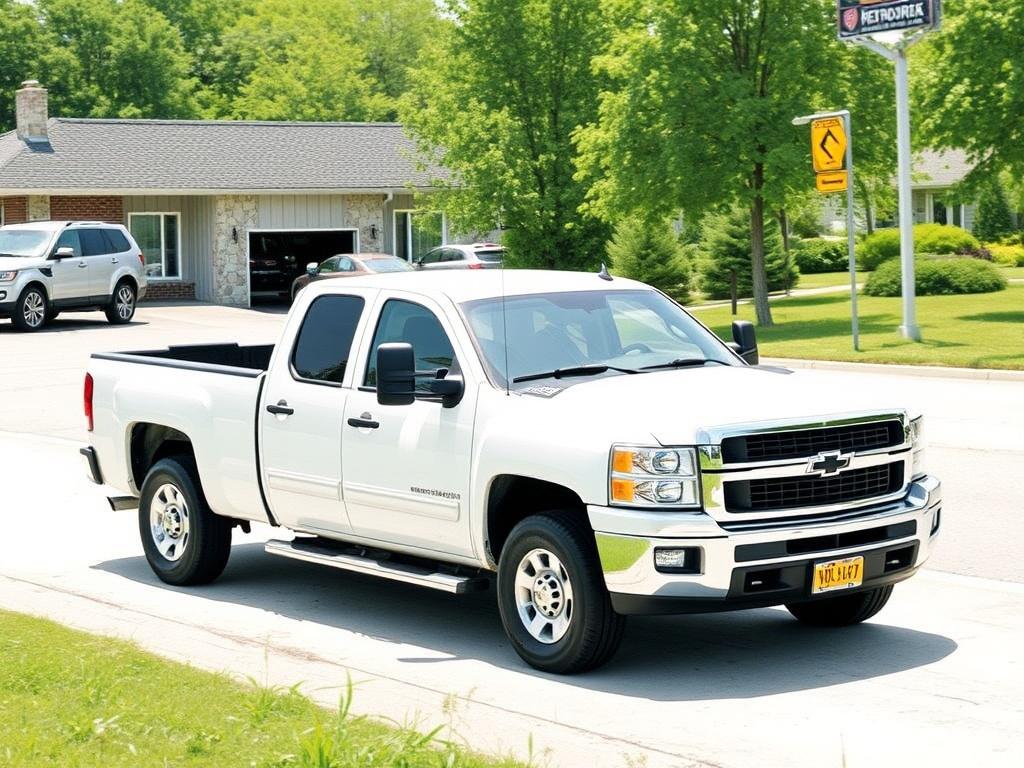
There are a few common misconceptions. One is that the tariff is solely responsible for high truck prices. That’s false; it’s a significant factor but works alongside demand, margins, regulation and supply-chain dynamics. Another myth is that repeal would instantly make trucks inexpensive; in reality, it would likely yield gradual changes as production footprints and supplier networks adjusted.
Understanding the tariff requires nuance. It matters, and it has shaped decades of industrial strategy. But it also sits atop a set of market and regulatory forces that together determine what buyers ultimately pay at the dealership.
Practical takeaways for buyers and policymakers
Buyers who want to keep costs down should prioritize configurations, timing and the used market. Fleets with scale can negotiate better deals and consider total-cost-of-ownership metrics in procurement decisions. For policymakers, the lesson is that trade policy has long-term consequences and that reforms aimed at lowering consumer prices need to account for labor, investment and supply-chain realities.
Meaningful change—if desired—should be phased and accompanied by transition support. Abrupt removal of protections could impose concentrated pain in regions dependent on truck manufacturing. A carefully staged policy shift with targeted support could reduce consumer prices over time while softening the local economic shocks.
Final thoughts on an old tariff and modern trucks
The Chicken Tax is a small, surprising piece of modern automotive history. It began as a tariff response to an agricultural spat and evolved into a structural element of the American pickup industry. Its most visible effect is the added cost placed on imported trucks, but its deeper imprint is the way it shaped factories, supplier networks and market incentives over generations.
Understanding why pickup trucks are so expensive in America requires looking at policy, economics and culture together. The 25 percent duty explains part of the sticker price, but demand, dealer strategies, vehicle evolution and regulatory treatment also matter. That web of influences is why trucks remain both beloved and costly, and why any effort to change their price will need patience, political will and a strategy that acknowledges six decades of unintended consequences.