Deglobalization has nudged the world toward thicker borders and pockmarked supply chains, and tariffs are sliding back into the spotlight as a blunt, familiar tool. This article unpacks how customs duties might change when cross-border flows are no longer assumed to grow endlessly—how they will be designed, who will pay, and what governments and firms must do to adapt. I’ll weave policy analysis, business implications, and real-world examples gathered from years working on trade policy, procurement, and supply-chain strategy.
- Understanding deglobalization: not a single event but a structural pivot
- Why tariffs matter again
- Recent trends in tariff practice and practice matters
- Tariff design in a fragmented world
- Non-tariff measures: tariffs’ quiet partners
- Supply chains respond: reshoring, nearshoring, and supplier reconfiguration
- Tariff pass-through and price effects
- Tariffs as geopolitical tools
- International governance: how the WTO and regional pacts adapt
- Sector winners and losers
- Fiscal considerations: revenue, redistribution, and constraints
- Retaliation, escalation, and the risk of tariff wars
- Technology, digitization, and tariff enforcement
- Rules of origin: the bottleneck of preferential arrangements
- Environmental and social considerations intersecting with tariffs
- Scenario analysis: plausible futures for tariffs
- Policy recommendations for governments
- How businesses should adjust strategy
- Real-life examples: lessons from recent shifts
- Data and metrics to monitor
- Legal and compliance implications
- Equity and distributional effects within countries
- Academic perspectives and modeling challenges
- Long-term structural shifts and innovation
- Practical tips for citizens and consumers
- What businesses should track next
- Final reflections on adaptation and resilience
Understanding deglobalization: not a single event but a structural pivot
Deglobalization is often described as the opposite of the 1990–2010 rush toward freer trade: it is not a sudden collapse of international exchange but a rebalancing. Trade in goods remains substantial, but growth in cross-border sourcing, investment, and services is slowing, fragmenting, and becoming more geopolitically selective.
Several forces explain this pivot. Geopolitical competition, public concern about strategic dependencies (for example in semiconductors and medical supplies), rising transportation and labor costs in some regions, and political backlash against perceived local job losses are all pushing countries to rethink openness. The effect is a more contested terrain where tariffs are both policy lever and signaling device.
Why tariffs matter again
Tariffs serve three broad purposes: protection for domestic producers, revenue for governments, and leverage in negotiations. When global integration is the default, tariffs are often low and administratively simple. Under deglobalization, their use broadens: they become instruments of industrial policy, tools for decoupling from strategic rivals, and mechanisms to favor domestic or friendly suppliers.
The resurgence of tariffs shifts more than trade balances; it rewrites incentives for investment and technology transfer. Companies that once optimized for lowest landed cost now factor in tariff exposure, rules of origin, and the political risk of supply interruption. Those calculations affect decisions about where to invest, what to automate, and how to structure value chains across borders.
Recent trends in tariff practice and practice matters
The last decade has already produced vivid examples of tariffs wielded for political ends: the U.S.–China tariff campaigns, punitive duties on steel and aluminum, and selective sanctions tied to geopolitical conflicts. These episodes show how quickly tariff policy can be repurposed from revenue collection to strategic pressure.
Beyond headline-grabbing tariffs, many countries are reintroducing or tightening tariff-rate quotas, anti-dumping duties, and safeguard measures. The variation in instruments signals a return to granular trade management—tariffs plus an array of conditional rules that can be adjusted to target specific industries or trading partners.
Tariff design in a fragmented world
Tariff architecture will need to become smarter if it is to achieve nuanced policy goals without unnecessary collateral damage. Ad valorem tariffs (percentage of value) are simple but blunt; specific tariffs (dollars per unit) can better protect certain domestic sectors whose prices or units don’t track value closely. Hybrid and sectoral approaches will grow in popularity.
Rules of origin—the criteria that determine where a product is considered “made”—will rise in importance. When nations pursue selective reshoring or preferential deals with allies, rules of origin become the gatekeepers that determine which goods get preferential tariff treatment. Expect more complexity here, and more disputes over classification and value-added thresholds.
Non-tariff measures: tariffs’ quiet partners
As tariffs move back into policy toolkits, non-tariff measures (NTMs) will increasingly be applied alongside them. Sanitary and phytosanitary rules, technical standards, export controls, and licensing requirements allow governments to shape trade flows more surgically than a broad tariff can. They also create legal ambiguity that can be exploited for policy flexibility.
Firms must learn to navigate this layered environment. Compliance becomes a strategic cost center: traceability systems, legal counsel, and diversified certification become as essential as price negotiation. In my experience advising procurement teams, a single unexpected NTM can wipe out months of margin planning and force sudden supplier shifts.
Supply chains respond: reshoring, nearshoring, and supplier reconfiguration
Tariffs change the arithmetic of supply-chain design. When duties rise or become unpredictable, the value of proximity increases: shorter lead times, lower inventories, and reduced tariff exposure. That explains why many manufacturers are considering partial reshoring or nearshoring for critical components rather than full repatriation of every factory.
I’ve visited automotive plants where firms split production: complex, high-value engineering stays near R&D hubs, while standardized assembly remains near low-cost regions. This split strategy hedges against both tariff shocks and sudden geopolitical disruption. The pattern suggests tariffs will not cause a wholesale reversal of globalization but will accelerate a pragmatic, layered model of production location.
Tariff pass-through and price effects
How much of a tariff ends up in consumer prices depends on market structure, elasticity, and the position of affected firms. In concentrated industries with strong brands, much of the duty is often absorbed by firms or passed to consumers with little change in quantity. In price-sensitive markets, tariffs can sharply reduce demand or prompt substitution toward untaxed alternatives.
Governments that view tariffs as revenue sources must recognize their regressive potential. Low-income households spend a larger share of income on traded goods, so tariffs raise living costs disproportionately. That political reality will shape which tariffs are sustainable and which invite public backlash.
Tariffs as geopolitical tools
Tariffs are increasingly chosen for their signaling value. A well-targeted duty can communicate red lines, punish abuses, or reward realignment without resorting to military or full-scale sanctions. Yet signaling carries risk: miscalibrated tariffs can trigger retaliation, disrupt regional supply networks, and harden alliances among targeted states.
The strategic use of tariffs is often asymmetric: small, open economies can be pushed into compliance by large market powers. That dynamic will drive a new kind of coalition-building, where mid-sized economies form trade pacts to insulate themselves from unilateral tariff leverage by larger actors.
International governance: how the WTO and regional pacts adapt
World Trade Organization rules were designed for a markedly different era. Under deglobalization, multilateral institutions face pressure to accommodate selective decoupling, carve-outs for national security, and complex origin rules. The WTO will either evolve to manage these complexities or cede space to bilateral and regional arrangements.
Regional trade agreements and plurilateral deals already provide alternative governance paths. They can harmonize rules of origin, create joint tariff schedules for strategic sectors, and set dispute mechanisms more aligned with contemporary geopolitics. Expect more sector-specific alliances—think semiconductors, critical minerals, and green technologies—defining who trades with whom and on what terms.
Sector winners and losers
Not all industries will experience tariff-driven reconfiguration the same way. Low-value, labor-intensive sectors—textiles, basic electronics assembly—are more sensitive to tariffs and will either relocate or shrink. High-value, innovation-driven sectors—pharmaceuticals, advanced machinery—may gain protection to foster domestic capabilities, inviting public investment but also potential inefficiency risks.
Agriculture occupies a special space. Many countries use tariffs and quotas to shield farmers, and rising food security concerns can strengthen protectionist impulses. However, food is also politically sensitive: steep tariffs can raise prices quickly and provoke widespread public discontent, limiting the appetite for heavy-handed measures.
Fiscal considerations: revenue, redistribution, and constraints
For some emerging economies, tariffs remain a significant revenue source. As trade patterns change, governments will weigh tariff income against the economic distortions duties introduce. Over-reliance on tariffs may discourage formalization of the economy and inhibit long-term growth.
On the other side, tariffs can be used to redistribute resources—protecting nascent sectors or shifting the burden to foreign producers. Such redistributive effects are politically attractive, but they can entrench rent-seeking and encourage inefficient industries if not paired with transparent sunset clauses and performance evaluations.
Retaliation, escalation, and the risk of tariff wars
Tariffs rarely stay isolated. Targeted measures invite countermeasures, and tit-for-tat escalation can spiral into damaging tariff wars. The global experience of the 2018–2019 tariff rounds shows that even limited tariffs can have outsized effects on specific sectors and on investor confidence.
To prevent escalation, governments may prefer calibrated measures: temporary safeguards, negotiated quotas, or mediated dispute settlement rather than sweeping, indefinite duties. Business leaders I’ve worked with prefer predictability almost above all; measured policy instruments reduce the chance of knee-jerk retaliation that disrupts planning.
Technology, digitization, and tariff enforcement
Digitization changes both the administration and evasion of tariffs. Better customs data, blockchain traceability, and electronic certificates of origin make enforcement more precise, allowing customs to target specific transshipments or origin misclassification more effectively. These technologies lower leakage but raise privacy and interoperability questions.
Conversely, digital trade and services complicate traditional tariff regimes. Many services and digital goods are intangible, delivered through cross-border data flows, or embedded in complex multinational arrangements. Tariffs are poorly suited to these flows, which may explain why non-tariff digital policies—data localization, export controls, and digital services taxes—play a larger role in a fragmented world.
Rules of origin: the bottleneck of preferential arrangements
Rules of origin determine which products qualify for reduced tariffs under trade agreements and therefore determine the winners in preferential systems. Under deglobalization, these rules will be fiercely negotiated because they can steer investment and sourcing preferences toward favored partners.
Complex rules of origin increase compliance costs. Small and medium-sized enterprises often lack the administrative capacity to document complex value-added calculations, giving larger firms an advantage. Policymakers mindful of competitiveness will simplify or standardize origin rules in some agreements, while using complexity as a gatekeeping tool in strategic sectors.
Environmental and social considerations intersecting with tariffs
Tariffs are increasingly proposed as complements to environmental policy: border carbon adjustments (BCAs) and carbon tariffs are gaining traction as tools to prevent carbon leakage while preserving domestic climate regulations. These measures recast tariffs as instruments for global public goods rather than mere protectionism.
Social standards—labor, human rights, and supply-chain transparency—also influence tariff debates. Preferential access could be conditioned on adherence to core standards, and punitive tariffs might be applied to goods linked to forced labor or environmental destruction. These politicized criteria introduce subjectivity, creating both moral clarity and diplomatic friction.
Scenario analysis: plausible futures for tariffs
Projecting tariff trajectories requires scenario thinking because many variables—geopolitics, tech progress, and domestic politics—interact. I outline four plausible scenarios and the likely tariff patterns each produces.
| Scenario | Tariff pattern | Trade governance |
|---|---|---|
| Managed fragmentation | Targeted tariffs and selective preferences for allies | Sectoral plurilateral deals, tighter rules of origin |
| Competitive protectionism | Broad tariffs, frequent escalation | Weak multilateralism, bilateral tit-for-tat measures |
| Cooperative decoupling | High tariffs only on strategic goods; liberalization elsewhere | Coordinated carve-outs via multilateral accords |
| Market retrenchment | Rising tariffs across sectors as a revenue and protection tool | Regional blocs dominate, limited cross-bloc trade |
Each scenario implies different costs and winners. Managed fragmentation might preserve overall growth while protecting key sectors, whereas competitive protectionism risks large welfare losses. Policymakers will navigate toward scenarios that match domestic politics and alliance structures.
Policy recommendations for governments
Governments face a balancing act: protect strategic capabilities without imposing broad, growth-sapping tariffs. First, apply tariffs selectively and transparently with time-bound objectives and performance metrics. Temporary safeguards with clear exit criteria reduce the risk of permanence and rent-seeking.
Second, pair tariff policy with domestic investments—in skills, infrastructure, and R&D—so protectionism does not become a substitute for competitiveness. Third, coordinate with allies where tariffs serve shared strategic goals to reduce unilateral escalation and to build resilient supply chains together.
- Use targeted, temporary tariffs tied to explicit industrial policy milestones.
- Strengthen customs capacity and digital traceability to ensure enforcement and fairness.
- Create compensation or social insurance mechanisms for workers displaced by trade shifts.
- Pursue plurilateral agreements for critical sectors to manage decoupling cooperatively.
These steps reduce the risk that tariffs become a blunt instrument that worsens the very vulnerabilities they seek to remedy.
How businesses should adjust strategy
Firms need to embed tariff-risk thinking into procurement, pricing, and investment decisions. Build flexibility into contracts, maintain multi-source supplier networks, and invest in origin-traceability systems that minimize tariff exposure. For many companies, the additional cost of dual sourcing pays for itself when a tariff shock hits.
Tariff engineering—designing products or packaging to alter tariff classification—will rise as a compliance strategy. That tactic has limits: aggressive reclassification invites legal challenge and reputational risk. A better long-term approach is aligning product design with resilient supply-chain architecture: modularity and standardization make supplier substitution easier.
Real-life examples: lessons from recent shifts
Consider the semiconductor push in recent years. Governments in the U.S., Europe, and Asia offered subsidies and tariff protections combined with investment conditions to attract chip plants. The policy mix reveals a shift from passive openness to active competition for strategic industry control.
Another example: the pandemic’s lesson in personal protective equipment (PPE). Countries that relied heavily on imports faced shortages and abrupt tariff liberalization followed by export controls. The experience pushed many governments to redefine essential goods lists and consider reserve capacities—policy choices that affect future tariff calculus.
Data and metrics to monitor
Policymakers and firms need timely indicators to respond to changing tariff landscapes. Watch tariff lines by sector, applied versus bound tariff rates, and anti-dumping and safeguard filings. Complement these with high-frequency trade flow data and input-output maps to detect where tariffs will have immediate ripple effects.
Supply-chain mapping tools that integrate customs data, shipping manifests, and corporate disclosures will be valuable. These tools reveal concentration risks and alternate sourcing routes and help assess tariff pass-through in near real time. Governments should invest in data infrastructure to improve policy targeting and predict unintended consequences.
Legal and compliance implications
Increasing tariff use raises legal complexity. Firms must track evolving classification codes, preferential rules, and sanction regimes. Customs misclassification fines and reputational damage can be substantial, making proactive compliance a routine business function rather than an occasional legal exercise.
Companies that export to multiple jurisdictions will face a patchwork of requirements. Harmonizing internal compliance systems—centralized origin documentation, automated tariff simulations, and legal review—reduces friction. Firms that invest early in robust compliance infrastructure gain operational clarity and competitive advantage.
Equity and distributional effects within countries
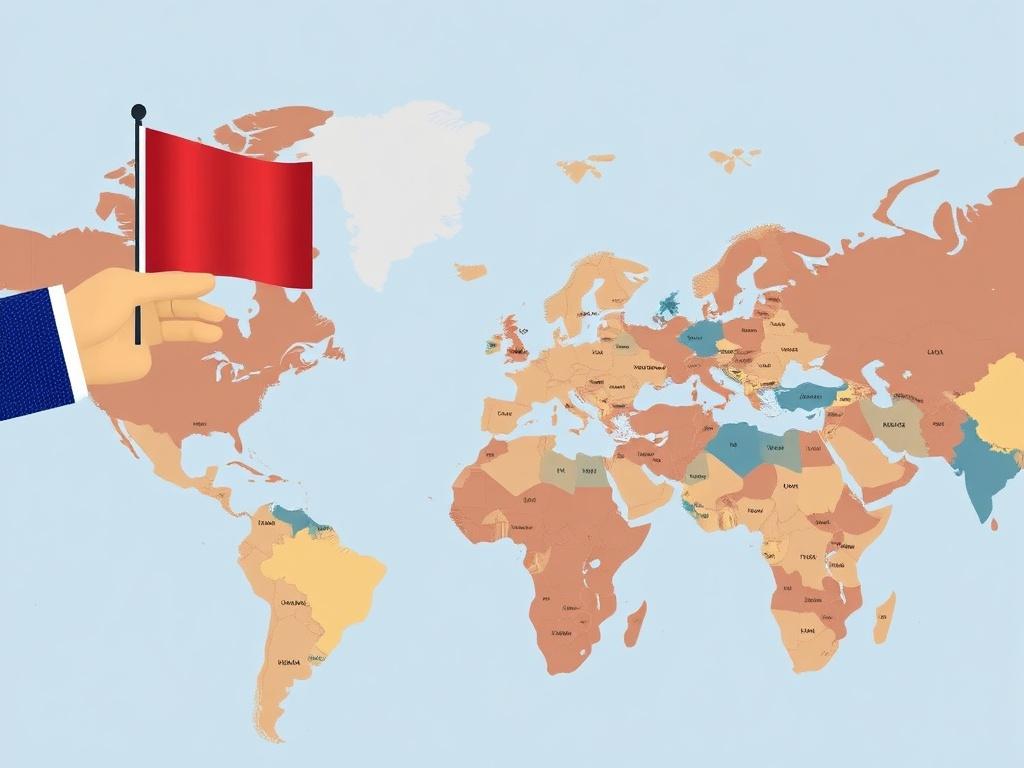
Tariffs tend to create concentrated benefits and diffuse costs. Protected industries gain higher prices and potentially higher wages, while consumers and downstream firms face higher input costs. That distributional impact fuels political debate and affects electoral outcomes, especially in democracies.
Mitigating measures—worker retraining programs, targeted subsidies, and tax credits—can make tariff policy more politically sustainable. Transparent compensation for affected households, funded by temporary tariffs themselves or general revenues, helps manage the social consequences of industrial restructuring.
Academic perspectives and modeling challenges
Economists model tariffs with various tools, from partial-equilibrium analyses of specific sectors to general equilibrium models that capture economy-wide feedbacks. Modeling deglobalization is hard because it requires assumptions about firm heterogeneity, strategic behavior, and political factors that shape tariff decisions.
Empirical work increasingly uses firm-level customs data and global value-chain matrices to estimate tariff impacts more precisely. Still, models must grapple with endogeneity: tariffs not only affect trade but are also set in response to changing trade patterns, making causal inference tricky. Robust policy choices require both models and careful real-world monitoring.
Long-term structural shifts and innovation
Tariffs can influence the direction of innovation. Protection can create domestic markets large enough to support learning-by-doing and localized innovation ecosystems, as happened in several East Asian economies historically. But if applied indiscriminately, tariffs can dull competitive pressure and slow productivity growth.
Policymakers seeking to use tariffs as developmental tools should couple them with R&D incentives, linkages to global tech networks, and time-bound access to foreign technologies. Done well, tariffs can seed national capabilities without closing off the benefits of international knowledge flows.
Practical tips for citizens and consumers
Consumers can expect higher prices on some goods as tariffs rise, especially on imported electronics, apparel, and intermediate inputs used in domestic production. Being aware of origin labeling and the provenance of key goods can help shoppers make informed choices and support local producers when they wish to prioritize that option.
Citizens can also influence tariff policy through democratic channels: participating in public consultations, supporting transparency in trade policymaking, and holding elected officials accountable for trade-offs presented by protectionist measures. Public engagement matters because tariff policy affects jobs, prices, and national resilience.
What businesses should track next
Firms should track three classes of indicators: policy signals (legislation, tariff reviews, and safeguard investigations), market indicators (price spreads between domestic and imported goods, inventory levels), and operational indicators (supplier concentration and transit times). Early-warning systems that flag rapid changes allow companies to deploy contingency plans quickly.
Investment committees should incorporate tariff scenarios into capital allocation decisions. A factory location that looks marginally attractive under free trade may become optimal once tariff exposure and political risk are modeled. Scenario planning becomes a standard part of corporate governance.
Final reflections on adaptation and resilience
Tariffs will not singlehandedly remake the global economy, but under deglobalization they will be central levers shaping where value is created and traded. Policymakers, firms, and civil society must learn to manage these levers with precision, balancing strategic goals with efficiency and fairness.
From my work advising both government agencies and private firms, the central lesson is clear: predictability and targeted support beat sweeping, indefinite protection. Where tariffs are unavoidable, pairing them with clear objectives, sunset clauses, and investments in domestic capability yields the best chance to turn short-term shelter into long-term strength.