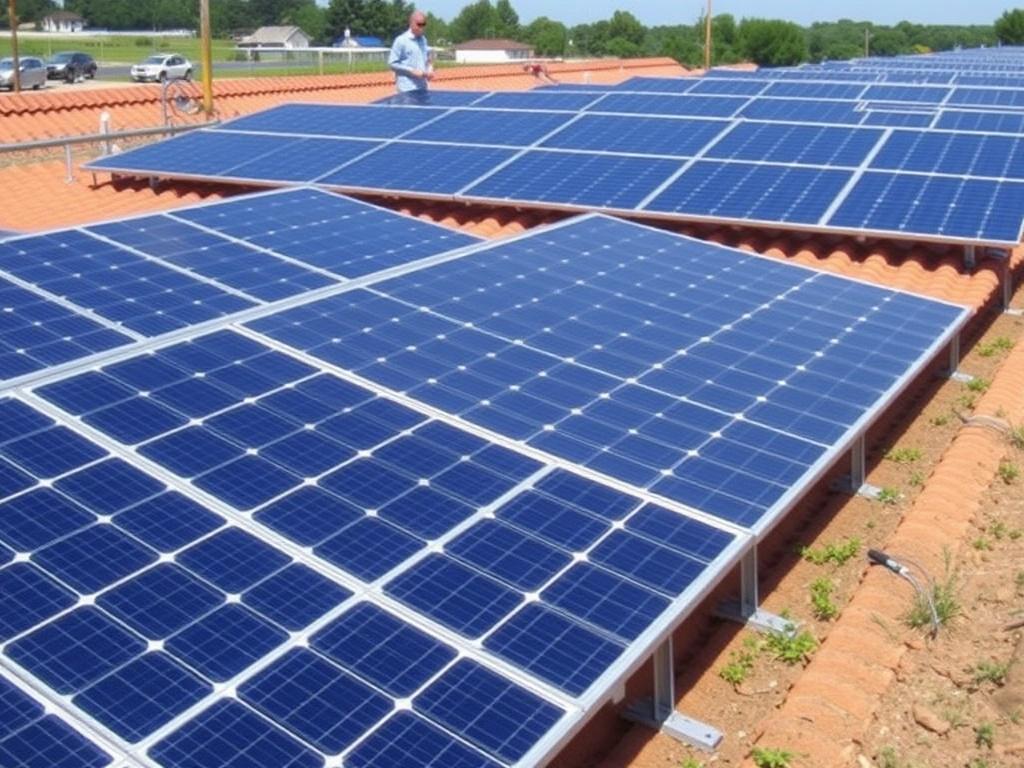
The question of whether tariffs on solar panels protect domestic industry or undermine the shift to clean energy sits at the intersection of trade policy, climate strategy, and industrial planning.
This article unpacks the history, economics, and real-world consequences of solar tariffs, weighing the intended benefits against the unintended costs and offering practical alternatives that better align industrial goals with climate imperatives.
- How we got here: a short history of solar trade disputes
- What tariffs on solar panels are meant to do
- The economics: theory versus messy reality
- Who wins: the intended beneficiaries
- Who loses: installers, consumers, and climate goals
- Evidence from recent cases
- Examples of circumvention and relocation
- A closer look at environmental consequences
- Jobs: counting winners and losers
- Political economy: why tariffs remain attractive
- Alternatives and complements to tariffs
- Targeted trade remedies and time limits
- Industrial policy with climate alignment
- Design principles for better policy
- Real-world lessons and my experience on the ground
- Practical checklist for policymakers
- Comparative table: tariffs versus alternative instruments
- Global coordination and standards
- When tariffs might make sense
- Looking forward: aligning industrial policy with climate urgency
- Practical recommendations for a balanced approach
- Final thoughts
How we got here: a short history of solar trade disputes
The solar industry expanded rapidly in the 2000s as module prices plunged and global demand exploded. Manufacturing clustered where costs were lowest, and by the 2010s a handful of firms in Asia—especially in China—dominated global production for cells and modules.
That concentration triggered trade disputes. Several producing countries alleged unfair subsidies, dumping (selling below cost), or other distortive practices. Governments responded with a mix of antidumping duties, safeguard tariffs, and broader protectionist measures aimed at rescuing or fostering local manufacturing capacity.
In the United States, a notable moment arrived in 2018 when the administration imposed tariffs on imported solar cells and modules under a Section 201 safeguard. Europe and India pursued their own measures at various times, and many nations experimented with tariffs, quotas, or minimum-pricing agreements to prop up domestic firms.
What tariffs on solar panels are meant to do
At their most basic, tariffs raise the price of imported goods at the border. Applied to solar panels, they can raise the landed cost of modules in the domestic market and thereby make locally produced panels comparatively more attractive.
Policymakers typically justify these measures on a few grounds: protect nascent or distressed domestic manufacturers, preserve or create jobs in manufacturing, and avoid overdependence on a single foreign supplier for a technology that’s strategic for energy security.
Tariffs are also pitched as a lever to force negotiating changes—either to secure better trade terms or to blunt alleged unfair competition that, proponents say, would otherwise drive local firms out of business.
The economics: theory versus messy reality
Economic theory offers clear predictions about tariffs: they transfer surplus from domestic consumers and importers to domestic producers and governments, create deadweight losses, and reduce total trade volume. The strength of those effects depends on demand elasticity and the share of imports in consumption.
In the solar market the story is complicated by two facts. First, prices have been falling steeply for years because of technological improvements and scale economies, so a tariff can temporarily hinder that price decline. Second, the global supply chain for solar PV is segmented—polysilicon, wafers, cells, and modules are often produced in different countries—so tariffs on finished modules can be circumvented through component trade or through shifting final assembly.
Another important dynamic is learning-by-doing. Solar firms reduce costs as they build volume. Tariffs that raise prices and reduce deployment can slow learning and raise long-term costs. Conversely, if tariffs actually foster a viable manufacturing base that scales, that could produce future cost reductions. The difficulty is that nurturing an industry in a global sector requires sustained demand, deep supplier ecosystems, and time—factors that tariffs alone usually don’t provide.
Who wins: the intended beneficiaries
Domestic manufacturers are the obvious beneficiaries when tariffs are high enough to blunt import competition. When imports drop, local firms may capture market share, ramp up production, and hire workers to staff factories.
In some cases, tariffs are paired with supportive measures—tax credits, grants, or procurement guarantees—that help manufacturing firms overcome early disadvantages. When that happens, the combined package can genuinely seed domestic capacity rather than merely shelter failing incumbents.
There is also a political constituency for tariffs: firms and workers in regions with manufacturing facilities often gain jobs and investment, even if the national economy faces higher energy costs or slower renewable deployment.
Who loses: installers, consumers, and climate goals

Higher module prices travel down the project pipeline. Installers, developers, and homeowners see higher upfront costs for rooftop and utility-scale systems, and those costs can deter new projects. Because solar is price-sensitive, even modest price increases can cut deployment, especially in markets driven by private investment rather than heavy subsidies.
That translates into fewer installations and, in many markets, fewer jobs in installation, sales, and operations—sectors that often employ more people per unit of capacity than manufacturing does. Several industry analyses have found that the labor intensity of installation means job losses there can offset manufacturing job gains.
Crucially, lower deployment slows emissions reductions. If tariffs raise costs enough to delay or cancel projects, the net effect can be higher fossil fuel use and higher greenhouse gas emissions during the period of reduced solar growth.
Evidence from recent cases
The 2018 U.S. tariff package provides a useful, if imperfect, case study. The measures began at a high rate and stepped down over four years, with carve-outs for certain quantities and a minimum value exemption for some cell imports.
Industry groups such as the Solar Energy Industries Association publicly warned that these tariffs would raise module prices and cost installation jobs across the United States. Advocates for manufacturing defended the tariffs as necessary to give domestic producers room to grow.
In the years after their introduction, some domestic cell and module capacity did expand, but global manufacturers also shifted production to Southeast Asia and other jurisdictions to avoid tariffs. Installers reported mixed impacts, with price-sensitive small-scale projects hit hardest, while large utilities often absorbed price increases or renegotiated supply chains.
Examples of circumvention and relocation
Companies with global footprints responded to tariffs by locating final assembly in tariff-free countries, exporting finished modules from those locations, or adjusting the point of value-added to minimize duty exposure. This is a predictable response in globalized manufacturing and shows the limits of tariffs when firms can relocate parts of their supply chain.
Customs authorities in several countries launched anti-circumvention probes to determine whether companies were deliberately shifting production to evade duties. Those investigations sometimes led to duties on additional imports or sanctions, but they also consumed time and enforcement resources.
The practical takeaway is that tariffs often reshape supply chains rather than eliminate foreign competition. That reshaping can lead to job creation in new locations—and job losses in others—without necessarily delivering the domestic industrial renaissance policymakers envisioned.
A closer look at environmental consequences
Policymakers who favor tariffs for industrial reasons should weigh the environmental trade-offs carefully. Solar installation is one of the fastest ways to reduce emissions at scale. Anything that slows market growth can delay emission reductions and raise the societal cost of meeting climate targets.
Conversely, a robust domestic manufacturing base could provide long-term climate benefits if it secures supply chains for national decarbonization programs and reduces the risk of future disruptions. The climate benefit of manufacturing capacity depends on timing: immediate tariffs that slow deployment tend to harm near-term emissions goals, while long-term secure supply could help later deployment—if it materializes.
There’s also the question of embodied emissions. Manufacturing facilities powered by clean grids produce panels with lower life-cycle emissions than those powered by fossil-heavy electricity. Encouraging cleaner manufacturing practices globally is another lever—one that tariffs don’t directly address.
Jobs: counting winners and losers
Arguments about jobs are always persuasive but rarely simple. Solar deployment creates many installation jobs per megawatt, while manufacturing creates fewer jobs per megawatt but may offer higher wages and different skill sets.
When tariffs favor manufacturing at the expense of deployment, you can see a net jobs loss. That dynamic played out in several markets where analysts estimated that tariff-induced price increases would cost more installation jobs than would be gained in manufacturing.
Successful industrial policy that truly expands manufacturing employment usually combines demand-side support (guaranteed procurement, subsidies for factory investment) with workforce development. Tariffs alone, especially if temporary, rarely convert into stable, large-scale employment gains.
Political economy: why tariffs remain attractive
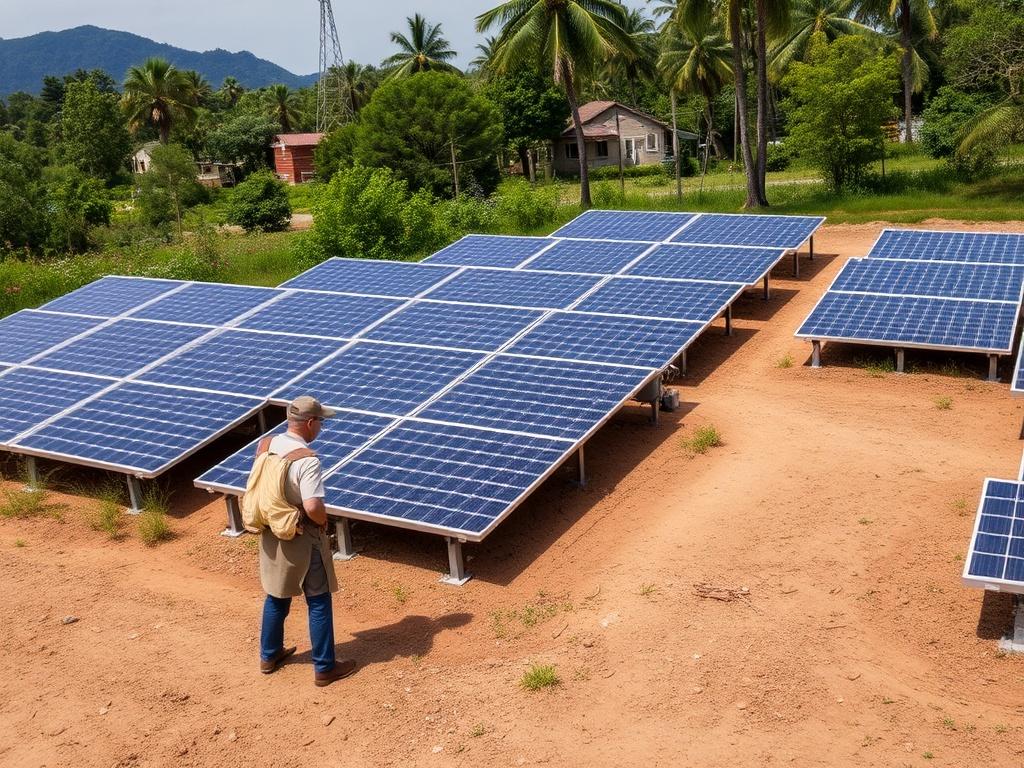
Tariffs are familiar tools—visible, understandable, and politically expedient. They create concentrated, vocal beneficiaries: manufacturers and localized workforces. Those beneficiaries can mobilize politically in ways that dispersed consumers or future beneficiaries of clean air cannot.
Tariffs also fit a narrative about strategic decoupling and technological sovereignty. For countries that worry about dependence on foreign suppliers for critical clean-energy components, tariffs feel like an assertive policy instrument.
But the political salience of manufacturing jobs can overshadow long-term national priorities, such as rapid decarbonization or efficient use of public resources. The challenge for policymakers is to design instruments that capture the political benefits without sacrificing climate goals.
Alternatives and complements to tariffs
If the policy objective is to build domestic manufacturing capacity without impeding deployment, tariffs are only one option—and often a blunt one. Several alternative or complementary tools can more precisely target desired outcomes.
Investment grants, low-interest loans, and tax credits for factory construction lower the cost of building manufacturing capacity directly. Public procurement—government purchases of domestically produced modules for federal buildings, military bases, or public utilities—creates demand certainty that can anchor investments.
Price supports tied to domestic content requirements in clean energy programs can ensure that support benefits local suppliers while maintaining overall deployment incentives. Programs that support worker training and supplier networks build the ecosystem manufacturers need to scale competitively.
Targeted trade remedies and time limits
When unfair trade practices are proven, targeted antidumping or countervailing duties that address specific distortionary behaviors can be defensible. These measures are often narrower than sweeping safeguard tariffs and can be designed to expire once competition is restored.
Limiting the duration of trade remedies and tying them to performance benchmarks for domestic firms can prevent long-term sheltering of inefficient producers. For example, duties could phase out as domestic factories reach specified production, quality, or cost thresholds.
Industrial policy with climate alignment
To reconcile industrial goals and climate commitments, policymakers should prioritize instruments that scale both manufacturing and deployment together. Production tax credits for domestically manufactured components, combined with incentives for projects that use them, link supply with demand.
Public investment in R&D and demonstration plants for next-generation technologies—such as perovskites, bifacial modules, or advanced cell chemistries—can position domestic industry at the technological frontier rather than in low-margin commodity production.
Design principles for better policy
Effective policy requires clear objectives, credible timelines, and performance measurement. If the goal is to create enduring manufacturing capacity, define the scale of capacity needed, the timeline for achieving it, and the metrics that will trigger the removal of protection.
Policies should be assessed for their impact on deployment, employment, emissions, and fiscal cost. Cost-effectiveness matters: public dollars invested to create manufacturing capacity should produce benefits comparable to other climate investments, such as wind or energy efficiency.
Transparency and stakeholder engagement also help. Input from installers, developers, manufacturers, utilities, and labor groups will reveal trade-offs and reduce surprise. Adaptive mechanisms—regular reviews and sunset clauses—prevent temporary measures from calcifying into permanent protection.
Real-world lessons and my experience on the ground
Working in energy policy and speaking with both rooftop installers and factory managers over the past decade, I’ve seen the trade-offs firsthand. Installers often tell the same anecdote: small projects are fiercely price-sensitive, and even a small uptick in module costs can push marginal rooftop deals into the “not feasible” column.
Conversely, I’ve visited factories where managers describe the struggle to attract skilled workers, qualify into customer supply chains, and reach the scale necessary to compete globally. They note that predictable, long-term demand signals—rather than short-lived tariffs—are what really allows them to invest.
One U.S. manufacturer I met invested heavily in automation and quality control to reduce unit costs, but it still cited lack of order certainty and difficulty accessing capital as major hurdles. That underscores a simple point: manufacturing grows on the back of markets, not tariffs alone.
Practical checklist for policymakers
When contemplating tariffs on solar panels, officials should walk through a series of pragmatic questions to avoid collateral damage.
- What is the specific objective: job creation, supply security, technology leadership, or punishment of unfair practices?
- Are there less trade-distorting tools—grants, procurement, tax credits—that can achieve the same goal more efficiently?
- How will tariffs affect consumer prices and near-term deployment targets for renewable energy?
- What enforcement capacity exists to prevent circumvention and to monitor real effects?
- Is there a clear sunset provision or performance benchmark to end protection if it fails to deliver?
Answering these honestly will often point away from sweeping tariffs and toward more targeted, transparent solutions that align industrial and climate objectives.
Comparative table: tariffs versus alternative instruments
The following table summarizes trade-offs among policy tools in a compact way.
| Policy instrument | Primary advantage | Main downside |
|---|---|---|
| Tariffs | Quick to implement, politically visible support for producers | Raise consumer prices, risk deployment reductions, encourage supply-chain relocation |
| Grants / loans for factories | Directly reduces capital barriers for manufacturing | Requires good project selection; potential for waste without oversight |
| Public procurement | Provides guaranteed demand to anchor investments | Costly on government budgets; limited by procurement scale |
| Domestic content incentives | Links manufacturing gains to deployment | Complex to administer; risk of trade disputes |
| Targeted anti-dumping duties | Addresses specific unfair practices | Can lead to retaliation; narrow in scope |
Global coordination and standards
Because solar is globally traded, unilateral tariffs often prompt countermeasures and supply-chain shifts rather than genuine capacity building. International coordination can help avoid wasteful trade wars and instead steer investment to where it is most efficient and climate-beneficial.
Trade agreements that include provisions for environmental standards, or cooperative manufacturing initiatives among allied countries, can secure supply chains without the broad economic costs of tariffs. Multilateral finance for capacity building in emerging manufacturing hubs can also be part of a cooperative strategy.
Standards for product quality, lifecycle emissions, and worker protections can raise the bar globally and reduce incentives for a race to the bottom. Those standards, combined with financing and technical assistance, make it easier for new factories to scale responsibly.
When tariffs might make sense
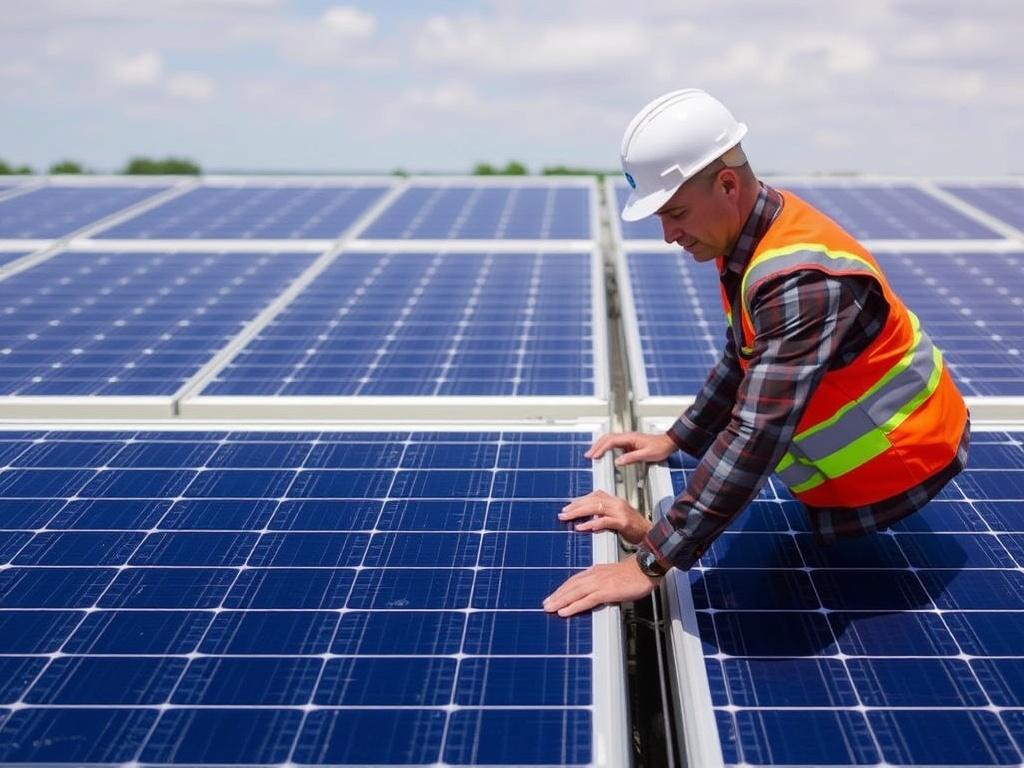
There are circumstances where tariffs are defensible: if there is clear evidence of injurious dumping or subsidies and if remedies are narrowly tailored, time-limited, and paired with policies that encourage competitiveness rather than perpetual shelter.
Tariffs can also be part of a transitional package where immediate relief to manufacturers is coupled with a credible plan—procurement commitments, domestic content thresholds tied to performance, or matched investment—to ensure protections are temporary.
But even in those cases, policymakers should test whether the same ends could be achieved more cheaply and with less harm to deployment via direct support or procurement strategies.
Looking forward: aligning industrial policy with climate urgency
Governments face a dual challenge: build resilient domestic supply chains for strategic technologies and rapidly decarbonize their economies. The two goals are largely compatible, but they require policy design that recognizes timing, scale, and incentives.
Short-term measures that raise costs and slow deployment are risky when the climate clock is ticking. Long-term industrial strategy needs to be patient and anchored in demand, not temporary protection. Investments that boost productivity, workforce skills, and technological differentiation will pay off more reliably than tariffs that simply raise prices.
Finally, transparent metrics and sunset clauses ensure that policies evolve rather than ossify. If an infant industry cannot stand on its own after a reasonable incubation period, continuing to protect it may simply consume public resources that could be invested more effectively to cut emissions.
Practical recommendations for a balanced approach
Policymakers should adopt a layered approach: use targeted trade remedies only when evidence supports them; rely primarily on demand-building measures like procurement and tax incentives to create predictable markets; and invest in R&D and workforce programs to make domestic industry competitive.
Design protections to be temporary and conditional, with clear performance metrics and regular reviews. Build international partnerships to diversify supply chains and establish shared standards for environmental and labor performance.
Finally, measure success not only by manufacturing output, but by how well policies accelerate deployment, reduce emissions, and create broadly distributed economic benefits across regions and sectors.
Final thoughts
Tariffs on solar panels can create short-term breathing room for domestic manufacturers, but they often do so at the price of higher consumer costs, fewer installations, and delayed emission reductions. The net effect depends on timing, breadth of measures, and whether tariffs are paired with credible industrial strategies that actually scale productive capacity.
If the policy aim is to secure supply chains and create green-industrial jobs without undermining climate goals, the smarter path combines targeted support, demand guarantees, and time-limited trade remedies. That approach protects both industry and the planet, rather than favoring one at the expense of the other.
Policymakers who keep that balance in mind—benchmarked, transparent, and rooted in clear outcomes—stand the best chance of ensuring that efforts to protect manufacturing ultimately strengthen, rather than weaken, the transition to clean energy.