The long shadow of the Boeing–Airbus saga stretches beyond hangars and air shows; it sits at the intersection of trade law, industrial policy, and geopolitics. This story has strained alliances, reshaped supply chains, and raised questions about how governments should support strategic industries. Here I walk through the origins, the legal findings, the economic fallout, and what lies ahead for manufacturers, carriers, and the traveling public.
- How this dispute began: a brief historical sketch
- What the WTO found: two mirrored rulings
- Why the findings mattered beyond lawyers
- Tariff implementation: the mechanics of retaliation
- Examples of targeted goods and strategic choices
- Economic impacts: costs, supply chains, and market shifts
- Who bears the cost: manufacturers, airlines, or passengers?
- Political dynamics and diplomacy around the dispute
- How domestic politics shaped external strategy
- Effects on Boeing and Airbus: competition and strategy
- Investment choices and product programs
- Impact on airlines and route planning
- Consumers: fares, service, and environmental consequences
- Legal and technical issues: what counts as a subsidy?
- Types of support most often scrutinized
- Case studies: specific aircraft and programs
- Supply-chain reshaping: where parts are made and why it matters
- How suppliers decide where to locate
- Negotiation attempts and moments of détente
- Lessons learned from the dispute
- How allies and other countries were affected
- Regulatory and certification issues intertwined with trade
- The role of innovation and long-term competitiveness
- Public–private partnerships in innovation
- Where things stand now: recent developments and the path ahead
- What negotiators and companies can do differently
- Practical checklist for airlines and suppliers
- Table: policy options and likely outcomes
- Personal observation from years covering trade and industry
- What to watch next: indicators of change
- Final thoughts on a complex, ongoing challenge
How this dispute began: a brief historical sketch
The roots of the conflict go back decades, seeded in the explosive growth of commercial aviation after World War II. Boeing, Airbus, and their national backers developed different funding models as aircraft development grew more expensive and risky. Those models—ranging from direct government grants to state-backed loans and tax arrangements—would later collide under the rules of the World Trade Organization.
What started as periodic complaints about unfair competition morphed into parallel legal battles. The United States accused several European governments of subsidizing Airbus, while the European Union countered that U.S. support for Boeing took forms that violated international commitments. Each side filed formal disputes at the WTO, converting industrial rivalry into a test case for global trade law.
Because the aerospace sector sits at the heart of national prestige and high-technology employment, governments were slow to back down. Jobs, regional development, and national supply chains meant that any concession would carry political costs. Over time the legal wrangling became a dance: rulings, appeals, authorized countermeasures, and then retaliatory tariffs that touched goods well beyond aircraft themselves.
What the WTO found: two mirrored rulings
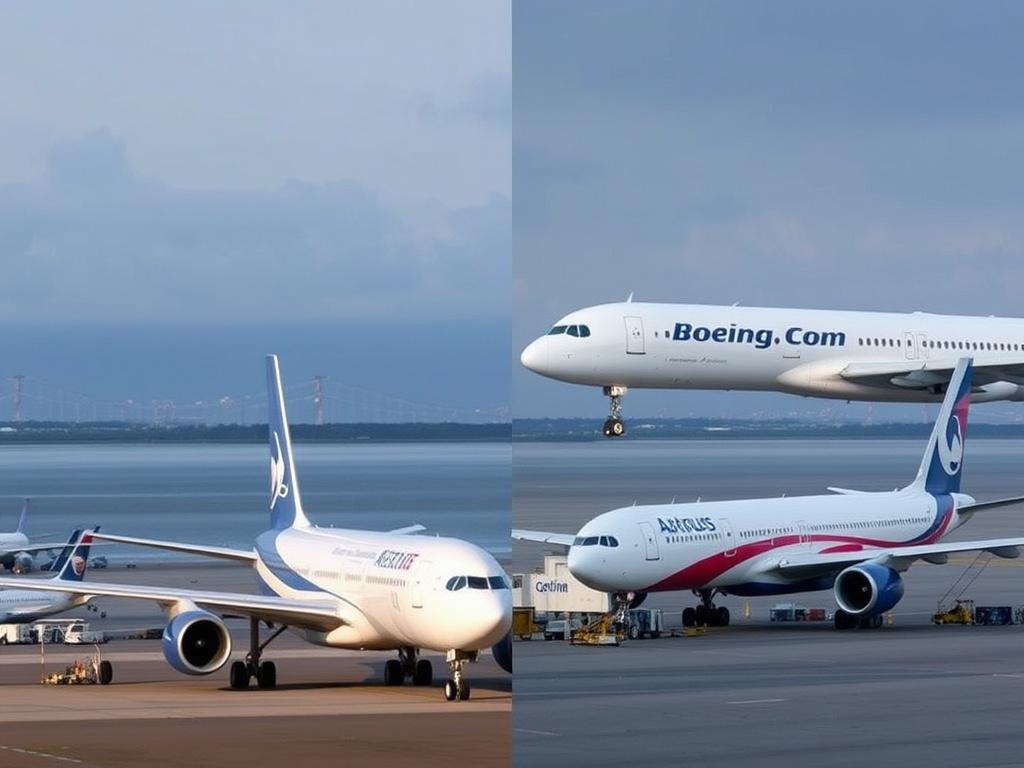
The WTO’s involvement produced two major streams of findings rather than a single, clean verdict. One stream examined whether European support for Airbus was incompatible with the WTO; the other looked at whether U.S. measures helped Boeing unfairly. Both processes were lengthy and legally detailed, reflecting the technical and financial complexity of aircraft financing and procurement.
WTO panels and appellate bodies found elements of both sides’ cases persuasive. At various points the WTO concluded that some government support to Airbus had been inconsistent with trade obligations, while on other counts it identified forms of U.S. support to Boeing as problematic. The dual findings meant that each government received partial vindication and partial rebuke, complicating simple narratives of winner and loser.
The legal outcomes were consequential not only for the aerospace firms but also for the WTO itself. The disputes tested the organization’s ability to manage sprawling, politically sensitive cases involving subsidies and industrial policy. The rulings set precedents for how certain types of government finance are categorized under international trade rules.
Why the findings mattered beyond lawyers
At first glance the rulings seem abstract—technical judgments about loan terms or tax arrangements. In practice, the classification of a subsidy as “illegal” can justify significant economic countermeasures. Governments authorized by the WTO to impose countervailing duties must translate legal language into trade policy, often choosing punitive tariffs aimed at maximizing leverage while minimizing political blowback.
Those policy decisions reverberate through supply chains and commercial contracts. Aircraft are expensive, long-lived products built from thousands of components by suppliers across continents. Tariffs, even targeted ones, can change the economics of production and procurement and prompt firms to alter sourcing, pricing, or delivery arrangements.
Tariff implementation: the mechanics of retaliation
Authorized by WTO findings, U.S. and EU countermeasures took the form of tariffs on selected goods. Rather than targeting only aircraft, policymakers used leverage by slapping duties on a basket of products tied to political constituencies. Tariffs thus became negotiation tools as much as economic penalties.
Because aircraft are complex and integrated products, imposing a tariff directly on finished planes would be complicated and politically charged. Instead, governments frequently selected a mix of aerospace and non-aerospace goods, from industrial parts to agricultural products, to maximize political impact and pressure negotiating partners. That tactic spread pain across sectors and regions, sometimes affecting constituencies not directly involved in aircraft manufacturing.
Tariff application is also a matter of timing and legal form. A WTO authorization permits retaliation up to a certain extent, but each government must design domestic measures consistent with its own trade and customs frameworks. That process can take months, during which companies and political leaders maneuver to blunt the worst effects.
Examples of targeted goods and strategic choices
In practice, lists of targeted goods often reflected domestic political priorities. Goods tied to key electoral districts, influential industries, or symbolic national products tended to appear on retaliation lists. This strategy aimed to raise the political stakes for governments seeking relief from the other side and to encourage quicker negotiations.
Beyond the headlines about aircraft, affected goods have ranged from agricultural produce to luxury items and industrial machinery. For exporters, these measures have meant sudden shifts in market access and profitability. For importers and consumers, tariffs can raise costs and prompt substitution toward alternative suppliers or products.
Economic impacts: costs, supply chains, and market shifts
Tariffs on aircraft and related goods ripple differently through the economy than typical consumer tariffs. Aircraft orders are negotiated years in advance, involve complex financing, and are central to airline fleet planning. Tariffs can delay deliveries, complicate maintenance agreements, and change the relative attractiveness of different aircraft types for carriers planning new routes.
Supply chains have been reshaped by manufacturers responding to trade barriers. Firms may relocate production or source components from jurisdictions outside the scope of tariffs. That flexibility is costly and time-consuming; it can also fragment the economies of regions heavily tied to one manufacturer or the other, from U.S. aviation hubs to European factory towns.
Currency effects and price pass-through further complicate the picture. Aircraft prices are negotiated in U.S. dollars, while many suppliers operate with local cost structures. Tariffs add another layer of cost that manufacturers must absorb or rebalance, often passing some of the burden onto airlines through higher list prices or less favorable delivery terms.
Who bears the cost: manufacturers, airlines, or passengers?
In the short term, manufacturers typically absorb some tariff-related costs to keep deals intact. Over longer horizons, airlines may see price increases or delays that affect operational planning. Ultimately, passengers can be hit in multiple ways: higher fares, fewer route options, or delayed new aircraft that would have replaced older, less fuel-efficient planes.
Yet the distribution of pain is uneven. Large national carriers with political clout may secure exemptions or adjust procurement strategies, while smaller airlines and regional suppliers often lack the leverage to negotiate favorable terms. The resulting market distortions tend to advantage the better-capitalized and politically connected.
Political dynamics and diplomacy around the dispute
The Boeing–Airbus conflict never stayed confined to trade negotiators’ memos. It has been litigated in parliaments, debated in campaign speeches, and used as leverage in broader diplomatic talks. The stakes touched industrial policy, national security arguments, and regional economic development politics.
Politicians often framed the dispute around jobs and national pride. Lawmakers representing aerospace manufacturing constituencies pushed for tougher responses to perceived unfair competition, while leaders balancing multiple interests sought negotiated settlements to protect broader trade flows. That tension has influenced how patiently each side pursued legal remedies versus diplomatic compromises.
At times, the dispute threatened to spill into cooperation on unrelated matters, from defense procurement to regulatory harmonization. The prospect of broader diplomatic friction incentivized both sides to avoid escalation, preferring managed settlements or temporary truces over permanent ruptures.
How domestic politics shaped external strategy
Administrations approached the conflict through the lens of their electoral priorities. Leaders with constituencies concentrated in aerospace regions were often less willing to countenance concessions. Conversely, governments concerned about agricultural or manufacturing exports sought to limit retaliatory damage. These domestic calculations made bilateral bargaining more complex.
Legislative oversight also played a role. Lawmakers demanded accountability and tangible wins, pressing executives to secure relief that could be framed as defending national industries. That dynamic sometimes reduced policymakers’ flexibility, prolonging negotiations and increasing the likelihood of tit-for-tat measures.
Effects on Boeing and Airbus: competition and strategy
Both Boeing and Airbus felt the strain but in different ways. Airbus benefited from a diversified European supplier base and concrete governmental support in its early years, while Boeing’s large domestic footprint and defense contracts gave it a different set of policy relationships. The tariffs and legal rulings changed each company’s calculus about investment, platform strategy, and market priorities.
Airbus used its position in the dispute to further entrench production in Europe while seeking new markets abroad. Boeing, meanwhile, faced pressure to respond to Airbus’s advances in certain market segments, invest in new models, or pursue restructuring to stay competitive. Both firms also had to factor in reputational and contractual risks tied to delivery delays and supplier uncertainty.
Market share shifts were subtle and gradual rather than instantaneous. Airlines choose aircraft for reasons beyond price—commonality of fleets, fuel efficiency, route structure, and delivery schedules all matter. Still, trade frictions nudged some buyers toward cautious choices, delaying fleet modernization in some cases and accelerating it in others where long-term operating costs favored one manufacturer.
Investment choices and product programs
Large development programs, whether for a new narrow-body or wide-body aircraft, involve multiyear commitments and heavy upfront capital. Tariff uncertainty complicates decision-making for both manufacturers and their suppliers. Companies may postpone investments, focus on derivative models, or seek partnerships that reduce exposure to trade measures.
For suppliers, the environment encouraged contingency planning. Firms evaluated the costs of duplicating capacity in multiple regions versus negotiating exemptions or seeking other forms of risk mitigation. Those choices have long-term implications for industrial geography and the resilience of aerospace supply chains.
Impact on airlines and route planning
Airlines experienced the dispute indirectly through price and schedule uncertainty. Delivery delays may force carriers to extend leases on older aircraft or alter route launches. In some cases, carriers negotiated price breaks or delivery guarantees to offset the uncertainty tied to tariffs and countermeasures.
The alignment between fleet planning cycles and trade policy is critical. Airlines typically plan fleet moves years ahead, and sudden tariff-driven cost changes can force re-evaluation of route economics. Low-cost carriers that rely on uniform fleets are particularly sensitive to shifts in the relative price of competing models from Boeing and Airbus.
Regional and smaller carriers suffered more acutely when tariffs impacted components or spares that affected maintenance and safety margins. Even indirect supply disruptions can increase downtime for aircraft, raising operating costs and complicating scheduling for busy carriers.
Consumers: fares, service, and environmental consequences

Travelers rarely see tariffs explicitly labeled on tickets, but they feel the effects through higher fares, fewer routes, or reduced frequency. When airlines face higher capital costs for acquiring new aircraft, those costs can filter into pricing decisions or reduce airlines’ willingness to open marginal routes that support connectivity for smaller communities.
Another overlooked consequence is environmental. Modern aircraft deliver significant fuel efficiency gains over older models. Delays in fleet renewal caused by tariff-related uncertainty can slow the industry’s emissions reductions. That outcome matters to regulators and to passengers concerned about the environmental footprint of air travel.
On the positive side, competitive pressure between Boeing and Airbus has driven technological improvements independent of trade disputes. But tariffs can blunt the pace of equipment turnover and make it more costly for airlines to invest in greener technologies, at least in the short term.
Legal and technical issues: what counts as a subsidy?
At the heart of the WTO cases was the question: what exactly is a subsidy, and when does it become illegal? The WTO’s Agreement on Subsidies and Countervailing Measures defines support types, but applying those categories to complex aircraft financing is challenging. Governments and companies structure programs to be defensible, and the WTO must evaluate the substance rather than just the form.
Examples include launch aid, which involves repayable loans tied to aircraft development. If the loan has favorable terms or repayment is contingent in ways that effectively reduce the borrower’s risk, critics argue it functions like a grant. Sales guarantees and direct government investments also raised tricky legal questions about whether they distort competitive conditions.
Rulings turned on detailed financial analysis, including interest rates, repayment terms, conditionality, and the economic effects of the support. The legal process revealed how nimble public finance mechanisms can be and how important transparent documentation and market-comparable terms are for defending such programs under WTO rules.
Types of support most often scrutinized
Launch aid, state-backed loans with favorable terms, and certain tax arrangements were central targets in the legal disputes. Program design matters: a loan that mimics market terms is less likely to be viewed as trade-distorting than one with unusually low interest or generous repayment provisions. The WTO’s decisions emphasized economic substance over labels.
Governments sometimes structured support as indirect measures—investment in research centers, supplier development, or infrastructure upgrades—making legal assessment even more complex. Those broader ecosystem investments can yield legitimate public benefits, yet they also can be perceived by competitors as giving an unfair edge if narrowly tied to one manufacturer.
Case studies: specific aircraft and programs
Several specific aircraft development programs became focal points in the disputes. Launch aid for early Airbus wide-body programs and perceived U.S. support for Boeing’s development efforts were scrutinized in painstaking detail. Each program had unique financing structures, delivery schedules, and market contexts that shaped the legal arguments.
These case studies illustrate how different approaches to risk-sharing between firms and governments can produce divergent legal outcomes. They also show the long time horizon of aircraft development: decisions taken decades earlier can become central evidence in legal disputes many years down the line. That temporal disconnect complicates both policymaking and industry planning.
For executives and policymakers, the lessons included the need for robust documentation and careful structuring of support to withstand legal scrutiny. For negotiators, the complexity underscored why technical expertise is essential when litigating industrial policy at the WTO.
Supply-chain reshaping: where parts are made and why it matters
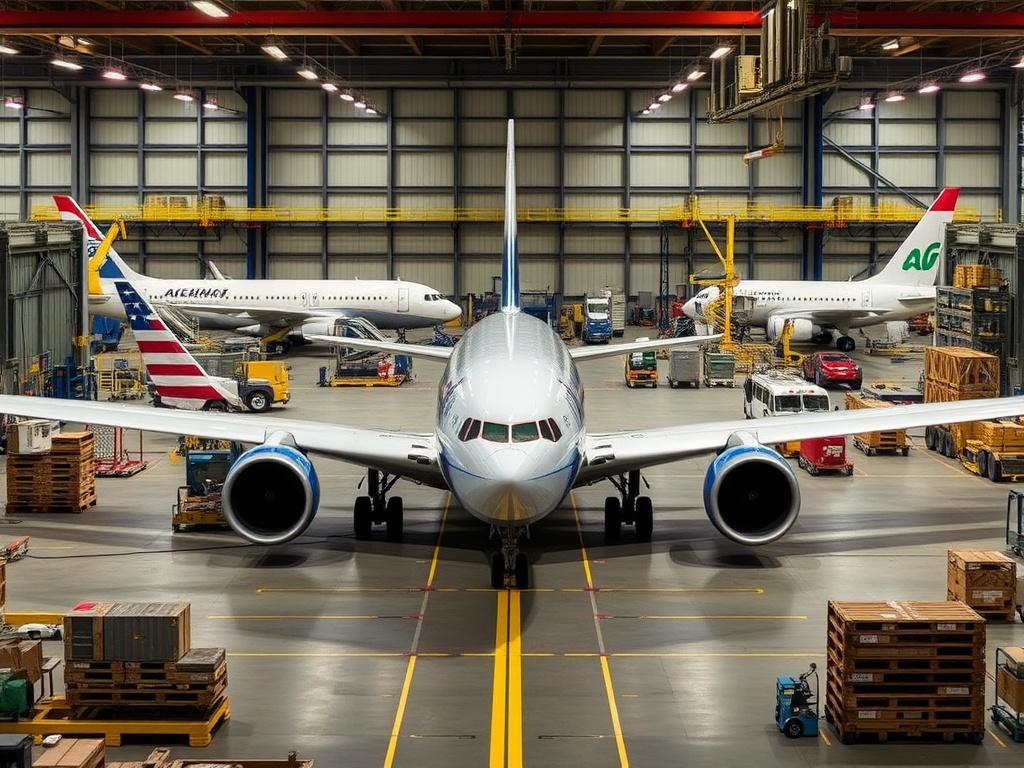
A key commercial response to tariffs has been supply-chain diversification. Manufacturers and suppliers assessed whether relocating production or sourcing from third countries could reduce exposure to duties. Those adjustments are costly and require long lead times, but they can also increase resilience against future trade shocks.
The geography of aerospace production is the result of decades of contract awards, skills development, and supplier specialization. Moving production involves retraining workers, creating new quality-control systems, and reestablishing logistics. Firms weigh these costs against the potential for reduced tariffs and more stable market access.
For governments, the prospect of losing significant supplier activity to other regions is a major policy concern. That risk has driven some states to expand incentives or to negotiate more favorable bilateral terms to keep aerospace work at home, further complicating the international landscape and inviting fresh scrutiny under trade rules.
How suppliers decide where to locate
Supplier decisions hinge on a mix of cost, expertise, and political risk. Access to skilled labor, proximity to major assembly sites, and predictable trade relations are critical. Firms also consider currency exposure and the stability of contracts with prime manufacturers when deciding whether to invest in new facilities.
For smaller suppliers, winning work from a major OEM (original equipment manufacturer) can be transformational. As a result, regional governments often aggressively court suppliers with tax breaks or grants, which, in turn, invites questions about whether such incentives constitute unfair competition under international rules.
Negotiation attempts and moments of détente
Because the stakes were high, there were periodic attempts to negotiate settlements or at least manage the dispute to prevent broader harm. These talks sometimes produced temporary pauses in tariff impositions or narrow agreements on specific measures, though a final comprehensive settlement proved elusive for many years.
Negotiations involved not just trade officials but also leaders in industry, finance ministers, and defense authorities. The interconnected nature of modern economies meant that a hard line on one front could create vulnerabilities elsewhere, incentivizing pragmatic solutions. Those solutions, however, often required delicate trade-offs and mutual concessions.
Even limited détente had useful consequences. Temporary truces allowed manufacturers and airlines to proceed with delivery schedules and gave negotiators breathing room to seek more durable agreements. But without structural resolution of underlying subsidy concerns, the peace was often fragile.
Lessons learned from the dispute
One clear lesson is that industrial policy and trade law are increasingly entangled. Governments see strategic industries as crucial for employment and national capability, yet the international trading system constrains how states can support those industries. Reconciling those goals requires greater transparency and forward-looking policy design.
Another lesson is that litigation alone rarely resolves deep strategic competition. WTO rulings can authorize retaliation, but they do not create incentives for long-term cooperation or market-sharing. Lasting solutions tend to require negotiated rules that both sides see as fair and enforceable over decades, not just years.
Companies learned that legal risk is a core part of strategic planning. Building flexibility into contracts, maintaining documentation that proves commercial terms, and diversifying supply bases emerged as defensive strategies that can blunt the impact of future disputes.
How allies and other countries were affected
Allied governments watched the dispute warily because friction between major partners can spill into broader cooperation. Countries with significant aerospace sectors or suppliers had to choose sides or hedge their exposure. Some governments used the period to pitch their own jurisdictions as alternative production hubs.
Smaller countries with export-oriented economies felt the impact through trade disruptions. Tariffs on agricultural or industrial goods used to pressure partners could harm unrelated sectors and damage political alliances. That broadened the conversation beyond the immediate conflict, prompting discussions about global trade governance.
For emerging aviation markets, the dispute sometimes offered opportunities. Airlines and suppliers in third countries could bid for work or sales from manufacturers seeking to avoid contentious jurisdictions, creating openings for industrial diversification and new partnerships.
Regulatory and certification issues intertwined with trade
Beyond tariffs and subsidies, aircraft markets are shaped by certification processes and regulatory alignment. Differences between aviation authorities complicate cross-border sales and maintenance, and they can be exploited as non-tariff barriers. Harmonization of safety and environmental standards therefore matters both for commerce and for dispute avoidance.
Manufacturers invest heavily in meeting diverse regulatory regimes. A tariff raises costs, but so does the need to satisfy multiple certification authorities. That dual pressure can sway procurement decisions, as carriers weigh not only price but the time and cost of obtaining approval to operate particular types of aircraft within their regulatory environments.
Efforts to harmonize certification have progressed in some areas, driven by practical needs and industry lobbying. Those efforts reduce friction but require trust and technical cooperation among national authorities—trust that can be tested when disputes flare in other domains.
The role of innovation and long-term competitiveness
Trade disputes can distract from deeper drivers of competitiveness, such as research and development, workforce skills, and supply-chain sophistication. Subsidies that support R&D can be both economically productive and legally contentious. Policymakers must balance the need to foster innovation with adherence to international rules.
For manufacturers, long-run competitiveness depends on more than temporary trade advantages. Investments in materials science, manufacturing automation, and sustainable propulsion are the real determiners of market leadership over decades. Tariff battles may influence who gets short-term wins, but technological leadership is harder to buy with subsidies alone.
That realization has pushed some stakeholders to redirect energy from litigating past grievances toward collaborating on shared research initiatives, particularly in areas like sustainable aviation fuels and emissions-reducing technologies where cooperation yields global benefits.
Public–private partnerships in innovation
Where public support is defensible, it often takes the form of broad-based research funding or infrastructure investment rather than direct launch aid. Such programs are more easily defended at the WTO when they are open to multiple firms and structured to avoid preferential treatment that distorts competition.
Partnerships aimed at decarbonizing aviation have found bipartisan support across jurisdictions, offering a safer channel for government help that avoids rekindling old subsidy fights. These collaborative programs also tap into common interests—airlines, manufacturers, and regulators all benefit if cleaner technologies become affordable at scale.
Where things stand now: recent developments and the path ahead
In recent years the dispute has been managed rather than fully settled. Both sides have occasionally stepped back from the brink, and there have been discussions about more systemic solutions. Yet the underlying tensions around state intervention, strategic industry protection, and complex financing remain unresolved in the abstract.
Looking forward, several trends will shape the next phase. Pressure to decarbonize aviation will push manufacturers toward new technologies; that shift will require large-scale financing that could reignite questions about permissible forms of support. Geopolitical frictions, including shifts in global supply-chain alliances, will also influence the calculus.
At the institutional level, the WTO’s ability to arbitrate complex industrial disputes depends on member states’ willingness to accept its authority and to engage in transparent record-keeping. Improvements in dispute settlement capacity and clear guidance about what constitutes permissible support could reduce the frequency and intensity of future conflicts.
What negotiators and companies can do differently
One pragmatic approach is to design support programs with greater transparency and market-based terms. Clear documentation and open tendering lower the risk that a measure will be judged trade-distorting. Governments and companies that adopt these practices strengthen their legal defenses and reduce uncertainty for trading partners.
Another tactic is to prioritize cooperative initiatives where mutual benefit is clear—for example, joint research consortia on sustainable aviation fuels, where the global public-good nature of the challenge justifies shared investment. Such projects realign incentives away from zero-sum competition toward shared advancement.
Finally, companies can build contractual flexibility into purchase agreements and supplier contracts to manage trade policy risk. Clauses that anticipate tariffs or provide mechanisms for renegotiation during disputes can preserve commercial relations even amid legal conflict.
Practical checklist for airlines and suppliers
For companies navigating this environment, practical steps can reduce exposure to tariff shocks. These include conducting scenario planning for delayed deliveries, diversifying component sourcing, and negotiating contractual protections such as price adjustment clauses or delivery guarantees. Proactive engagement with policymakers can also clarify rules and potential exemptions.
Smaller suppliers should prioritize financial resilience and explore partnerships that expand market access beyond a single OEM. Larger firms may invest in dual-sourcing strategies or modular production that allows quick reallocation of output when trade barriers arise. Across the board, legal and compliance teams must be integral to strategic planning.
Table: policy options and likely outcomes
| Policy option | Short-term effect | Long-term risk/benefit |
|---|---|---|
| Targeted tariffs | Immediate pressure on counterpart | Risk of escalation; political signaling |
| Transparent, market-based support | Lower legal risk | Promotes competitiveness without trade friction |
| Joint R&D initiatives | Builds cooperative pathways | Long-term technological gains; lower conflict |
| Supply-chain diversification | Reduces exposure to tariffs | High transition cost but increased resilience |
Personal observation from years covering trade and industry
Having followed trade disputes across sectors, I’ve seen how technical legal victories can feel hollow if they leave the economic and political drivers intact. Litigation clarifies obligations, but it rarely cures the underlying incentives that gave rise to contested programs. Real change tends to come from a mix of legal clarity, political compromise, and shared investment in technologies that create mutual gain.
When I visited aerospace suppliers in different countries, the recurring theme was uncertainty. Managers worried less about headline rulings than about the operational consequences—delivery schedules disrupted, cash flow interrupted, and skilled workers furloughed. Those are the human elements that rarely make the legal briefs but determine whether a region prospers or stagnates.
What to watch next: indicators of change
Keep an eye on several bellwethers. First, the tone and transparency of government support programs—are they open, competitive, and market-referenced? Second, the pace of regulatory harmonization, particularly around environmental standards and certification. Third, whether manufacturers announce significant supply-chain relocations as a way to manage tariff risk.
Also watch multilateral forums for negotiated guidelines on industrial support. Any movement toward clearer rules that balance the need for innovation with fair competition would be a meaningful sign of progress. Finally, track airline fleet orders and delivery schedules; shifts there often reflect the practical market consequences of policy decisions.
Final thoughts on a complex, ongoing challenge
The Boeing–Airbus dispute over tariffs and subsidies illustrates the tension between national industrial strategy and the rules of an interconnected trading system. It’s not a problem with a single neat fix, because it sits at the crossroads of economics, politics, and technology. Effective responses will need to be incremental, pragmatic, and rooted in both legal clarity and cooperative investment.
Whether through more disciplined forms of public support, smarter international rules, or collaborative research into future aircraft technologies, there are pathways out of recurring confrontation. The trade-offs are unavoidable, but so are the opportunities—for cleaner air travel, more resilient supply chains, and a better-aligned global aviation industry if the parties choose to pursue them.
For now, the dispute remains a living case study in how strategic industries provoke strategic responses, and how law, diplomacy, and markets must all adapt to keep the skies open and the industry competitive.