When the economy coughs and output drops, the temptation to act quickly is powerful. Tariffs—taxes on imported goods—appear to offer a simple cure: protect domestic industries, preserve jobs, and force foreign competitors to step back. That intuition is emotionally satisfying and politically potent, but steering fiscal and trade policy through a downturn requires more than a catchy slogan.
- Why tariffs become popular when times are tough
- How tariffs affect an economy in recession: the main channels
- Price effects and pass-through to consumers
- Resource reallocation and deadweight losses
- Historical evidence: what the past tells us
- Modern examples and mixed outcomes
- Distributional consequences: winners, losers, and who pays
- Employment and labor market adjustments
- Political economy: why tariffs are attractive despite the costs
- Time inconsistency and credibility problems
- Alternatives that actually stabilize demand and support workers
- Trade-adjustment assistance and retraining
- Exceptions and narrow cases where tariffs might make sense
- Strategic use versus political cover
- Practical checklist for policymakers tempted by tariffs
- Real-life perspective: research and observation
- International law and institutional constraints
- How tariffs interact with monetary and fiscal policy
- Measuring costs: what to expect if tariffs are enacted during a downturn
- What voters should know when leaders promise tariffs
- Summary table: weighing tariffs in a recession
- Final reflections on policy choices and priorities
Why tariffs become popular when times are tough
Politicians and voters alike see tariffs as visible, decisive action. A new tariff can be announced in a single headline, and that headline reads like protection for local workers and firms at risk from foreign competition.
Economic anxiety sharpens attention on familiar producers—steel mills, textile plants, and other visible factories—and tariffs offer a direct line of defense for those sectors. Policymakers like policies that have a clear, narrow beneficiary because the politics are straightforward: concentrated winners and diffuse losers.
There is also a narrative appeal. When imports rise and unemployment spikes, it is easy to frame the problem as “foreign goods are taking our jobs,” and to present tariffs as the fix. That narrative is seductive, but it glosses over how interconnected modern supply chains and consumer markets really are.
How tariffs affect an economy in recession: the main channels
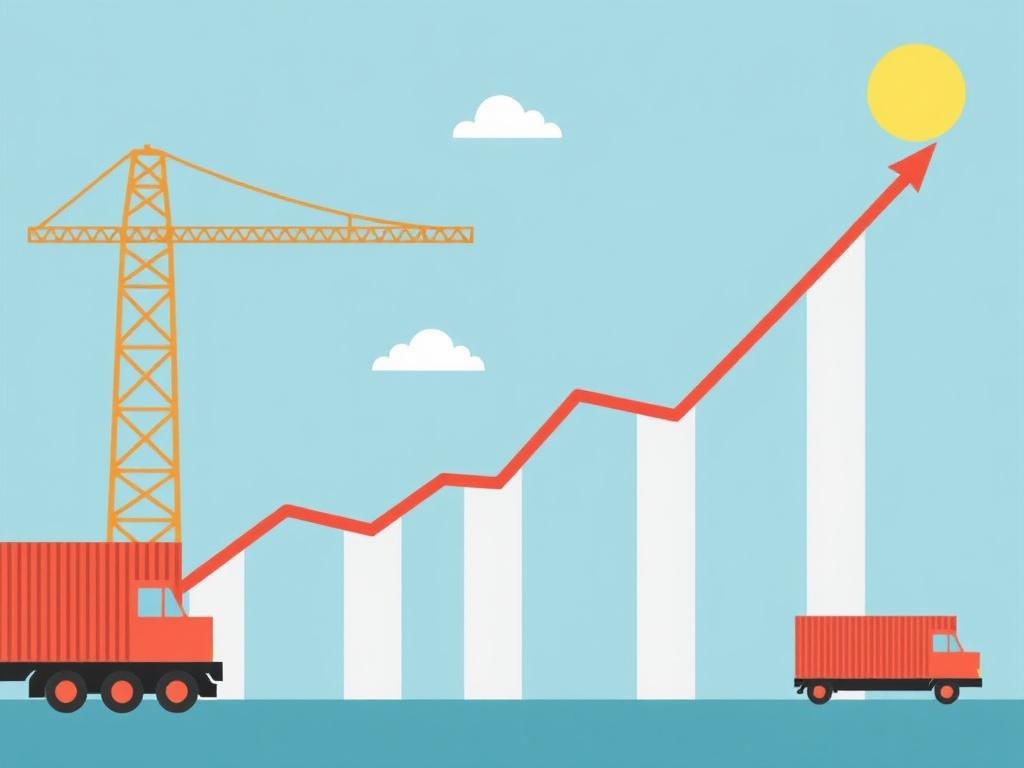
At a basic level, tariffs raise the price of imported goods for domestic buyers. That increase in prices has ripple effects: consumers have less purchasing power, firms face higher input costs, and resources shift toward the protected sectors.
During a recession, aggregate demand is the core problem. Tariffs can move demand between sectors but rarely create it. If consumers spend more on domestically produced appliances because imported models are more expensive, their overall spending power falls and total demand may shrink.
Tariffs also trigger retaliation. Trading partners often respond with their own tariffs on exports, which directly lowers demand for exporters and can deepen a downturn. Because exports generate income for workers and firms, retaliatory measures can turn a local protection into a national contraction.
Price effects and pass-through to consumers
When a tariff is imposed, the price increase can be shared between foreign exporters and domestic importers, but consumers almost always face higher costs. The degree of pass-through depends on market structure, competition, and the elasticity of demand for the goods in question.
In a slack economy, some producers may be unable to raise prices because demand is weak; instead, they accept lower margins and the tariff’s protective effect on domestic production weakens. That makes tariffs an unreliable instrument for buoying employment in the short run.
For low- and middle-income households, higher prices on basic goods act like a regressive tax. During a recession, when those households already face income losses, a tariff-induced price rise can be particularly harmful to consumption and to poverty rates.
Resource reallocation and deadweight losses
Tariffs redirect resources—labor, capital—toward import-competing industries that might be less efficient than foreign producers. Economists call the resulting productivity losses “deadweight losses” because they reduce total welfare without producing offsetting benefits.
In normal times, such reallocation may be argued for on strategic or long-term industrial policy grounds, but in a recession the economy needs to recover output quickly. Misallocating scarce capital and labor into protected sectors slows recovery and can lock in inefficient firms.
When recovery eventually arrives, the economy may be left with higher-priced inputs and a less competitive industrial base, which can weigh on growth for years after the downturn ends.
Historical evidence: what the past tells us
History does not offer a single experiment that settles the debate, but it does provide cautionary examples. The Smoot-Hawley Tariff Act of 1930 in the United States is the most cited historical case where trade barriers rose sharply at the onset of a deep economic contraction.
Many historians and economists argue that Smoot-Hawley worsened the global collapse of trade and contributed to the depth of the Great Depression, through retaliatory tariffs and collapsing global demand. While the act was not the sole cause of the Depression, the episode illustrates how protectionism can amplify economic stress.
More recently, during the 2008–2009 global financial crisis, G20 leaders explicitly pledged to avoid protectionist measures, reflecting awareness that tariffs could deepen the slump. That collective restraint likely played a role in preventing a wave of beggar-thy-neighbor policies that could have made recovery harder.
Modern examples and mixed outcomes
In the last decade, the imposition of tariffs by major economies has offered more recent, though less clear-cut, data. Tariffs introduced in the late 2010s between major trading partners produced measurable redistribution and sectoral disruption, but did not cause a systemic depression.
Those episodes show that the immediate political benefits of tariffs can be maintained even when economic costs are diffuse and slower to appear. Studies of recent tariff episodes report net negative effects on GDP and employment in many cases, but the magnitude varies by country and sector.
What is consistent across episodes is that retaliation and supply-chain disruptions tend to magnify the initial costs, and that consumers and downstream businesses often carry much of the burden.
Distributional consequences: winners, losers, and who pays
Tariffs create concentrated winners—firm owners and workers in protected industries—while imposing costs on a broad range of consumers and firms that use imported inputs. That imbalance explains why protectionist policies are politically durable despite economic inefficiency.
In a recession, the distributional hit is sharper for lower-income households because they spend a larger share of income on goods affected by tariffs. Higher prices reduce real incomes and can blunt the impact of other stabilizing policies like stimulus checks.
Exporters also lose when foreign markets retaliate. Regions that rely heavily on exports can experience job losses even as other regions gain temporary protection, producing a patchwork of hurt and help across the country.
Employment and labor market adjustments
Protecting a factory with tariffs may preserve jobs temporarily, but it does not immunize that workforce from longer-term technological change or demand shifts. Recessions are often moments of structural change, and insulating workers from that reality can make future adjustments more painful.
Workforce policies that focus on retraining, mobility, and wage insurance are generally more effective at helping workers transition than trade barriers that try to freeze the status quo. Those policies can be targeted and time-limited, reducing economic damage while addressing social needs.
For industries with real comparative advantage or innovation potential, tariffs can be counterproductive by shielding firms from competitive pressures that spur productivity and investment.
Political economy: why tariffs are attractive despite the costs
Tariffs are politically attractive because they produce visible, concentrated benefits and an easy narrative. A single plant saved or a high-profile CEO praising a president’s tariffs makes for powerful political capital.
The costs of tariffs are diffuse and often slow to accumulate. Consumers pay a bit more in many product categories, and firms that face higher input costs may lose profitability gradually. That separation between visible win and hidden cost explains why protectionism is tempting.
During recessions, political incentives become acute. Leaders who can offer protectionist measures create the perception of decisive action, even when the economic case is weak. That signaling value is part of why tariffs surface as a policy choice in downturns.
Time inconsistency and credibility problems
Policymakers sometimes promise that tariffs will be temporary, aimed at stabilizing industries only during the downturn. But temporary measures are often difficult to remove once vested interests form around them.
This time-inconsistency problem means tariffs can become permanent fixtures, increasing long-run economic costs. Industries and workers that receive protection may lobby to keep it, making future liberalization politically costly.
Credibility matters for investment. If businesses expect trade policy to swing unpredictably, they may defer spending and hiring, which undermines the very recovery policymakers hoped to spur with protectionist measures.
Alternatives that actually stabilize demand and support workers
When the objective is to repair aggregate demand and protect livelihoods, fiscal and monetary tools are typically more effective than trade barriers. Direct stimulus boosts total spending without raising costs for consumers through higher import prices.
Targeted measures—unemployment insurance, direct transfers to low-income households, payroll support for firms with otherwise viable business models—help maintain consumption and preserve productive relationships between workers and firms.
Public investment in infrastructure and green technologies can boost demand while addressing long-term needs, turning recession policy into an opportunity to improve future competitiveness rather than entrenching inefficiency.
Trade-adjustment assistance and retraining
Policies that accept trade as a structural reality but help displaced workers adapt have proven more humane and economically sensible than blunt protectionism. Trade-adjustment programs, retraining, and mobility support soften the social costs while allowing resources to flow to higher-value uses.
These approaches require political will and up-front spending, but they avoid the inefficiencies that tariffs impose on consumers and downstream firms. When well-designed, they can speed recovery and raise long-term productivity.
Combining temporary income support with rapid retraining and job placement helps workers transition faster than insisting on keeping uncompetitive firms alive through tariffs.
Exceptions and narrow cases where tariffs might make sense
There are limited circumstances in which tariffs can be defensible even during a recession. National security concerns, genuine market failures, and credible infant-industry cases are often cited as exceptions.
However, these exceptions must be narrowly defined and accompanied by clear timelines and exit strategies. Broad or permanent protection framed as temporary frequently becomes entrenched, yielding long-term harm.
For example, if a critical domestic industry is at existential risk and there are no viable suppliers from allied countries, temporary import restrictions with a clear phase-out schedule might be part of a larger strategy. Yet such cases are rare and require careful design.
Strategic use versus political cover
There is also a strategic dimension where targeted tariffs can be used as bargaining chips in negotiations with trade partners. That is distinct from using tariffs as blunt domestic stimulus tools during a downturn.
Smart leverage in bargaining must be calibrated and paired with enforcement mechanisms; otherwise, it amounts to grandstanding that provokes retaliation. In a recession, that misstep can be especially costly.
Policymakers should be wary of using national hardship as political cover for protectionist moves that serve narrow interest groups rather than public welfare.
Practical checklist for policymakers tempted by tariffs
Before implementing tariffs in a recession, policymakers should ask a set of concrete questions that reveal likely consequences and alternatives. That checklist helps separate genuine needs from political impulse.
Questions should include: Will the tariff raise aggregate demand or just shift it? Who bears the cost—consumers, downstream firms, or the protected industry? Is retaliation likely, and how damaging would it be to exporters?
Policymakers should also assess the administrative feasibility of temporary measures, the ease of unwinding protection, and whether superior alternatives like targeted fiscal support exist and are politically implementable.
- Will this tariff increase total spending or only reallocate it?
- Are targeted fiscal measures available that achieve the same goals more efficiently?
- Is retaliation likely, and what would be the impact on exporters?
- Can the tariff be made truly temporary with clear exit criteria?
- Who benefits, and who pays?
Real-life perspective: research and observation
In my time researching trade and macroeconomic policy, I’ve seen how appealing simple solutions are in complex crises. A tariff looks neat on paper and performs well in soundbites, but the messy reality of supply chains and consumer behavior often undermines the promise.
On multiple occasions, I observed business owners express relief at short-term protection while simultaneously worrying about higher input costs and delayed investments. Those conflicting reactions reflect the asymmetric nature of tariff effects.
Policymakers who visited factories and town halls frequently felt pressure to act quickly, which is understandable. The lesson I took away is that quick symbolic action is rarely a substitute for carefully targeted support that addresses root causes of economic pain.
International law and institutional constraints

The modern trading system, embodied in treaties and the World Trade Organization, places limits on unilateral tariffs. During recessions, countries that respect these commitments avoid escalatory cycles of retaliation that spread and worsen the slump.
Legal challenges and disputes can arise when tariffs are used for non-legitimate purposes, creating uncertainty and additional costs for exporters and importers. That uncertainty deters investment and complicates recovery planning.
For countries that rely heavily on export-led growth, instituting tariffs risks isolating them from global markets and undermining long-term growth prospects.
How tariffs interact with monetary and fiscal policy
Tariffs can complicate monetary policy by raising domestic inflationary pressures while aggregate demand is weak. Central banks face a policy dilemma when prices rise but output remains below potential, especially if wage growth does not follow price increases.
Fiscal policy can counteract some tariff effects, but combining tariffs with contractionary fiscal stances can intensify the recession. Coordinated fiscal stimulus and structural reform almost always outperform protectionist approaches in restoring demand and confidence.
When tariffs are implemented without complementary measures to support consumers and firms, the net effect can be stagflationary pressure—higher prices with weak growth—which central banks and treasuries find very hard to manage simultaneously.
Measuring costs: what to expect if tariffs are enacted during a downturn
Several categories of costs tend to appear after tariff imposition in recessions: immediate price increases for consumers, higher input costs for downstream firms, potential export losses due to retaliation, and longer-term productivity declines from protected inefficiency.
Estimating the magnitude of these costs requires detailed sectoral analysis, but a useful rule of thumb is that the broader and less targeted the tariff, the larger the economy-wide loss will be relative to any protected gains.
Policymakers should demand rigorous, transparent modeling of these effects before acting and compare the results to alternative measures such as temporary fiscal transfers or public investment projects.
What voters should know when leaders promise tariffs
Voters should view tariff promises with healthy skepticism and ask how the policy will affect everyday prices and jobs in their community. The headline that claims “protecting local jobs” rarely tells the whole story about who will pay.
Citizens can press for clarity on timelines, the expected beneficiaries, and whether complementary measures—retraining, income support—will accompany the tariffs. That information helps weigh short-term political satisfaction against long-term economic health.
Active civic engagement and demand for accountability can make a difference in preventing protectionist policies from becoming permanent fixtures that erode living standards over time.
Summary table: weighing tariffs in a recession
The table below summarizes typical positive and negative effects to consider when evaluating tariff policy during a downturn.
| Potential benefit | Typical cost |
|---|---|
| Short-term protection for specific firms and jobs | Higher consumer prices and regressive burden on low-income households |
| Political signaling and visible action | Retaliation and lost export markets |
| Possible bargaining leverage in trade talks | Resource misallocation and slower productivity growth |
| Temporary relief for a strategically vital industry | Risk of permanent entrenchment and long-term inefficiency |
Final reflections on policy choices and priorities
Tariffs in a recession trade a quick, visible response for diffuse economic harm. They can protect particular industries in the short term, but they rarely restore aggregate demand or foster broad-based recovery. For these reasons, tariffs are usually a poor substitute for well-targeted fiscal support and policies that help workers adapt to structural change.
When the goal is to revive an economy and safeguard livelihoods, policymakers are better served by measures that boost total spending, protect vulnerable households, and invest in future competitiveness. Tariffs can be part of a wider toolbox in exceptional cases, but they should be narrow, temporary, and accompanied by clear plans for unwinding.
Ultimately, the question Tariffs during a recession: A terrible idea? nudges us toward a practical answer: not usually. The costs are real, the politics are tempting, and the alternatives are often both more effective and fairer. When leaders face the next downturn, the wiser course is to focus on policies that restore demand, support transitions, and leave the economy stronger on the other side.