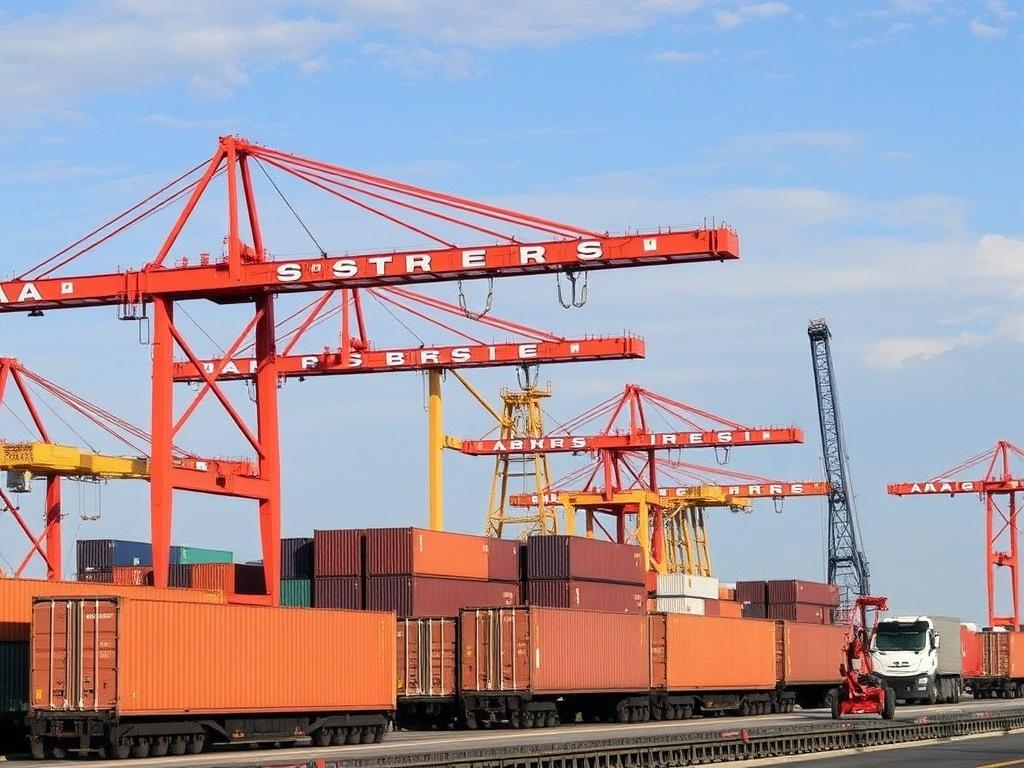
When a government announces a tariff, it does not simply change a line on a spreadsheet. It ripples through planning calendars, vendor relationships, and waking conversations on factory floors. That single policy decision forces managers to make guesses with real money at stake, and businesses hate being forced to guess.
- The mechanics of tariffs: a simple tax, a complex effect
- Why uncertainty terrifies managers
- Policy volatility creates planning paralysis
- Contractual complexity amplifies exposure
- How tariffs hit the numbers: margins, pricing, and competitiveness
- Pricing strategies under pressure
- The hidden cost: increased working capital
- Inventory, lead times, and the bullwhip effect
- Lead-time inflation and capacity hoarding
- Strategies companies use to manage tariff risk
- Short-term levers: rerouting, reclassification, and duty drawback
- Medium- and long-term moves: diversification and redesign
- Real-world examples and case studies
- US-China trade conflict and Section 301 tariffs
- Solar panels and washing machines: protecting some industries, hurting others
- Auto industry and Harley-Davidson: public headlines, private shifts
- Operational pain points: logistics, compliance, and classification
- Tariff classification and customs disputes
- Logistics chokepoints and unpredictable fees
- Financial and strategic ripple effects
- Investment, hiring, and capacity decisions
- Small suppliers versus large multinationals
- Practical playbook for executives
- Short-term moves: quick wins and trade-offs
- Medium- and long-term moves: building durable resilience
- The political dimension: lobbying, risk, and signaling
- How companies influence policy
- Looking ahead: a world where tariff shocks recur
- A pragmatic path forward
The mechanics of tariffs: a simple tax, a complex effect
At its core a tariff is a tax on imported goods, usually expressed as a percentage of value or a fixed fee per unit. That simplicity is deceptive: where the tax lands in a value chain depends on how contracts are written, who absorbs costs, and whether inputs cross borders multiple times during manufacturing.
Because modern production spreads across countries, a tariff on one component can raise the cost of an entire product. A small added cost at an early stage compounds through stamping, assembly, testing, and shipping, altering margins and price competitiveness at every step.
Tariffs also interact with duties, quotas, anti-dumping measures, and local content rules, creating a web of regulatory friction. Companies must translate those rules into sourcing choices, product design changes, and customer-facing prices — all under time pressure.
Why uncertainty terrifies managers
Uncertainty does something almost physical to supply chains: it stretches lead times, it inflates required inventory, and it shortens the horizon for confident planning. Businesses run on predictability; forecasting, purchasing, and manufacturing systems assume rules won’t change overnight. When they do, the entire machine strains.
Uncertainty raises two straightforward problems. First, it increases the probability of making the wrong decision. Second, it multiplies the cost of getting that decision wrong. Companies prefer to pay known costs rather than gamble on unknown future tariffs that might reverse or intensify.
The psychological effect matters too. Engineers delay product launches, procurement teams hoard components, and sales teams stall pricing decisions. These are rational reactions, but they create inefficiencies — overstocked warehouses, underutilized factories, and confused customers.
Policy volatility creates planning paralysis
Policy volatility is not only about new tariffs; it is about the credibility and timing of government decisions. When tariffs are threatened in public speeches, leaked memos, or sudden executive actions, firms have to decide whether to act immediately or wait for clarity. Neither choice is risk-free.
If they act too soon by changing suppliers or shifting production, they may incur needless costs if the policy never materializes or is reversed. If they wait, they might miss the window to secure capacity or to adjust logistics before tariffs take effect. That paralysis costs time and money.
Executives often describe this dilemma as “betting against the calendar.” Forecasts, capital plans, and hiring schedules are calendar-driven; a policy that can appear and disappear without notice forces constant recalibration.
Contractual complexity amplifies exposure
Many companies operate under fixed-price contracts that extend months or years into the future. Tariffs that arrive mid-contract create mismatches where suppliers, distributors, or customers have different capacities to absorb costs. Legal disputes or renegotiations often follow.
On top of that, supply contracts may specify port of entry, Incoterms, or tariff classification responsibilities that determine who pays duties. When tariffs change, these clauses become battlegrounds because shifting a few percentage points of the landed cost can wipe out a supplier’s margin or force a customer to pay more than expected.
Reconciling these contract clauses requires legal, commercial, and operations teams to work in tandem — a coordination exercise that is expensive when done under time pressure and costly if done repeatedly.
How tariffs hit the numbers: margins, pricing, and competitiveness
Tariffs are most visible on unit economics. A 10 percent duty on an imported keypad may look small, but when that keypad is a necessary component, the duty can lift the finished-goods cost enough to change pricing strategies or market positioning. Competitors who source domestically or offshore elsewhere suddenly have an edge.
Companies respond in three ways: absorb the cost, pass it to customers, or redesign the product. Each option affects sales volumes, margins, and brand expectations differently. The choice depends on elasticity of demand, contract terms, and strategic priorities.
Absorbing tariffs may protect market share in the short run but reduces profitability. Passing costs to customers risks lost sales and damaged relationships. Redesigning products takes time and engineering effort, and may reduce functionality or increase unit cost in other ways.
Pricing strategies under pressure
When tariffs bite, many companies implement tiered pricing or temporary surcharges to protect margins while they evaluate longer-term fixes. Those surcharges are often unpopular with customers and can complicate sales forecasting and commission calculations.
Dynamic pricing models that worked for e-commerce players become harder to apply when tariffs are opaque or retroactive. Retailers that advertised prices before a tariff announcement face the public relations problem of raising prices afterward, sometimes triggering regulatory scrutiny.
Seasonal buyers and contract customers react differently; some accept small surcharges for continuity while others use tariffs as leverage to renegotiate terms or switch suppliers altogether.
The hidden cost: increased working capital
Tariff uncertainty forces businesses to hold more inventory as a buffer against sudden cost increases or supply interruptions. That inventory carries storage costs, insurance, and risk of obsolescence — real expenses that hurt cash flow.
Payment terms can also tighten. Suppliers facing new tariffs may demand shorter payment cycles to shield themselves, while buyers push for longer terms to conserve liquidity. This tug-of-war raises financing costs across the chain.
For small and medium-sized suppliers, increased working capital can be existential; they lack access to cheap financing and often cannot absorb prolonged periods of compressed margins.
Inventory, lead times, and the bullwhip effect
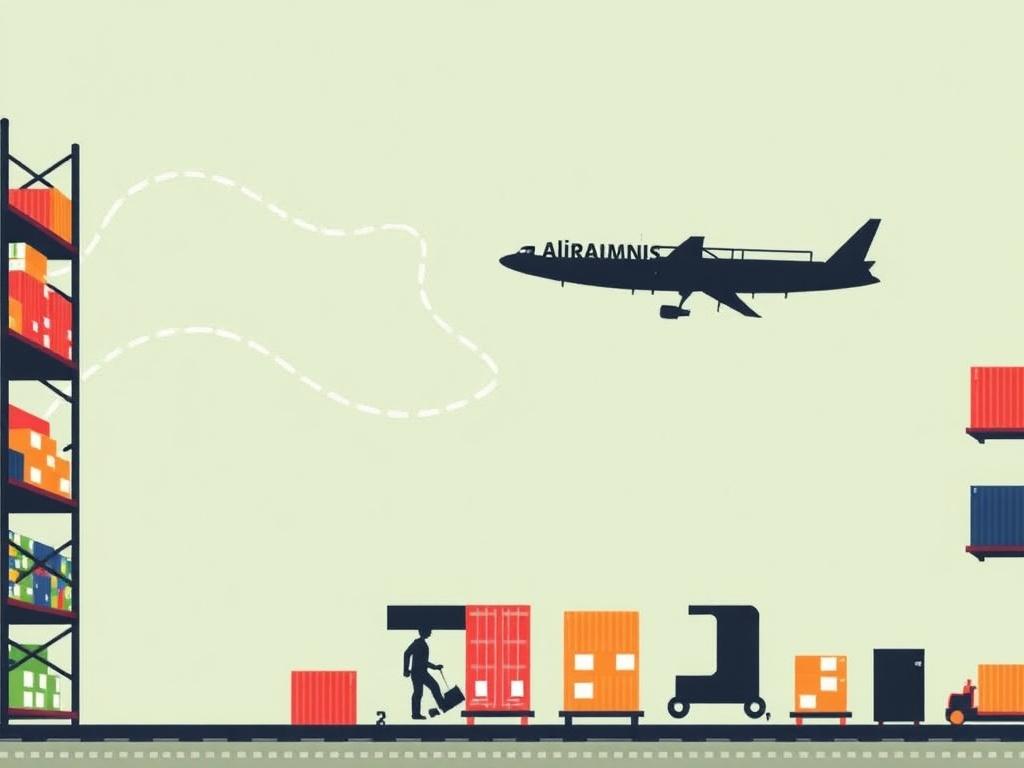
Tariffs amplify the bullwhip effect: small changes in consumer demand morph into large swings in upstream orders. When buyers fear future tariffs, they accelerate orders, causing suppliers to ramp up production and component procurement. When the policy stabilizes or demand drops, upstream players are left with excess inventory.
This outcome is not theoretical. I once advised a client who doubled orders for a critical connector after tariff rumors surfaced. When the tariff was delayed and volumes normalized, the manufacturer had piles of unsold connectors and had to discount aggressively to clear stock.
The cycle wastes capacity, ties up capital, and damages supplier trust, because rapid, unpredictable order patterns strain lead-time commitments and make long-term forecasting less reliable.
Lead-time inflation and capacity hoarding
To avoid tariff exposure, firms often front-load production or reserve manufacturing windows. That behavior creates capacity hoarding, where companies block slots at factories or carriers and then release them later. The net effect is higher global lead times for everyone.
Shipping lanes react similarly: when importers anticipate tariffs, they may expedite shipments or pay for premium services, driving up freight rates. Carriers and warehouses benefit in the short run, but higher logistics costs become structural in competitive markets.
Capacity hoarding also disadvantages smaller players who cannot reserve large blocks of production or pay expedited freight, creating a competitive skew that favors larger, cash-rich firms.
Strategies companies use to manage tariff risk
Firms use a mix of tactical and strategic responses to tariff uncertainty. Tactics are immediate: rerouting shipments, reclassifying products under alternative tariff codes, or changing ports of entry. Strategic changes take time: redesigning products to use different inputs or building regional supply networks.
Effective risk management combines scenario planning with operational flexibility. Companies that already mapped their supply chains and identified critical nodes can move more quickly and less expensively than those that have not.
Many organizations now maintain a “tariff playbook” describing decision trees for different scenarios: tariff enactment, escalation, partial exemptions, or rollback. That playbook reduces indecision when politics moves quickly.
Short-term levers: rerouting, reclassification, and duty drawback
In the short term, managers often look for customs classification differences that legitimately lower duties or for using Free Trade Agreements where rules of origin qualify content as local. These are technical solutions that require customs expertise and careful documentation.
Duty drawback programs and bonded warehouses let companies import components, assemble products, and export finished goods with reduced net duties. Such options help exporters and firms with complex cross-border flows, but they also add administrative burden.
Rerouting shipments through third countries to take advantage of different tariff regimes is another tactic, but it carries legal and reputational risks if it strays into tariff circumvention.
Medium- and long-term moves: diversification and redesign
Longer-term responses include diversifying suppliers across geographies, moving production closer to end markets, or redesigning products to use alternative components. These options reduce exposure but require investment in supplier development, tooling, or regulatory compliance.
Nearshoring and reshoring have gained attention because they shorten supply chains and reduce tariff exposure. But relocating production has tradeoffs: higher labor costs, different regulatory environments, and the need to develop local supplier ecosystems.
Product redesign can remove tariff-vulnerable components or replace materials with locally sourced alternatives. Engineering teams often have to balance cost, performance, and time-to-market when pursuing redesign as a tariff mitigation strategy.
Real-world examples and case studies
Looking at history helps clarify why companies react so strongly. The 2018 U.S. tariffs provide several illustrative examples where policy shifts forced rapid operational and strategic decisions.
In that period, tariffs on steel and aluminum shocked manufacturers and downstream industries. Automakers and construction firms exposed to metal prices faced higher input costs and supply uncertainties that pushed some to alter sourcing and hedging strategies.
Other cases, like tariffs on solar panels and washing machines, highlight how protectionist measures intended to support domestic producers can have unintended downstream consequences for installers, retailers, and project developers.
US-China trade conflict and Section 301 tariffs
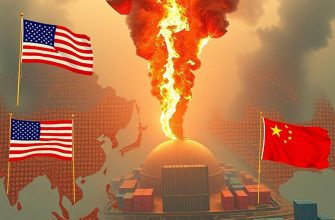
The U.S.-China trade tensions of the late 2010s introduced multiple rounds of tariffs on billions of dollars of goods. Manufacturers that relied on specific components from China faced complex decision trees: absorb, relocate, or redesign. None were easy or cheap.
Some firms shifted parts of production to Southeast Asia to maintain competitiveness and avoid the highest tariff brackets. Others doubled down on domestic suppliers or started long-term supplier development programs outside China.
These moves illustrate how tariffs are not merely costs; they reshape investment decisions and strategic footprints for decades, prompting capital expenditure and supplier relationship changes that outlast the immediate policy.
Solar panels and washing machines: protecting some industries, hurting others
When the United States imposed tariffs on solar panels and washing machines, the aim was to stimulate local manufacturing. The immediate effect, however, was to raise input costs for project developers and retailers, which slowed demand and raised the cost of installing renewables and appliances.
Projects were delayed while buyers renegotiated contracts, and smaller installers faced cash-flow stress. The net employment effects were complex: some manufacturing jobs gained, while installation and retail jobs faced declines due to reduced demand.
These episodes show the redistribution effects of tariffs across an ecosystem, not just the target industry. Policymakers and businesses must weigh those downstream consequences.
Auto industry and Harley-Davidson: public headlines, private shifts
High-profile examples make the problems visible. Harley-Davidson publicly warned that retaliatory tariffs would force some production overseas to avoid tariffs on motorcycles exported from the U.S. The company then had to navigate backlash and operational changes in real time.
Automakers more broadly recalibrate sourcing and production footprints because vehicles incorporate thousands of parts that cross borders multiple times. Tariff shocks push strategic conversations about platform sourcing, regional manufacturing hubs, and supplier consolidation.
These decisions are costly and irreversible in the short term, which is why executives hate sudden policy moves that compress decision windows and raise the odds of error.
Operational pain points: logistics, compliance, and classification
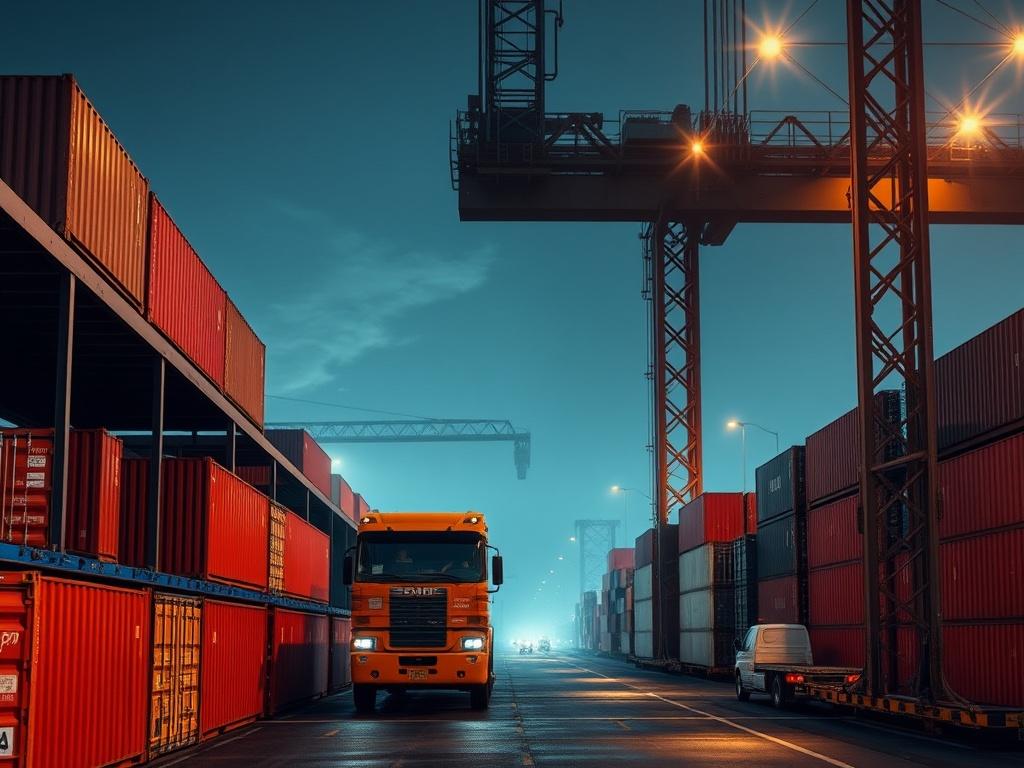
Beyond headline numbers, tariffs create operational headaches that are often overlooked until they become urgent. Customs classifications, reconciliations, and audits require specialized teams and meticulous record-keeping. Mistakes in classification can lead to retroactive duty assessments and fines.
Logistics partners become critical allies because tariffs change the economic calculus of routing. Port congestion, transshipment rules, and carrier agreements all interact with tariff risk to determine the cheapest and most reliable path to market.
Regulatory uncertainty also increases the value of compliance systems. Firms invest in software and customs expertise to track rules of origin, certificate requirements, and tariff code changes across dozens of jurisdictions.
Tariff classification and customs disputes
Each product must be classified under a tariff schedule, and classifications can be ambiguous. Companies sometimes file binding rulings to gain certainty, but those take time and legal resources. While they wait, companies operate in a gray zone that affects pricing and risk allocation.
Customs disputes can be costly not only in duties but also in opportunity cost. Goods tied up in audits or appeals cannot be sold, and warehouses can fill with contested inventory that neither party wants to take a loss on.
For many firms, the cost of ongoing customs litigation and the defensive staffing to manage it are an unavoidable part of operating at scale in a volatile policy environment.
Logistics chokepoints and unpredictable fees
Logistics providers sometimes levy new fees or change service levels in response to shifting trade patterns. When demand spikes, surcharges appear; when trade lanes re-route, transit times change. These dynamics complicate landed-cost calculations and cash forecasting.
Ports and carriers may also implement rules or restrictions that intersect with tariff policy. For example, a sudden increase in transshipment through a third country can strain its ports and inland transport, adding delay and cost.
These ripple effects emphasize that tariffs are not isolated taxes but triggers for a cascade of operational adjustments across the logistics network.
Financial and strategic ripple effects
Tariff uncertainty affects investment decisions and the cost of capital. Boards and investors dislike unpredictability because it reduces the clarity of future cash flows and increases the risk premium required for new projects. That can mean delayed plant expansions, slower hiring, or canceled product programs.
Companies also face strategic trade-offs: protect existing markets by absorbing costs, or pivot strategically to new markets where tariff exposure is lower. These choices reshape competitive landscapes over years, not months.
Financial planning becomes more conservative during periods of trade friction. Firms that once made bold investments may defer to preserve optionality, with long-run implications for innovation and market leadership.
Investment, hiring, and capacity decisions
Capital investments in factories, tooling, and automation are long-term bets. Tariff risk forces firms to add flexibility to those bets: invest in adaptable lines, build dual-capacity plants, or negotiate flexible contracts with suppliers. All options raise upfront costs.
Hiring plans also bend under uncertainty. Firms hesitate to add headcount if they cannot forecast demand confidently, which can create talent gaps and operational stress if demand unexpectedly rebounds.
These human and capital constraints reduce a company’s ability to seize opportunities quickly when the policy fog clears, leaving nimble competitors at an advantage.
Small suppliers versus large multinationals
Large multinational firms generally have more tools to manage tariff risk: legal teams, diversified supply bases, and access to credit. Small suppliers often lack those buffers and therefore bear disproportionate pain when policies change suddenly.
That imbalance can create systemic risk within industry clusters. If many small suppliers falter, larger firms may find their inputs scarce or quality degraded. Managing supplier health becomes a strategic priority during tariff uncertainty.
Some large firms respond by offering financial support, longer-term contracts, or collaborative inventory strategies to stabilize small suppliers because their own continuity depends on it.
Practical playbook for executives
Companies that manage tariff uncertainty best combine preparation with flexible execution. Several practical steps help reduce reaction costs and preserve strategic optionality when policies shift.
These steps span data, contracts, operations, and relationships. They are not silver bullets but build resilience sequentially and cumulatively, making shocks easier to absorb without disastrous consequences.
Below is a compact checklist organizations can use to prioritize actions when tariffs loom or start to bite.
- Map the supply chain: identify single points of failure and tariff-exposed components.
- Create scenario models: quantify financial exposure under multiple tariff outcomes.
- Review contracts: clarify who bears duties and renegotiate where necessary.
- Develop near-term tactical options: bonded warehouses, reclassification, routing alternatives.
- Invest in supplier diversification and regional supplier development for medium-term resilience.
Short-term moves: quick wins and trade-offs
Short-term tactics include increasing safety stock for critical components, securing alternate logistics routes, and using bonded facilities to defer duty payments. These moves buy time and reduce immediate volatility but increase carrying and administrative costs.
Another short-term lever is pricing communication. Transparent, time-limited surcharges tied to specific policy changes can be more acceptable to customers than stealth price increases. Clear communication preserves trust even when costs rise.
However, these actions are temporary. They do not solve structural exposure and can create problems if maintained too long, so executives should treat them as bridges, not destinations.
Medium- and long-term moves: building durable resilience
Longer-term strategies require capital and organizational change. Diversifying suppliers, building regional manufacturing capacity, and redesigning products to reduce cross-border content all reduce tariff sensitivity. These are investments in optionality and strategic independence.
Supplier development programs are particularly valuable: training, quality assistance, and shared tooling can create a resilient regional supplier base that responds faster and more cheaply than moving production entirely.
Finally, investing in customs expertise and compliance technologies reduces operational risk and speeds up legitimate use of preferential trade agreements and duty mitigation programs.
The political dimension: lobbying, risk, and signaling
Companies do not passively accept tariff regime changes; many engage in lobbying, public campaigns, and coalition-building to shape policy. These political efforts are a natural extension of corporate risk management when trade policy can materially affect profitability.
But engagement is resource-intensive and not always successful. Timing matters: efforts to influence policy are more effective before rules are in place than after. Firms must weigh the cost of advocacy against the potential benefits and reputational risks.
Sometimes, public positions become strategic signaling — a way to warn suppliers or customers that the company will not absorb costs indefinitely. Those signals can be useful, but they also carry the risk of alienating stakeholders or policymakers.
How companies influence policy
Large firms often coordinate with trade associations, industry coalitions, and lobbying firms to present data-driven impact analyses to policymakers. Demonstrating downstream economic effects, such as job losses or supply disruptions, can alter legislative or executive decisions.
Smaller firms usually lack direct access and instead rely on trade groups or local representatives to amplify their voices. Building coalitions with downstream users can be effective because politicians care about voter-facing impacts like price increases or job cuts.
Even with strong advocacy, policy outcomes remain uncertain because governments balance economics with politics, national security, and strategic objectives. Thus, lobbying is an element of risk management, not a guaranteed fix.
Looking ahead: a world where tariff shocks recur
Globalization is evolving from a focus on pure cost optimization to a hybrid emphasis on resilience and geopolitical hedging. As a result, companies should expect tariff shocks and trade policy shifts to be recurring features of the operating landscape.
Firms that treat uncertainty as a constant will invest differently: they will prioritize supply chain transparency, build adaptable production systems, and reserve capital for strategic moves. That posture is not about pessimism but about creating optionality in an unpredictable world.
One realistic metric of success is not avoiding all disruption but reducing the cost and speed of recovery after a shock. Companies that can reroute production, renegotiate contracts quickly, and maintain customer trust will outperform peers when policy volatility returns.
A pragmatic path forward
Tariffs are taxes, but their true cost is measured in foregone opportunities, strained relationships, and delayed investments. Companies dislike uncertainty because it erodes their ability to plan and execute precisely — the very things that create economic value.
By mapping exposure, investing in customs and supplier capabilities, and blending short-term tactical moves with long-term strategic shifts, organizations can reduce the pain of tariff shocks. The goal is not to predict politics perfectly but to build systems that tolerate unpredictability.
For leaders, that means trading some short-term efficiency for long-term robustness, and accepting that in a world of recurring geopolitical turbulence, prepared companies make the best use of imperfect information.
| Time horizon | Typical actions | Primary trade-off |
|---|---|---|
| Immediate (days–weeks) | Reroute shipments, impose temporary surcharges, use bonded warehouses | Higher operating costs, customer friction |
| Short-term (months) | Increase inventory, renegotiate contracts, secure alternate suppliers | Working capital strain, quality risk from new suppliers |
| Long-term (1–5 years) | Nearshoring, product redesign, supplier development | Capital expenditure, potential higher labor costs |
Tariffs and supply chains: Why companies hate uncertainty is not merely a catchy phrase; it is a practical reality managers confront daily. The policy choices of governments translate into operational choices for firms, and the ability to manage that translation determines competitiveness over time.
I have seen firms that survived tariff shocks by acting too slowly and others that thrived by treating uncertainty as a design constraint. The difference was not luck; it was preparation, humility about what leaders did not know, and speed in deploying well-rehearsed contingency plans.
Ultimately, tariffs will remain a tool of policy. Companies that accept that and build supply chains engineered for flexibility — not just efficiency — will be the ones that suffer least and adapt fastest when the next tariff shock arrives.