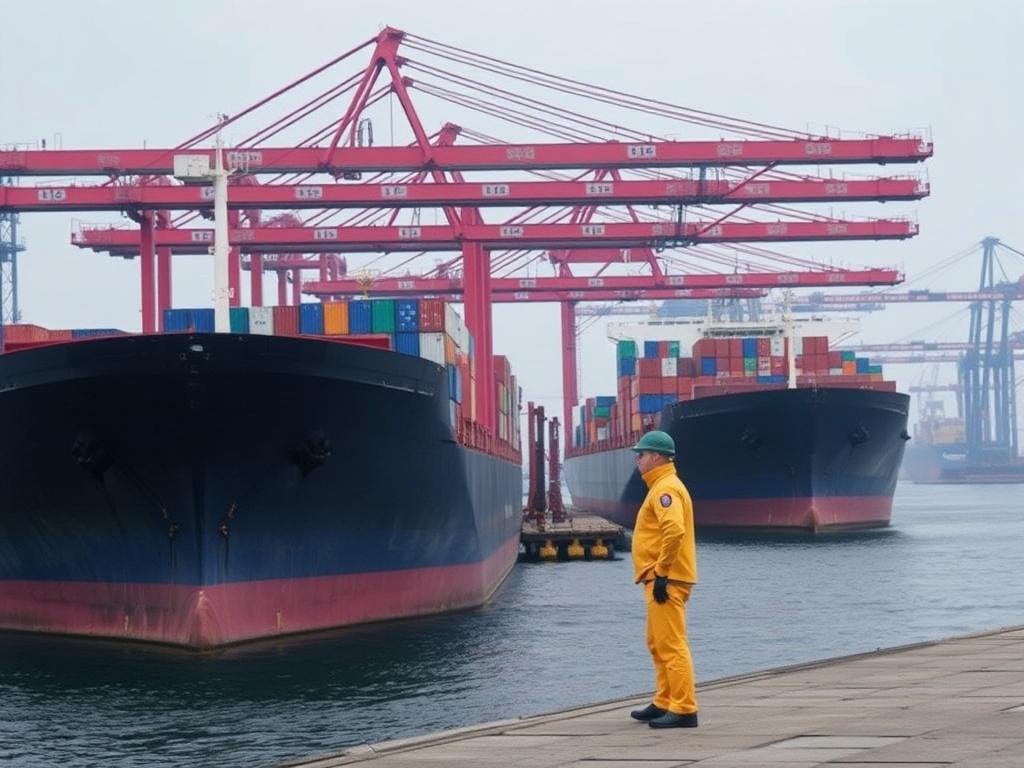
Trade tensions between countries seem like big-government drama, but their effects land squarely in small business cash registers, warehouse shelves, and storefront windows. A tariff, a retaliatory quota, or a disrupted shipping route can turn a healthy quarter into a scramble for survival. This article walks through practical steps owners and managers can take now to protect cash, rewire supply lines, and even find advantage amid uncertainty.
- Why trade wars matter to small businesses
- Immediate triage: cash, customers, inventory
- Supply chain strategies: diversify, localize, and build redundancy
- Pricing, contracts, and hedging
- Market diversification: expand channels and geographies
- Technology and processes: use data to get ahead
- Financing: access capital before you need it
- Operations and workforce: flexibility without panic
- Policy engagement, advocacy, and insurance
- Scenario planning and stress testing
- Real-world examples and practical lessons
- Practical checklist: immediate actions and medium-term moves
- Quick reference table: strategies by timeline
- Communication: how to keep stakeholders aligned
- Product strategy: redesign where tariffs bite hardest
- Pricing psychology: how to present increases
- Technology vendors and partners: pick pragmatically
- When to raise prices, when to cut costs, and when to pivot
- Government programs and export resources to explore
- Monitoring and early-warning systems
- Human element: leadership and decision-making under pressure
- Longer-term resilience: build the business for volatility
- Final practical pointers and parting thoughts
Why trade wars matter to small businesses
Trade disputes change prices and availability for goods quickly. Small firms typically lack the negotiating leverage of multinationals, so increased tariff costs and shipping delays bite profit margins harder and faster.
Beyond direct costs, trade frictions ripple through supplier networks. A factory delay overseas can halt domestic assembly lines and leave finished-product inventory stranded at ports, creating lost sales and unhappy customers.
Market sentiment shifts too. When prices become volatile, customers may delay purchases or switch to cheaper alternatives. That makes revenue forecasting harder, which in turn complicates decisions about hiring, inventory, and capital expenditures.
Finally, the policy landscape can change suddenly. New tariffs, updated rules of origin, or altered customs procedures arrive with little lead time, and small businesses frequently lack the in-house legal or compliance teams to respond quickly.
Immediate triage: cash, customers, inventory
First, stabilize cash flow. Map your cash runway by listing receivables due, upcoming payables, and fixed expenses. Once you know how many weeks you can operate under different revenue scenarios, you can make smarter decisions about borrowing, staff, and supplier negotiations.
Talk to customers proactively. Transparent communication about potential delays or price changes keeps relationships intact and reduces churn. Offer alternatives—partial shipments, substitute products, or temporary discounts—to maintain sales while you sort supply-side issues.
Inventory becomes both a risk and a lever. Slow-moving stock ties up cash but having strategic inventory of high-demand items can prevent lost sales during supply disruptions. Segment inventory into essential SKUs and nonessentials, then prioritize spending where it protects revenue.
Take immediate steps to free up cash where possible: renegotiate payment terms with vendors, accelerate receivables with early-payment incentives, and freeze nonessential spending. Small actions now extend your decision window later.
Supply chain strategies: diversify, localize, and build redundancy
Dependence on a single country or supplier is a vulnerability. Start mapping your supply chain beyond first-tier suppliers to identify concentration risk. Ask where components are manufactured and what alternatives exist.
Diversifying suppliers takes time, but you can begin by qualifying one or two alternatives. Even suppliers in the same region or a friendly neighboring country can reduce exposure to a particular trade dispute.
Local sourcing or nearshoring is not always cheaper, but it often reduces lead times and reduces the impact of tariffs. Weigh the higher unit cost against savings from fewer delays, lower inventory buffers, and improved cash flow certainty.
Build redundancy intentionally. That doesn’t mean duplicating everything; it means identifying critical nodes—components or raw materials without easy substitutes—and ensuring at least one backup supplier or process exists.
Pricing, contracts, and hedging
Review pricing strategies with care. Raising prices to cover tariffs risks losing customers, but absorbing costs erodes margins. Consider tiered approaches—raise prices on new orders while honoring existing contracts—and communicate the rationale clearly to buyers.
Examine contracts for force majeure, price adjustment clauses, and currency risk provisions. Where contracts lack flexibility, negotiate amendable terms, especially for long lead-time orders. Small suppliers can often trade some price certainty for extended payment terms.
Hedging isn’t just for big firms. Simple financial tools—currency forwards, commodity futures, or supplier-side agreements priced in a stable currency—can reduce exposure to price swings. Work with your bank or a financial advisor to choose affordable instruments that fit your risk profile.
Also, consider creative pricing structures such as subscription models, bundling, or service add-ons. These approaches can stabilize revenue and reduce sensitivity to product price fluctuations driven by tariffs.
Market diversification: expand channels and geographies
Relying on a single market magnifies trade-war risk. Explore alternative sales channels like e-commerce marketplaces, wholesale distributors, or local retailers to spread demand. Each channel has different margin structures, so model the trade-offs before committing resources.
Geographic diversification reduces political risk. If export markets for finished goods are affected by reciprocal tariffs, pursue new regions where demand for your product is steady and tariff exposure is lower. Use targeted digital marketing to test interest before scaling operations.
Partnering with distributors or agents in new regions reduces the upfront cost of market entry. They already understand local regulations and customer preferences, which accelerates traction without the overhead of establishing your own foreign sales team.
Don’t forget the domestic market. In times of international friction, patriotic buying and local procurement initiatives often rise. Positioning your brand as locally made or responsibly sourced can capture customers switching away from imported alternatives.
Technology and processes: use data to get ahead
Invest in visibility tools that track inventory, shipments, and supplier performance. Better data reveals where bottlenecks live and where to apply corrective action. Even modest investments in cloud-based ERP or inventory software deliver outsized benefits in a crisis.
Automation reduces manual errors and accelerates decision-making. Automated reorder points, real-time alerts for shipment delays, and integrated purchasing workflows mean you can react faster when a tariff changes or a container is delayed.
E-commerce adapts faster than brick-and-mortar to shifting supply sources. If a supplier change affects product characteristics or lead times, online channels allow you to update product pages, set customer expectations, and manage preorders without the friction of physical retail.
Leverage data to segment customers by price sensitivity and loyalty. Deploy promotions and inventory allocations with precision so you protect your most valuable relationships during turbulent periods.
Financing: access capital before you need it
Build relationships with lenders before a cash crunch forces you into unfavorable terms. A pre-approved line of credit, a community bank loan, or a supplier financing program can be lifesaving when tariffs compress margins.
Explore government programs that support businesses during trade disruptions. Many regions offer short-term loans, export credit insurance, or grants aimed at helping firms pivot suppliers or expand to new markets. These programs often have application lead times, so start early.
Consider alternative financing such as invoice factoring or purchase order financing to convert receivables into immediate working capital. The fees can be higher, but they buy time to renegotiate supply terms or reprice products more strategically.
Keep a close eye on working capital metrics—days sales outstanding, days inventory on hand, and days payable outstanding. Small improvements across these measures free up cash without necessarily adding debt.
Operations and workforce: flexibility without panic
Cross-train employees so essential functions continue if one team member is unavailable or if demand shifts between product lines. A flexible workforce reduces the need for rapid hiring or layoffs when orders fluctuate.
Adjust production schedules to match stabilized demand. Running frequent, smaller production runs reduces inventory risk when component availability is uncertain. It also allows faster switching between suppliers if specifications change.
Keep morale and communication channels strong. Uncertainty can erode employee confidence, and a stressed team makes more mistakes. Regular, honest updates and involving staff in problem-solving keep operations resilient and creative.
Policy engagement, advocacy, and insurance
Small firms often feel powerless in trade debates, but collective advocacy works. Join industry associations to amplify your voice on tariff impacts and to access resources such as legal briefings and lobbying efforts focused on small business relief.
Talk to your insurance broker about trade-disruption coverage and political-risk insurance. While such policies have limits and costs, they can cover lost profits or payment defaults that result from sudden government actions abroad.
Stay informed on regulatory changes, not just tariffs. Rules of origin, customs valuation, and labeling requirements frequently shift during trade tensions, and noncompliance can incur fines or shipment delays that are avoidable with early awareness.
Scenario planning and stress testing
Build at least three scenarios: mild disruption, moderate disruption, and severe disruption. For each one, model revenue, cash flow, and inventory needs for the next 3, 6, and 12 months. Clear scenarios make choices less emotional and more mechanical when the pressure is on.
Stress-test your most critical assumptions, such as lead times and price elasticity. If a key component’s lead time doubles or its cost rises 30 percent, walk through the operational steps you would take and estimate the financial outcome.
Assign trigger points for action—specific events that prompt a supplier switch, price adjustment, or financing drawdown. These triggers remove hesitation and keep the business responsive instead of reactive.
Real-world examples and practical lessons

I once worked with a small furniture maker that relied on a particular wood veneer imported from one country. When tariffs increased, the vendor passed the cost on, and margins vanished. The company began qualifying domestic veneer mills and introduced a higher-margin, locally sourced line marketed as “short-supply pro.”
Another example comes from a specialty food producer I advised during a regional trade dispute. Instead of raising prices immediately, the owner negotiated a temporary co-investment with a supplier: the supplier absorbed part of the tariff in exchange for a longer-term purchase commitment. That arrangement preserved shelf placement and customer loyalty.
These real cases share common themes: early supplier conversations, creative contracting, and an emphasis on customer communication. Small businesses that survive don’t wait for government fixes; they engineer options and make trade-offs with customers and suppliers.
When I ran a small manufacturing shop, we kept a ‘supply playbook’—a short document listing alternative suppliers, lead times, quality checkpoints, and contact names. It sounds simple, but when a container was stuck at a port, that playbook cut response time from days to hours.
Practical checklist: immediate actions and medium-term moves
Here’s a prioritized list to use as a quick operational checklist. Starting with cash and customers yields the biggest near-term impact, while supplier diversification and technology investments pay off over months.
- Map cash runway and secure short-term financing if needed.
- Contact key customers to set expectations and offer alternatives.
- Audit supplier concentration and begin qualifying backups.
- Adjust pricing strategy with transparent communication.
- Invest in inventory visibility tools and automate reorder points.
- Explore government assistance and insurance options.
- Create scenario plans with clear trigger points for action.
Quick reference table: strategies by timeline
The table below groups tactical moves into immediate, short-term, and strategic horizons so you can prioritize under pressure.
| Horizon | Focus | Example actions |
|---|---|---|
| Immediate (0–30 days) | Cash and communications | Reforecast cash flow, renegotiate terms, inform customers |
| Short-term (1–6 months) | Supply resilience | Qualify alternative suppliers, adjust inventory policies |
| Strategic (6–24 months) | Market and operational redesign | Nearshoring, product redesign, digital expansion |
Communication: how to keep stakeholders aligned
Clarity with stakeholders reduces friction and preserves trust. Share a concise plan with investors, lenders, and major customers that outlines risks, mitigation steps, and likely timelines. Transparency prevents panic and positions you as a responsible partner.
Internally, establish a short weekly update that tracks lead times, inventory levels, and cash position. This cadence creates discipline and ensures that decisions are made with the latest facts rather than worst-case rumors.
External messaging should be empathetic and specific. Avoid vague corporate statements; explain exactly what customers can expect and why. That level of detail turns uncertainty into a manageable problem customers can accommodate.
Product strategy: redesign where tariffs bite hardest
Some products are more sensitive to trade measures because their parts cross borders multiple times. Target those for redesign or substitution. If a product can be rebuilt with components from low-tariff countries or standard parts, the cost of redesign often pays back quickly in reduced import exposure.
Consider modular product design that allows components to be sourced from different regions without changing the overall product. Modularization increases flexibility when a single supplier or country becomes problematic.
For service-oriented businesses, shift emphasis to bundled services or maintenance contracts that are less exposed to goods tariffs. Services can be a ballast while physical product costs gyrate.
Pricing psychology: how to present increases
When you must raise prices, frame the change around value and transparency. Explain the cause succinctly—higher raw material costs or increased import duties—and emphasize commitments you’re maintaining, like quality and lead times.
Offer choices: a small permanent price increase, a larger temporary surcharge, or a no-cost downgrade to a lower-spec product. Giving customers agency reduces resistance and often preserves overall revenue.
Loyalty discounts for long-term customers or early renewals can also protect relationships without broad price hikes. Use targeted offers rather than blanket reductions to manage margin impact selectively.
Technology vendors and partners: pick pragmatically
Not all tech is worth buying in a tumultuous environment. Prioritize tools that increase visibility, reduce friction, or automate recurring processes. Evaluate subscription costs relative to expected savings from faster decisions or fewer stockouts.
When selecting vendors, ask for flexible contracts that allow you to scale up or down quickly. During a trade dispute, the ability to pause a service or shift usage without long-term penalties helps manage costs.
Consider peer recommendations and short trials. Many software providers offer pilot periods that let you validate impact before committing—use them to avoid expensive mistakes under pressure.
When to raise prices, when to cut costs, and when to pivot
Use data-driven thresholds for decisions. Raise prices if input costs rise sustainably above a predetermined percentage and demand remains stable. Cut costs when revenue drops across several periods and the business is burning through runway.
Pivots—like introducing a new product line or targeting a different market—are labor- and cash-intensive. Treat them as strategic moves reserved for when core operations are compromised or when an opportunity presents clear, testable demand signals.
Maintain a bias toward preserving customer relationships. Cost-cutting moves that damage service levels or reputations can be harder to recover from than short-term margin compression.
Government programs and export resources to explore

Many governments run export promotion agencies, tariff relief programs, or working-capital loans—programs designed specifically to cushion trade shocks. Small businesses should compile a list of applicable federal and state resources and track application timelines.
Export credit agencies and trade consortia sometimes offer low-interest financing or insurance against buyer default in volatile markets. These instruments reduce commercial risk and can unlock new, safer export opportunities.
Industry associations often share best practices and coordinate group purchases or lobbying efforts. Joining a relevant association can give you access to collective bargaining power and legal guidance that would otherwise be out of reach.
Monitoring and early-warning systems
Set up alerts for tariff announcements, freight-cost indices, and supplier performance metrics. Early warning gives you more time to enact contingency plans with less disruption and cost. Small investments in monitoring can prevent expensive last-minute decisions.
Track macro indicators relevant to your business: exchange rates, commodity prices, and shipping container rates. These indicators often move before policy changes and can signal increased risk in your supply chain.
Establish a single source of truth for these metrics so decision-makers are aligned. When the data is centralized and trusted, responses become quicker and less politicized.
Human element: leadership and decision-making under pressure
Leadership in crises is about prioritizing calm, clear decisions. Avoid paralysis by establishing a small crisis team empowered to act within preset thresholds. Quick, informed decisions beat perfect, late ones when supply lines are breaking.
Be candid with employees about trade impacts and the rationale behind choices. Clear communication prevents rumor-fueled resignations and keeps teams focused on execution instead of speculation.
Lastly, protect your own bandwidth. Owners who burn out during a crisis make poorer decisions. Delegate, lean on advisors, and create a decision rhythm that preserves mental clarity.
Longer-term resilience: build the business for volatility
Once immediate threats recede, invest in capabilities that make the company resilient to future shocks. Diverse supplier relationships, flexible manufacturing, strong cash reserves, and a digital sales presence are long-term assets that pay dividends in normal times and crises alike.
Institutionalize lessons learned through documented playbooks and cross-functional drills. The companies that internalize processes for rapid supplier shifts and transparent customer communications will move from reactive to proactive over time.
Consider sustainability also as resilience. Eco-friendly sourcing and reduced dependence on single-use or rare materials often align with supply-chain diversification and can open new markets.
Final practical pointers and parting thoughts
Start by stabilizing cash and communicating with customers; those two actions buy time to work on supply lines and pricing strategies. Next, diversify suppliers selectively and invest in visibility tools that illuminate risk before it becomes a crisis.
Use scenario planning and define trigger points for action so decisions are less emotional when disruptions hit. Small, incremental changes—cross-training staff, qualifying a backup supplier, or securing a modest line of credit—compound into real resilience over time.
Trade disputes are political and cyclical, but businesses that prepare, adapt, and communicate can not only survive them but sometimes gain market share while competitors flounder. Take sensible precautions, make reasoned choices, and keep customers at the center; those are the practices that will carry your small business through uncertain trade winds and into calmer seas.