Canada’s supply management system: Tariffs on dairy is a phrase that pockets a lot of heat in political debates and supermarket conversations alike, but the reality behind those words is a layered policy architecture with everyday consequences for farmers, processors, retailers, and shoppers.
- What supply management actually looks like
- How tariffs and tariff‑rate quotas work together
- a short table: the basic components of the system
- Why tariffs are central to the system’s survival
- Who pays: consumers, farmers, or taxpayers?
- Distributional effects within the industry
- Trade deals and the shrinking space for protection
- How high are the tariffs?
- Consumer prices in context
- Real‑world example: shopping and sticker shock
- How farmers experience quota and tariff protections
- Processors and the challenge of scale
- Export ambitions and contradictions
- Policy arguments in favor of the current model
- Criticisms and tradeoffs
- Political dynamics and why reform is hard
- Comparing with other countries
- Options for reform and the practical challenges
- a brief list: pathways policymakers often consider
- Case study: provincial variations and local politics
- The role of labeling and consumer information
- Environmental and animal welfare angles
- Economic modeling and uncertainty
- How reforms have been handled elsewhere
- Practical advice for consumers and farmers
- My view from the field: why nuance matters
- Moving forward: policy recommendations
- Final thoughts on the practical implications
What supply management actually looks like
At its core, supply management is a production-control system. It combines production quotas, a pricing regime intended to cover farmers’ costs, and tight limits on imports to keep domestic supply and demand roughly in balance.
The tariff component is the traffic cop at the border: import restrictions are enforced by low-tariff access for small quantities, known as tariff‑rate quotas, and very high tariffs beyond those quotas. Those border measures make it expensive, and often impractical, for foreign dairy to compete on price with Canadian product.
Provincial marketing boards and national organizations administer the system. Farmers buy or lease quota to produce milk and receive prices based on a regulated schedule rather than simply selling into an open market. That structure shifts many market signals away from raw price competition toward administrative coordination.
How tariffs and tariff‑rate quotas work together
Tariffs are blunt instruments by design: they raise the cost of imported dairy to protect domestic prices. In practice, most countries are discouraged from freely exporting dairy into Canada because the post‑quota tariff rates are set high enough to make imports uncompetitive.
Tariff‑rate quotas create a two‑tier import regime. Small quantities enter at relatively low — or sometimes zero — tariffs, usually to meet needs that domestic producers cannot satisfy. Once those quotas are filled, any additional imports face punitive tariffs that deter large inflows.
The administrative details matter. Quotas are allocated, sometimes auctioned, and often subject to bilateral or multilateral trade concessions. The size of a quota and its allocation rules determine how much foreign product can enter at preferential tariff levels in a given year.
a short table: the basic components of the system
| Component | Role |
|---|---|
| Production quotas | Limit domestic supply to stabilize prices and incomes |
| Price regulation | Set farm‑gate prices to cover production costs and margins |
| Tariff‑rate quotas | Allow limited imports at low tariffs; impose high tariffs beyond quotas |
Why tariffs are central to the system’s survival
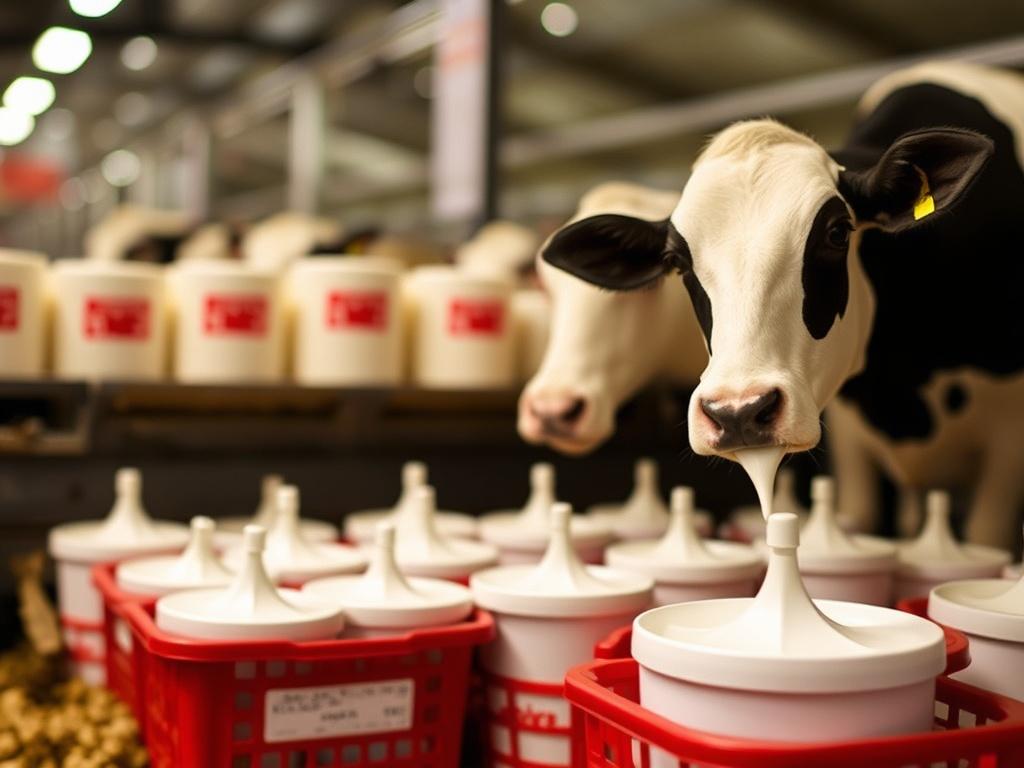
Without strong border protection, quotas and regulated prices have little meaning; cheaper foreign milk would overwhelm the regulated market and drive domestic prices down. Tariffs act as the economic barrier that preserves the space for quota‑holding producers to sell their milk at the administratively set prices.
That barrier is also political muscle. Politicians and stakeholders who defend supply management tend to emphasize food security, rural livelihoods, and the predictability tariffs provide in negotiations. For many farmers, high tariffs are not merely policy; they are the difference between a viable farm and an untenable business model.
Who pays: consumers, farmers, or taxpayers?
Tariffs raise domestic prices by limiting lower‑cost imports. That burden shows up first in grocery aisles: dairy products in Canada generally cost more than comparable products in many other developed countries. Consumers ultimately shoulder higher retail prices through everyday purchases.
Farmers benefit from price stability and predictable returns, which is why quotas themselves can be valuable assets that trade hands. Quota values can represent a significant capital investment for a producer, and those values tend to be capitalized into the cost structure of production.
Governments sometimes add taxpayer support via supply management complements, such as risk‑management programs, but the model differs from broad farm subsidies because the system’s price‑setting mechanism shifts much of the cost burden onto consumers through higher prices rather than direct outlays.
Distributional effects within the industry
Not all dairy stakeholders gain equally. Quota holders and established family farms generally reap the system’s principal benefits: predictable incomes and asset appreciation through quota values. New entrants, by contrast, often face substantial barriers, because acquiring quota can be expensive and financing constrained.
Processors and retailers face a different calculus. Domestic processors benefit from a secure supply of raw milk at stable prices, but suppliers of imported ingredients or foreign processors are locked out or constrained by tariffs and quotas. Retailers must balance higher procurement costs against consumer resistance to price increases.
Trade deals and the shrinking space for protection
International trade agreements have chipped away at the most absolute form of protection. Deals such as the Comprehensive Economic and Trade Agreement (CETA) with the EU, the Comprehensive and Progressive Agreement for Trans‑Pacific Partnership (CPTPP), and the United States‑Mexico‑Canada Agreement (USMCA) all required Canada to give some market access to foreign dairy suppliers in return for broader trade benefits.
Under the recent continental agreement, Canada accepted a tranche of market access to U.S. dairy corresponding to a modest percentage of domestic consumption; the figure most commonly cited in press coverage and government materials is about 3.6 percent. That concession was politically sensitive because it marked a clear, quantifiable reduction in the previously tight protections.
Each agreement is different in its details, but the pattern is familiar: a limited quota of tariff‑free or low‑tariff imports is negotiated, while the remainder of the market remains protected by high tariffs. Over time, multiple agreements add up, nudging open slices of the market that were once fully closed.
How high are the tariffs?
Tariff levels beyond quota allowances are intentionally steep and sometimes expressed as percentages that look dramatic on paper. The practical effect is that many dairy imports are effectively priced out of the market except when they fit inside quota concessions.
Instead of focusing on a single number, it’s clearer to think of tariffs as part of a system: they work together with quotas and domestic price controls to preserve margins for producers. That design matters more than a single percent rate, because even a moderate tariff can be prohibitive in a thinly traded product category, while very high tariffs are a more deliberate statement of protective policy.
Consumer prices in context
Comparative studies and consumer surveys repeatedly show Canadians often pay more for milk, cheese, and butter than consumers in neighboring countries. The price gap is not uniform across all dairy categories; specialty cheeses or artisanal butter may be closer in price, while commodity items are where protection shows up most clearly.
Price differences also interact with income distribution: higher basic food costs hit lower‑income households proportionally harder. That distributional effect is one reason why discussions about supply management often move beyond industry insiders and into the public policy arena.
Real‑world example: shopping and sticker shock
On a recent trip to a grocery store in Toronto, I compared the shelf of cheddar with what I had seen in New York months earlier. The plain cheddar block in Canada was noticeably pricier than a comparable U.S. brand, even after accounting for exchange rates and packaging differences.
That anecdote isn’t scientific, but it’s illustrative: for many consumers the impact of border measures is visible every time they fill a cart. The higher cost tends to nudge purchasing patterns — smaller pack sizes, private‑label choices, or substitutions — but it rarely prompts a sudden collapse in demand because dairy remains a staple.
How farmers experience quota and tariff protections
I’ve spent time on dairy farms in Ontario and Quebec where conversations about price and quota come up naturally. Farmers talk about quotas as both an asset and a constraint: an asset because quotas secure revenue streams, and a constraint because they cap production flexibility and can be costly to acquire or expand.
Many farmers describe a preference for predictability. They value not having to compete against a flood of cheap imports that could crash local prices. At the same time, they acknowledge that quota ownership passes wealth across generations and can complicate succession planning for farms whose retiring owners need to extract value from their quota holdings.
Processors and the challenge of scale
Processors, particularly those that operate at the national level, must manage supply contracts, quotas, and regulatory compliance while keeping an eye on consumer demand and price sensitivity. Large processors can lobby for policy tweaks, but they also face higher input costs than competitors in more open markets.
Smaller, niche processors sometimes find opportunities inside the system by specializing in premium or regionally distinct dairy products. Those segments can command higher prices and may be less affected by commodity pressures, but they represent a small slice of overall dairy consumption.
Export ambitions and contradictions
Canada’s dairy sector is not a natural export powerhouse under the existing system because domestic protection discourages competitiveness on world markets. Exporting means competing against producers who operate at different price structures and without the same domestic price supports.
That said, certain Canadian processors and specialty producers have found export niches. These firms typically rely on product differentiation, high quality, or logistical advantages. For broad commodity exports like bulk milk powders, the domestic price insulation makes large‑scale export competitiveness difficult.
Policy arguments in favor of the current model
Supporters of supply management emphasize stability, predictability, and localized food security. They argue that the system protects family farms, maintains rural communities, and prevents the boom‑and‑bust cycles common in commodity agriculture.
Another common argument is that a domestic system focused on responsible production standards — for animal welfare, environmental stewardship, and food safety — is worth preserving even if consumers pay a premium. For many advocates, those values outweigh a strict cost comparison with international prices.
Criticisms and tradeoffs
Critics point to higher consumer prices and limited opportunities for new entrants as central flaws. They argue that quotas create an insider market where capitalized quota values restrict mobility and inject inefficiency into the supply chain by shielding producers from competition.
Trade partners and exporters also see supply management as an unfair barrier that requires concessions in other sectors to secure broader market access. The policy tradeoffs in negotiations have left Canada offering finite market slices in exchange for access to other industries.
Political dynamics and why reform is hard
Supply management is politically resilient. Dairy regions are often represented by influential legislators, and the concentrated interests of quota holders produce organized resistance to change. Politicians weigh the electoral risks of upsetting rural constituencies against the diffuse, and often less vocal, consumer interests.
When governments have pursued reforms or negotiated concessions, they typically accompany those moves with compensation programs or transition funds to ease the costs for affected producers. That pattern — limited market openings plus compensation — reflects both political calculation and recognition of the system’s embedded economic value.
Comparing with other countries
No two countries manage dairy exactly the same way, but comparing approaches is useful. In many European countries, direct subsidies and stabilization programs coexist with open markets, while Australia and New Zealand rely on market liberalization and export competitiveness.
Those comparisons show tradeoffs: liberalized systems can encourage efficiency and lower consumer prices, but they also concentrate production and can erode community resilience in rural areas. Canada’s approach favors stability over raw efficiency, a choice that reflects political priorities as much as economic ones.
Options for reform and the practical challenges
Potential reforms include gradual quota buyouts, tariff reductions tied to timebound schedules, targeted compensation for quota holders, or hybrid models that relax import controls on specific product lines. Each option involves complex distributional questions about who pays and who benefits.
Practical challenges make reforms politically delicate: financing compensation, preventing sudden market dislocations, and preserving food security while opening markets all require careful sequencing. Any reform package must reckon with the asset value of quota and the livelihoods tied to it.
a brief list: pathways policymakers often consider
- Gradual liberalization with transitional compensation;
- Quotas converted into tradable assets with clearer rules for access;
- Targeted tariff reductions for processed products to encourage trade;
- Investment in competitiveness and export promotion for value‑added products.
Case study: provincial variations and local politics
Policies and sentiment differ by province. Some provinces have larger quota systems and a greater share of the national herd, while others are more lightly engaged. Those regional differences shape political bargaining and the distribution of benefits across the country.
In provinces with dense dairy regions, defenders of the system often have strong local networks and community support. In less dairy‑intensive provinces, consumer advocates and urban voters may carry more weight in policy debates. Those dynamics make a one‑size‑fits‑all reform politically complicated.
The role of labeling and consumer information
Labeling policies can influence how consumers perceive the value of domestic dairy. “Made in Canada” or “farm fresh” labels help some brands command a premium, and clearer origin labeling lets shoppers make informed choices about whether to pay more for domestic product.
At the same time, labeling is no substitute for price differences. Information can change preferences for some consumers, but for price‑sensitive households, higher costs remain a barrier regardless of the label on the carton.
Environmental and animal welfare angles
Supply management supporters point to the environmental benefits of a locally controlled dairy sector, such as shorter supply chains and incentives to maintain pasture and property stewardship. Those factors contribute to a broader argument for preserving domestic food systems.
Critics counter that protection can reduce incentives to innovate in efficiency or adopt new environmental practices. The policy challenge is to link any future reforms to green incentives so that producers are rewarded for sustainable practices as markets open up incrementally.
Economic modeling and uncertainty
Modeling the long‑term economic effects of tariff reductions is complicated because outcomes depend on multiple variables: consumer price elasticity, responses from foreign producers, changes in domestic productivity, and the pace of quota retirement or redistribution.
As a result, policy debates often draw on competing models that produce different forecasts. Proponents of liberalization emphasize potential consumer savings and efficiency gains, while defenders of the status quo highlight the value of stability and the political costs of disruption.
How reforms have been handled elsewhere
When other countries have liberalized agricultural sectors, the transition often involved compensation programs, retraining, and investment in new value chains. Those experiences show that thoughtful sequencing and support can mitigate social pain, but they also reveal that vested interests rarely relinquish privileges without significant incentives.
Canada’s own incremental concessions in trade deals illustrate a hybrid approach: limited openings negotiated in exchange for protection elsewhere, with targeted measures to soften the transition for affected farmers. That precedent suggests policymakers will continue to prefer gradualism over sudden change.
Practical advice for consumers and farmers
Shoppers who want lower dairy costs can look for private labels, buy in bulk, or choose store promotions that concentrate savings. Being mindful of pack sizes and buying for immediate use rather than impulse choices can reduce grocery bills.
Prospective farmers considering entering the sector should carefully evaluate the cost of quota and the likely returns under current price schedules. Access to financing, regional demand, and succession plans are all critical considerations when calculating whether dairy production is economically feasible.
My view from the field: why nuance matters
Having talked with farmers, processors, and consumers over several years, I’ve seen how supply management produces real benefits for some people and real frustrations for others. It stabilizes lives and livelihoods in rural communities while creating visible costs at the checkout.
That tension is not a flaw to be dismissed but a reality that makes policy both necessary and difficult. Any serious conversation about tariffs and dairy has to account for both the measurable economic tradeoffs and the human stories that animate them.
Moving forward: policy recommendations
Policymakers who want to preserve core benefits while reducing consumer burdens should prioritize gradual, transparent measures. Phasing quota adjustments, pairing tariff changes with compensation, and investing in productivity and value‑added processing can smooth transitions.
At the same time, improving transparency around pricing and quota valuation, strengthening support for new entrants, and linking reforms to environmental goals would make any changes more equitable and forward looking. The goal is to align incentives so that producers remain viable while consumers get better value.
Final thoughts on the practical implications
Tariffs on dairy are not just technical trade tools; they are one axis of a broader system that shapes farm life, retail markets, and international bargaining. The system’s protections have costs and benefits that play out every day at the farm gate and in the grocery cart.
Understanding those tradeoffs matters because the choices are not purely economic; they carry social and political consequences. Whether Canada keeps, reforms, or phases out parts of its supply management architecture, the path forward will need patience, careful design, and empathy for the people on every side of the ledger.