Tariffs are more than taxes on imports; they are instruments diplomats and policymakers use to shape behavior, rewire supply chains, and signal political will. Like any tool of statecraft, they do not operate in a vacuum: legal rules, domestic politics, economic interests, and international reactions all shape what a tariff can accomplish. This article walks through how tariffs function as bargaining instruments, the techniques negotiators use, the risks they carry, and practical steps governments and businesses can take to respond.
- What a tariff is — and how it differs from other trade measures
- Common tariff types
- The bargaining logic: how tariffs create leverage
- Tariffs as a negotiating tool: How they work in diplomacy in practice
- Legal and institutional constraints: the rules that shape bargaining space
- WTO limits and the art of plausible compliance
- Economic effects and trade-offs: what tariffs do to economies
- Distributional impacts: winners and losers at home
- Negotiation tactics: how tariffs are used in the give-and-take of diplomacy
- Escalation and de-escalation signals
- Case study: Smoot-Hawley and the lesson of unintended consequences
- Case study: US-China tariffs in 2018–2019 — leverage, countermeasures, and limits
- Case study: Section 232 and the use of national security claims
- Retaliation dynamics and the risk of trade wars
- Alternatives to tariffs: when to use other instruments
- Design principles for tariff-based bargaining
- A practical checklist for crafting tariff measures
- Business and consumer implications: preparing for tariff diplomacy
- My experience observing tariff diplomacy
- The future of tariffs in a fragmented global economy
- Final practical recommendations for policymakers and diplomats
What a tariff is — and how it differs from other trade measures
A tariff is a fee imposed on imported goods, usually calculated as a percentage of value (ad valorem) or as a fixed charge per unit (specific). At its simplest, it raises the landed price of a foreign product, which can protect domestic producers, generate revenue, or create leverage in negotiations.
Tariffs contrast with quotas, which limit the quantity of imports, and with non-tariff measures like standards, licensing rules, or technical barriers that restrict trade without changing price directly. Export controls and sanctions are cousins in the toolkit but are usually framed as security or human-rights measures rather than trade policy per se.
Different kinds of tariffs serve different purposes. A broad, high ad valorem tariff is blunt — it affects many industries and consumers — while a narrow, targeted tariff can pressure a specific sector in another country without widespread domestic price impact. Choosing the right form matters to both bargaining leverage and political acceptability.
Common tariff types
Policymakers typically choose among a few standard tariff structures depending on objectives and legal constraints. Ad valorem tariffs are simple to administer, while specific tariffs can protect low-value items more effectively. Compound tariffs combine the two to fine-tune effects.
Another distinction is between temporary safeguard tariffs, used to protect a domestic industry facing sudden import surges, and punitive tariffs meant to punish or coerce a trading partner. Anti-dumping and countervailing duties are legally justified retaliatory tools applied when imports are alleged to be unfairly priced or subsidized.
Choosing the type and scope of a tariff alters both its economic impact and diplomatic potency. A cleverly tailored tariff can concentrate pain where it will most effectively extract concessions, while a poorly targeted tariff can produce blowback at home and abroad.
| Tariff type | Description | Typical diplomatic use |
|---|---|---|
| Ad valorem | Percentage of the product’s value | General protection or revenue; easy to calculate |
| Specific | Fixed fee per unit | Targets low-value goods; precise targeting |
| Safeguard | Temporary measure against import surges | Buys time for domestic adjustment or bargaining |
| Anti-dumping / CVD | Applied when unfair pricing or subsidies are alleged | Legal pathway for retaliation under WTO rules |
The bargaining logic: how tariffs create leverage
At its core, using a tariff as leverage depends on asymmetric sensitivity: one country can impose costs that matter more to its trading partner than the partner can impose back. That asymmetry might come from a partner’s reliance on a particular export market, concentration of an industry, or political vulnerabilities tied to unemployment and prices.
Tariffs alter the payoff matrix in negotiations. By raising costs for targeted industries, a government can change the domestic political calculus of the partner’s decisionmakers and private actors, making concessions more attractive than continued pain. In this sense, tariffs are bargaining chips that translate economic pressure into political pressure.
Signaling is a related logic. Announcing a tariff threat signals seriousness and willingness to escalate; imposing a tariff demonstrates resolve and can reset negotiating terms. The combination of credible threat and calibrated pain is how tariffs are meant to win concessions without permanent rupture.
Tariffs as a negotiating tool: How they work in diplomacy in practice
When negotiators wield tariffs, they often mix threats, targeted imposition, and promises of removal in return for specific actions. That sequence — threaten, impose, bargain, and remove — is the standard playbook. The art lies in timing, scope, and the political choreography that accompanies the economic measures.
Threats alone can be effective when credibility is high. A country with a recent history of following through on trade threats gains bargaining power because partners cannot dismiss warnings as bluffs. Conversely, an empty threat that is never enforced reduces future leverage and damages deterrence.
Imposition carries costs, so negotiators try to design tariffs that maximize leverage while minimizing domestic harm. Targeting inputs in export industries of the partner, or products with concentrated production and political visibility, often produces higher returns in talks than sweeping tariffs that hit consumers broadly.
Legal and institutional constraints: the rules that shape bargaining space
International law and domestic statutes impose boundaries on how tariffs can be used. The World Trade Organization (WTO) disciplines most applied tariffs and provides dispute settlement mechanisms that constrain abusive measures. Exceptions exist — for national security, safeguards, and remedial duties — but they carry procedural requirements and political costs.
At the national level, statutes like the United States’ Section 232 (national security), Section 301 (remedies for unfair practices), and anti-dumping/countervailing duty laws provide authorities for targeted tariffs. Those legal channels often matter as much as the economics: a tariff imposed under a recognized legal mechanism looks less arbitrary and withstands scrutiny better on the international stage.
Institutional rules shape both tactics and credibility. If a government must seek parliamentary approval for tariffs, that can slow imposition but increase domestic buy-in. If a tariff is likely to be challenged at the WTO and overturned, a government must weigh that potential reputational cost when crafting bargaining strategies.
WTO limits and the art of plausible compliance
The WTO does not ban tariffs, but it constrains how they can be applied and justifies remedies only under defined conditions. Members are expected to adhere to bound tariff rates contained in their schedules, and any departures can trigger disputes. These rules mean that many tariff-based bargaining strategies try to stay within recognized legal exceptions or accept the risk of a dispute.
Plausible compliance — framing a policy so that it appears to conform to multilateral rules — can reduce the risk of retaliation and preserve diplomatic options. For example, framing a tariff as a safeguard against a damaging import surge, rather than as pure coercion, helps the measure survive scrutiny and maintain negotiating leverage.
Still, the legal route is not always the preferred one for immediate pressure. Where urgency outweighs legal niceties, countries may use tariffs quickly and accept the legal fallout as part of the strategy, especially if they calculate the partner will prefer to settle than escalate the dispute.
Economic effects and trade-offs: what tariffs do to economies
Tariffs raise domestic prices, protect certain producers, and reduce volumes of targeted imports. That protection can preserve jobs and industry in the short term, but it also distorts resource allocation and invites retaliation. The net national gain depends on whether the political and strategic benefits of concessions outweigh the economic costs.
Economists emphasize the deadweight loss created by tariffs — resources diverted to less efficient domestic producers and higher prices for consumers. Yet bargaining uses of tariffs deliberately tolerate those losses as the cost of extracting broader policy objectives, such as market access, technology transfer restrictions, or regulatory concessions.
Timing matters. Short, sharp tariffs imposed specifically to win a discrete demand may succeed with limited economic damage, while prolonged tariffs — especially in deep global value chains — can reconfigure production and provoke permanent shifts that undermine diplomatic goals.
Distributional impacts: winners and losers at home
Within a country, tariffs create clear winners and losers. Protected industries and their workers gain, while consumers and downstream firms that rely on imported inputs lose. These distributional effects shape domestic politics and often determine whether a tariff can be sustained.
Policymakers must balance the competing demands: protect a politically salient industry to secure strategic leverage, or avoid large-scale consumer pain that could erode political capital. Designing compensation packages, retraining programs, or temporary relief can make tough tariffs politically manageable.
Interest groups play an outsized role in shaping tariff policy. Industry associations lobby for protection; consumer groups and retailers oppose it. Recognizing these dynamics is crucial for diplomats who must anticipate how domestic pressures will constrain or bolster bargaining positions.
Negotiation tactics: how tariffs are used in the give-and-take of diplomacy
Diplomats and trade officials employ several tactical variations when using tariffs. Common moves include threat-and-delay (announce intentions, keep them pending), selective targeting (aimed at specific industries), escalation ladders (gradually widening tariffs), and conditional removal tied to performance benchmarks.
Threat-and-delay can be potent because uncertainty itself creates urgency for the targeted partner. A tariff that may arrive next month prompts firms and governments to act preemptively. Conditional removal — offering a phased rollback if counterparts take agreed steps — turns the tariff into a reversible pressure point rather than a permanent barrier.
Negotiators also use exemptions and carve-outs as bargaining chips. Granting temporary relief to certain players or regions can be offered in exchange for cooperation on unrelated concessions, amplifying the diplomatic utility of the tariff beyond its immediate economic effect.
- Threaten: public or private warnings to compel talks.
- Impose selectively: target sectors with concentrated political influence.
- Escalate gradually: widen tariffs if demands are unmet.
- Offer sunset: time-limited measures tied to benchmarks.
- Linkages: bundle trade concessions with unrelated policy goals.
Escalation and de-escalation signals
Escalation ladders make coercion credible. By linking small initial tariffs to larger potential increases, negotiators force counterparties to weigh future pain against short-term resistance. This structure often produces concessions before costs mount.
Conversely, de-escalation requires a clear pathway to removal. Vague promises of “reconsideration” do little to change domestic politics in the target country. Specifying performance thresholds and timelines helps build trust and enables orderly rollback without losing face.
Timing and sequencing are crucial. A tariff used as a first move can shock, but one used after months of private talks often serves as the decisive nudge. Successful negotiators calibrate public and private messaging carefully to preserve room for compromise.
Case study: Smoot-Hawley and the lesson of unintended consequences
The Smoot-Hawley Tariff Act of 1930 is the historical cautionary tale often invoked in trade policy debates. Enacted by the United States at the onset of the Great Depression, it raised tariffs on thousands of imports and triggered retaliatory measures from trading partners.
While historians debate the scale of Smoot-Hawley’s impact relative to other economic forces, most agree it deepened global trade contraction and made economic recovery harder. The episode is frequently cited to show how protectionist measures intended to shield domestic industries can backfire diplomatically and economically.
The Smoot-Hawley lesson for negotiators is blunt: broad, deep tariffs imposed without multilateral consultation can create a spiral of retaliation that undermines any bargaining gains. Narrow, time-limited measures, by contrast, are less likely to provoke systemic disruption.
Case study: US-China tariffs in 2018–2019 — leverage, countermeasures, and limits
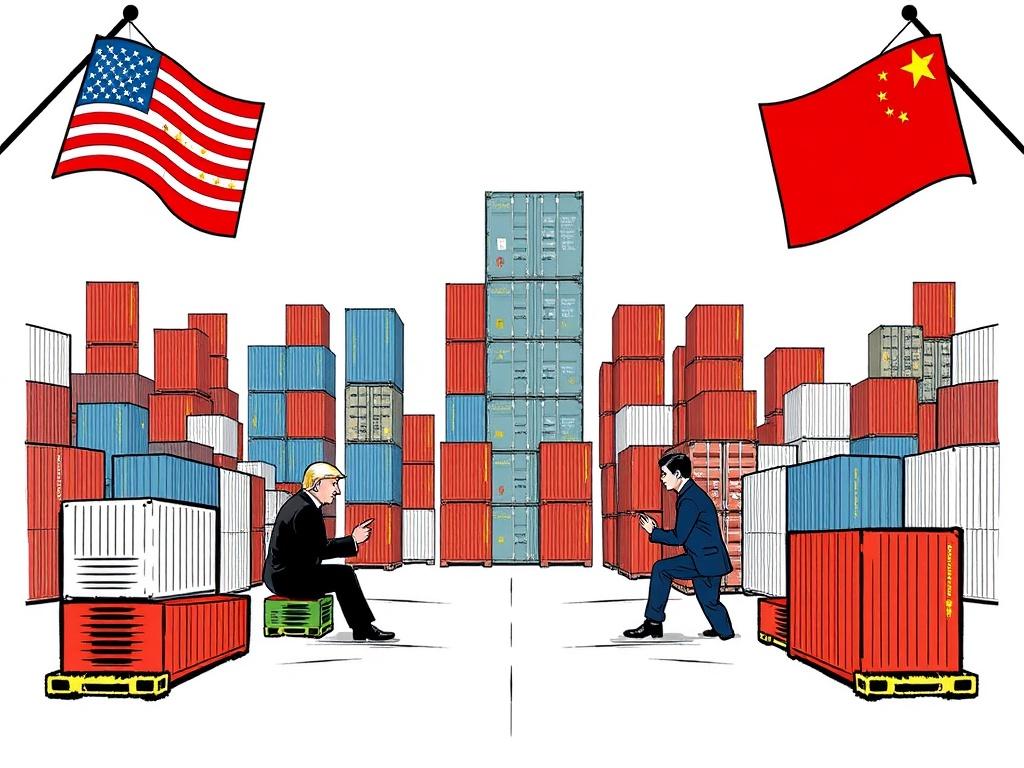
The tariffs that the United States imposed on Chinese goods beginning in 2018 illustrate many dynamics of tariff diplomacy. The U.S. used Section 301 authority to levy duties on hundreds of billions of dollars of Chinese imports, aiming to address intellectual property practices, forced technology transfers, and other concerns.
China retaliated with tariffs of its own, targeting politically sensitive U.S. sectors like agriculture. Both sides absorbed costs, sought alternative markets, and adjusted supply chains. The dispute produced partial concessions, including the January 2020 “Phase One” agreement, but many structural issues remained unresolved.
The episode showed two enduring limits of tariff bargaining. First, deep global supply chains dull the immediate pain of tariffs because firms can reroute inputs and markets. Second, victims of tariffs can respond in politically costly ways — for example, through lobby pressure — making the domestic political calculus complex for both sides.
Case study: Section 232 and the use of national security claims
The use of national security as a justification for tariffs has grown more frequent in recent decades. Under the U.S. Section 232 authority, presidents have imposed tariffs on steel and aluminum citing security concerns, prompting debate about the legitimacy and scope of such claims.
National security justifications complicate dispute settlement because they invoke exceptions that are hard to second-guess. Critics argue this invites abuse — using security claims as a pretext for protectionism — while proponents say it provides necessary flexibility to address genuine vulnerabilities.
From a bargaining perspective, invoking security can harden positions. A tariff framed as a security imperative is difficult for the targeted country to attack domestically, which increases the measure’s credibility. But it also raises the stakes and the risk of long-term deterioration in trust between partners.
Retaliation dynamics and the risk of trade wars
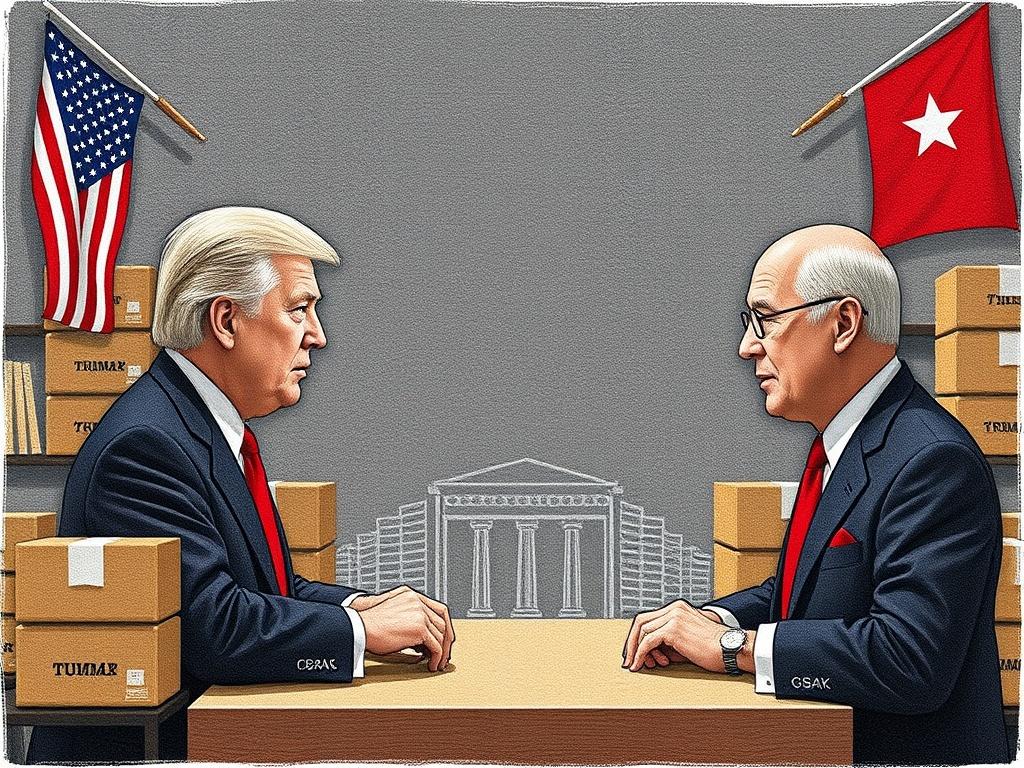
When tariffs prompt retaliation, a spiral can develop that shifts the game from negotiated settlements to generalized conflict. Each new tariff raises the political costs of stepping back and increases incentives for further measures. Breaking such spirals requires credible de-escalation mechanisms and third-party mediation at times.
Game theory sheds light on this dynamic: where mutual fear of backsliding is high, tit-for-tat strategies can become entrenched. Diplomatic channels and confidence-building measures — including sunset clauses, independent monitoring, or arbitration — reduce the likelihood of dangerous escalation.
Practical diplomacy often combines carrots and sticks. Concessions on unrelated policy areas, phased rollbacks tied to verification, or temporary compensation schemes can help aversive partners save face and restore constructive engagement.
Alternatives to tariffs: when to use other instruments
Tariffs are not the only lever. Sanctions, export controls, investment screening, public procurement rules, and subsidies all serve as alternatives or complements. Each carries its own legal framework and diplomatic consequences.
Export controls and investment restrictions are particularly relevant in the age of sensitive technologies and national-security concerns. They can be more targeted than tariffs and can directly disrupt critical supply chains without broadly raising consumer prices.
Subsidies offer the opposite mechanism: instead of raising import costs, a government boosts domestic capacity. Subsidies can be less confrontational in the short term but may violate trade rules or provoke long-term industry distortions, so they require careful calibration.
Design principles for tariff-based bargaining
If policymakers decide to use tariffs as a lever, design matters. The most effective measures are targeted, temporary, reversible, and paired with clear benchmarks for removal. They should minimize collateral domestic pain and preserve room for off-ramps in negotiations.
Targeting concentrates pain where it is most likely to change behavior: specific export industries, politically connected firms, or high-visibility sectors. Temporariness reduces the incentive for structural reallocation that could undermine later bargaining leverage.
Transparency and communication are also important. Publicly articulating the conditions for removal — timelines, benchmarks, and monitoring processes — creates an accountable framework that other governments can evaluate and respond to constructively.
A practical checklist for crafting tariff measures
Practical design can follow a simple checklist: define the objective precisely, measure asymmetric vulnerabilities, choose the least disruptive instrument, set a clear timeline, and establish verification methods. This sequence keeps diplomacy focused and reduces the chance of mission creep.
Include domestic safeguards: compensation for affected workers, provisions for critical inputs, and contingency plans for sudden domestic price shocks. Such measures protect political viability and make it easier to sustain short-term pressure without long-term economic harm.
Finally, consider multilateral coordination. Working with allies to align measures increases legitimacy, shares costs, and amplifies pressure on the target while reducing the risk that unilateral actions will be isolated and ineffective.
Business and consumer implications: preparing for tariff diplomacy
Firms caught in the crossfire must be nimble. Diversifying suppliers, increasing inventory buffers, and exploring alternative markets help manage tariff risk. Governments may offer short-term relief, but resilience is primarily a private-sector task.
Consumers experience tariffs through higher prices and reduced choice. Businesses that rely on imported inputs may see margin compression or must pass costs downstream. Companies with lobbying power often respond by pressing home governments for exemptions or relief.
From a corporate strategy perspective, integrating trade policy analysis into supply chain decision-making saves time and money. When tariffs arrive, companies that have already considered scenarios can react faster and avoid panic-driven, costly shifts.
My experience observing tariff diplomacy
In covering trade negotiations over the last decade, I have watched tariff threats shift bargaining dynamics in real time. I observed officials who used carefully staged public statements to create leverage and others whose premature escalation undercut future credibility.
One memorable negotiation involved a targeted tariff threat that led to a private meeting and a rapid technical fix from the other side — a regulatory tweak that resolved the dispute without broad economic fallout. That episode underscored how technical adjustments, not sweeping concessions, frequently close deals.
Another lesson from interviews with trade officials is the importance of domestic coalition-building before imposing tariffs. Where governments had prepared compensatory measures and secured parliamentary support, they maintained leverage longer and avoided domestic backlash that could force reversal.
The future of tariffs in a fragmented global economy
The contemporary trade landscape complicates tariff diplomacy. Global value chains mean that tariffs often produce domestic harm by raising costs for firms that rely on imported intermediate goods. Digital trade and services also reduce the leverage of tariffs that target tangible goods.
Geopolitical competition and concerns about strategic decoupling increase the likelihood that tariffs and related restrictions will be used for broader policy aims. Green industrial policy and carbon border adjustments, for instance, may shape future tariff debates as countries align trade measures with climate goals.
Multilateral institutions face pressure to adapt. The WTO’s capacity to adjudicate novel tariff rationales — from national security to carbon adjustments — will shape how effective tariff diplomacy can be without degenerating into chronic fragmentation.
Final practical recommendations for policymakers and diplomats
Use tariffs sparingly and surgically. Define clear objectives, identify asymmetric vulnerabilities, and design time-limited measures with measurable benchmarks for removal. Avoid broad-based tariffs that create widespread consumer pain and risk uncontrolled escalation.
Invest in credibility: consistent follow-through on threats makes future negotiations more efficient. At the same time, preserve legal cover where possible by using recognized authorities and documenting the policy rationale so the measure can withstand international scrutiny.
Remember that tariffs are a means, not an end. They aim to change behavior, secure concessions, or signal intent. When those goals are met, removing tariffs promptly preserves access to markets and prevents the permanent reconfiguration of trade ties that ultimately weakens diplomatic leverage.