Tariffs are a headline topic in politics and business, yet they remain mysterious to many people who encounter them through higher prices or trade news. This article walks you through what tariffs are, how they work, why governments use them, and what they mean for consumers, businesses, and the global economy. Read on for a practical, grounded explanation—Tariffs explained in under 5 minutes is an achievable promise if you focus on the essentials and skip the jargon.
- What a tariff actually is
- Tariffs versus other trade taxes
- How tariffs are applied in practice
- Types of tariffs
- Tariff-rate quotas and seasonal rates
- Why governments use tariffs
- Protecting industries and jobs
- Diplomacy and bargaining
- Immediate effects on prices and consumers
- Impact on producers and supply chains
- Welfare analysis: winners, losers, and inefficiency
- Trade diversion and trade creation
- Tariffs and inflation
- Tariffs versus quotas and non-tariff barriers
- How tariff rates are negotiated internationally
- WTO rules and exceptions
- Reading tariff schedules and HS codes
- Practical example: importing a sofa
- Personal experience: sourcing shocks and supplier shifts
- Tariff passthrough and market structure
- Strategic tariffs and retaliation
- Historical case: Smoot-Hawley and its lessons
- Recent case: steel and aluminum tariffs
- Tariffs and developing countries
- How businesses prepare for tariff risk
- Customs valuation: what counts as the customs value
- Tariffs and small businesses
- Measuring tariff incidence: who really pays?
- Tariffs, exchange rates, and adjustment
- Rules of origin and preferential tariffs
- Legal challenges and dispute settlement
- Environmental and social considerations
- Technology, e-commerce, and small parcels
- How consumers can respond
- How exporters think about foreign tariffs
- Tools for businesses: tariff classification and rulings
- Short checklist for analyzing a tariff change
- Common misconceptions about tariffs
- When tariffs make sense
- Alternatives to tariffs
- Final practical thoughts
What a tariff actually is
A tariff is simply a tax on imported goods. Governments impose this tax at the border when products cross into a country, adding a monetary cost to the item before it reaches consumers or retailers.
Tariffs raise the price of foreign goods relative to domestic products, creating an economic incentive to buy local or to shift supply chains. The amount can depend on the product type, its declared value, or a fixed per-unit rate.
Tariffs versus other trade taxes
Not all border charges are called tariffs, even though they share similarities. For example, value-added taxes (VAT) and sales taxes apply to domestic and imported goods alike, while tariffs target imports specifically.
An important distinction is that tariffs are policy tools with political goals—protection, revenue, or negotiation leverage—whereas customs fees and administrative charges are meant to cover processing costs. That difference shapes how and why governments change tariff levels.
How tariffs are applied in practice
When an importer declares a shipment, customs officials classify the goods under a harmonized system code and apply the corresponding tariff rate. That rate is then multiplied by the declared customs value or by units, depending on the tariff type.
Importers typically pay the tariff before goods clear customs, or their customs broker pays on their behalf and invoices them. Businesses factor expected tariffs into pricing, sourcing decisions, and inventory planning to avoid surprise costs.
Types of tariffs
Tariffs come in several formal varieties: ad valorem, specific, compound, and tariff-rate quotas among them. Each has a distinct effect on prices and trade flows and is used for different policy goals.
Ad valorem tariffs are calculated as a percentage of the value of the imported good. Specific tariffs are a fixed amount per unit—like $1 per kilogram—while compound tariffs combine both approaches.
Tariff-rate quotas and seasonal rates
Tariff-rate quotas allow a certain quantity of a product to enter at a low or zero tariff, with higher tariffs applying to additional quantities. These are common for sensitive agricultural products and help balance domestic supply protection with import needs.
Some tariffs vary by season or are applied temporarily during harvest or demand spikes. Policymakers use these flexible tools to prevent sudden domestic price drops or to cushion local producers.
| Tariff type | How it’s charged | Typical use |
|---|---|---|
| Ad valorem | Percentage of customs value | Common, adjusts with price |
| Specific | Fixed amount per unit | Commodity-style goods |
| Compound | Combination of percent and per-unit | Complex products, anti-circumvention |
| Tariff-rate quota | Low tariff up to a limit, higher beyond | Agriculture, managed import flows |
Why governments use tariffs
Governments use tariffs for a handful of reasons: to raise revenue, protect nascent or strategic industries, retaliate in trade disputes, or pursue industrial policy. Each motive influences how tariffs are designed and for how long they remain in place.
Revenue tariffs were common historically; customs duties funded many early national budgets before income taxes became widespread. Today, tariffs still generate income for some countries, especially those with extensive trade relative to GDP.
Protecting industries and jobs
Tariffs can shelter domestic producers from foreign competition, allowing local firms time to grow or avoid layoffs. Policymakers often promise job protection as a political selling point for new tariff measures.
However, protectionism is a blunt tool. It can keep inefficient firms alive and raise costs for consumers and downstream industries that use imported inputs. The net employment effect depends on the economy’s structure and the tariff’s scope.
Diplomacy and bargaining
Tariffs also serve as leverage in trade negotiations. Raising tariffs can be a bargaining chip to bring trading partners to the table or to push for concessions on market access, intellectual property, or regulatory standards.
That use turns tariffs into economic signaling: a way to show resolve, retaliate to unfair practices, or test an opponent’s willingness to compromise without resorting to military measures.
Immediate effects on prices and consumers

On arrival, tariffs raise the landed cost of imported products, typically leading to higher retail prices. The degree to which consumers feel the increase depends on market competitiveness and whether domestic suppliers raise prices in response.
Some of the tariff cost is absorbed by foreign exporters via lower export prices; some is passed on to importers and ultimately consumers. The division of the burden—called tax incidence—depends on supply and demand elasticities.
Impact on producers and supply chains
Domestic producers of protected goods usually benefit from higher tariffs because they face less price pressure from foreign competitors. That can translate into increased output, higher profit margins, and sometimes more hiring.
Conversely, firms that rely on imported inputs suffer when tariffs raise their production costs. Manufacturers can see margins squeezed or be forced to shift sourcing to more expensive domestic suppliers, reducing competitiveness.
Welfare analysis: winners, losers, and inefficiency
Economists model tariffs as creating a deadweight loss: they protect some domestic producers and generate government revenue but reduce total welfare by distorting consumption and production decisions. That lost welfare is a classic trade-off taught in every intermediate economics course.
Despite this textbook result, the political reality is nuanced. Concentrated industries gain visibly, while losses to consumers are dispersed. Political pressure thus often favors tariffs even when aggregate national welfare falls.
Trade diversion and trade creation
In regional trade agreements or preferential tariffs, lower duties within a bloc can create trade creation: members buy more from each other because tariffs on external suppliers remain higher. This can increase welfare if intra-bloc producers are efficient.
Trade diversion happens when imports shift from a lower-cost non-member to a higher-cost member because of preferential tariffs. That shift raises costs and can reduce overall welfare despite increased intra-bloc trade.
Tariffs and inflation
When tariffs are broad or hit essential goods—like energy, steel, or food—they can push up the overall price level. That effect can be especially pronounced if tariffs are sudden and large, creating supply-side shocks.
Central banks may respond to tariff-induced inflation depending on their mandate and the persistence of price changes. If tariffs raise core inflation expectations, monetary policy might tighten, amplifying economic effects beyond immediate price increases.
Tariffs versus quotas and non-tariff barriers
Quotas limit the quantity of a good that can be imported, while tariffs tax imports without an explicit limit. Quotas create scarcity that can produce higher rents for license holders or domestic suppliers.
Non-tariff barriers—like technical regulations, standards, or licensing requirements—can be more subtle than tariffs and sometimes more protectionist. They often disguise protectionist intent under the guise of safety or environmental concerns.
How tariff rates are negotiated internationally
Multilateral institutions like the World Trade Organization (WTO) set rules that constrain tariff levels and discourage discrimination between trade partners. Countries negotiate binding tariff commitments reducing unpredictability for traders.
Trade agreements—bilateral, regional, or multilateral—often involve detailed tariff schedules and rules of origin that determine whether goods qualify for preferential treatment. Negotiations are complex and involve sensitive sectors where political stakes are high.
WTO rules and exceptions
The WTO allows members to raise tariffs in certain conditions, such as anti-dumping measures or safeguards when sudden import surges threaten domestic industries. These exceptions come with procedural steps and time limits.
Anti-dumping duties counteract imports priced below fair market value, while countervailing duties offset foreign subsidies. Both are forms of targeted tariffs that require investigations and legal justification under WTO rules.
Reading tariff schedules and HS codes
Every traded product has a harmonized system (HS) code: a numeric classification used worldwide. Tariff schedules list rates by HS code, sometimes down to eight or ten digits for precise categories.
Importers must correctly classify goods and declare their customs value. Misclassification or undervaluation can trigger penalties, delay, or seizure. Customs brokers and trade attorneys are often used to navigate these technicalities.
Practical example: importing a sofa
Imagine a retailer importing sofas. The HS code classifies the product under furniture, and the tariff schedule shows a 5% ad valorem rate. If the customs value is $1,000 per sofa, the tariff is $50 per unit before any duties or fees.
If the tariff rises to 25%, the landed cost increases by $200, forcing the retailer to either raise prices, absorb margin losses, or find alternate suppliers. That simple arithmetic explains why tariff shifts trigger rapid sourcing reviews.
Personal experience: sourcing shocks and supplier shifts
As a writer who has advised small businesses, I watched a boutique furniture importer pivot suppliers after a sudden tariff increase on imports from Country A. Within weeks, the owner explored suppliers in Country B and domestic options to avoid the higher tax.
The switch involved quality checks, longer lead times, and renegotiated pricing, but it demonstrated how flexible supply chains and early risk assessment can mitigate tariff shocks. The transition wasn’t free or instantaneous, though—it required capital and patience.
Tariff passthrough and market structure
How much of a tariff shows up in retail prices depends on market concentration. In highly competitive markets, firms may absorb part of the tariff to keep prices stable, reducing margins instead of raising consumer prices.
In oligopolistic markets, firms often pass tariffs on to consumers fully because coordinated price increases face less competitive pressure. Industry structure therefore shapes the real-world impact of tariffs.
Strategic tariffs and retaliation
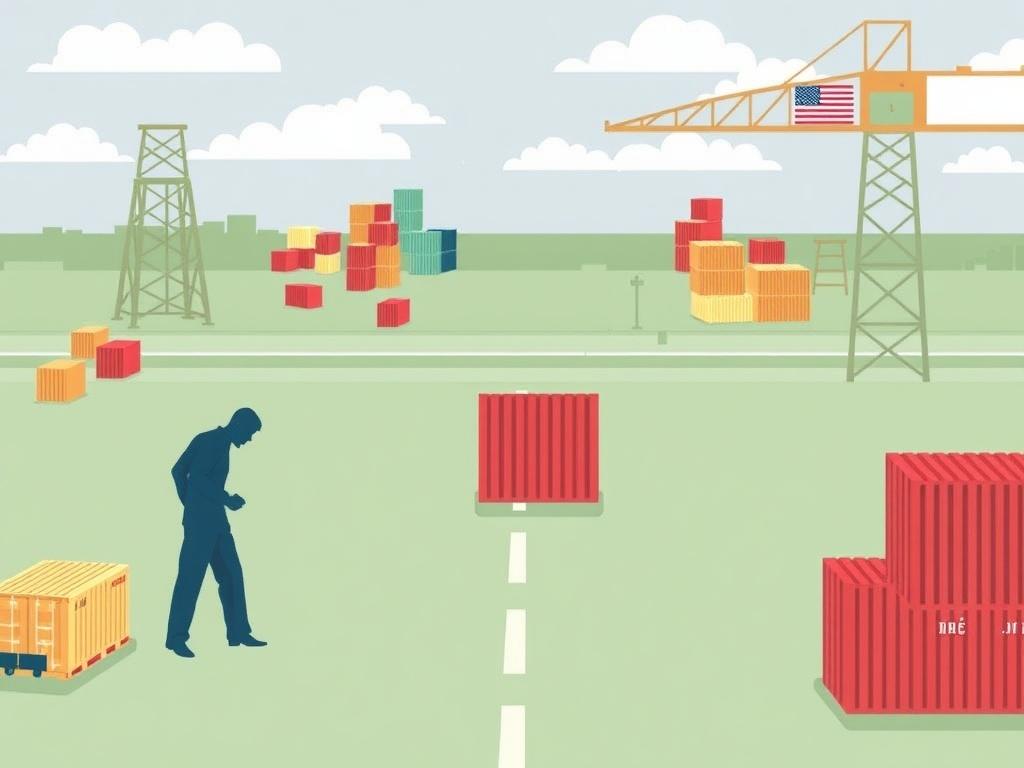
Tariffs often spark retaliation. When one country imposes tariffs, trading partners may retaliate against politically sensitive sectors to increase domestic pressure for policy reversals. This tit-for-tat can escalate into trade wars.
Trade wars damage multiple sectors, including those not directly targeted, through higher costs and uncertain markets. Empirical studies show prolonged tariff wars reduce trade, investment, and growth in involved economies.
Historical case: Smoot-Hawley and its lessons
The 1930s Smoot-Hawley tariffs in the United States raised duties dramatically on a wide range of goods. Many historians link the tariffs to retaliatory measures and a sharp contraction in global trade during the Great Depression.
While debates continue about the exact magnitude of Smoot-Hawley’s effects, the episode is a cautionary tale about widespread protectionism and how quickly trade policy can backfire in a downturn.
Recent case: steel and aluminum tariffs
In the late 2010s, some major economies imposed tariffs on steel and aluminum citing national security or unfair trade practices. The measures raised costs for automakers and construction firms that rely on these inputs.
Affected industries lobbied for exclusions or relief, while trading partners retaliated with tariffs on agricultural and manufactured goods. The episode illustrated how sector-specific tariffs ripple through supply chains and politics.
Tariffs and developing countries
Tariffs can be a double-edged sword for developing countries. On one hand, they provide revenue and protect newborn industries; on the other, they can raise consumer prices and discourage export competitiveness.
Many developing economies rely heavily on tariffs because administrative capacity for value-added or income taxes is limited. International dialogue often focuses on balancing revenue needs with efficiency and integration into global markets.
How businesses prepare for tariff risk
Prudent importers run tariff impact scenarios, diversify suppliers, and consider nearshoring or reshoring critical production to reduce exposure. Hedging strategies include long-term contracts, price escalation clauses, and local inventory buffers.
Compliance systems are equally important: accurate classification, proper valuation, and documentation minimize disputes and fines. Customs delays due to misclassification can be costly and damage customer relationships.
Customs valuation: what counts as the customs value
Customs value usually starts with the transaction price—the amount actually paid for the goods. Adjustments account for freight, insurance, and related costs depending on the country’s valuation rules and the chosen Incoterms.
Understanding which costs are included in the customs value matters because ad valorem tariffs multiply off that base. Misunderstanding Incoterms or the seller-buyer relationship can unintentionally inflate tariffs.
Tariffs and small businesses
Small businesses that import can be disproportionately harmed by tariffs because they have less ability to absorb cost increases or to leverage alternative suppliers. High tariffs can force them out of markets with slim margins.
At the same time, some small producers benefit when protection gives them space to grow. The net effect depends on the industry and how dependent the business is on imported inputs versus local demand.
Measuring tariff incidence: who really pays?
Tariff incidence refers to the distribution of the economic burden among consumers, producers, and foreign exporters. It is not automatically the consumer or the country that imposes the tariff; market forces set the actual split.
Empirical research uses price data and trade flows to estimate incidence. Findings vary by sector: in some cases consumers bear most of the tariff, in others foreign producers reduce their prices to maintain market share, absorbing much of the cost.
Tariffs, exchange rates, and adjustment
Exchange rate movements can offset or amplify tariff effects. A depreciating domestic currency makes imports more expensive, compounding tariff-driven price increases, while an appreciating currency can mitigate tariff impacts.
Over time, currencies and trade balances adjust, which may reduce the immediate pass-through of tariffs. Yet these macroeconomic adjustments can take months or years and can produce their own winners and losers.
Rules of origin and preferential tariffs
Preferential tariffs in trade agreements require rules of origin to prevent transshipment—where goods from non-member countries are routed through a member to access lower tariffs. These rules can be complex and enforcement-intensive.
Complying with rules of origin often requires detailed supply chain documentation proving sufficient local value added. For some firms, the administrative cost outweighs tariff savings, influencing decisions on whether to use preferential routes.
Legal challenges and dispute settlement
Trade partners often challenge tariffs at the WTO via dispute settlement when they allege violations of agreements. These cases can take years and sometimes end in authorized retaliation if the challenge succeeds.
Even when a legal win is obtained, practical enforcement is tricky: authorized retaliation must be proportionate and politically acceptable. Hence, many disputes are settled through negotiation before escalation.
Environmental and social considerations
Tariffs are increasingly used to pursue non-economic goals, such as incentivizing greener production or penalizing goods from countries with poor labor or environmental standards. These “sustainable trade” measures are politically popular but technically complex.
Linking tariffs to emissions or labor conditions raises questions about measurement, fairness, and potential protectionist misuse. Policymakers must balance legitimate policy objectives with transparent, enforceable criteria.
Technology, e-commerce, and small parcels
The rise of e-commerce and small-parcel shipments has forced customs administrations to rethink tariff collection. Low-value consignments previously exempted as a matter of convenience now represent meaningful revenue and compliance issues.
Some countries have adjusted de minimis levels—the threshold below which imports aren’t subject to tariffs or VAT—leading to changes in online retail pricing and logistics strategies for sellers and marketplaces.
How consumers can respond
Consumers can shop around, buy domestic alternatives, or delay purchases when tariffs affect prices. Price transparency helps: comparing unit prices rather than sticker prices reveals where tariffs have inflated costs most.
For big-ticket items, consumers may benefit from buying during clearance sales when retailers discount inventory that carries newly higher tariffs, absorbing some of the cost to move stock.
How exporters think about foreign tariffs
Exporters face the flip side: tariffs imposed by destination countries can reduce competitiveness abroad. To manage this, firms may establish local production, engage in tariff engineering, or negotiate trade preferences through local partners.
Entering a market with high tariffs often requires a strategic decision: absorb the tariff to gain market share, pass it to foreign consumers, or shift to a different market or distribution method.
Tools for businesses: tariff classification and rulings
Customs agencies often provide binding rulings—official classifications of goods under HS codes—that give importers certainty on tariff treatment for specific products. Seeking a ruling can prevent costly reclassification disputes later.
Industry associations and trade chambers also offer support, from training to pooled legal resources, which smaller companies find invaluable when facing complex tariff changes or retaliatory measures.
Short checklist for analyzing a tariff change
When a tariff is announced, follow a systematic approach: identify affected HS codes, estimate cost per unit, model demand elasticity, and consider substitution effects. This gives a quick sense of the likely impact on prices and volumes.
- Verify product classification and customs value assumptions.
- Calculate per-unit and percentage impacts on landed cost.
- Assess supply chain alternatives and timeline for changes.
- Estimate downstream price pass-through and competitive effects.
- Plan communication and contingency for customers or suppliers.
Common misconceptions about tariffs
One myth is that tariffs always create jobs. Protection can preserve jobs in targeted industries but often destroys jobs where protected inputs raise costs. Net employment effects are rarely unambiguously positive.
Another misconception is that tariffs fully isolate domestic markets. In an interconnected economy, companies can re-route, offshore, or change production methods, reducing the intended protective effect over time.
When tariffs make sense
Tariffs can be sensible in targeted, temporary circumstances: to counteract unfair subsidies, to provide a short breathing space for restructuring, or as legitimate bargaining tools during negotiations. They are best when used sparingly and transparently.
Long-term, broad-based tariffs usually do more harm than good by reducing competitive pressure and stifling innovation. Successful industrial policy often pairs temporary protection with clear conditions, sunset clauses, and performance targets.
Alternatives to tariffs
Instead of tariffs, governments can invest in workforce training, research and development, tax incentives for innovation, or infrastructure improvements that enhance competitiveness without distorting trade. These measures address root causes rather than symptoms.
Regulatory reforms and streamlined permitting can be more effective at raising productivity and supporting industries than indefinite border taxes, though political timelines often favor visible protectionist moves over gradual reforms.
Final practical thoughts
Tariffs are a blunt but powerful instrument. They change prices, reshape supply chains, and carry political as well as economic consequences. Understanding their mechanics helps businesses and consumers adapt rather than react with surprise.
For anyone watching trade policy, focus on the scope of the tariff, affected product classifications, likely passthrough to prices, and the retaliatory risk. Those elements determine whether a tariff is a temporary irritant or a lasting market shift.
If you want a quick refresher for conversations or meetings, remember the essentials: tariffs are taxes on imports, they raise landed costs, different tariff types behave differently, and the political economy of winners and losers explains why tariffs persist despite textbook warnings. The promise of Tariffs explained in under 5 minutes is about grasping these fundamentals and using them to ask better questions about specific policies you encounter.