Will tariffs exist in 100 years? It’s a crisp, provocative question that invites history, economics, geopolitics, and a little imagination to the table. Tariffs have been one of the oldest policy tools of sovereign states, but the world around them is changing—faster supply chains, digital commerce, climate policies, and new security priorities all bend the framework in different directions.
- Why tariffs have endured until now
- Lessons from history: cycles of protection and liberalization
- Economic logic: when tariffs make sense
- Technology and the changing base of trade
- Services and the problem of taxing intangibles
- Geopolitics: tariffs as a weapon and shield
- Export controls and the blurred line with tariffs
- Climate policy and the rise of border adjustments
- From tariffs to trade-adjusted climate tools
- Regional blocs, preferential trade, and the role of tariffs
- Non-tariff barriers: the new face of protection
- Standards, certification, and supply-chain governance
- Digital constraints, data flows, and customs 2.0
- Economic nationalism, populism, and political cycles
- Resource scarcity, strategic materials, and entrenchment of duties
- Scenario planning: four plausible futures
- How businesses should prepare
- Operational steps businesses can take
- What governments should consider
- Legal and institutional constraints
- Equity, development, and the morality of tariffs
- Practical signs to watch in the next decade
- Real-world examples that illuminate the debate
- Will tariffs survive as taxes, or merely as tools?
- Final reflections: the long view
Why tariffs have endured until now
Tariffs are not an accident of history; they perform clear, measurable functions. They raise revenue for governments, protect nascent industries, shape labor markets, and act as an instrument of foreign policy in the form of economic coercion or reward.
Historically, customs duties were often the simplest way for states to collect money before modern taxation systems existed. Even after income taxes matured, tariffs remained useful because they are visible to voters and can be applied selectively.
Tariffs also impose a visible cost on trade that can be directed at particular countries or industries. That makes them politically attractive when governments want to signal toughness or protect politically sensitive sectors like agriculture and steel.
Lessons from history: cycles of protection and liberalization
Trade policy tends to oscillate. The 19th century saw cycles between free trade and protectionism, driven by industrialization, war, and political realignment. The Smoot-Hawley tariffs of the 1930s are a cautionary tale; steep duties deepened global economic pain and helped create a backlash that spawned postwar liberalization.
After World War II, the General Agreement on Tariffs and Trade (GATT) and later the World Trade Organization (WTO) promoted gradual tariff reductions and predictable rules. That architecture made tariffs less harmful and helped make tariff cuts politically sustainable for decades.
Yet liberalization has not eliminated tariffs. Instead, it reduced average tariff levels while complexifying trade governance with rules of origin, safeguards, and quotas. Those instruments show how tariffs morph rather than simply disappear.
Economic logic: when tariffs make sense
Economists generally prefer lower tariffs because they boost efficiency and consumer choice. But there are legitimate economic arguments for selective duties. Infant industry protection, temporary safeguards against surges in imports, and correction for market failures remain conventional justifications.
Tariffs can also be used to correct an externality that the market ignores, for example when imported goods are produced under conditions that shift environmental or social costs elsewhere. In such cases, a duty can level the playing field while domestic regulation comes into alignment.
The practical question for the future is not whether tariffs are ever sensible, but whether the same tool will remain the preferred means to achieve those ends. Alternatives exist—subsidies, standards, certifications, carbon pricing—that can perform similar functions without a blunt border tax.
Technology and the changing base of trade
Trade in 2126 will involve far more services, digital products, and data than the goods-heavy trade of the 20th century. Tariffs are straightforward to impose on physical goods, but they are poor fits for digital flows and services.
As production becomes more automated and localized—through robotics, 3D printing, and flexible manufacturing—physical shipments across borders may shrink. When a factory robot prints components on-site, the scope for traditional customs duties diminishes.
Nevertheless, new technologies can reshape tariffs rather than eliminate them. Sophisticated tracking, blockchain-based provenance systems, and digital customs platforms could make duties more targeted and easier to administer, potentially encouraging their continued use.
Services and the problem of taxing intangibles
Services account for an ever-larger share of GDP in advanced economies, and many services cross borders without physical movement. Professional services, software, and streaming media challenge customs frameworks that rely on containers and harmonized commodity codes.
Governments have resorted to different tools—like withholding taxes, digital service taxes, or value-added taxation—rather than tariffs. International coordination remains patchy, and disputes over digital taxation illustrate the limits of unilateral approaches.
Over the next century, if multilateral rules catch up with digital trade, we could see harmonized fees or levies that occupy a similar policy niche to tariffs but operate on data flows and digital transactions.
Geopolitics: tariffs as a weapon and shield
Tariffs are modern instruments of statecraft. Economic sanctions and trade restrictions have become central to geopolitical contests in the 21st century, from embargoes to tariff-based pressure campaigns. They are visible, reversible, and politically digestible tools for governments that want to exert force without military action.
The rise of strategic rivalry—think great-power competition—makes tariffs durable. When national security, technological leadership, or control over critical supply chains is at stake, governments are likelier to deploy trade barriers to protect domestic capabilities.
In that sense, tariffs may well persist as part of a toolkit for geopolitical competition. But their character could shift: rather than broad levies, expect highly targeted duties, coupled with export controls and investment screening, aimed at sensitive technologies and resources.
Export controls and the blurred line with tariffs
Export controls, investment screening, and sanctions are complementary to tariffs, and they can be more effective when states want to prevent technology transfer or control strategic inputs. These tools are likely to proliferate alongside or instead of traditional duties.
Because they are regulatory rather than fiscal, export controls can bypass trade law constraints that limit tariffs. Over the next century, we may see a world where restrictive measures are more nuanced and rules-based, but equally impactful on trade flows.
The result could be a hybrid regime that retains customs duties for general revenue or protection, while sophisticated regulatory barriers shape strategic trade policy.
Climate policy and the rise of border adjustments
Climate change has already pushed tariff policy in new directions. Carbon border adjustment mechanisms (CBAMs) aim to prevent “carbon leakage” by taxing imports based on their embedded emissions. That concept is a cousin of tariffs, wrapped in environmental policy.
Over the next 100 years, as decarbonization accelerates, environmental border adjustments could become widespread. They serve both trade and environmental goals, imposing a cost on dirty production regardless of where it occurs.
CBAMs also raise complex legal and measurement questions. They force customs agencies to assess emissions intensity—a challenging task for complex supply chains—but technological advances in tracking emissions could make such duties administratively feasible.
From tariffs to trade-adjusted climate tools
Carbon fees at the border change the narrative: duties no longer aim primarily to protect domestic firms but to enforce global environmental standards. That reframes trade policy as climate policy, with tariffs appearing as one instrument among many.
International coordination could reduce the need for punitive duties by aligning domestic carbon prices. But when coordination fails, border measures will be the default. That suggests duties will persist, albeit under a different label and rationale.
In short, climate policy could entrench a form of tariff that is more technical and globally rationalized than the protective tariffs of the past.
Regional blocs, preferential trade, and the role of tariffs
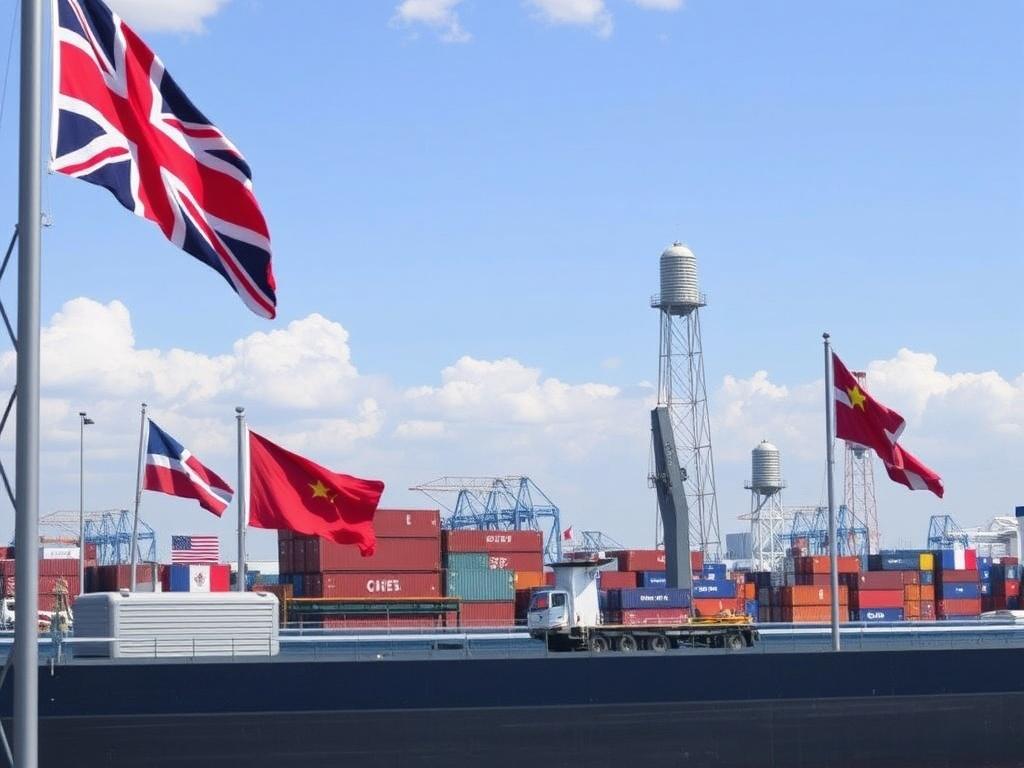
The last half-century has seen a proliferation of regional trade agreements. Preferential tariffs within blocs coexist with external duties that reinforce regional economic communities. That architecture may deepen as trust erodes at the global level.
Regional integration can reduce tariffs among members while preserving external protection. In a century of fractured multilateralism, tariffs would appear not as universal rules but as tools of bloc management—used to favor allies and discipline rivals.
Conversely, deeper integration—toward federations or customs unions—could diminish the role of tariffs internally. If a large, durable political union emerges, customs duties may be largely obsolete within its borders, although they would remain relevant at the union’s external perimeter.
Non-tariff barriers: the new face of protection
Even as average tariff rates fell globally, non-tariff measures (NTMs) proliferated. Standards, sanitary and phytosanitary rules, quotas, licensing, and complex regulatory requirements can restrict trade as effectively as tariffs without the same political backlash.
Because NTMs can be defended on safety, health, or environmental grounds, they can be easier to maintain and harder to challenge in trade disputes. Over the coming century, NTMs may become the predominant tool of trade management, making tariffs seem blunt and old-fashioned.
This trend suggests a future in which duties persist but lose relative importance to rules-based barriers that shape market access in more subtle, technical ways.
Standards, certification, and supply-chain governance
Companies increasingly face demands to certify their supply chains for labor, environmental impact, and provenance. Those requirements can have the same effect as a tariff by raising the cost of entry for foreign producers who cannot meet the standards.
Private standards and corporate sourcing codes will interact with public policy. Firms that internalize high standards may lobby governments to keep tariffs low, while those that struggle to comply may prefer protective duties to maintain domestic markets.
As verification technology improves, standards will be enforced more rigorously, making non-tariff governance a durable feature of international commerce.
Digital constraints, data flows, and customs 2.0
Not all protection will take the form of money at the border. Data localization laws, encryption controls, and licensing regimes can restrict access to markets and act like de facto tariffs on digital trade. These measures respond to concerns about privacy, security, and political control.
Customs administrations themselves are digitizing. Electronic manifests, automated classification, and real-time monitoring allow for dynamic tariffs and smarter enforcement. This technical capacity could make it politically easier to deploy selective duties when desired.
In a future where data is as valuable as steel, border policy will likely evolve to cover intangible goods, blurring the historic boundary between tariffs and regulatory controls.
Economic nationalism, populism, and political cycles
Political movements that prioritize domestic employment and sovereignty can revive tariffs quickly. Populist governments often find protective duties an appealing signal to voters because tariffs create visible winners and losers.
Because politics cycles, a single country’s tariff policy can swing dramatically over years or decades. That unpredictability favors permanent institutional solutions or multilateral constraints if the international community wants stability.
However, political will to bind future governments is limited. If public sentiment favors protection during economic dislocations—like automation-driven job losses or crises—tariffs could return as a popular remedy despite economic downsides.
Resource scarcity, strategic materials, and entrenchment of duties
Critical materials—rare earths, advanced battery minerals, and strategic foodstuffs—are likely to remain a focus of trade policy. When supplies are concentrated geographically, countries may use tariffs, export restrictions, or stockpiles to secure domestic supply.
Tariffs on resource imports can be part of a broader industrial strategy that includes domestic investment, recycling programs, and trade diplomacy. In a century where strategic competition over materials persists, tariffs could become permanent instruments of resource policy.
Thus, while broad-based consumer goods tariffs might wither, duties tied to strategic goods could become more entrenched as nations seek resilience.
Scenario planning: four plausible futures
Forecasting a single outcome 100 years ahead is hazardous, but scenario thinking clarifies the main forces and possible paths. Below is a compact table that outlines four scenarios and their implications for tariffs.
| Scenario | Description | Implications for tariffs |
|---|---|---|
| Global convergence | Multilateral cooperation strengthens; common rules for digital trade and carbon pricing emerge. | Tariffs largely decline; duties replaced by harmonized fees and carbon adjustments. |
| Regional blocs | Fragmentation into several large economic blocks with strong internal integration. | Low internal tariffs, higher external tariffs at bloc perimeters; selective duties for strategic sectors. |
| Tech-localization | Automation and advanced manufacturing localize production; services dominate trade. | Reduced tariffs on goods overall; new levies on data and services; targeted duties for critical inputs. |
| Geopolitical rivalry | Persistent great-power competition and supply-chain decoupling. | Tariffs and trade barriers return as central tools of statecraft; highly targeted and dynamic duties proliferate. |
Each scenario is a simplification, but together they show how tariffs could either fade, transform, or reassert themselves depending on technology, policy, and geopolitics. The future is likely to be a complex mix rather than a single model.
How businesses should prepare
Firms cannot rely on any static view of tariff policy. Flexibility in sourcing, robust compliance capabilities, and scenario-based strategic planning are essential to navigate a world of shifting duties and standards.
Supply-chain diversification, nearshoring options, and investment in traceability systems reduce exposure to sudden tariff shocks. Firms that can prove low-carbon footprints or labor compliance will enjoy smoother market access regardless of tariff regimes.
In my own experience working with manufacturers that imported components from several countries, even the threat of a tariff can force rerouting and costly contractual changes. Being able to pivot quickly saved margins and relationships.
Operational steps businesses can take
Practical actions include building modular supply chains, investing in customs expertise, and engaging in trade policy advocacy. Companies should also invest in data systems that track the origin and sustainability of inputs because future border fees may be calculated on such metrics.
Strategic use of regional production hubs and alliances with local manufacturers can mitigate tariff risk. In many cases, paying a modest duty is cheaper than retooling production—so cost-benefit analysis must be dynamic and forward-looking.
Finally, firms should monitor policy signals closely; tariff risks often manifest as staged measures—investigation, temporary safeguards, and then permanent duties—giving attentive firms a window to adapt.
What governments should consider
For policymakers, the question is not only whether tariffs will exist, but how to use them responsibly. Transparent, time-limited duties with clear objectives reduce the risk of permanent protectionism.
Governments should pair any tariffs with domestic policies that boost competitiveness—training, R&D, and infrastructure—so duties remain a bridge, not a crutch. International cooperation on taxing digital trade and harmonizing carbon pricing would reduce the incentive to resort to unilateral tariffs.
Investing in customs modernization and dispute-resolution mechanisms will also make any necessary duties less distortionary. Smart, targeted measures that are easily reversible are preferable to sweeping, permanent levies that invite retaliation.
Legal and institutional constraints
The WTO and regional agreements have made tariffs more predictable, but these institutions face stress from geopolitical tensions and asymmetries in economic power. Over the next century, legal frameworks will either constrain or permit tariff use depending on their evolution.
Countries that remain inside multilateral disciplines will have less freedom to impose ad hoc tariffs. But as disputes become more technical—over carbon content or digital services—new legal frictions will emerge that existing rules may struggle to address.
Institutional reform, or its absence, will shape how often governments turn to tariffs. A robust, modernized trade governance system could marginalize tariffs; a fractured system could institutionalize them as routine tools of policy.
Equity, development, and the morality of tariffs
Tariffs have distributional effects. They can protect jobs in one place while raising prices elsewhere. For developing countries, preferential access to markets can be a vital growth channel, and wholesale elimination of duties may undermine infant industries without other support.
Development policy matters for the future of tariffs. If global institutions successfully combine tariff reduction with assistance for structural transformation, tariffs will decline more cleanly. Without that support, countries may use duties defensively, stunting global integration.
Ethical considerations also arise with climate border adjustments and digital levies—will poorer exporters be unfairly penalized? Policy design must account for capacity-building and transitional support to avoid exacerbating inequality.
Practical signs to watch in the next decade
The path tariffs take over the next 100 years begins with signals in the coming decade. Watch whether major economies agree on cross-border data rules, carbon pricing, and digital taxes. Progress there would reduce unilateral recourse to duties.
Also watch investment in customs digitalization and traceability tech. If governments and businesses adopt verified emissions accounting and digital provenance, border adjustments and targeted duties become more administratively feasible.
Another early-warning sign is the prevalence of export controls and strategic investment screening. A rise in those measures suggests tariffs will remain part of a broader suite of trade tools rather than fade away entirely.
Real-world examples that illuminate the debate
The U.S. tariffs on steel and aluminum in 2018 show how duties can be used for both industry protection and geopolitical signaling. They prompted retaliation, supply-chain adjustments, and a rethinking of trade relationships in affected sectors.
Europe’s ongoing development of a carbon border mechanism is an example of environmental policy reshaping trade measures. That process shows how tariffs can be repurposed as climate instruments, with legal, administrative, and diplomatic dimensions.
Smoot-Hawley and the postwar liberalization illustrate the risks and reversals in tariff policy. Both episodes emphasize that tariffs are political tools whose use depends on the prevailing domestic and international mood.
Will tariffs survive as taxes, or merely as tools?
In fiscal terms, tariffs are a declining share of government revenue for most advanced economies but remain significant for some developing countries. As domestic tax systems grow more sophisticated, the revenue role of tariffs will likely decline further.
However, the political and regulatory functions of tariffs—protection, signaling, and adjustment—are less likely to vanish. Even with low average rates, targeted duties could be common instruments in climate, security, and industrial policy.
So while tariffs as a major source of public revenue may diminish, their role as an instrument of policy is likely to persist, although in transformed, more technical, and often narrower forms.
Final reflections: the long view
Predicting the precise shape of trade policy in a century is impossible, but we can say this: tariffs are tools, and tools adapt to the problems they are asked to solve. The problems of the next century—climate change, strategic competition, and the digital economy—will demand new tools and new rules.
Some forms of tariffs will probably fade as trade becomes more digital and services-oriented, and as multilateral cooperation addresses cross-border issues like carbon leakage. At the same time, targeted duties linked to national security, strategic materials, or environmental standards will likely remain.
Ultimately, the persistence of tariffs will depend less on abstract economic theory and more on politics, technology, and governance choices. Countries that cooperate will find ways to reduce tariffs; those that retreat into blocs or prioritize security will use them more aggressively.
Whether tariffs still exist in 100 years will be shaped by collective decisions made today—how we price carbon, regulate data, and design international institutions. Those choices will determine whether tariffs are relics, reformulated tools, or central levers of statecraft in a new world.