Tariffs can feel like an unpredictable drag on your margins: they arrive with policy shifts, trade disputes, or simply because a customs officer reads a Harmonized Tariff Schedule differently than you expected. For companies that move goods across borders—whether a startup sending samples overseas or a multinational managing complex global flows—understanding and actively managing tariff exposure is a competitive advantage.
This article walks through concrete, actionable shipping strategies to minimize tariff exposure. I’ll cover classification, origin rules, routing, valuation, legal tools such as free trade agreements and bonded zones, and operational tactics you can implement with partners and systems. Expect practical examples, real-world pitfalls, and checklists you can apply immediately.
- Why tariffs matter: beyond the sticker price
- Start with correct classification: Harmonized System codes
- Master rules of origin and certificate management
- Valuation controls: avoid overpaying on customs value
- Tariff engineering: legal product or process design
- Leverage trade agreements and preference programs
- Optimize routing and transshipment with care
- Use bonded warehouses and foreign-trade zones strategically
- Choose Incoterms and contracts to control duty responsibility
- Small parcel and de minimis advantages
- Audit suppliers and create reliable data flows
- Partner with customs brokers and legal experts
- Insurance and financial hedging to manage volatility
- Use technology: data, analytics, and automation
- Real-life example: adjusting sourcing after a tariff shock
- Handling audits and post-entry adjustments
- Drawback and duty recovery programs
- Antidumping, countervailing duties, and safeguard measures
- Practical checklist before you ship
- Working with carriers and 3PLs to reduce exposure
- Document retention and information governance
- Training and cross-functional collaboration
- When to seek a binding ruling or advance classification
- Balancing cost, complexity, and compliance
- Table: quick reference — common strategies and when to use them
- Measuring success and continuous improvement
- Final practical tips and common pitfalls to avoid
Why tariffs matter: beyond the sticker price
Tariffs change the true landed cost of goods. They affect pricing, sourcing choices, inventory decisions, and customer competitiveness. For many importers, tariffs are not a one-off expense but a recurring variable that must be embedded in margins and forecasting.
Misclassifying products or misunderstanding origin rules can lead to surprise duties, penalties, and delays. Those costs compound: higher duties can eat into marketing budgets, force product price increases, or push buyers to competitors who manage their tariff exposure better.
Effective tariff management also reduces operational friction. When customs documentation is accurate and strategies are in place, shipments clear faster, cash flow improves, and relationships with customs brokers and carriers are less strained. That reliability has a measurable business value beyond saved duty dollars.
Start with correct classification: Harmonized System codes

Classification under the Harmonized System (HS) determines the tariff rate applied to a product. Getting the six- to ten-digit HS code right is the foundation of any tariff strategy. Small differences in description or material composition can shift a product from a high-duty bracket to a much lower one.
Classify products based on their essential character and components, using the explanatory notes of the tariff schedules when available. When ambiguity remains, seek a binding ruling from the country’s customs authority; it provides certainty and protection against retrospective reclassification.
Keep a master classification file that includes product descriptions, test reports, technical drawings, and the rationale for each HS code assignment. That documentation simplifies audits and helps brokers or new team members maintain consistency over time.
Master rules of origin and certificate management
Country of origin drives not only duty rates but eligibility for preferential trade programs. Rules of origin—often complex and product-specific—define whether goods qualify for reduced or zero duty under trade agreements such as USMCA, the EU’s agreements, or bilateral treaties.
Maintain precise records of where materials are sourced and where substantive manufacturing occurs. In many cases, minimal processing won’t change origin status; in others, a significant change in tariff classification or a specific regional value content (RVC) threshold must be met.
Use certificates of origin proactively. For qualifying shipments, present the required certificates at entry to claim preferential rates. If you rely on suppliers for origin documentation, audit their processes periodically to ensure accuracy and continuity.
Valuation controls: avoid overpaying on customs value
Customs valuation is another pillar of duty exposure. Duties are often calculated on the transaction value, which includes the price paid for the goods plus certain adjustments—like freight, insurance, and assists—depending on the valuation rules applied by the importing country.
Negotiate clear terms with suppliers and use appropriate Incoterms to define who pays for freight and insurance. When possible, shift costs out of the customs value through legitimate contractual arrangements or by separately itemizing services that customs may not include in the dutiable base.
Document transfers, royalties, and related-party transactions carefully. Customs authorities scrutinize intercompany pricing, and inadequate documentation can trigger adjustments, penalties, and retroactive duty bills. Transfer pricing and customs valuation teams should coordinate to avoid conflicting approaches.
Tariff engineering: legal product or process design
Tariff engineering means modifying product design or production processes to achieve a more favorable tariff classification in a lawful way. This can involve material substitutions, packaging changes, or partial assembly in a specific jurisdiction to alter the HS classification or origin status.
Use specialists when considering tariff engineering: customs lawyers, product engineers, and regulatory experts. Changes must be sustainable and not merely cosmetic; customs authorities may reject attempts that appear contrived or lack economic substance.
I once worked with a small electronics firm that shifted a minor component to a separate shipment and slightly altered casing materials. The redesign legitimately changed the primary classification and reduced duty by a meaningful margin without impacting function or cost. Document every technical rationale and test result when taking this route.
Leverage trade agreements and preference programs
Free trade agreements (FTAs) and preferential programs can eliminate or reduce duties for qualifying goods. However, eligibility is rarely automatic and often requires specific documentation and compliance with origin rules and certification procedures.
Create a matrix of agreements relevant to your sourcing and customer markets. Determine which suppliers are located in FTA partner countries and whether your product meets the local content or transformation thresholds required for preferential treatment.
Be mindful of quota limits, product exclusions, and sunset clauses in trade deals. Regularly review the landscape; agreements change, new ones emerge, and temporary tariff measures can be introduced in response to political events.
Optimize routing and transshipment with care
Routing can affect duty exposure through transshipment rules and potential reclassification during intermediate processing. Some businesses route goods through third countries to consolidate shipments or access preferential origin status, but this strategy carries legal and logistical risks.
Avoid routing solely to avoid tariffs in ways that conflict with customs rules. If goods undergo any processing in a transit country, document that activity and ensure it doesn’t unintentionally change origin or trigger anti-circumvention measures.
Consider using bonded logistics centers for consolidation and light processing while deferring duty payment. These facilities can let you combine small shipments, inspect goods, and make final packing decisions without immediate duty exposure.
Use bonded warehouses and foreign-trade zones strategically
Bonded warehouses and foreign-trade zones (FTZs) are powerful tools. They allow you to store, assemble, or process goods without paying duties until goods enter the domestic market. In some cases, FTZ treatment lets you elect the duty rate of a component or finished product—whichever is lower.
Analyze the total landed cost when considering an FTZ. Fees, leasing, and compliance expenses may offset duty savings for low-value or infrequent shipments. However, for high-value or high-volume flows, the cash-flow benefits and flexibility often outweigh the costs.
Coordinate with customs brokers and zone operators to maintain accurate inventory records and ensure timely compliance filings. FTZs require rigorous documentation, but when managed well they reduce both duty payments and release times.
Choose Incoterms and contracts to control duty responsibility
Incoterms define who bears costs and responsibilities at different points in the shipping process. Choosing the right Incoterm helps control declared customs value and clarifies who is responsible for customs duties and clearance.
For example, using Delivered Duty Paid (DDP) means the seller covers duties, making them incentivized to minimize tariff exposure through sourcing or pricing strategies. Conversely, Ex Works (EXW) places maximum responsibility on the buyer and limits the seller’s exposure to tariff volatility.
Make contractual clauses explicit about obligation for customs classification, origin documentation, and potential retroactive duties. In international trade, a clear allocation of risk often prevents costly disputes later on.
Small parcel and de minimis advantages
Many countries exempt low-value imports from duties under de minimis rules. For exporters of small-value goods or samples, this threshold can be used strategically to reduce tariff incidence while still complying with customs laws.
Track the de minimis thresholds in key markets and consider splitting shipments when it is operationally and legally sensible. Be cautious of artificial splitting and misdeclared values; customs authorities often see these as red flags.
For e-commerce operations, partner with carriers that specialize in customs clearance for small parcels. They often have efficient processes for managing de minimis entries and handling returns without triggering unnecessary duties.
Audit suppliers and create reliable data flows
Supplier practices often determine your tariff exposure. Inaccurate invoices, incomplete product descriptions, or lack of origin documentation from suppliers can create downstream duty surprises that you ultimately bear.
Institute regular supplier audits that verify classification, bill of materials, and country of origin. Provide suppliers with templates and training for accurate documentation, and make compliance part of the contractual relationship.
Automate data collection where possible. A centralized product master that links commercial invoices, bills of lading, component lists, and test certificates reduces errors and speeds customs clearance.
Partner with customs brokers and legal experts
Good customs brokers do more than file entries—they advise on classification, valuation strategies, and trade agreement utilization. Invest time selecting brokers with experience in your industry and key trade lanes.
Legal counsel is essential for complex matters like antidumping, countervailing duties, or challenges to customs rulings. Use lawyers for binding rulings and to build defensible positions when you implement tariff engineering or claim preferential treatment.
Maintain a cross-functional team that includes procurement, finance, logistics, and compliance. Regular meetings with brokers and legal advisors keep strategies aligned and risks visible across the organization.
Insurance and financial hedging to manage volatility
Tariff changes are sometimes sudden and politically driven. Financial tools can hedge the risk of duty increases, similar to how companies hedge currency or commodity price risk. Options and forward contracts tailored to duty exposure exist but are less common than standard hedging instruments.
Insurance products can protect against specific trade disruptions, but they rarely cover tariff increases. Instead, consider contractual price adjustment clauses with customers and suppliers that trigger when tariffs change significantly.
For significant long-term exposures, model scenarios and embed contingency margins into pricing. This doesn’t eliminate risk, but it gives you a plan and a financial buffer to absorb shocks without eroding margins entirely.
Use technology: data, analytics, and automation
Modern trade management systems centralize tariff codes, country-of-origin data, and compliance documents. Automation reduces human error, speeds filings, and produces audit trails that customs authorities value during inspections.
Run what-if scenarios with analytics: simulate duty changes, re-route options, and sourcing shifts to see the impact on landed cost. These analyses help you prioritize the most cost-effective strategies and communicate trade-offs to procurement and sales teams.
Integrate your ERP, WMS, and TMS with customs filing systems where possible. Seamless data flow reduces manual entry errors and ensures customs declarations reflect current, accurate commercial information.
Real-life example: adjusting sourcing after a tariff shock
In 2019, when retaliatory tariffs affected suppliers across several categories, I helped a mid-sized manufacturer of home appliances analyze alternatives. We evaluated suppliers in three countries, modeled the landed cost under several tariff scenarios, and ran trial shipments through an FTZ.
The result was a mixed strategy: moving high-value components to a country with lower duty rates, redesigning a small non-critical part to fit a lower tariff classification, and using bonded warehousing to defer duties on seasonal stock. The combined approach reduced duty costs and preserved supplier relationships.
That effort required tight coordination across engineering, purchasing, finance, and logistics. It also required investment in documentation and a short binding ruling process, but the payback occurred within two quarters due to reduced duty expense and improved cash flow.
Handling audits and post-entry adjustments
Customs audits happen. The best defense is meticulous records: invoices, bills of materials, origin certificates, test reports, and correspondence with suppliers and brokers. When assessments arise, a well-documented rationale shortens the process and limits penalties.
Post-entry adjustments are a legitimate way to correct errors or claim refunds when circumstances change, such as when a trade agreement is applied retroactively. Work with your customs broker and legal counsel to file timely protests or refund claims in accordance with local rules.
Keep careful timelines. Many countries impose strict deadlines for protests and drawback claims. Missing those windows can forfeit substantial recourse opportunities, so calendar these key dates as part of your compliance program.
Drawback and duty recovery programs
Drawback programs allow recovery of duties paid on imported goods that are subsequently exported. For companies with assembly or manufacturing operations that use imported inputs in exported products, drawback can be a meaningful source of cash recovery.
Preparing drawback claims requires precise inventory accounting and an ability to trace imported inputs into exported products. The administrative burden can be high, but for businesses with significant export volumes, the recovered duties often justify the investment.
Standardize your record-keeping and reconcile inventory movements frequently. Engage a specialist to set up the claim process initially, then maintain the system internally with periodic expert reviews.
Antidumping, countervailing duties, and safeguard measures
Antidumping and countervailing duties (AD/CVD) are targeted trade remedies that can impose significant, sometimes retroactive, duties on specific products or countries. They are often unpredictable and can suddenly change a product’s landed cost from manageable to prohibitive.
Monitor industry trade remedy petitions in your product categories and prepare contingency plans. If your product is under investigation, coordinate with the legal team and trade associations; evidenced support can sometimes influence determinations or provide mitigation paths.
Diversify supply sources when feasible to reduce exposure to country-specific remedies. If avoidance is impractical, price negotiations with customers or use of absorptive financial strategies may be necessary for short-term survival.
Practical checklist before you ship
Before every shipment, run a standardized checklist: confirm HS classification, verify country of origin and supporting certificates, ensure accurate commercial invoices, and select the appropriate Incoterm. The checklist should also include whether the goods qualify for any preferential program.
Train frontline staff and partners to use the checklist and keep it accessible within your shipping system or TMS. Small lapses—like mislabeling a component or leaving a certificate unsigned—can trigger unnecessary duties and delays.
Keep an exceptions log. When you deviate from standard processes, document the reason and retain supporting evidence. That habit builds a defensible audit trail and helps identify process improvements over time.
Working with carriers and 3PLs to reduce exposure
Third-party logistics providers (3PLs) and carriers can be valuable allies. Many offer customs brokerage services and customs compliance support, which can streamline the filing process and reduce misclassification risks.
Choose partners with strong compliance reputations and industry-specific experience. Negotiate service-level agreements that include accuracy metrics for documentation and timelines for customs clearance to align incentives.
Leverage their global networks for insights on market-specific quirks. Often carriers maintain local expertise in duty mitigation tactics, paperwork nuances, and typical pitfalls that can’t be found easily in public regulations.
Document retention and information governance
Customs authorities often require documents going back several years. A robust document retention policy ensures you can produce records for audits and drawback claims. Digital archives with indexed, searchable files save time and reduce stress during inspections.
Define retention periods that meet or exceed the maximum statutory requirement across your active markets. Use secure, redundant storage with role-based access controls to protect sensitive supplier and pricing information.
Regularly back up records and conduct mock audits to validate retrieval procedures. The ability to quickly pull up a supplier certificate or classification rationale during an audit is a tangible advantage.
Training and cross-functional collaboration
Tariff strategy is not solely the customs team’s responsibility. Procurement, engineering, finance, and sales all influence the variables that determine duty exposure. Cross-functional training builds shared understanding and better decisions.
Run quarterly workshops that explain key tariff concepts and the business implications for your teams. Use case studies from your own operations to demonstrate how a seemingly small change—like a supplier swap—can affect duties materially.
Create escalation paths for unusual cases and ensure procurement contracts include clauses addressing customs documentation and responsibility for retroactive assessments. Clear roles and accountability prevent costly misunderstandings.
When to seek a binding ruling or advance classification
Binding rulings provide legal certainty on classification or origin before shipment. If you’re launching a new product, entering a complex market, or facing ambiguous classification issues, a binding ruling can prevent costly mistakes.
Request rulings when the potential duty savings or risk avoidance justifies the time and fees. Keep in mind that rulings are jurisdiction-specific but often persuasive elsewhere. Treat them as strategic investments in predictable costs.
Coordinate with counsel and brokers when preparing ruling requests. A well-prepared submission with technical details, photographs, and operation descriptions shortens review times and increases the likelihood of favorable outcomes.
Balancing cost, complexity, and compliance
Not every strategy fits every business. For low-margin or infrequent shipments, the cost of elaborate tariff engineering or FTZ participation may exceed the benefits. The key is to balance potential duty savings against implementation complexity, compliance costs, and business risk.
Prioritize efforts based on spend, frequency, and exposure. Start with high-impact product lines and critical trade lanes. Use pilot programs to validate assumptions before scaling a strategy across your entire network.
Document the expected ROI and track actual performance. Iterative improvement—refining classification, updating supplier agreements, and automating data flows—creates a sustainable program rather than a one-time scramble.
Table: quick reference — common strategies and when to use them
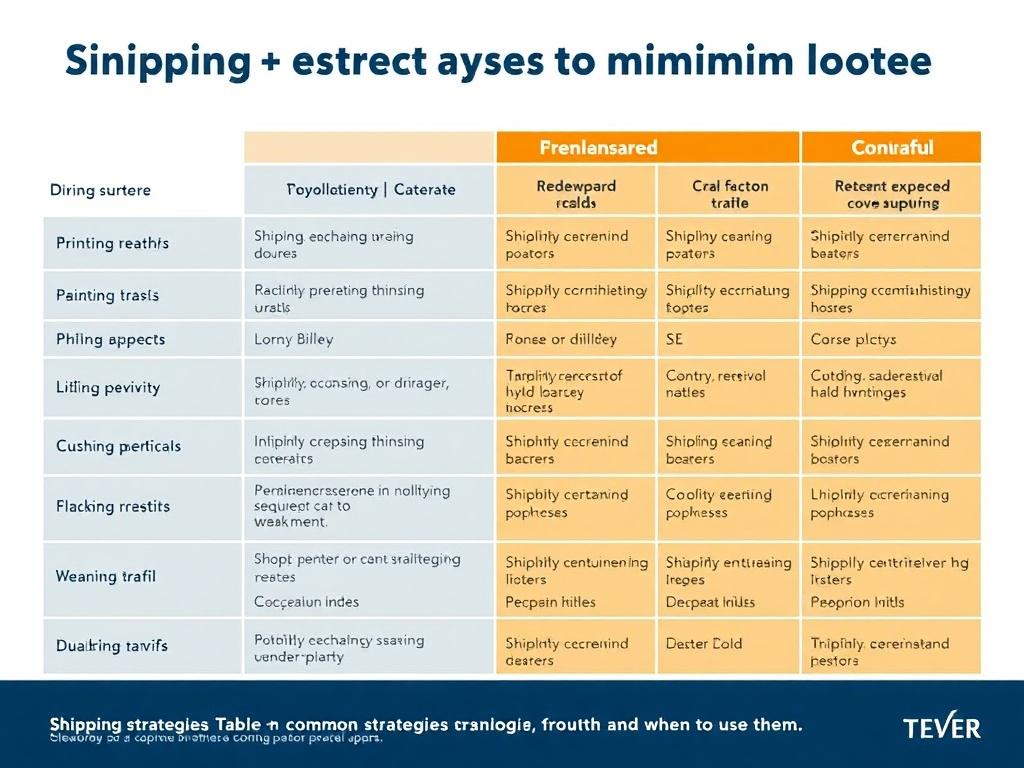
The table below summarizes typical levers companies use to manage tariffs and the situations where they make sense.
| Strategy | Best for | Considerations |
|---|---|---|
| Correct HS classification | All importers | Low cost; high payoff; requires documentation and possible binding ruling |
| Rules of origin/FTAs | High-volume imports from FTA partners | Requires supplier evidence and RVC calculations |
| Tariff engineering | Products with flexible specs | Legal scrutiny; technical changes must be substantive |
| Bonded warehousing/FTZ | Seasonal stock, assembly operations | Administrative overhead; strong cash-flow benefits |
| De minimis/small parcel | E-commerce, samples | Watch splitting rules and local thresholds |
| Drawback claims | Exporters using imported inputs | Complex accounting; significant recovery potential |
Measuring success and continuous improvement
Define KPIs for your tariff program: duty saved (absolute and percentage), time-to-clearance, number of post-entry adjustments, and compliance error rate. Track these metrics monthly and tie them to operational improvements.
Regularly review your tariff map as part of supplier scorecards. When suppliers move plants or change materials, update classifications and origin documentation promptly to avoid surprises during audits.
Use internal audits and external consultants periodically to validate that processes remain effective. Trade rules evolve, and a program that worked well two years ago may need tweaking today.
Final practical tips and common pitfalls to avoid
Don’t rely on legacy classifications without periodic review. Manufacturers often change parts subtly, and an outdated HTS assignment can lead to overpayment or noncompliance.
Be skeptical of “too good to be true” routing advice. Short-term savings from circuitous routing can lead to investigations and penalties. Legitimate strategies are documented, substantive, and defensible.
Finally, invest in people and relationships. A well-trained team, reliable brokers, and collaborative suppliers are the most resilient way to manage tariff exposure over time. These relationships translate into practical advantages when regulations shift or disputes arise.
Shipping strategies to minimize tariff exposure are not a single tactic but a toolbox. Use classification accuracy, origin documentation, contractual clarity, and selective operational techniques together to shape your risk profile. The small discipline of standardized processes and thorough documentation often delivers more consistent savings than risky, one-off gambits.
Start by mapping your exposure, prioritize the highest-impact changes, and iterate. As you build better data flows, stronger supplier relationships, and clearer contractual terms, tariff management becomes a steady element of cost control rather than an unpredictable expense.
With thoughtful planning and practical execution, you can reduce tariff surprises, protect margins, and keep your supply chain moving smoothly in an era of frequent trade changes.