Tariffs are loud and visible: a headline policy that promises jobs and the return of factories to domestic soil. They are also blunt instruments, easy to understand and politically popular. But the question that matters for managers, workers, and communities is less rhetorical than technical—do tariffs actually cause manufacturing to reshore in meaningful, sustainable ways, or do other forces like automation and supply-chain strategy do the heavy lifting?
- How tariffs are supposed to work — the simple economic pitch
- Why factories left in the first place
- The mixed record of tariffs in recent policy experiments
- Where tariffs did change behavior
- Automation changes the calculus
- Robots, cobots, and flexible manufacturing
- Case studies: when automation enabled reshoring—and when it didn’t
- Foxconn’s Wisconsin project
- GE Appliances and targeted domestic investment
- How firms actually respond when tariffs change incentives
- Total cost of ownership: a practical framework
- Example TCO table
- Supply-chain flexibility and nearshoring as alternatives
- Policy levers that work better than tariffs alone
- What incentives should look like
- A practical checklist for executives considering reshoring
- Labor, skills, and the human side of automation
- Real-world example from the floor
- Environmental and strategic considerations
- When tariffs backfire or encourage avoidance
- How to measure whether reshoring is happening—and whether it matters
- What successful reshoring looks like
- The geopolitical dimension and the risk of decoupling
- Practical recommendations for policymakers and business leaders
- Looking ahead: automation, policy, and the shape of manufacturing
How tariffs are supposed to work — the simple economic pitch
At their most basic, tariffs raise the price of imported goods, narrowing the price gap between foreign-made and domestically produced items. That price change, in theory, makes it profitable for firms to locate production closer to home or to bring it back entirely. Policymakers often present tariffs as a lever to correct trade imbalances, protect strategic industries, or create domestic jobs.
But the economy is not a simple arithmetic problem where one price change yields a single predictable response. Firms respond to tariffs by adjusting sourcing, altering product design, automating processes, or passing costs to customers. The immediate effect of a tariff is on relative prices, while the longer-run effects play out through investment, technology adoption, and global supply-chain redesign.
Why factories left in the first place
The migration of manufacturing overseas accelerated in the late 20th and early 21st centuries for straightforward reasons. Labor cost differences, especially for routine, assembly-line work, were large enough to outweigh higher transportation and coordination costs. Companies consolidated production in regions with efficient supply clusters and favorable business climates.
Trade liberalization and improvements in logistics reduced the friction of global sourcing. Containerization, better freight rates, and digital coordination made it easier to manage production across time zones. Intellectual property and quality control remained concerns, but many firms judged the cost savings worth the trade-offs.
The mixed record of tariffs in recent policy experiments
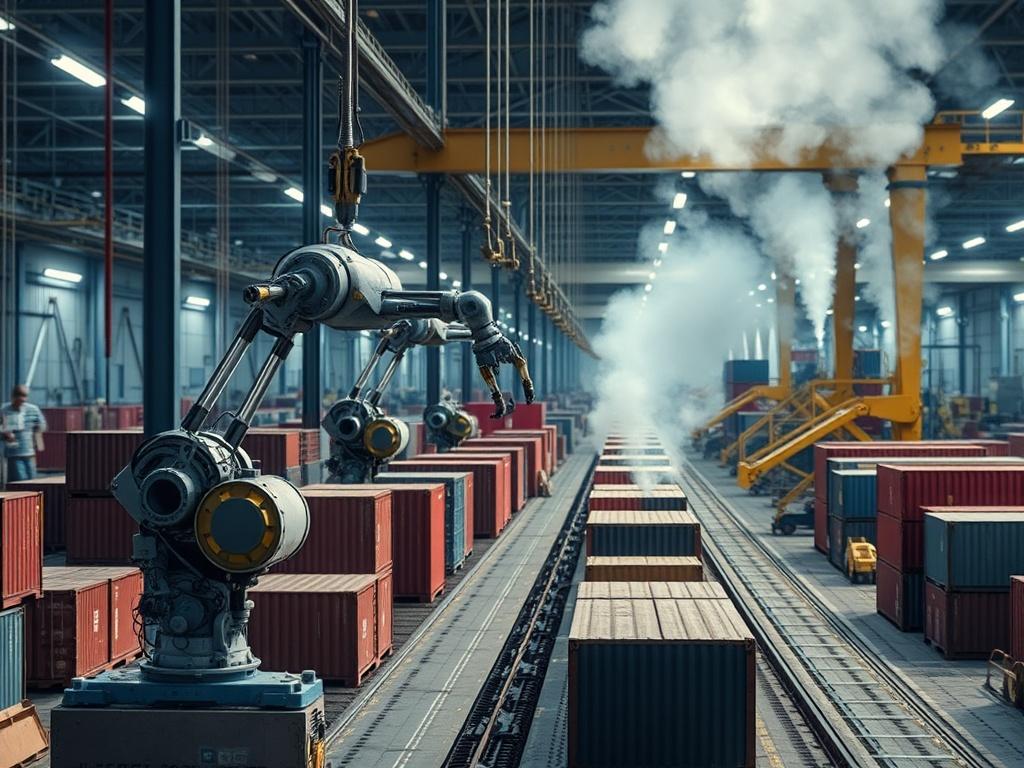
Tariffs have been used repeatedly over the last decade as a policy tool to punish unfair trade practices, protect domestic producers, or gain leverage in negotiations. The recent rounds of tariffs on Chinese goods and on steel and aluminum in the United States provide useful case studies. They raised costs for downstream industries and prompted a range of corporate responses.
Rather than producing a wholesale return of manufacturing to the United States, evidence suggests tariffs often induce three other responses: passing costs to consumers through higher prices, shifting sourcing to other low-cost countries, or investing in automation to reduce exposure to labor-cost differences. In many sectors, reshoring in response to tariffs alone has been modest and piecemeal.
Where tariffs did change behavior
Tariffs have protected certain industries and saved some jobs—steel and aluminum producers, for example, saw increased domestic activity following higher import tariffs. In sectors with high transport costs or heavy regulation, raising tariffs sometimes tipped the balance toward local production. But these effects tend to be concentrated, temporary, and often come with costs elsewhere in the economy.
Some small manufacturers benefited from a brief increase in domestic demand because imported substitutes became more expensive. Yet firms that require complex global inputs rarely relocated entire supply chains because tariffs rose; instead, they diversified suppliers or altered product mixes to avoid the tariff impact.
Automation changes the calculus
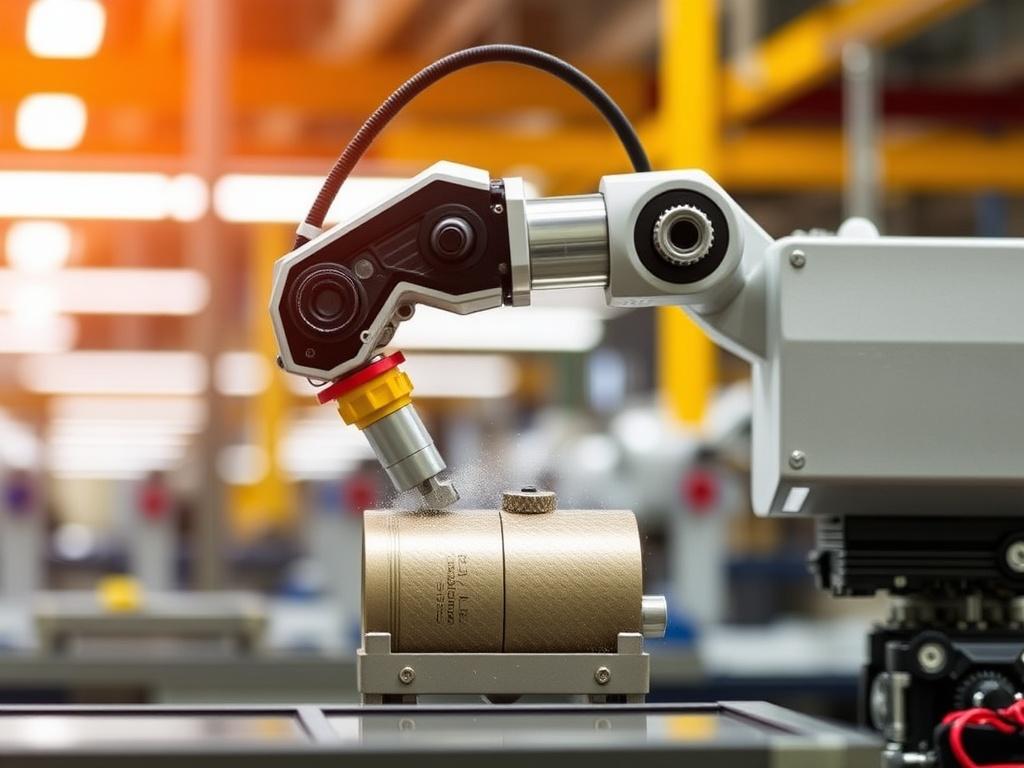
The most important long-term variable in the reshoring debate is not a tax on imports but the falling cost and rising capability of automation. Robotics, computer numerical control (CNC) machines, vision systems, and software-driven production planning make it cheaper to produce domestically without a large workforce. When labor is no longer the dominant cost, proximity, quality, and speed of iteration matter more.
Automation reduces the labor component of unit cost, narrowing the gap that once made offshoring irresistible. For items that require customization, rapid iteration, or tight intellectual property control, automated domestic production can be superior even when wages are higher. That dynamic is why many executives say automation—not tariffs—is the decisive enabler of reshoring.
Robots, cobots, and flexible manufacturing
Traditional industrial robots excel at repetitive, high-volume tasks but require fixed setups and high throughput to justify their cost. Collaborative robots, or cobots, are cheaper and easier to program, allowing small and medium-sized manufacturers to automate tasks without massive capital budgets. Additive manufacturing and modular, reconfigurable production lines add further flexibility.
These technologies change the break-even calculations. A factory that once needed twenty workers to run a product line might need four technicians to oversee automated cells, while maintaining similar throughput. The capital cost is front-loaded, but the advantages include lower exposure to labor-market volatility, reduced shipping needs, and faster responsiveness to market changes.
Case studies: when automation enabled reshoring—and when it didn’t
Not every experiment with automation-led reshoring has succeeded. The story is nuanced: some projects demonstrate how automation can anchor production at home, while others remind us that automation is not a cure-all when underlying economics are weak.
Adidas’s Speedfactory efforts in Germany and the United States are a cautionary tale. The company invested in automated micro-factories to produce highly customized shoes closer to demand. The promise was shorter lead times and local customization, but Adidas later scaled back these facilities, citing cost and strategic focus. The problem wasn’t that automation failed technologically; it was that production scale, supply-chain economics, and corporate strategy didn’t align.
Foxconn’s Wisconsin project
Foxconn’s proposed large-scale assembly plant in Wisconsin, announced with fanfare and significant local incentives, illustrated political and practical limits to reshoring. The original plan promised thousands of jobs and extensive manufacturing on American soil. When the company later significantly scaled back the project, it highlighted how capital requirements, labor markets, and shifting strategic priorities complicate headline-grabbing pledges.
The Wisconsin experience shows that subsidies and promises do not automatically translate into factory floors. Firms consider the total ecosystem—access to skilled labor, supplier networks, logistics, and predictable policy environments—when deciding where to deploy capital. Tariffs alone are rarely enough to overcome gaps in the ecosystem.
GE Appliances and targeted domestic investment
General Electric’s appliance business provides a more practical example. GE and other appliance makers have invested in modernized plants in the U.S., combining automation with skilled local labor to produce higher-value appliances domestically. These decisions were driven as much by product strategy and customer proximity as by trade measures.
In such cases, automation improved the viability of domestic production, but the moves were incremental and sector-specific. Appliances face high shipping costs and dealer networks that value local assembly. Those structural factors, combined with technology adoption, made reshoring a sensible, sustainable choice without relying on punitive tariffs.
How firms actually respond when tariffs change incentives
When tariffs raise import prices, firms map out a menu of options. The simplest is to absorb the cost, which cuts margins. The next simplest is to raise prices and pass the cost on to consumers. If neither is acceptable, firms look to operational levers: switch suppliers, modify product designs to avoid tariff lines, or relocate production to non-targeted countries.
Investment in automation often ranks near the top of strategic responses, but it is capital-intensive and time-consuming. Firms will automate when the expected return matches their planning horizon and strategic goals. For many industries, automation is a long-term bet rather than a quick fix for a tariff shock.
Total cost of ownership: a practical framework
Companies that actively manage reshoring decisions use a total cost of ownership (TCO) framework. TCO aggregates the direct and indirect costs of making a product in different locations: labor, materials, tariffs, transportation, inventory carrying costs, lead time penalties, and the costs of quality variation. It also includes intangibles like IP protection and customer responsiveness.
Tariffs are one line in a TCO calculation. When tariffs are temporary or uncertain, firms discount their impact in long-term investment decisions. When automation permanently lowers labor-related costs at home, the domestic option becomes more attractive in TCO terms. That shift explains why automation is often more decisive than tariffs in relocation decisions.
Example TCO table
The table below summarizes typical elements in a TCO comparison that a manufacturer might use when deciding whether to reshore or stay offshore.
| Cost component | Offshore production | Domestic production |
|---|---|---|
| Direct labor | Lower | Higher (can be reduced with automation) |
| Transportation | Higher (long distance) | Lower (shorter supply chains) |
| Tariffs and duties | Variable | None or lower |
| Inventory carrying costs | Higher (safety stock for longer lead times) | Lower (just-in-time, shorter lead times) |
| Quality and rework | Higher risk | Lower (closer oversight) |
| Intellectual property risk | Higher | Lower |
| Investment in capital equipment | Lower (manual labor) | Higher (automation) |
Supply-chain flexibility and nearshoring as alternatives
When confronted with tariffs, many firms pursue nearshoring rather than full reshoring. Moving production to Mexico, Central America, or Southeast Asia reduces the labor-cost gap while mitigating shipping time and some tariff exposure. Nearshoring offers a compromise: lower unit costs than domestic production, but faster replenishment and fewer trade frictions than distant offshore suppliers.
Nearshoring decisions are often influenced by regional trade agreements, like USMCA, which change the calculus on content and sourcing rules. For companies selling into the U.S. market, Mexico has been an especially attractive option because it combines competitive labor costs with geographic proximity and cultural familiarity.
Policy levers that work better than tariffs alone
If the objective is to sustainably increase domestic manufacturing, policymakers have options beyond tariffs that tend to be more effective. Investment tax credits for automation, grants for capital equipment, targeted R&D support, and workforce training programs directly lower the costs of reshoring and increase the odds of successful, long-term operations.
Procurement policies that favor domestic suppliers and transparent, stable incentives are also powerful. When government purchasing power guarantees a baseline of demand for a newly reshored industry, firms are more willing to invest in automation and local supply chains. Stability matters: unpredictable tariff regimes or mercurial subsidy policies deter the long-term capital commitments manufacturing requires.
What incentives should look like
Effective incentives align with private-sector incentives by reducing upfront capital barriers and addressing market failures. For example, grants for retooling, tax credits tied to investment and employee training, and public-private partnerships for advanced manufacturing centers help both companies and workers adapt to new technologies. Programs that prioritize durable ecosystem building—suppliers, skills, and R&D—outperform one-off plant incentives.
Direct subsidies without accompanying ecosystem support tend to produce headline factories that struggle because they lack access to skilled workers and local suppliers. That’s why thoughtful industrial policy couples capital support with education investments and supplier development programs.
A practical checklist for executives considering reshoring
Executives weighing a move back home should use a disciplined checklist rather than political noise. First, build a robust TCO model that includes scenarios for tariffs, fuel prices, and automation costs. Second, map the supplier ecosystem: what inputs must be local, and which can be sourced globally?
Third, estimate the timeline and capital needs for automation. Fourth, analyze labor skill availability and training costs. Finally, factor in regulatory and permitting timelines, incentives available, and the potential reputational benefits or risks of moving production.
- Develop a scenario-based TCO analysis
- Audit current supplier relationships and constraints
- Model automation options and payback periods
- Assess local workforce skills and training needs
- Evaluate policy incentives and procurement opportunities
- Plan for supply-chain resilience and diversification
Labor, skills, and the human side of automation
Automation is often portrayed as a pure cost story, but labor markets and skills are central. Robotics and advanced manufacturing don’t eliminate the need for workers; they change the mix of skills required. Firms that reshore must plan for technicians, programmers, maintenance workers, and supervisors rather than only assembly-line labor.
Investment in workforce development is essential. Community colleges, vocational programs, and apprenticeship initiatives can be part of the reshoring package. From my reporting and factory visits, successful plants invest in upskilling programs and create career paths for employees who transition from manual assembly to higher-skill roles.
Real-world example from the floor
I once walked a midsize machine shop where the owner had installed several cobots and an automated toolchanger. The shop had cut lead times and improved consistency while reducing mundane, repetitive tasks that previously caused turnover. They weren’t a headline Silicon Valley story—just a pragmatic decision to buy capital to solve a chronic staffing problem and win local contracts that required fast turnaround.
The owner told me tariffs were part of the conversation, but the decisive factor was the ability to compete on service and flexibility. Automation allowed them to offer same-week delivery to regional OEMs and to produce small batches profitably. That kind of outcome—incremental, sustainable, and locally rooted—typifies how automation supports reshoring in practice.
Environmental and strategic considerations
Reshoring decisions increasingly account for environmental impacts and strategic resilience. Shorter supply chains can reduce emissions from transport and enable tighter control over environmental practices. For some manufacturers, the reputational value of a lower-carbon, locally produced product is a market differentiator.
At the same time, reshoring for purely strategic reasons—reducing geopolitical exposure, protecting critical minerals and technologies—can justify investments even when pure cost metrics look unfavorable. Governments have begun to support reshoring in sectors labeled strategic, such as semiconductors and pharmaceuticals, using a mix of grants, tax incentives, and procurement commitments.
When tariffs backfire or encourage avoidance
Tariffs can sometimes produce unintended consequences. Companies may reroute supply chains through third countries to avoid tariff lines, engage in tariff engineering by redesigning products or separating components, or simply move operations to other low-cost locations not covered by the tariffs. These responses can weaken the intended domestic impact of tariffs.
Higher input costs from tariffs can also soften demand for downstream products, harming domestic firms that rely on affordable imported components. In short, tariffs can be a blunt instrument that reshapes trade flows without guaranteeing new domestic factories.
How to measure whether reshoring is happening—and whether it matters
Counting factory openings and job announcements is necessary but insufficient. Researchers and policymakers should measure durable investment, supply-chain depth, and wage-quality among reshored jobs. Sustainable reshoring should show evidence of long-term capital expenditure, supplier localization, and workforce development—not just transient construction jobs or assembly roles with low wages.
Data collection should look at capital formation in manufacturing, skill-level changes, and the development of supplier networks. These metrics help distinguish headline-grabbing pledges from real, resilient industrial renewal driven by automation and ecosystem investment.
What successful reshoring looks like
Successful reshoring tends to be incremental, sector-specific, and technology-driven. It focuses on products where domestic proximity confers clear advantages—short lead times, IP protection, customization, or high transport costs. It couples automation with workforce upskilling and supplier development, and it thrives in regions with stable policy and predictable incentives.
Rather than a mass return of low-skill assembly lines, the pattern I’ve observed is one of distributed, technologically advanced facilities that produce higher-value goods or serve strategic functions. These operations create fewer low-wage jobs than some promises advertise, but they tend to offer better pay and more durable employment when paired with training and career pathways.
The geopolitical dimension and the risk of decoupling
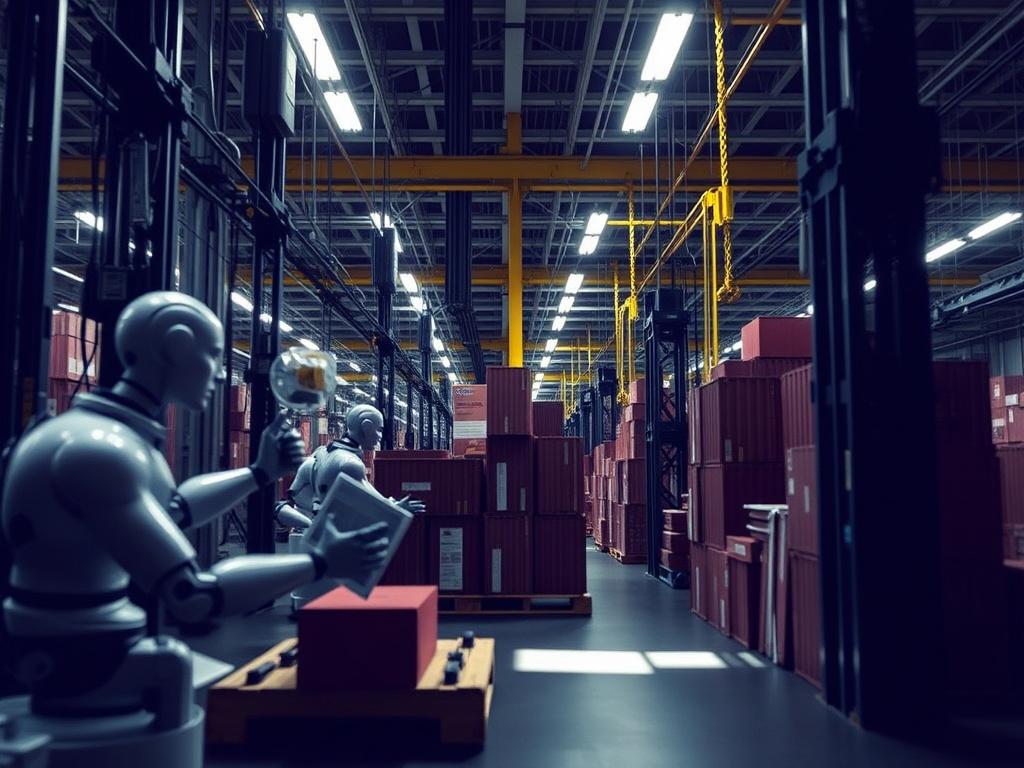
Geopolitical tensions add another layer to the reshoring conversation. Governments worried about strategic dependence may be willing to subsidize domestic capacity in critical sectors. This can accelerate reshoring in areas like semiconductors, batteries, and medical supplies, where policy support offsets the high capital costs of automation and advanced manufacturing.
But decoupling is costly. Trying to recreate entire global supply chains inside national borders is expensive and may reduce efficiency. A more pragmatic approach is selective reshoring for strategic segments combined with diversification and mutual trade relationships to preserve the efficiencies of global commerce where strategic risk is low.
Practical recommendations for policymakers and business leaders
For policymakers aiming to promote sustainable domestic manufacturing, focus on predictable incentives for capital investment, workforce development, and supplier networks. Avoid making tariffs the centerpiece of industrial policy; they can be part of a toolkit but are rarely sufficient on their own. Long-term, durable change requires investment in technology, skills, and regional ecosystems.
Business leaders should run careful TCO analyses, prioritize automation investments where they change unit economics, and consider nearshoring as a pragmatic intermediate step. When firms do reshore, they should plan for workforce transitions, local supplier development, and the management of customer expectations during the switch.
Looking ahead: automation, policy, and the shape of manufacturing
The interplay between automation and reshoring will continue to evolve. Advances in AI, machine vision, and materials science could make domestic production even more competitive for complex, high-value products. At the same time, geopolitical pressure and climate considerations will push some production closer to end markets for resilience and carbon footprint reasons.
Tariffs may remain a recurring political tool, but their role is likely to be marginal compared with the structural effects of automation and ecosystem investment. The sustainable return of factories depends less on punishing imports and more on making domestic production economically and operationally attractive through technology, talent, and policy stability.
For communities and workers hoping for manufacturing revival, the most reliable path is a pragmatic one: build the skills, institutions, and local supplier networks that allow automation to deliver stable, higher-quality jobs. Tariffs can create temporary shifts, but durable reshoring arises where technology, business strategy, and public policy align to make domestic production the best long-term choice.